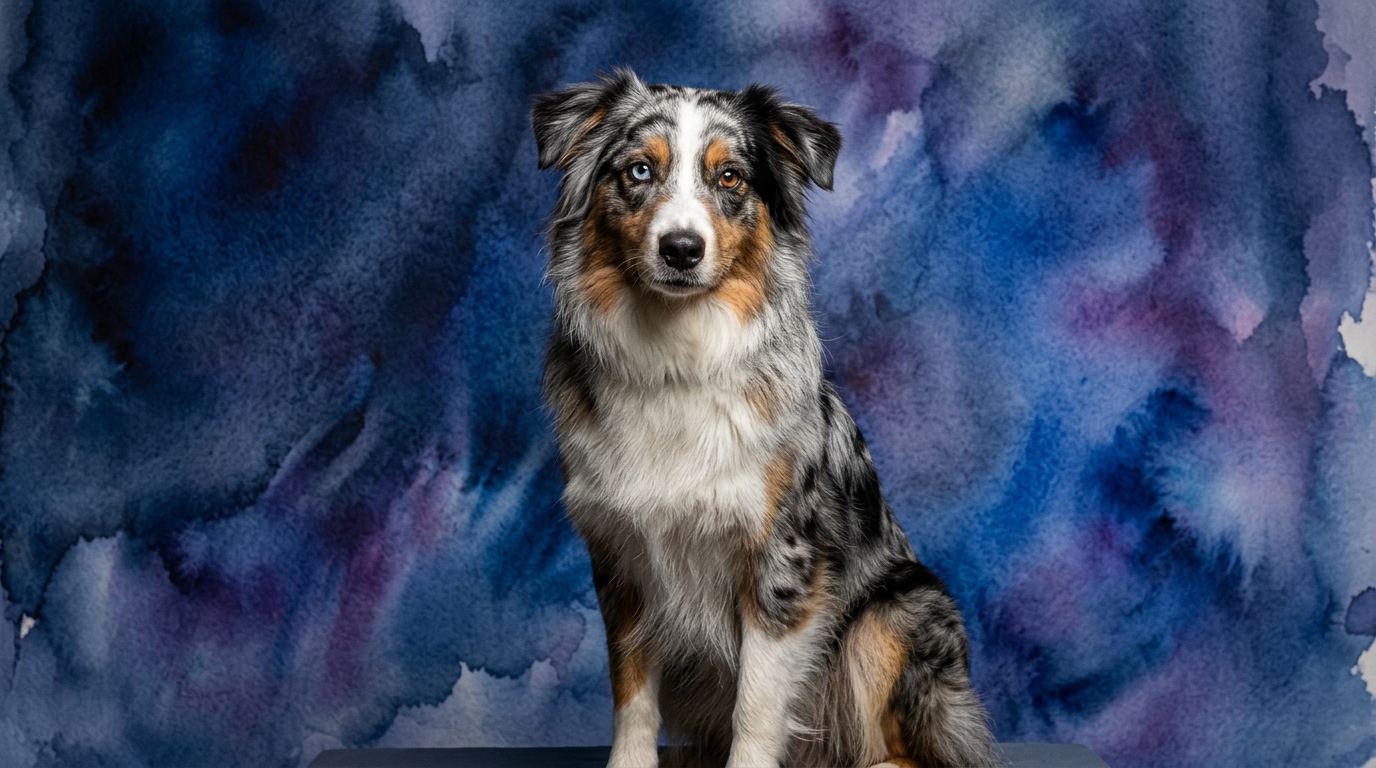
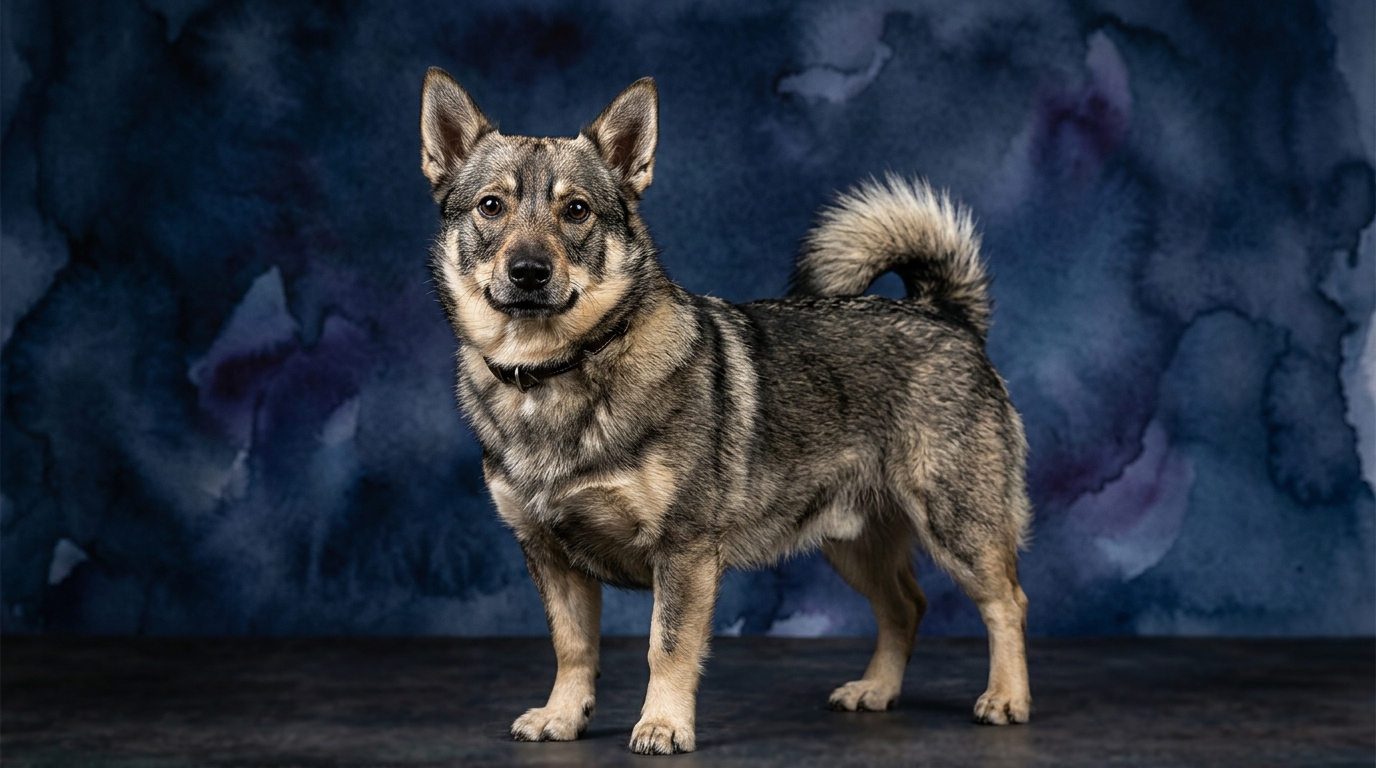
Side-by-Side IQ Profile: Australian Shepherd vs. Swedish Vallhund
The Australian Shepherd presents an impressive cognitive profile, scoring 5/5 in Problem Solving, Training Speed, Instinctive Drive, and Memory, alongside a robust 4/5 in Social Intelligence. This indicates a dog with a profound capacity for independent thought, rapid learning, and an innate, powerful urge to engage in purposeful activities. They excel at figuring out complex puzzles, absorbing new commands with remarkable speed, and retaining vast amounts of information over time, all while maintaining a keen awareness of their social environment. Their high instinctive drive means they don't just wait for instructions; they often seek out opportunities to apply their cognitive prowess, whether it's organizing livestock or orchestrating play.
In contrast, the Swedish Vallhund consistently scores 3/5 across all five dimensions: Problem Solving, Training Speed, Social Intelligence, Instinctive Drive, and Memory. This profile describes a capable and practical canine mind, rather than an intensely complex one. Vallhunds are perfectly adept at navigating their world, learning new tasks at a steady pace, and forming strong social bonds. They approach challenges with a sensible, trial-and-error method, and their learning, while not instantaneous, is consistent and reliable with clear instruction. Their instinctive drive is present, manifesting as a watchful and often vocal nature, and a tendency to “heel-nip” in play, but it lacks the overarching intensity and organizational complexity seen in the Australian Shepherd. Their memory serves them well for daily routines and learned commands, though perhaps not with the same depth of intricate detail as a breed scoring 5/5.
Where the Australian Shepherd Excels Cognitively
The Australian Shepherd’s cognitive advantages are pronounced in areas demanding independent thought and rapid assimilation of complex information. Their 5/5 Problem Solving score means they don't just follow a path; they often invent one, whether it's figuring out how to bypass an obstacle in a novel way or understanding multi-step tasks without explicit guidance for each phase. This translates into a dog that actively seeks solutions rather than passively waiting for direction. Coupled with their 5/5 Training Speed, Aussies absorb new commands and intricate sequences with astonishing quickness, often grasping concepts in just a few repetitions. This makes them exceptionally efficient partners in advanced training disciplines like competitive obedience, agility, or rally. Furthermore, their superior Memory (5/5) ensures that once a skill is learned, it is deeply ingrained and reliably recalled, even after periods of inactivity. This comprehensive cognitive strength, especially their potent Instinctive Drive (5/5), propels them to constantly engage with their environment, seeking mental and physical challenges that fulfill their innate need to work and organize, making them extraordinary partners for highly structured, task-oriented activities.
Where the Swedish Vallhund’s Cognitive Profile Shines
While the Swedish Vallhund’s individual cognitive scores are lower than the Australian Shepherd’s, their consistent 3/5 profile across all dimensions presents its own unique advantages, particularly for owners seeking a more balanced and less intensely demanding canine companion. Their 3/5 Problem Solving, for instance, means they are practical and adaptable without being prone to overthinking or devising overly complex schemes to achieve their desires. They are content with straightforward tasks and clear boundaries, which can be a “win” for owners who appreciate a dog that is less likely to outsmart them or become bored with simpler routines. The Vallhund’s 3/5 Instinctive Drive is another area where their cognitive profile can be seen as an advantage. While they retain their herding heritage, this drive is generally less overwhelming and more contained than an Aussie’s. This translates into a dog that is less likely to constantly attempt to herd family members, other pets, or even children with the same relentless intensity, making them potentially easier to integrate into a diverse household without requiring constant, high-level “job” assignments. Their moderate Social Intelligence (3/5) ensures they are responsive and affectionate without being overly sensitive or needing constant, nuanced emotional mirroring, promoting a stable and generally unflappable demeanor in various social settings.
Training Dynamics: Which Breed is Easier?
Determining which breed is “easier” to train depends entirely on the owner's definition of “easy” and their training goals. The Australian Shepherd, with its 5/5 Training Speed, is undeniably faster at learning new commands and complex routines. They possess an eagerness to please and a cognitive capacity that allows them to grasp intricate concepts quickly, making them ideal candidates for advanced obedience, agility, and competitive dog sports where rapid acquisition of skills is paramount. However, this “ease” comes with a significant caveat: their equally high 5/5 Instinctive Drive and Problem Solving mean that if their prodigious cognitive abilities are not consistently engaged and channeled through structured training, they can become bored, destructive, or even develop undesirable behaviors by inventing their own “jobs.” Training an Aussie means committing to a continuous, high-level mental partnership.
The Swedish Vallhund, while scoring 3/5 in Training Speed, is still a very trainable breed. They learn at a moderate, steady pace, requiring consistent repetition and clear, positive reinforcement. Their “ease” lies in their generally more manageable intensity. While they require mental stimulation and activity, their 3/5 Instinctive Drive means they are less likely to become unmanageably destructive or anxious if they miss a day of intensive training, compared to an Aussie. They are amenable to basic and intermediate obedience, house manners, and fun tricks without necessarily demanding the advanced, complex intellectual challenges that an Australian Shepherd thrives on. For an owner seeking a diligent student who is less likely to “outthink” them or become restless with less constant intellectual engagement, the Vallhund might present a more straightforward training journey.
Matching Breeds to Owner Lifestyles
The distinction between these two breeds becomes particularly clear when considering owner lifestyles. The Australian Shepherd is unequivocally suited for highly active owners who are prepared to fully engage with a dog possessing exceptional cognitive and physical demands. Owners who thrive on outdoor adventures, participate in dog sports like agility, flyball, or herding, or enjoy extensive, structured training sessions will find the Aussie to be an unparalleled partner. Their 5/5 Problem Solving, Instinctive Drive, and Training Speed mean they require constant mental and physical challenges to prevent boredom and destructive behaviors. They need a “job,” whether it's advanced obedience, trick training, or real herding, and an owner dedicated to providing that consistent intellectual outlet.
The Swedish Vallhund, while still a robust and engaged herding breed, offers a more adaptable profile that can suit moderately active owners who appreciate a companion with a good work ethic but without the same relentless intensity. Owners who enjoy daily walks, moderate hikes, consistent basic to intermediate training, and interactive play will find the Vallhund a joyful and fulfilling companion. Their 3/5 scores across the board mean they are adaptable and trainable, but they don't possess the same innate urgency for constant, high-level mental exertion as the Australian Shepherd. They can integrate well into a family that provides regular activity and consistent engagement, but doesn't necessarily revolve around dog sports or advanced, multi-hour training sessions every day. They are not a “relaxed” couch potato dog, but their needs are certainly less intense than the Aussie's.
The Verdict
Opt for an Australian Shepherd if you are an experienced, highly active individual or family committed to extensive daily exercise, advanced training, and providing consistent, complex mental stimulation through dog sports or a dedicated "job."
Choose a Swedish Vallhund if you seek a robust, engaged companion who will thrive with consistent, moderate training and daily activity, fitting well into a moderately active family life without requiring overwhelming intellectual challenges.
🧠 Find Your Pet's IQ Score
Our Pet IQ Lab assessment covers 25+ tests across 5 cognitive dimensions — personalized to your breed.
Take the Full IQ Test →Frequently Asked Questions
Are Australian Shepherds suitable for first-time dog owners?
Generally, Australian Shepherds are not recommended for first-time dog owners due to their exceptional cognitive demands, high energy levels, and intense need for consistent, structured mental and physical stimulation. They require an owner prepared for a significant commitment to training and engagement to prevent behavioral issues.
Do Swedish Vallhunds bark excessively?
Swedish Vallhunds can be quite vocal, often using their voice to alert their family to perceived threats or novelties, a trait stemming from their historical role as farm guardians. While their watchdog instincts are strong, consistent training and early socialization can help manage and moderate their barking tendencies.
Which breed is better suited for apartment living?
Neither breed is ideally suited for apartment living without significant owner effort, as both are active herding dogs. However, the Swedish Vallhund might be slightly more adaptable to apartment life than the Australian Shepherd, provided they receive ample daily exercise, mental stimulation, and consistent outdoor time to compensate for the lack of a large yard.