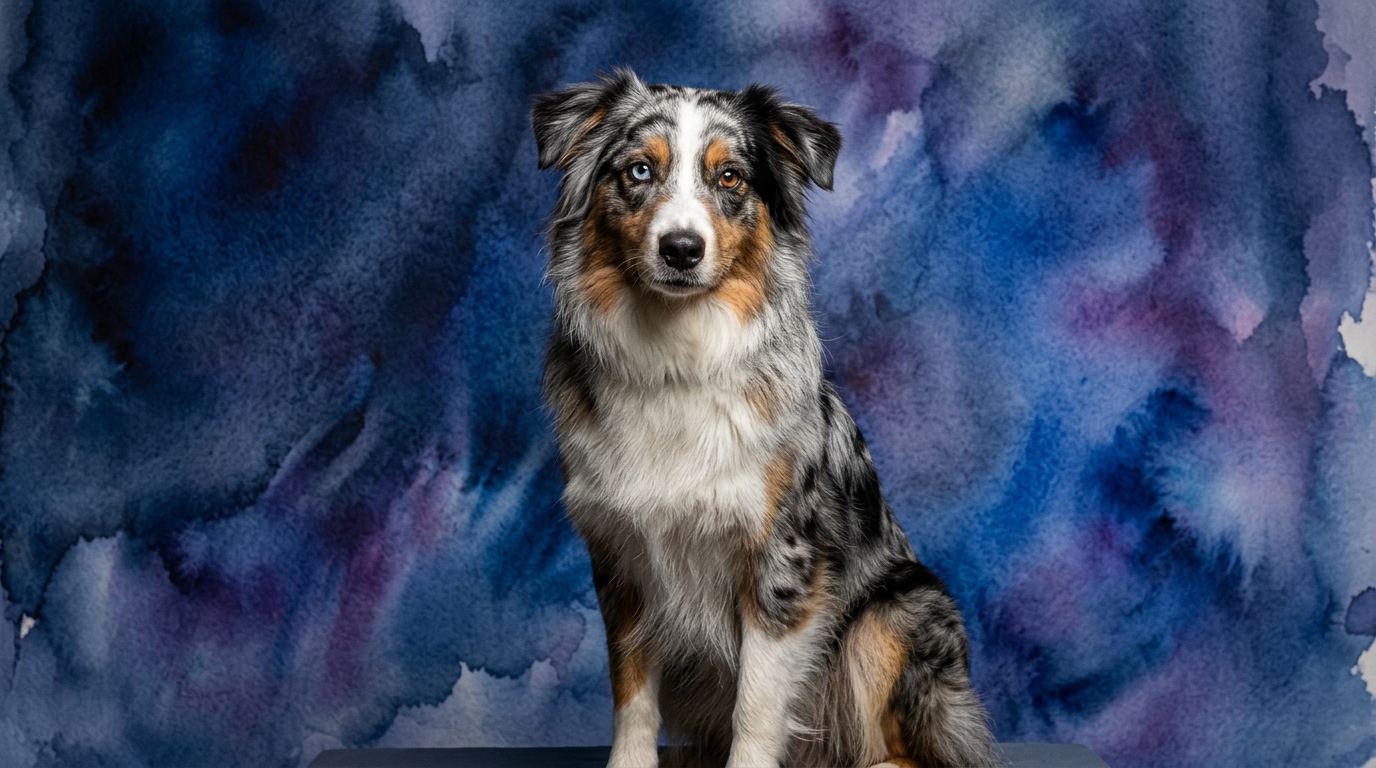
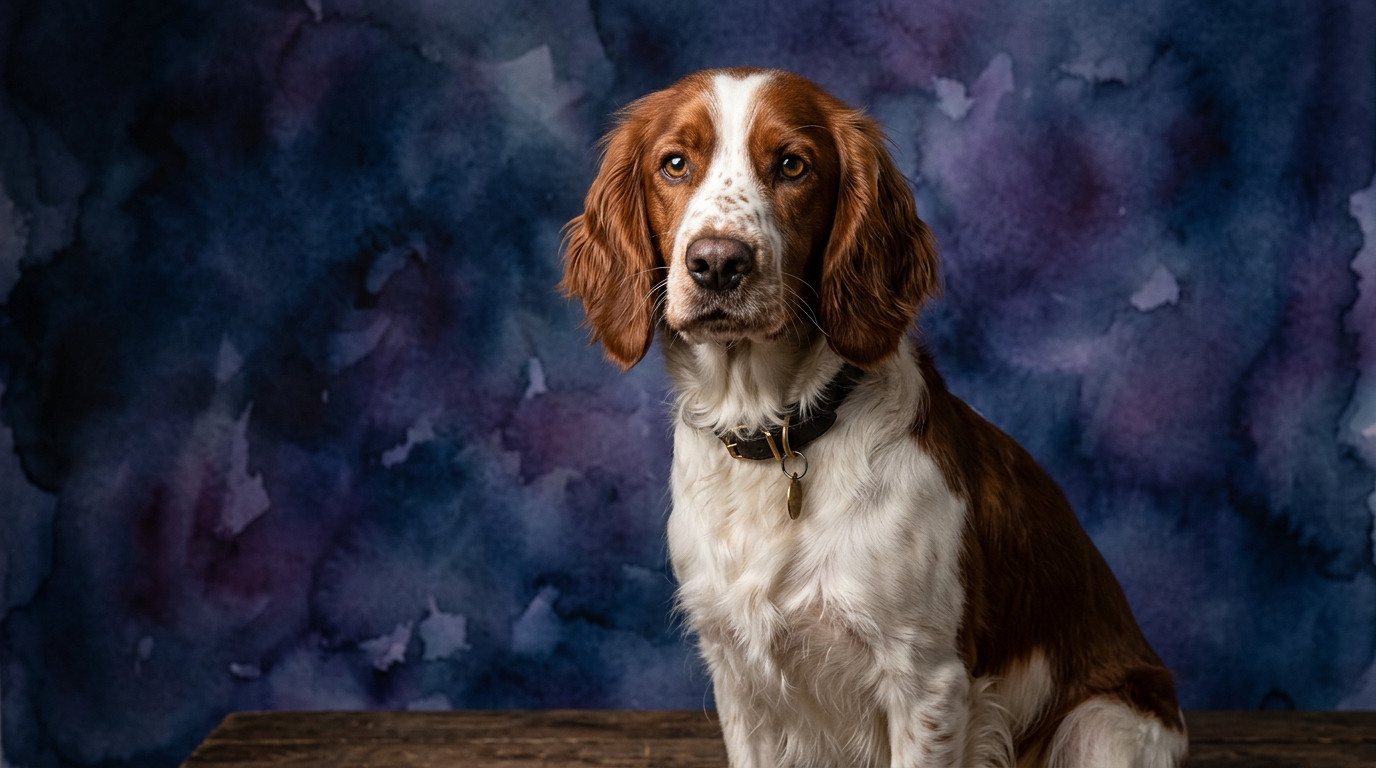
Side-by-Side IQ Profile: Aussie vs. Welsh Springer
To understand the cognitive differences between these two breeds, The Cosmic Pet Pet IQ Lab employs a five-dimensional framework, assessing problem-solving, training speed, social intelligence, instinctive drive, and memory. Each dimension is scored out of five, offering a granular view of their mental capabilities.
The Australian Shepherd, a Herding dog, scores exceptionally high across most metrics: Problem Solving 5/5, Training Speed 5/5, Social Intelligence 4/5, Instinctive Drive 5/5, and Memory 5/5. This profile paints a picture of a dog with profound mental acuity, a rapid learning curve, and a powerful intrinsic motivation.
The Welsh Springer Spaniel, categorized as a Sporting dog, presents a robust yet distinct cognitive profile: Problem Solving 4/5, Training Speed 4/5, Social Intelligence 3/5, Instinctive Drive 3/5, and Memory 4/5. These scores indicate a capable and cooperative learner with a joyful, purposeful drive, slightly less intense than their herding counterpart.
Australian Shepherd: A Masterclass in Canine Cognition
The Australian Shepherd's 5/5 problem-solving capability represents a pinnacle of canine ingenuity, allowing them to analyze dynamic situations, strategize movements, and adapt on the fly, a legacy of their demanding herding roles. This translates into an uncanny ability to outwit complex puzzle toys or navigate new environments with minimal guidance. Their 5/5 training speed is equally remarkable, signifying an almost instantaneous grasp of new concepts, often after just a few repetitions. This makes them exceptional for advanced obedience, intricate agility, or demanding service roles where rapid learning and precision are paramount. Furthermore, the Aussie's 5/5 instinctive drive provides an unparalleled depth of focus and motivation for specific tasks. This intense, innate desire to work translates into a tireless work ethic in activities like herding or competitive disc sports, where sustained concentration is essential. Finally, their 5/5 memory ensures that once a behavior is learned, it is deeply ingrained and recalled with impressive accuracy, contributing to highly consistent performance over time.
Welsh Springer Spaniel: Cooperative Charm and Practical Acumen
The Welsh Springer Spaniel's 3/5 instinctive drive, while lower, offers a distinct cognitive advantage for many companion homes; their drive is directed towards cooperative sporting activities rather than the constant need to control, resulting in a cheerful, less intense engagement style. Their 3/5 social intelligence, though not as analytically deep, translates into a universally friendly and adaptable social approach, making them eager to greet and interact without the initial reserve of some herding breeds. The 4/5 problem-solving of a Welsh Springer is robust and highly practical for daily life, excelling at household challenges without creating overly complex, self-invented strategies. Coupled with a 4/5 training speed and an eager-to-please disposition, their learning style emphasizes partnership and enthusiasm, making the training process a joyful, bonding experience rather than an intense mental challenge.
Training Dynamics: Which Breed Learns Faster?
The Australian Shepherd, with its top-tier 5/5 training speed and 5/5 problem-solving, will generally grasp new concepts and complex commands with astonishing rapidity. Their profound instinctive drive further fuels their motivation to work and please their handler, especially when tasks align with their natural herding tendencies. However, this same cognitive intensity and drive mean Aussies demand consistent, intelligent engagement and clear direction. If their sharp minds are not adequately stimulated, they are prone to inventing their own "tasks" or finding less desirable outlets for their intellect, which can present challenges for an inexperienced or inconsistent owner.
In contrast, the Welsh Springer Spaniel, scoring a solid 4/5 in training speed, is also a highly trainable breed. While their learning process might involve slightly more repetitions than an Aussie, their generally more relaxed instinctive drive (3/5) and innate eagerness to please can make them feel "easier" for a novice owner. Welsh Springers are less likely to challenge boundaries or devise complex schemes if not adequately stimulated, making their training trajectory more straightforward and less intense for many households. Their cooperative spirit makes them willing and joyful partners in the learning process, often prioritizing connection over independent problem-solving.
Lifestyle Match: Active vs. Moderately Active Owners
The Australian Shepherd is unequivocally suited for active owners. Their 5/5 instinctive drive and 5/5 problem-solving capabilities demand a lifestyle filled with purpose, rigorous physical activity, and consistent mental challenges. Owners who enjoy dog sports like agility, flyball, competitive obedience, or even practical farm work will find an Aussie thrives with such extensive engagement. A truly relaxed owner would quickly find themselves overwhelmed by an Aussie's unmet cognitive and physical needs, which could manifest as persistent attention-seeking, destructive behaviors, or anxiety.
Between the two, the Welsh Springer Spaniel offers a better fit for an owner seeking a moderately active companion rather than a high-octane working partner. Their 3/5 instinctive drive means they still need regular, consistent exercise and mental engagement—daily walks, interactive playtime, and some training sessions are essential to keep them content. However, their energy is typically expressed with a joyful exuberance that is more easily satisfied with structured play and family activities, rather than the intense, constant mental "work" an Aussie often craves. They are more adaptable to periods of calm once their needs are met, making them suitable for active families who also appreciate downtime.
The Verdict
Opt for an Australian Shepherd if you are an experienced, highly active owner committed to providing extensive mental and physical stimulation, thriving on a partnership with a dog that possesses unmatched cognitive processing and a profound desire to work.
Select a Welsh Springer Spaniel if you desire a joyful, cooperative, and moderately energetic companion, appreciate a slightly more adaptable social temperament, and can provide consistent, engaging training and exercise without the intensity required by a high-drive herding dog.
🧠 Find Your Pet's IQ Score
Our Pet IQ Lab assessment covers 25+ tests across 5 cognitive dimensions — personalized to your breed.
Take the Full IQ Test →Frequently Asked Questions
Do Australian Shepherds get along with other pets?
Australian Shepherds often do well with other pets, especially if raised with them. Their strong herding drive (5/5) means they might try to 'herd' smaller animals, so careful introductions and supervision are crucial to ensure harmonious coexistence.
Are Welsh Springer Spaniels good with children?
Welsh Springer Spaniels are generally known for their affectionate and patient nature, making them suitable companions for children. Their moderate social intelligence (3/5) allows them to adapt well to family dynamics, though supervision is always advised with any dog and child interaction.
Which breed requires more grooming?
Both breeds have double coats and require regular grooming to prevent matting and manage shedding. The Welsh Springer Spaniel's feathering might require slightly more attention to prevent tangles, but both benefit from consistent brushing to maintain coat health.