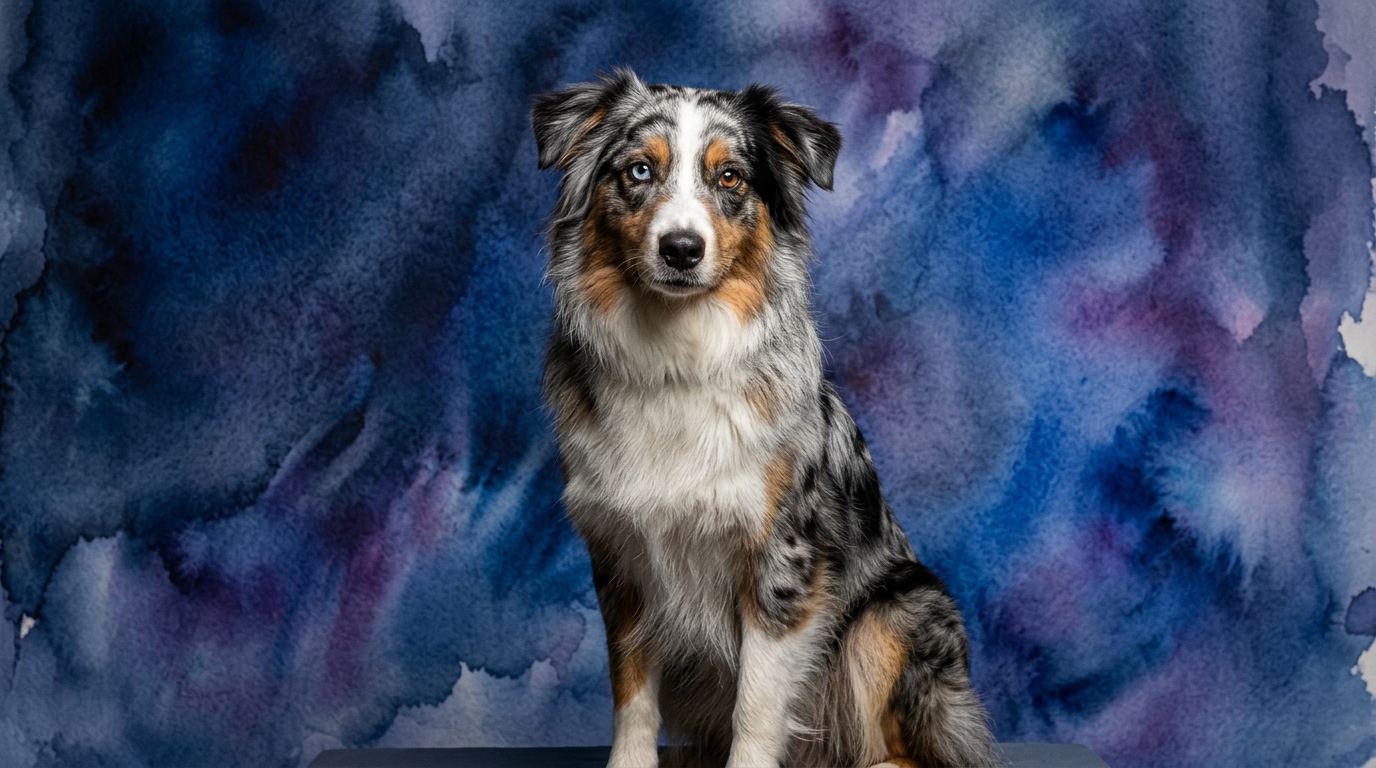
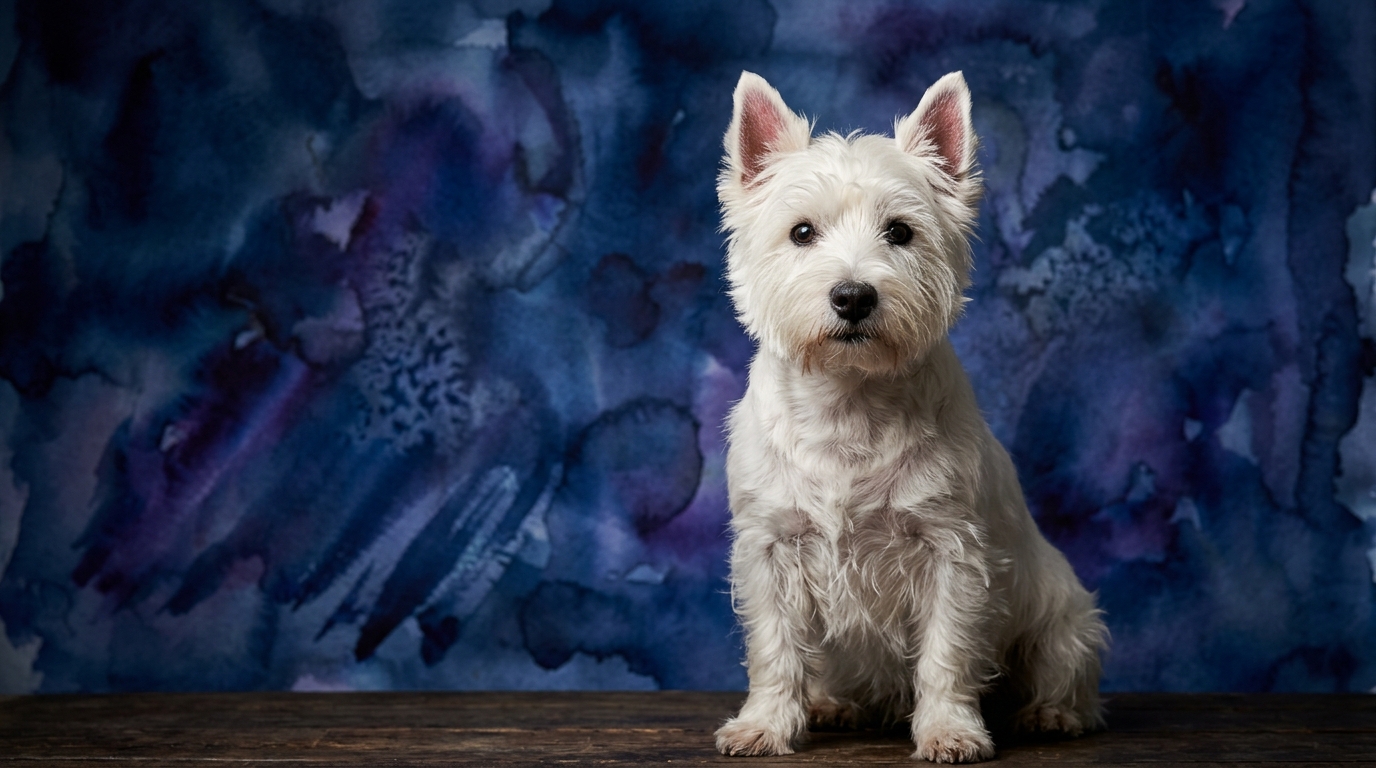
Side-by-Side IQ Profile: Australian Shepherd vs. West Highland White Terrier
The Cosmic Pet Pet IQ Lab employs a five-dimensional framework to unravel the cognitive nuances of different dog breeds, offering a granular view beyond generic notions of 'smartness.' For the Australian Shepherd, a Herding group dog, their scores paint a picture of a highly engaged and capable mind. They achieve a perfect 5/5 in Problem Solving, indicating an exceptional capacity to navigate complex scenarios, devise novel solutions, and understand intricate sequences of actions. Their Training Speed also rates 5/5, reflecting a rapid assimilation of commands and a keen ability to form associations quickly, making them highly responsive learners. Social Intelligence stands at 4/5, suggesting a strong aptitude for reading human cues and understanding social dynamics, particularly within their immediate 'flock' or family unit. Instinctive Drive, at 5/5, underscores their powerful innate herding behaviors, their intense work ethic, and a profound need for purposeful activity. Finally, their Memory scores 5/5, signifying an outstanding ability to retain a vast repertoire of commands, routines, and past experiences with remarkable accuracy over time.
In contrast, the West Highland White Terrier, a member of the Terrier group, presents a different cognitive blueprint, tailored to their historical role. Their Problem Solving is rated 3/5, indicating competence in direct, tangible challenges but perhaps less inclination towards abstract or multi-step puzzles compared to the Aussie. A Training Speed of 3/5 suggests they learn at a steady pace, requiring more consistent repetition and patience, as their independent nature can sometimes overshadow their desire to comply. Their Social Intelligence also registers 3/5; they are adept at bonding deeply with their human family but can be more selective or independent with strangers, defining a smaller, more focused social circle. Instinctive Drive, at 3/5, reflects a strong, focused prey drive primarily aimed at small vermin, rather than complex cooperative tasks. This drive manifests as tenacity and determination in their specific pursuits. Lastly, their Memory scores 4/5, demonstrating a good retention for routines and learned behaviors, ensuring they remember important household rules and commands effectively, though perhaps not with the exhaustive detail of a herding breed.
Where the Australian Shepherd Wins Cognitively
The Australian Shepherd's cognitive strengths are profoundly linked to their heritage as a working herding dog, demanding a comprehensive suite of mental aptitudes. Their 5/5 Problem Solving score means they don't just follow instructions; they anticipate, adapt, and innovate. This manifests in scenarios requiring them to gather disparate elements, navigate obstacles, or react to unpredictable livestock movements—skills directly transferable to advanced dog sports like agility, where they must assess courses and execute complex sequences on the fly. This sophisticated problem-solving is complemented by their 5/5 Training Speed, allowing them to absorb new information with astonishing alacrity. They often require fewer repetitions to master a command or trick, making them exceptionally versatile for various disciplines, from obedience to service work. Their superior memory (5/5) means that once learned, behaviors are deeply ingrained, enabling them to build an extensive vocabulary of cues and understand intricate routines. This robust recall supports their reliability in high-stakes situations, whether on a farm or as a search-and-rescue partner. Furthermore, their 5/5 Instinctive Drive fuels a relentless desire for engagement and purpose, translating into a dog that actively seeks out mental challenges and thrives on collaborative tasks with their human handler. This combination results in a canine partner capable of truly complex, cooperative work, often appearing to 'think with' their owner.
Where the West Highland White Terrier Wins Cognitively
While the West Highland White Terrier's IQ scores may appear lower in direct comparison, their cognitive strengths are distinct and perfectly suited to their original purpose: independent vermin hunting. Their 3/5 Problem Solving, for instance, isn't about grand strategic planning but about immediate, decisive action. This is the intelligence of a dog who must independently assess a tunnel, locate a hidden rodent, and execute a capture plan without human guidance. It's a pragmatic, self-reliant form of problem-solving that prioritizes tenacity and quick, on-the-spot decisions. Their 3/5 Instinctive Drive, though not as broad as a herder's, is intensely focused and unwavering. When a Westie locks onto a scent or a perceived target, their determination is formidable. This single-mindedness, often perceived as stubbornness, is a cognitive asset for a terrier – they are not easily deterred from a task they deem important. This focused drive also contributes to their robust memory (4/5) for specific cues related to their interests, such as the sound of a treat bag or the location of their favorite toy. Their 3/5 Social Intelligence, while not broadly gregarious, allows them to forge incredibly strong, devoted bonds within their immediate family. This means they are highly attuned to the moods and routines of their chosen humans, offering a deep, personal companionship that is less about universal engagement and more about specific, cherished relationships. They excel at being charming, self-possessed companions who understand their place within their family unit, providing a distinct kind of cognitive resilience and loyalty.
Which is Easier to Train and Why
When considering ease of training, the Australian Shepherd holds a clear advantage, largely due to their 5/5 Training Speed and high Social Intelligence (4/5). Australian Shepherds were selectively bred to work closely with humans, responding to subtle cues and anticipating commands. Their innate desire to please and their profound capacity for understanding human intentions make them exceptionally receptive to training. They quickly grasp new concepts, thrive on mental challenges, and view training as a rewarding collaborative activity. Their strong memory (5/5) ensures that once a behavior is learned, it is retained effectively, leading to consistent performance.
The West Highland White Terrier, with a 3/5 Training Speed, typically presents a different training experience. Their historical role as independent hunters means they were bred to make their own decisions, often without direct human supervision. This translates into a more self-willed and tenacious nature that can be perceived as stubbornness. While they are certainly capable of learning, they require more patience, consistency, and motivation. Training a Westie often involves finding what truly motivates them – whether it's high-value treats, a favorite toy, or engaging play – and making the learning process fun and rewarding to overcome their independent streak. Their instinctive drive (3/5) for chasing or digging can also be a significant distraction, requiring owners to be particularly diligent in proofing commands in various environments.
Which Suits Active Owners vs. Relaxed Owners
For owners seeking an active, engaged lifestyle, the Australian Shepherd is an ideal match. Their 5/5 Instinctive Drive and 5/5 Problem Solving mean they possess an almost insatiable need for mental and physical stimulation. They are not content with short walks; they require vigorous exercise, often including running, hiking, or participating in dog sports like agility, flyball, or herding. An Aussie thrives when given a 'job' to do, whether it's learning complex tricks, engaging in advanced obedience, or even assisting with household tasks. Owners who cannot provide consistent, high-level engagement risk their Aussie developing boredom-related behaviors such as destructive chewing, excessive barking, or anxiety. They are a true partner for adventure.
Conversely, the West Highland White Terrier typically suits a more relaxed, yet still engaged, owner. While Westies are energetic and enjoy playtime, their exercise requirements are generally moderate compared to the Australian Shepherd. A couple of brisk daily walks, combined with indoor play and opportunities for mental enrichment like puzzle toys or scent games, usually suffice. Their independent nature means they can be content to entertain themselves for periods, making them less demanding of constant human interaction than an Aussie. However, 'relaxed' does not mean 'neglectful.' Westies still require consistent engagement, socialization, and opportunities to express their terrier instincts in appropriate ways, such as supervised digging in a designated area, to prevent boredom and unwanted behaviors. They fit well into a home that appreciates a spirited, self-possessed companion who enjoys both activity and quiet companionship.
The Verdict: When to Choose Each Breed
The Verdict
Choose an Australian Shepherd if you seek a highly engaged, trainable partner for complex activities and have the energy to match their profound cognitive and physical needs.
Opt for a West Highland White Terrier if you appreciate a spirited, independent companion with a strong personality, and prefer a moderate activity level for your daily routine.
🧠 Find Your Pet's IQ Score
Our Pet IQ Lab assessment covers 25+ tests across 5 cognitive dimensions — personalized to your breed.
Take the Full IQ Test →Frequently Asked Questions
Do Australian Shepherds need a 'job' to be content?
Yes, their high instinctive drive and problem-solving aptitude mean they thrive on mental engagement and tasks. Without a job, they can become bored, leading to destructive behaviors or anxiety, as their minds are constantly seeking purpose.
Are Westies truly stubborn, or is it misinterpreted intelligence?
Westies are often perceived as stubborn due to their independent nature and strong will, a trait honed for solitary hunting. It's less about a lack of intelligence and more about a different motivation; they need to be convinced a task is worthwhile for them.
How do the Coren rankings relate to these breeds?
The West Highland White Terrier's Coren rank of #47 places them in the 'average working/obedience intelligence' category, indicating they learn new commands reliably. Australian Shepherds are not Coren-ranked, but their high scores across most IQ dimensions suggest they would likely place significantly higher if included, excelling in adaptive and working intelligence.