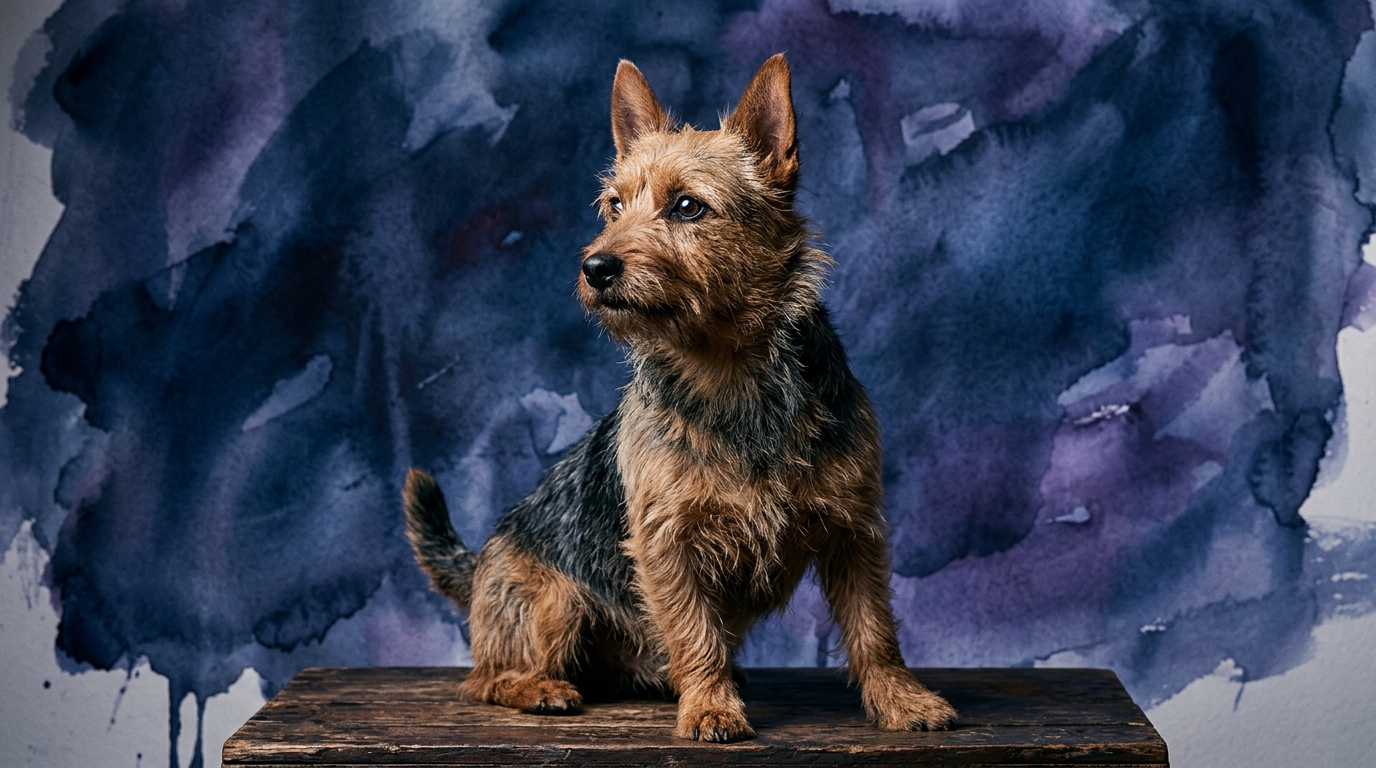
Side-by-Side IQ Profile: Australian Terrier
**Problem Solving (3/5):** This terrier demonstrates a practical, hands-on approach to challenges, often involving spatial reasoning to navigate tight spots or strategize an approach to perceived "prey." Their problem-solving leans towards persistence and ingenuity in achieving a specific, often self-serving, goal like finding a hidden toy or figuring out how to bypass an obstacle.
**Training Speed (3/5):** Australian Terriers absorb new commands at a moderate pace, but their independent spirit means consistency and positive reinforcement are paramount. They grasp concepts well, but their own agenda or a sudden distraction might momentarily override their willingness to comply, requiring patient and engaging training sessions.
**Social Intelligence (3/5):** These terriers navigate social dynamics with a keen awareness of their human companions and other animals, often adapting their behavior to elicit desired responses. They can read moods and intentions effectively, using their charm or alertness to engage with their environment and secure attention, though they may express their boundaries clearly with strangers.
**Instinctive Drive (3/5):** Rooted in their vermin-hunting heritage, the Australian Terrier exhibits a pronounced drive for chasing, digging, and exploring with their nose. This instinct is a powerful motivator, influencing their focus and energy, making them alert watchdogs and enthusiastic participants in scent work or earthdog trials.
**Memory (3/5):** Australian Terriers possess a solid memory for routines, commands, and the people and places they encounter. They retain learned behaviors and social cues well, remembering both positive and negative experiences, which contributes to their adaptability and ability to form strong, lasting bonds.
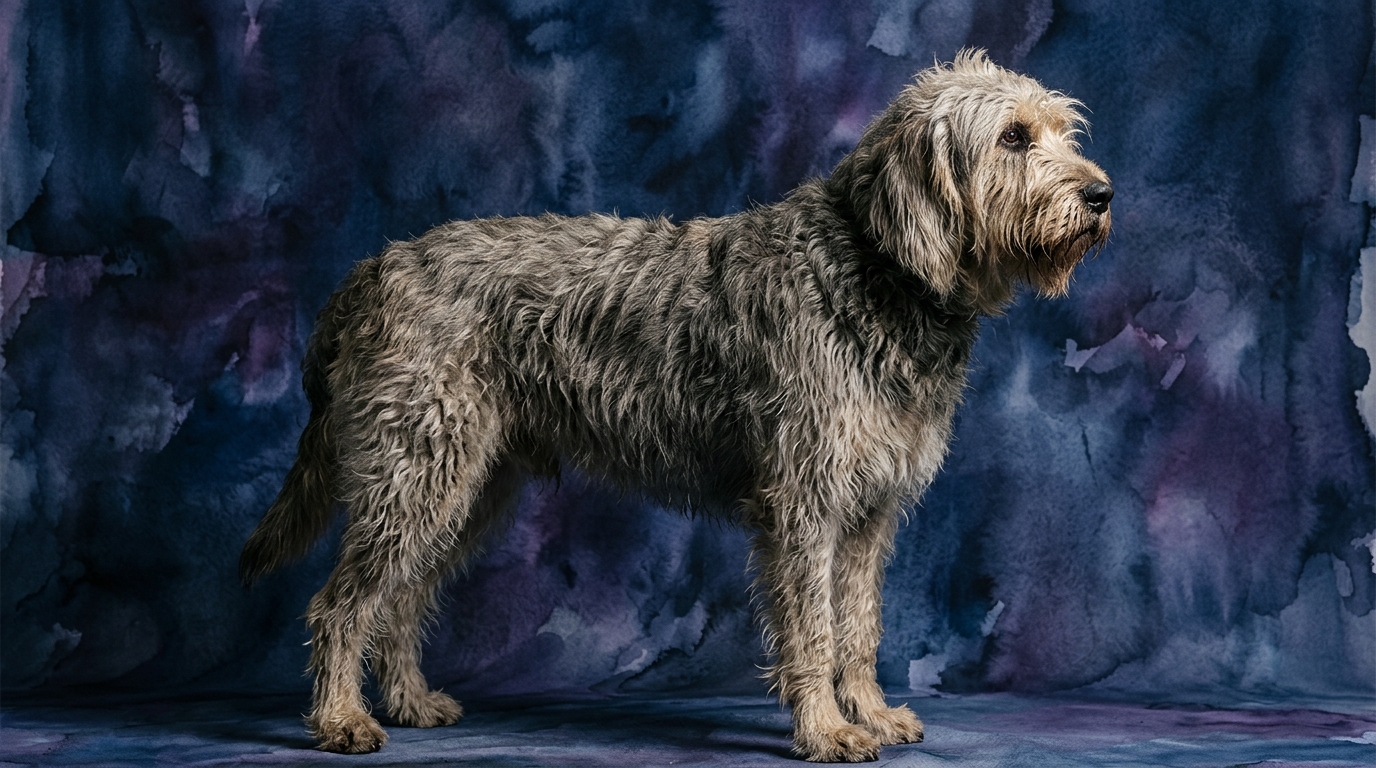
Side-by-Side IQ Profile: Otterhound
**Problem Solving (3/5):** The Otterhound’s problem-solving centers around their olfactory prowess, systematically deciphering complex scent trails and navigating varied terrain to reach a conclusion. Their intelligence manifests as sustained, focused determination to follow a "puzzle" through to its end, often involving intricate environmental interpretation rather than quick, agile maneuvers.
**Training Speed (3/5):** Otterhounds learn commands at a steady pace, but their deep-seated hound instincts can present a unique training challenge: a captivating scent can instantly eclipse all other priorities. While capable of understanding, their responsiveness is often contingent on their environment and whether their nose has found something more compelling.
**Social Intelligence (3/5):** These hounds exhibit a convivial and often boisterous social intelligence, connecting deeply with their family and generally being amiable with others. They understand social cues within their pack and can be surprisingly empathetic, though their large size and enthusiastic greetings might sometimes be misinterpreted by those unfamiliar with the breed.
**Instinctive Drive (3/5):** The Otterhound’s instinctive drive is overwhelmingly dominated by their exceptional nose and their historical role in tracking otters through water and land. This drive fuels their wanderlust, their deep vocalizations, and their unwavering pursuit of an interesting scent, defining much of their exploratory and communicative behavior.
**Memory (3/5):** Otterhounds have a good memory for places, people, and especially for scent profiles. They can recall familiar trails and locations, and their ability to remember scent patterns is crucial to their historical function, contributing to their effective tracking and navigation over long distances.
Where the Australian Terrier Wins Cognitively
While both score 3/5 in problem-solving, the Australian Terrier often demonstrates a quicker, more reactive form of cognitive agility suited to smaller-scale, immediate challenges. Their terrier heritage imbues them with a rapid assessment capability for things like outsmarting a small pest or quickly figuring out how to retrieve a toy from under furniture. This manifests as clever, often spontaneous, solutions to environmental puzzles that require a burst of focused effort.
In a busy home or urban setting, the Australian Terrier's social intelligence and moderate instinctive drive allow them to maintain focus on their human companions more readily than an Otterhound, whose powerful nose can easily hijack attention. An Australian Terrier is more likely to engage in interactive games or follow sequential commands without being significantly sidetracked by ambient smells.
Where the Otterhound Wins Cognitively
The Otterhound's 3/5 instinctive drive, combined with its problem-solving, is uniquely specialized for intricate, long-duration tasks. Their cognitive strength lies in their ability to process and follow a faint scent trail over varied terrain and through water for extended periods, requiring immense focus, memory for scent progression, and an ability to ignore countless other sensory inputs. This is a form of deep, sustained cognitive engagement that few breeds can match.
Otterhounds excel at interpreting complex outdoor environments through scent. Their problem-solving isn't about quick tricks but about systematically piecing together a narrative from olfactory information – understanding wind patterns, the age of a scent, and the presence of water to predict a path. This sophisticated environmental mapping through their nose is a distinct cognitive advantage in outdoor exploration and tracking.
Which is Easier to Train and Why
Despite both breeds scoring 3/5 in training speed, the *experience* of training differs significantly. The Australian Terrier, while possessing an independent streak characteristic of terriers, often shows a greater eagerness to please its primary human and is less prone to extreme distraction by distant scents. Their problem-solving skills make them quick to understand what is being asked, and their social intelligence means they respond well to positive reinforcement and engagement. Consistency is key, but their smaller size and more contained instincts often lead to a more manageable training journey in typical home environments.
The Otterhound, conversely, presents a different set of training considerations. While equally capable of learning, their powerful instinctive drive for scent work can be a formidable challenge. A fascinating smell can completely override any command, making off-leash training in unfenced areas particularly difficult and often unsafe. Their independent hound nature means they might choose to follow their nose over your instruction. Training an Otterhound requires immense patience, understanding of their breed-specific motivations, and a commitment to making training more rewarding than any passing scent, often involving specialized scent games to channel their natural drives constructively.
Which Suits Active Owners vs. Relaxed Owners
The Otterhound is unequivocally better suited for highly active owners who embrace outdoor adventures, especially those involving water or extensive walking/hiking. Their large size, boisterous nature, and profound need to explore with their nose demand significant daily exercise and mental stimulation that goes beyond a simple walk around the block. Owners who enjoy long, vigorous hikes, scent work, or even swimming with their dog will find the Otterhound a rewarding, albeit demanding, companion. Their energy is deep-seated and requires consistent outlets.
The Australian Terrier, while certainly an active and playful companion, is generally a better fit for owners with a more relaxed lifestyle or those living in smaller spaces. They enjoy walks and playtime but are typically content with moderate daily exercise and indoor engagement. Their smaller size and ability to adapt to apartment living, provided their exercise needs are met, make them less demanding in terms of sheer physical output. They are happy to curl up on the couch after a good play session, making them suitable for individuals or families seeking a spirited but adaptable canine friend who doesn't require extreme outdoor pursuits every day.
The Verdict
Opt for an Australian Terrier if you seek a spirited, adaptable companion who thrives on close interaction, moderate daily activity, and offers clever solutions to everyday domestic puzzles, perfect for urban or suburban living with a love for engaging play.
Select an Otterhound if you are a dedicated outdoor enthusiast, prepared to channel a powerful scent drive through extensive daily exercise and specialized activities like tracking, offering a boisterous, amiable companion for grand adventures.
🧠 Find Your Pet's IQ Score
Our Pet IQ Lab assessment covers 25+ tests across 5 cognitive dimensions — personalized to your breed.
Take the Full IQ Test →Frequently Asked Questions
Do Australian Terriers or Otterhounds bark a lot?
Australian Terriers can be quite vocal, using barks to alert their owners to new sights or sounds, a trait stemming from their watchfulness. Otterhounds also have a distinct, deep bay, often used when on a scent trail or to express excitement, so both breeds can be vocal, but for different reasons.
Are Australian Terriers good with children?
Australian Terriers can be wonderful family pets, often forming strong bonds with children, especially if raised with them. However, their terrier tenacity and small size mean interactions should always be supervised to ensure respectful play from both dog and child.
How much grooming do Otterhounds need?
Otterhounds have a distinctive shaggy, wiry double coat that requires regular grooming to prevent matting and remove debris, especially if they spend a lot of time outdoors or in water. Weekly brushing and occasional professional grooming or hand-stripping are typically recommended to maintain coat health.