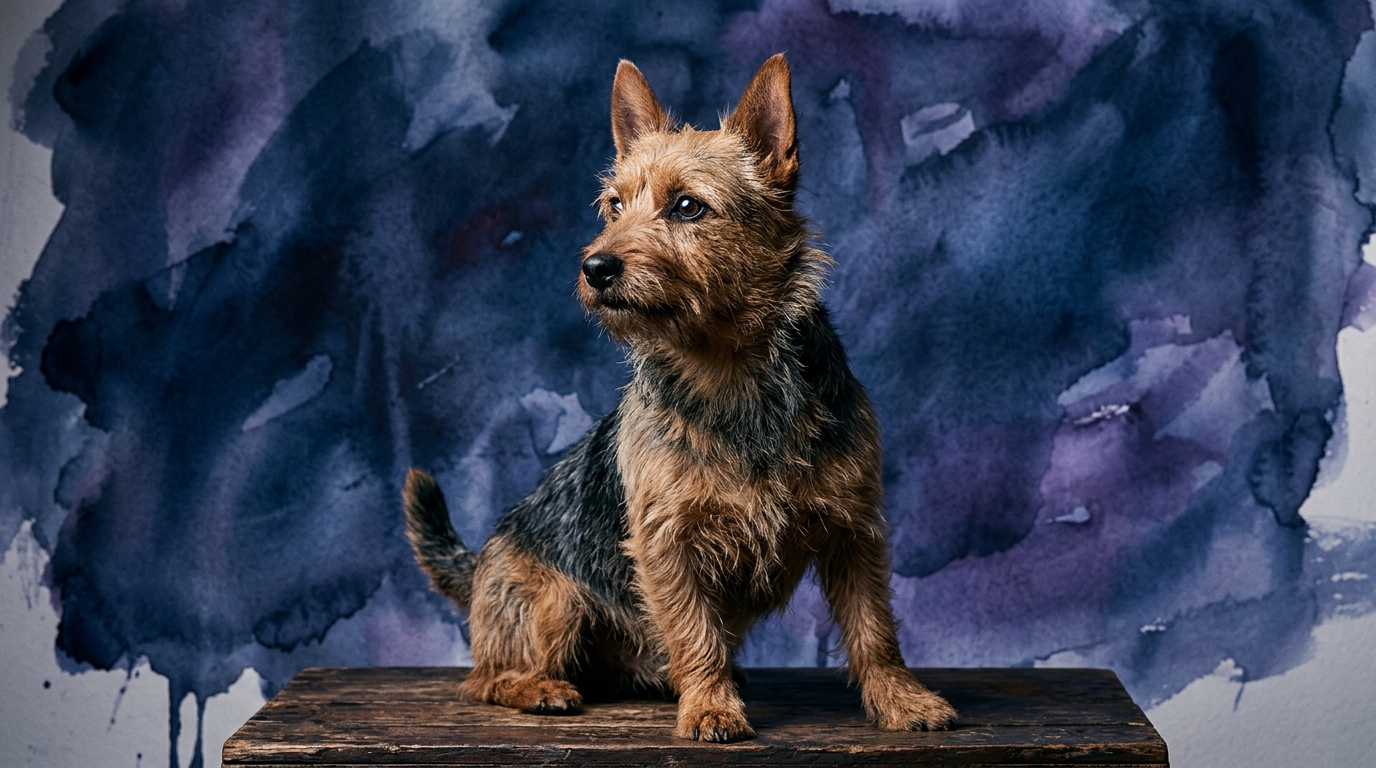

Side-by-Side Cognitive Profiles
The Cosmic Pet Pet IQ Lab assesses canine intelligence across five key dimensions, providing a nuanced understanding beyond simple obedience. For both the Australian Terrier and the Polish Lowland Sheepdog, each dimension registers a solid 3 out of 5, indicating a respectable and capable cognitive foundation. However, the *application* of these capacities differs significantly due to their distinct breed histories and inherent drives.
**Problem Solving (3/5):** The Australian Terrier approaches problem-solving with a characteristic terrier tenacity and independent spirit. Their 3/5 score suggests they are adept at figuring out how to achieve a goal, often through trial and error, persistence, and a keen sense of their environment. This might involve strategizing to reach a hidden toy, navigating a complex scent trail, or finding a way through a perceived barrier, all driven by curiosity and a desire for self-gratification. Their solutions are typically practical and action-oriented, reflecting their historical role as vermin hunters. The Polish Lowland Sheepdog, with its herding background, also exhibits a 3/5 in problem-solving, but their approach is more geared towards observation, analysis, and strategic management. They are capable of assessing a situation involving their 'flock' (be it sheep or family members), making independent decisions, and adapting plans to achieve a desired outcome, such as guiding people or objects. Their problem-solving often involves a broader scope, focusing on the dynamics of a group or environment rather than individual pursuit.
**Training Speed (3/5):** For the Australian Terrier, a 3/5 training speed means they are generally receptive and capable of learning new commands and routines with appropriate motivation and consistency. They can pick up on cues quickly, especially when the training is engaging, varied, and rewards-based. However, their independent terrier nature means they might choose to 'evaluate' the request before complying, requiring an owner who understands how to maintain their focus and make training feel like a collaborative game. The Polish Lowland Sheepdog also scores 3/5 for training speed, indicating a good capacity for learning. They are often eager to please their family and respond well to clear, structured instruction. Their working dog heritage means they appreciate having a 'job' and can commit to tasks once they understand the purpose. However, their independent and sometimes strong-willed nature means they are not simply automatons; they can assess situations and may require a patient, confident handler who builds trust and mutual respect.
**Social Intelligence (3/5):** The Australian Terrier's 3/5 social intelligence manifests as a strong ability to bond deeply with their immediate family and read their cues and emotional states. They are often attuned to the moods of their people and can offer comfort or solicit interaction effectively. While affectionate with their chosen circle, they may be more reserved or discerning with strangers, relying on their intuition to assess new social situations. The Polish Lowland Sheepdog's 3/5 social intelligence is characterized by a profound understanding of their family unit's dynamics. They are highly observant of social interactions, body language, and subtle environmental shifts, often acting as watchful guardians. They can interpret complex social signals within their 'pack,' whether human or animal, and respond appropriately, often displaying a protective yet sensitive nature. Their social acumen is rooted in their need to manage and protect their charges.
**Instinctive Drive (3/5):** The Australian Terrier's 3/5 instinctive drive is largely dominated by their terrier heritage: a strong prey drive, a propensity for digging, and a keen desire to patrol and investigate their surroundings. This drive means they are often self-motivated to find 'work' to do, which can involve chasing small critters, exploring every nook and cranny, or 'tidying' the garden with their paws. This instinctual wiring requires appropriate outlets to prevent boredom-related behaviors. The Polish Lowland Sheepdog’s 3/5 instinctive drive is distinctly herding-oriented. This manifests as a natural inclination to gather, protect, and manage. They possess a watchful nature, a tendency to 'organize' their environment, and a deep-seated need for purpose-driven activity. This drive can translate into 'herding' family members, monitoring household activity, or being highly alert to anything perceived as out of place.
**Memory (3/5):** The Australian Terrier's 3/5 memory score indicates a good capacity for retaining past experiences, both positive and negative, as well as remembering routines and learned behaviors. They can recall specific locations of favorite toys or treats, remember the faces of people they've met, and internalize house rules with consistency. This allows them to adapt and learn from their interactions and environment. The Polish Lowland Sheepdog also scores 3/5 in memory, possessing an excellent recall for people, places, and learned tasks, particularly those related to their duties or security. They can remember complex sequences of commands or routines and are adept at adapting their behavior based on prior experiences and the consequences associated with them. Their memory contributes to their reliability and their ability to be effective guardians and companions.
Where the Australian Terrier Excels Cognitively
Despite identical scores, the Australian Terrier's cognitive strengths shine in areas demanding independent resourcefulness and focused determination. Their 3/5 problem-solving is often expressed through tenacious, self-directed efforts to achieve personal goals, whether it’s figuring out how to get to a coveted object or navigating a new environment on their own terms. This breed demonstrates a particular aptitude for 'thinking on their feet' in immediate, often physical, challenges.
Their ingrained terrier drive, also rated 3/5, fuels a specific type of cognitive engagement: intense focus on a task, particularly if it involves scent work, digging, or the pursuit of small, fast-moving objects. This tenacity means that once an Australian Terrier is mentally engaged in a puzzle or a game, they apply considerable cognitive energy to seeing it through, often displaying impressive persistence. This makes them particularly adept at tasks requiring sustained individual effort and a degree of stubborn resolve, making them excellent companions for interactive puzzle toys or scent-based games.
Where the Polish Lowland Sheepdog Excels Cognitively
The Polish Lowland Sheepdog's cognitive strengths lie in their capacity for strategic observation, independent judgment, and a profound understanding of group dynamics, all within their 3/5 cognitive framework. Their problem-solving (3/5) is often geared towards assessing broader situations and making decisions that impact their perceived 'flock' or territory. This involves a more comprehensive analysis of their surroundings and the behaviors of others.
Their 3/5 social intelligence and instinctive drive combine to make them particularly adept at tasks requiring watchfulness, management, and protection. A PON can quickly interpret subtle changes in their environment or the mood of their family members, often anticipating needs or potential issues. This breed excels in roles where their independent thought can be applied to overseeing and maintaining order, making them particularly suited for activities that engage their natural herding instincts, such as agility courses that require complex sequencing or even 'herding' children during play.
Training Dynamics: Australian Terrier vs. Polish Lowland Sheepdog
Given their identical 3/5 training speed, the ease of training for these two breeds isn't about how *quickly* they learn, but rather *how* they learn and what motivates them. The Australian Terrier, with its independent terrier spirit, typically responds best to training that is engaging, positive, and varied. Consistency is paramount to overcome their occasional stubborn streak, and owners must make training feel like a fun game rather than a chore. They thrive on praise, high-value treats, and novelty, but their focus might wane if sessions are too long or repetitive.
The Polish Lowland Sheepdog, while also scoring 3/5, brings a different dynamic to the training arena due to their strong herding instincts and independent judgment. They are generally cooperative and eager to please their family, but they are also thinkers who may question commands if they don't perceive a clear purpose or if they feel their own assessment of a situation is more appropriate. They require a confident, fair, and consistent handler who establishes clear leadership without harshness. Training should be structured, mentally stimulating, and provide an outlet for their working drive. Once a PON understands a command's utility and respects their handler, they are diligent and reliable, often excelling in advanced obedience or dog sports.
Lifestyle Match: Active vs. Relaxed Owners
When considering an Australian Terrier, potential owners should understand that while they are small, they are not purely lap dogs. Their 3/5 instinctive drive and problem-solving capacities mean they require consistent mental and physical engagement. They thrive with owners who enjoy interactive play, daily walks, and providing a variety of puzzle toys and opportunities for exploration. They are adaptable to different living situations, but an owner who can provide consistent mental challenges and short bursts of activity will see them flourish. They suit moderately active owners who appreciate a spirited, self-sufficient companion.
The Polish Lowland Sheepdog, on the other hand, is definitely a match for active owners. Their 3/5 instinctive drive, rooted in herding, necessitates significant daily exercise and mental stimulation. They are not content with just a leisurely stroll; they need purposeful activity that engages their working brain, such as long walks, structured training sessions, or dog sports like agility, herding trials, or obedience. A truly 'relaxed' owner who cannot commit to providing these outlets will likely find a PON becoming bored, restless, and potentially developing unwanted behaviors. They are best suited for owners who are dedicated to integrating their dog into an active lifestyle and providing consistent mental challenges.
The Verdict
Choose the Australian Terrier if you seek a tenacious, adaptable companion for varied daily activities, valuing their independent problem-solving and spirited nature in a smaller package. They thrive with owners who enjoy interactive play and consistent mental engagement without requiring extensive, high-impact exercise.
Opt for the Polish Lowland Sheepdog if you are a dedicated, active individual prepared to provide consistent purposeful activity and mental challenges for a watchful, strategic partner. They excel with owners who appreciate their deep social bonds and independent judgment, thriving in environments where their working drive is engaged.
🧠 Find Your Pet's IQ Score
Our Pet IQ Lab assessment covers 25+ tests across 5 cognitive dimensions — personalized to your breed.
Take the Full IQ Test →Frequently Asked Questions
Do their identical IQ scores mean they are equally suited for all tasks?
No, identical 3/5 scores indicate a similar general capacity across dimensions, but the *manifestation* of that capacity is profoundly influenced by their breed-specific instincts. An Australian Terrier's problem-solving might focus on individual resourcefulness, while a Polish Lowland Sheepdog's might involve managing a situation or group, making them suited for different types of challenges.
How does a Terrier's problem-solving differ from a Herding dog's, despite the same score?
A Terrier's 3/5 problem-solving often involves independent exploration and overcoming physical obstacles for self-gratification or to satisfy prey drive. A Herding dog's 3/5 problem-solving, like the PON's, is typically more focused on situational analysis, managing resources or groups, and making independent decisions to maintain order or safety within their perceived 'flock'.
Can a Polish Lowland Sheepdog live in an apartment?
While adaptable to various living spaces, a PON's strong 3/5 instinctive drive and need for mental engagement mean an apartment lifestyle would require significant daily outdoor activity, structured training, and consistent mental stimulation. Without these outlets, they can become restless or destructive, making a home with a secure yard generally more ideal for their well-being.