Side-by-Side IQ Profile: Australian Terrier vs. Toy Poodle
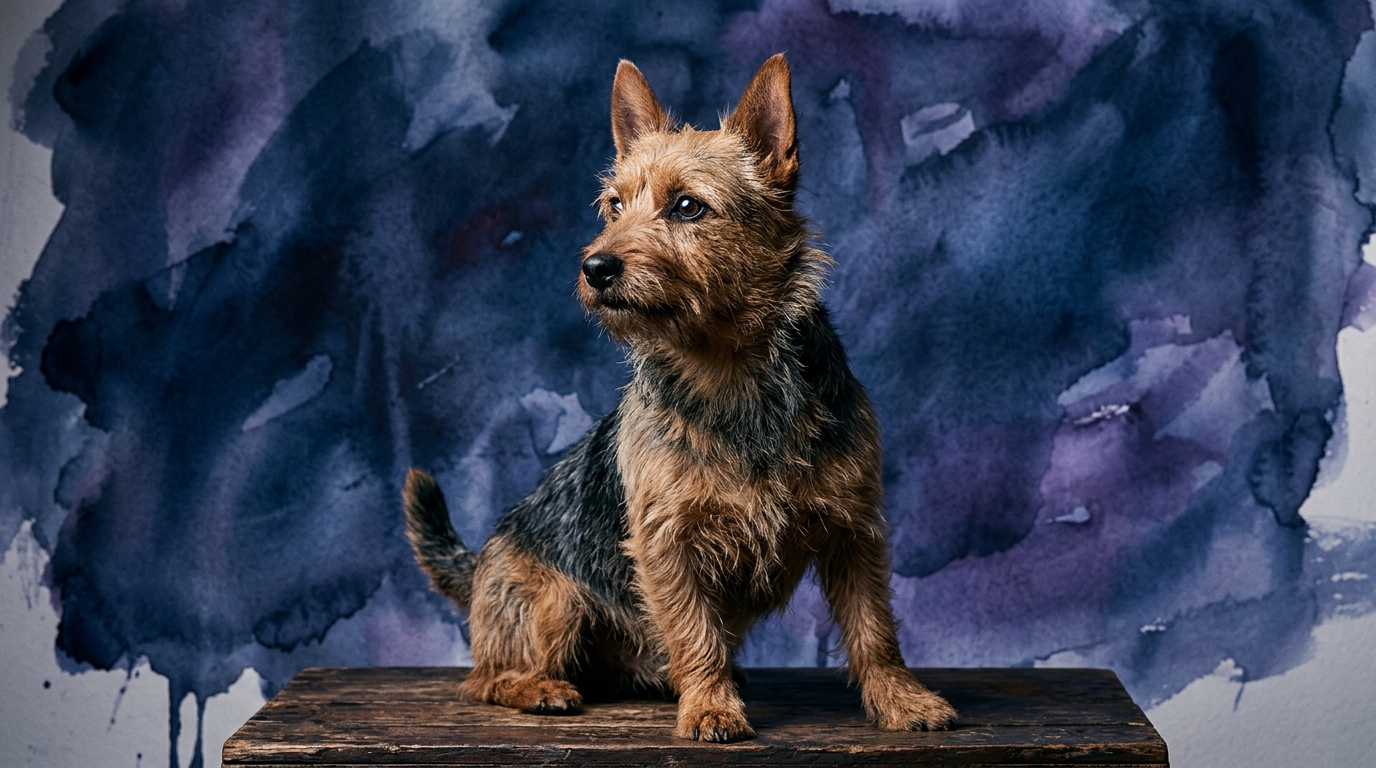
With a consistent 3/5 across all five dimensions, the Australian Terrier presents a balanced yet capable cognitive profile. Their Problem Solving at 3/5 suggests they can navigate moderately complex situations, often relying on learned patterns rather than innovative solutions. Training Speed also at 3/5 indicates they learn new commands and behaviors at a steady pace, responding well to consistent, positive reinforcement, though they might require more repetitions than some breeds. Social Intelligence, rated 3/5, means they generally understand human cues and dog-dog interactions, but might not always be the first to pick up on subtle emotional shifts. Their Instinctive Drive at 3/5 points to a moderate inherent inclination for their terrier tasks, such as chasing small prey or digging, which can be channeled in appropriate ways. Finally, a Memory score of 3/5 suggests they retain learned information adequately over time, remembering commands and past experiences without perfect recall of every detail.
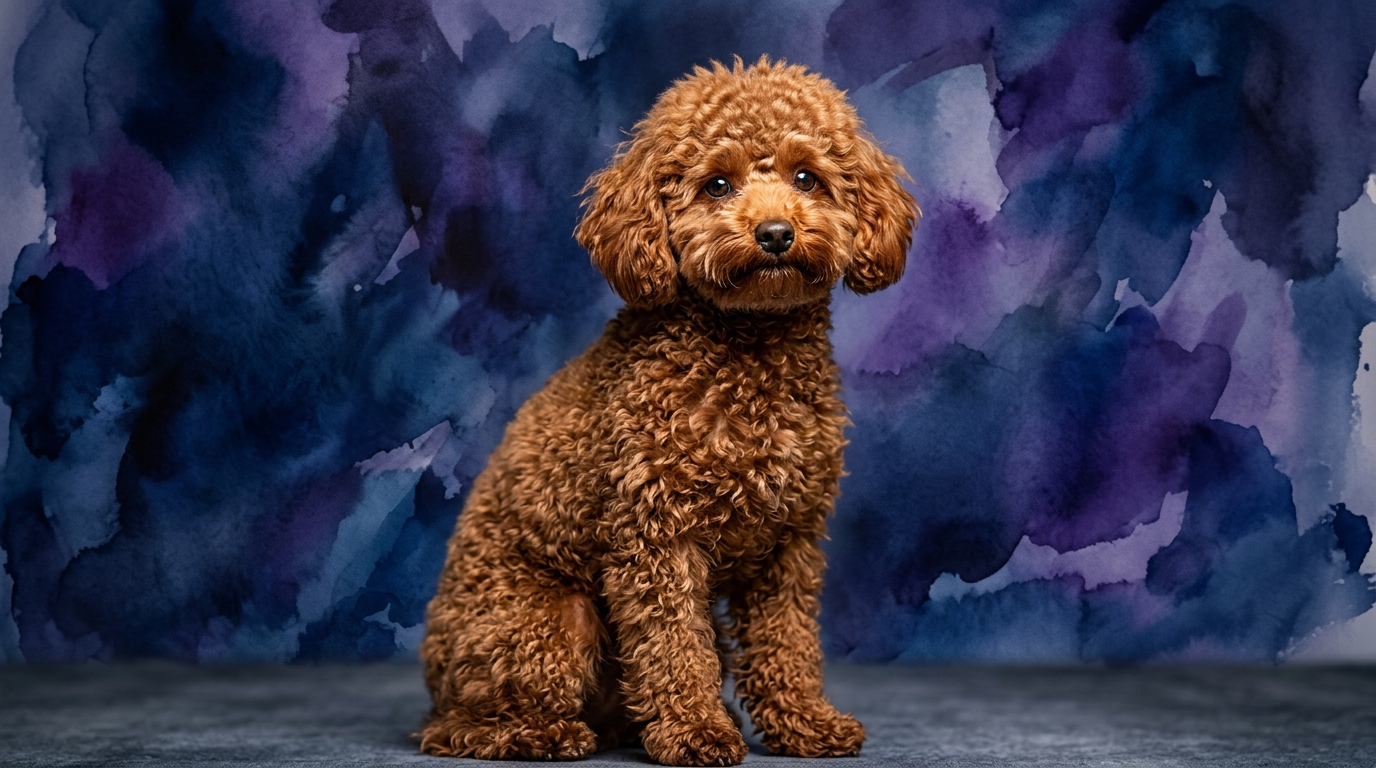
The Toy Poodle's cognitive profile showcases several exceptional strengths. Their Problem Solving ability is a remarkable 5/5, indicating a capacity for innovative thought and quick adaptation to novel challenges, often figuring out complex puzzles or new routines with minimal guidance. Training Speed also shines at 5/5, meaning they grasp new concepts and commands with impressive swiftness, often requiring very few repetitions to master a task. While their Social Intelligence matches the Australian Terrier at 3/5, suggesting a similar baseline for understanding social cues, their rapid learning can make them appear more attuned. Instinctive Drive is also a 3/5, reflecting a moderate inclination for retrieving or water work, remnants of their larger Poodle ancestry, though less pronounced in the Toy variety. Crucially, their Memory is a stellar 5/5, allowing them to retain vast amounts of information, recall complex sequences, and remember past experiences with remarkable accuracy, making advanced training and tricks well within their grasp.
Where the Australian Terrier Wins Cognitively
While the Toy Poodle scores higher in several key cognitive areas, the Australian Terrier's balanced 3/5 profile across all dimensions offers a unique advantage in specific contexts. Their moderate instinctive drive, for instance, is rooted in their terrier heritage, meaning they possess a robust, practical determination for tasks like scent work or supervised "ratting" games that might not appeal to the Toy Poodle's more general intellectual curiosity. This inherent drive, when properly channeled, translates into a resilient work ethic for specific, engaging activities. Furthermore, their consistent 3/5 in problem-solving means they are less prone to overthinking or becoming frustrated by complex, abstract challenges that a higher-scoring problem-solver might fixate on. Instead, they often approach obstacles with a straightforward, tenacious attitude, relying on persistence rather than intricate strategy. For owners seeking a companion with a predictable, grounded cognitive approach to daily life and a moderate, yet persistent, drive for engagement, the Australian Terrier's profile provides a steady, reliable presence. Their memory, while not photographic, is perfectly adequate for retaining essential routines and commands, making them consistent in familiar environments without demanding constant intellectual novelty.
Where the Toy Poodle Wins Cognitively
The Toy Poodle's cognitive strengths distinctly outshine the Australian Terrier's in areas demanding rapid acquisition of knowledge and sophisticated problem-solving. A 5/5 in Problem Solving means Toy Poodles excel at figuring out intricate puzzle toys, navigating novel environments, or even orchestrating clever ways to get what they want, often demonstrating a creative approach to obstacles. This cognitive agility allows them to adapt quickly to new routines or unexpected situations, making them highly versatile companions. Their Training Speed, also at 5/5, translates into an exceptional ability to learn complex command sequences, elaborate tricks, and even multi-step obedience routines with remarkable speed. They process new information efficiently, often needing only a few repetitions to master a new behavior, which makes them prime candidates for advanced dog sports like agility, obedience, or rally. Coupled with their 5/5 Memory, Toy Poodles retain these learned behaviors and problem-solving strategies over extended periods, making their training efforts highly durable. This combination of swift learning, deep retention, and creative problem-solving positions the Toy Poodle as a highly capable and intellectually engaging partner for owners who enjoy pushing the boundaries of canine learning.
Which is Easier to Train and Why?
Between the two breeds, the Toy Poodle is demonstrably easier to train, primarily due to its superior scores in Training Speed (5/5) and Problem Solving (5/5), coupled with its exceptional Memory (5/5). A Toy Poodle's ability to grasp new concepts quickly means an owner can introduce a new command or trick and expect mastery in significantly fewer repetitions compared to an Australian Terrier, which has a 3/5 Training Speed. For instance, teaching “stay” might take a Toy Poodle a handful of focused sessions, while an Australian Terrier might require more consistent, prolonged practice over days or weeks to achieve the same level of reliability. The Toy Poodle's problem-solving aptitude also makes them adept at understanding the *why* behind a command or the sequence of actions required, leading to quicker generalization of behaviors across different environments. Conversely, the Australian Terrier's 3/5 in these areas means training requires more patience, consistency, and a willingness to break down tasks into smaller, more manageable steps. While both breeds are trainable, the Toy Poodle offers a more rewarding experience for those who enjoy fast-paced learning and tackling advanced obedience or trick training.
Cognitive Profiles and Owner Lifestyles
The distinct cognitive profiles of the Australian Terrier and Toy Poodle lend themselves to different owner lifestyles. The Australian Terrier, with its balanced 3/5 across all cognitive dimensions and a moderate instinctive drive, is well-suited for owners who appreciate a steadfast companion with a practical, tenacious approach to life. Their consistent but not overly intense cognitive demands make them a good fit for relaxed owners who enjoy moderate daily activities, such as regular walks, engaging in scent games, or supervised digging opportunities, without the need for constant, complex intellectual stimulation. They thrive on routine and clear expectations, offering loyalty and a spirited presence without demanding constant novel challenges. In contrast, the Toy Poodle, with its 5/5 scores in problem-solving, training speed, and memory, thrives with active owners who are eager to engage their dog in mentally stimulating activities. These owners might enjoy dog sports, advanced trick training, or teaching complex routines. The Toy Poodle's sharp mind requires consistent mental engagement to prevent boredom, which could manifest as undesirable behaviors if left unfulfilled. They are ideal for individuals who want a highly interactive partner capable of learning and performing intricate tasks, making them excellent companions for those with an active, intellectually curious lifestyle.
The Verdict
Opt for an Australian Terrier if you seek a resilient, consistent companion with a moderate, balanced cognitive profile, thriving on routine and practical engagement rather than constant intellectual novelty.
Select a Toy Poodle if you desire a highly capable, rapidly learning partner eager for complex mental challenges, excelling in advanced training and requiring consistent intellectual stimulation.
🧠 Find Your Pet's IQ Score
Our Pet IQ Lab assessment covers 25+ tests across 5 cognitive dimensions — personalized to your breed.
Take the Full IQ Test →Frequently Asked Questions
Are Australian Terriers difficult to train due to their lower IQ scores?
No, Australian Terriers are not difficult to train; their 3/5 training speed simply means they learn at a steady pace, requiring more consistency and repetitions than a Toy Poodle. With patient, positive reinforcement, they can master essential commands and routines effectively.
Can a Toy Poodle be a good family dog, given its high problem-solving abilities?
Yes, Toy Poodles make excellent family dogs, especially for families who can provide consistent mental engagement and training. Their high problem-solving and social intelligence (3/5) mean they can adapt well to family dynamics, but they thrive best when their sharp minds are kept busy.
How does the instinctive drive differ between these two breeds?
Both breeds score 3/5 in instinctive drive, but the manifestation differs: the Australian Terrier's drive is rooted in traditional terrier tasks like chasing and digging, while the Toy Poodle's drive, though moderate, leans more towards retrieving or playful interaction, reflecting its diverse Poodle heritage.