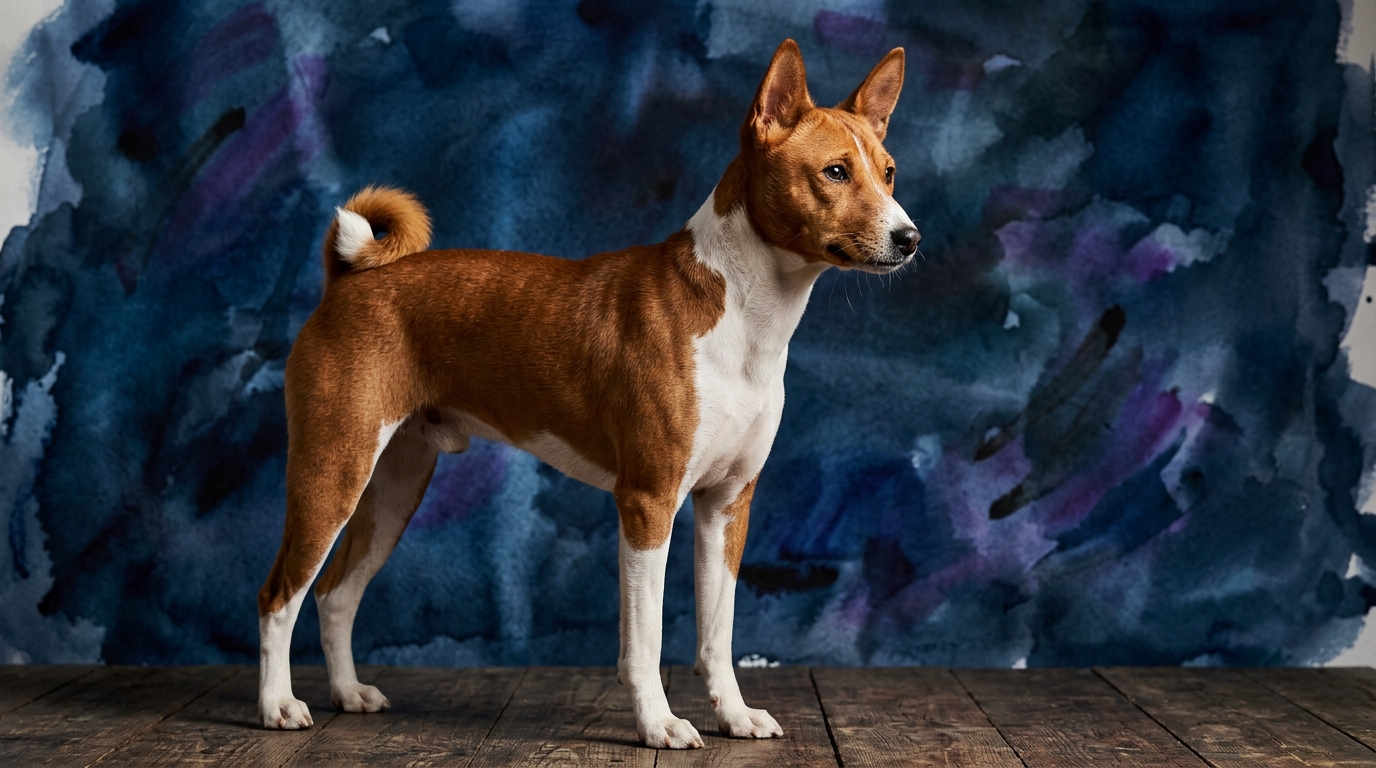
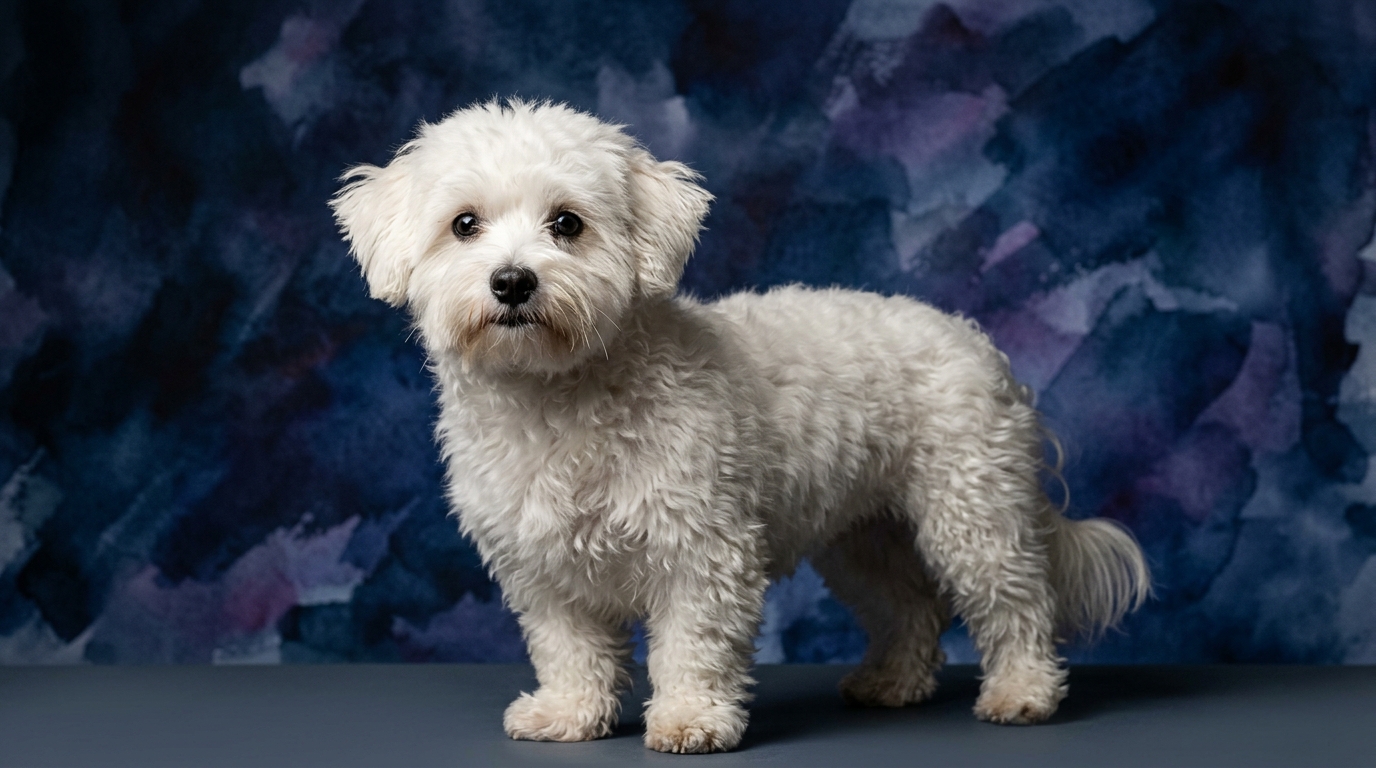
Side-by-Side IQ Profile: Basenji vs. Coton de Tuléar
The Cosmic Pet Pet IQ Lab employs five key dimensions to evaluate canine cognition, providing a nuanced understanding of a breed's mental landscape. For the Basenji, a hound often described as cat-like in its independence, its Coren ranking of #78 hints at a specific type of cognitive makeup. The Coton de Tuléar, a non-sporting companion dog without a Coren ranking, presents a contrasting profile.
Basenji Cognitive Profile:
Problem Solving (5/5): Basenjis exhibit exceptional independent problem-solving capabilities, adept at analyzing situations and devising creative solutions without human intervention. This often manifests in their knack for escaping enclosures or cleverly acquiring forbidden items.
Training Speed (1/5): Learning commands is a slow process for Basenjis, not due to a lack of understanding, but their inherent independence and low motivation for human-pleasing. They grasp concepts but exercise considerable discretion in compliance.
Social Intelligence (3/5): Basenjis possess a moderate understanding of social cues from both humans and other canines. While capable of deep affection, their bonds are often reserved, and their emotional responses are typically subtle rather than overtly demonstrative.
Instinctive Drive (5/5): Their instinctive drive is extremely high, characterized by a powerful prey drive and an insatiable desire to explore and hunt. Their actions are profoundly influenced by ancient hunting instincts, making them highly responsive to scent and movement.
Memory (4/5): Basenjis possess a robust memory, retaining routines, past experiences, and spatial information with impressive accuracy. This solid memory aids their problem-solving but also reinforces their recall of successful independent ventures.
Coton de Tuléar Cognitive Profile:
Problem Solving (3/5): Cotons are capable of navigating moderate challenges, often preferring to rely on learned strategies or seeking guidance from their human companions. They are adaptive but not as independently innovative as the Basenji.
Training Speed (3/5): Cotons learn at a moderate pace, generally demonstrating an eagerness to engage and a responsiveness to positive reinforcement. They acquire new commands steadily, enjoying the cooperative aspect of training.
Social Intelligence (3/5): Similar to the Basenji, Cotons show a moderate understanding of social dynamics, though their expression is often more outward and people-focused. They thrive on companionship and are sensitive to the emotional nuances of their family.
Instinctive Drive (3/5): Their instinctive drive is moderate, encompassing natural curiosity and a playful chase instinct, but lacking the intense, persistent prey drive characteristic of a hound. Their instincts lean more towards interactive play and companionship.
Memory (3/5): Cotons maintain a solid memory for established routines, commands, and familiar individuals. They can recall past experiences, though perhaps not with the detailed tenacity seen in a Basenji.
Where the Basenji Excels Cognitively
The Basenji's cognitive prowess shines brightest in its exceptional independent problem-solving (5/5) and formidable instinctive drive (5/5). These dogs are master strategists when it comes to achieving their own objectives. Their high problem-solving score isn't about rote learning; it's about their inherent ability to assess a situation, formulate a plan, and execute it independently, such as figuring out how to unlatch a cabinet or scale a seemingly insurmountable fence. This resourcefulness is further amplified by their intense instinctive drive, which compels them to pursue scents, explore new territories, or chase perceived prey with unwavering focus. Their strong memory (4/5) plays a crucial role here, allowing them to recall successful past strategies, making them repeat offenders in clever escapades. For an owner, this translates into a dog that is constantly thinking, often several steps ahead, and always seeking to engage its environment on its own terms, making them endlessly fascinating but also a perpetual management project.
Where the Coton de Tuléar Excels Cognitively
The Coton de Tuléar's cognitive strengths lie in its balanced, adaptable intelligence and its comparatively higher trainability. While its problem-solving (3/5) may not match the Basenji's independent genius, the Coton's willingness to engage with humans and learn through instruction gives it a distinct advantage in cooperative settings. Their moderate training speed (3/5) reflects a genuine desire to participate and respond to human guidance, making them more amenable to structured learning. Their moderate instinctive drive (3/5) means they are less likely to be solely consumed by independent pursuits, allowing them to remain more attentive to human cues and social interactions. This combination results in a dog that is generally more eager to please, more adaptable to family routines, and more attuned to the emotional atmosphere of its home, making them a delightful and less demanding companion for many households. They thrive on the mental stimulation of interactive games and learning new tricks alongside their people.
Which is Easier to Train, and Why?
Without question, the Coton de Tuléar is significantly easier to train than the Basenji. The Coton’s training speed of 3/5 signifies a moderate willingness to learn and a positive response to reinforcement, making them generally cooperative and enjoyable students. They appreciate the mental engagement and social interaction that training provides, often viewing it as a fun activity with their owner. In stark contrast, the Basenji’s training speed of 1/5 highlights their profound independence and minimal inherent motivation to comply with human directives. While a Basenji can quickly grasp a command due to its high problem-solving ability, it often makes a conscious choice whether or not to obey, based on its own assessment of the situation's value or its current priorities. This isn't a deficiency in understanding, but a powerful sense of self-determination, making consistent obedience a considerable challenge that demands extraordinary patience, creativity, and experience from an owner. For example, a Coton might reliably sit for a treat in a busy park, whereas a Basenji might understand the command perfectly but choose to ignore it if a captivating scent or squirrel crosses its path, prioritizing its instinctive drive over human instruction.
Which Suits Active Owners vs. Relaxed Owners?
For active owners who embrace a challenge and can provide extensive mental and physical engagement, the Basenji is an ideal match. Their exceptional instinctive drive (5/5) demands outlets like lure coursing, advanced scent work, or long, exploratory hikes where their natural hunting and tracking instincts can be fully expressed. Owners must be prepared for their high problem-solving skills (5/5) to be applied to creative escapades or finding mischief, necessitating extremely secure environments and consistent, imaginative engagement to prevent boredom. These owners often appreciate a dog with a strong, independent personality and are prepared to dedicate significant time to managing and channeling their companion's unique cognitive makeup. They thrive with owners who understand and respect their independent nature, engaging them in activities that appeal to their natural drives rather than expecting blind obedience.
The Coton de Tuléar, with its moderate instinctive drive (3/5) and balanced intelligence, is better suited for relaxed owners seeking an adaptable and affectionate companion. While they benefit from regular walks and interactive playtime, their exercise demands are less intense and more flexible than a Basenji's. Their moderate social intelligence (3/5) and higher trainability (3/5) mean they integrate more smoothly into a family routine and are generally content with companionship and varied interactive play sessions. They thrive in environments where they receive consistent attention and can participate in daily family life without demanding constant, high-octane activities. Their cognitive profile makes them excellent companions for those who enjoy a cooperative dog that readily engages in family activities and provides consistent emotional connection.
The Verdict
Choose the Basenji if you are an experienced, active owner seeking an independent, highly resourceful companion for challenging activities like scent work or agility, and you appreciate a dog that thinks for itself.
Opt for the Coton de Tuléar if you desire a trainable, adaptable, and affectionate companion for a relaxed family life, valuing a dog that readily participates in daily routines and enjoys human interaction.
🧠 Find Your Pet's IQ Score
Our Pet IQ Lab assessment covers 25+ tests across 5 cognitive dimensions — personalized to your breed.
Take the Full IQ Test →Frequently Asked Questions
Are Basenjis difficult dogs?
Basenjis can be quite challenging due to their profound independence, high problem-solving ability, and strong instinctive drives. They require consistent, creative training and substantial mental and physical engagement to prevent boredom and destructive behaviors, often proving too much for first-time dog owners.
Do Coton de Tuléars bark a lot?
Coton de Tuléars are not typically excessive barkers, but like many companion breeds, they can be prone to 'alert barking' if not properly socialized or if left alone for extended periods. Their moderate social intelligence means they are responsive to their environment and will often signal perceived changes.
Which breed is better with children?
The Coton de Tuléar is generally considered more suitable for families with children due to their adaptable nature, moderate energy, and desire for companionship. Basenjis, while not inherently aggressive, often prefer a quieter environment and may not tolerate the boisterousness of young children as readily due to their independent and sometimes aloof temperament.