Side-by-Side Cognitive Profiles
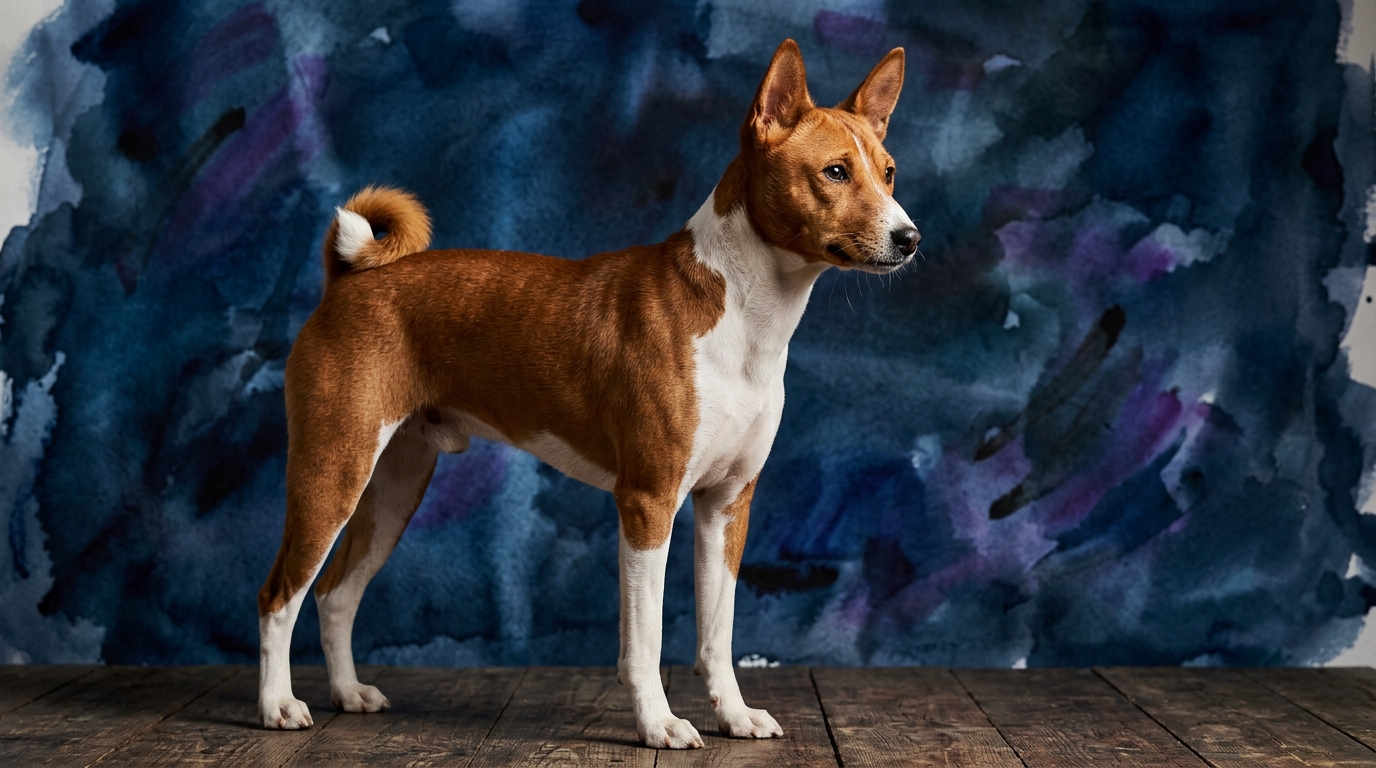
The Basenji, often called the "barkless dog," presents a captivating cognitive profile, particularly notable for its exceptional Problem Solving at 5/5. This breed demonstrates remarkable ingenuity in navigating its environment and overcoming obstacles, a testament to its ancestral role as an independent hunter. However, this sharp wit comes paired with a challenging Training Speed of 1/5, reflecting a profound independence that often prioritizes its own agenda over human directives.
Its Social Intelligence sits at a moderate 3/5, meaning while they can form bonds, Basenjis are often described as discerning or aloof rather than overtly eager to please. The Basenji's Instinctive Drive is a powerful 5/5, manifesting as a strong prey drive and an innate curiosity that propels exploration. Complementing this is a Memory score of 4/5, indicating they retain information and routines effectively, for better or worse, remembering both positive and negative experiences with clarity.
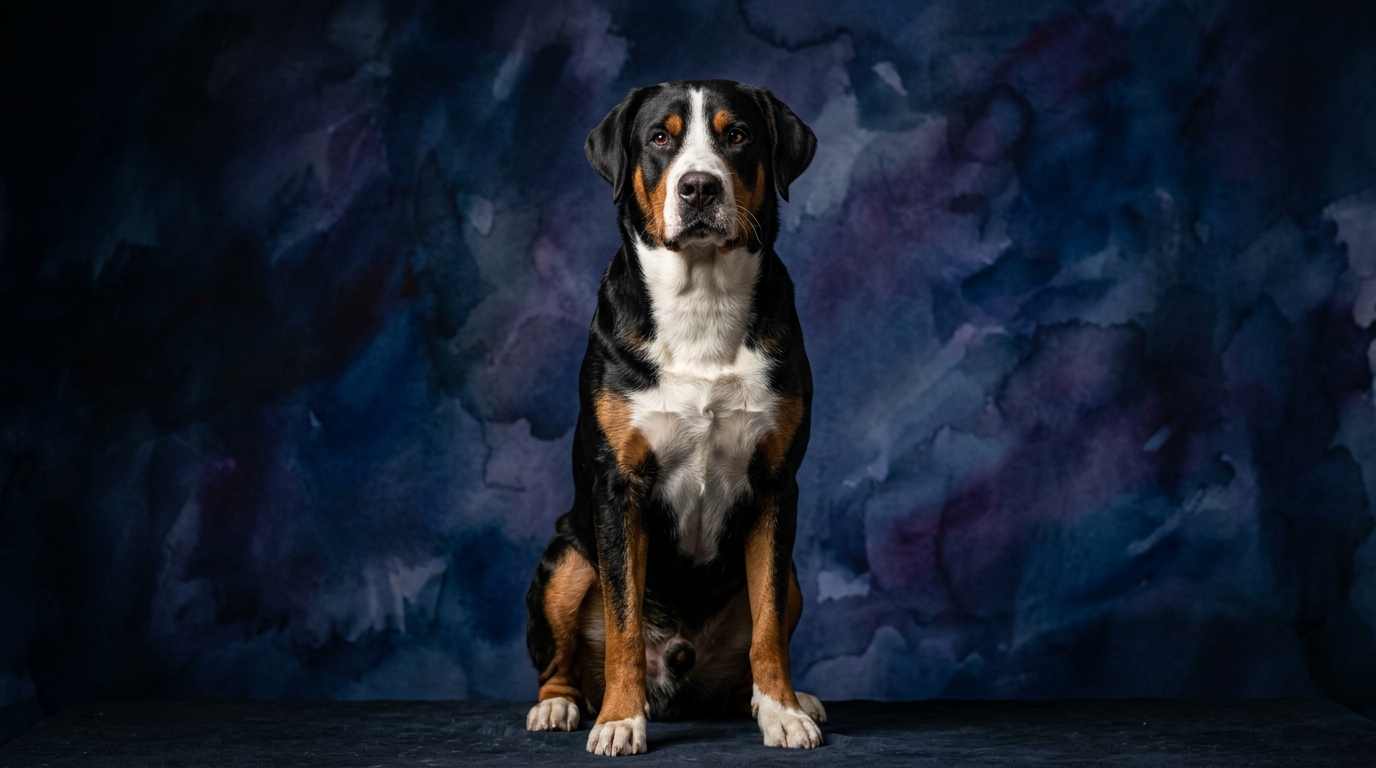
In contrast, the Greater Swiss Mountain Dog, a sturdy member of the working group, exhibits a more balanced and cooperative cognitive blueprint, though it is not included in the traditional Coren ranking. Its Problem Solving ability is rated 3/5, suggesting a solid capacity for understanding and resolving tasks without the same level of independent innovation seen in the Basenji. This breed's Training Speed is a respectable 3/5, indicating a willingness and capacity to learn new commands at an average pace, making them generally responsive to guidance.
The Swissy shares a Social Intelligence score of 3/5 with the Basenji, but often expresses it through a more genial and family-oriented disposition, valuing companionship. Its Instinctive Drive also registers at 3/5, reflecting a moderate, manageable drive often channeled into tasks like drafting or guarding rather than intense hunting. Finally, a Memory score of 3/5 suggests a reliable but not extraordinary ability to recall information, allowing for consistent learning and routine adherence without exceptional retention of minute details.
Where the Basenji Excels Cognitively
The Basenji undeniably shines in specific cognitive domains, particularly its Problem Solving (5/5). This isn't about rote learning; it's about intrinsic ingenuity. A Basenji confronted with a latched gate might not wait for a human to open it; instead, it might methodically test levers, push against hinges, or even try to scale the barrier, demonstrating an impressive capacity for independent thought and creative solutions to perceived obstacles. This resourcefulness makes them incredibly adept at navigating complex environments.
Furthermore, their high Instinctive Drive (5/5) means they are exceptionally attuned to their environment, constantly processing sensory information related to movement, scent, and sound. This acute awareness, combined with a strong Memory (4/5), allows them to quickly identify patterns, recall past successful strategies for hunting or escape, and adapt their behavior based on previous experiences. This combination makes them formidable independent operators, capable of making quick, situationally aware decisions without human prompting.
Where the Greater Swiss Mountain Dog Holds the Edge
While the Basenji excels in independent problem-solving, the Greater Swiss Mountain Dog's cognitive strengths lie in its balanced and cooperative nature, especially evident in its Training Speed (3/5) and a more manageable Instinctive Drive (3/5). Unlike the Basenji's independent streak, the Swissy often displays a greater willingness to engage with human instruction and purpose. This makes them more straightforward to guide through learning processes, as they are less likely to perceive training as an optional suggestion.
Their moderate Instinctive Drive means that while they possess the working dog's inherent desire for purpose, it is typically channeled into constructive tasks rather than an overwhelming prey drive or independent exploration. This allows for easier focus during training sessions and a more predictable response to commands. Combined with a solid, if not exceptional, Memory (3/5) and Problem Solving (3/5), the Swissy's cognitive profile supports consistent learning and application of learned behaviors within a cooperative framework, making them reliable partners in various activities.
Trainability: Basenji vs. Greater Swiss Mountain Dog
When considering ease of training, the Greater Swiss Mountain Dog clearly holds the advantage, primarily due to its 3/5 Training Speed. This breed generally approaches training with a cooperative spirit, eager to please its human companions and understand what is expected of it. Their moderate instinctive drive means they are less likely to be sidetracked by environmental stimuli, allowing for more focused and productive training sessions. They respond well to positive reinforcement and consistent methods, building upon learned behaviors reliably.
The Basenji, with its 1/5 Training Speed, presents a much greater challenge. Their profound independence and high problem-solving abilities often mean they are constantly evaluating whether a command serves their own interests. They aren't necessarily "stubborn" in the negative sense, but rather highly selective and self-motivated; if a command doesn't align with their immediate desires, they are more likely to ignore it or find an alternative. Their strong instinctive drive can also make recall particularly difficult in open environments, as their drive to pursue a scent or movement often overrides any learned command, requiring immense patience and creative motivation from their trainers.
Matching Canine Cognition to Owner Lifestyles
For owners seeking an active, intellectually stimulating companion who thrives on independent challenge, the Basenji is an intriguing choice. Their high instinctive drive and exceptional problem-solving abilities mean they require consistent mental engagement and physical outlets that tap into their natural curiosity and desire to explore. They are not content to be passive observers; rather, they need opportunities to 'work' their brains, whether through complex puzzle toys, scent work, or agility courses that allow for independent decision-making. These dogs excel with owners who appreciate their unique, often cat-like independence and are prepared to engage them actively in a variety of stimulating, often self-directed, activities.
The Greater Swiss Mountain Dog, while certainly robust and capable of activity, generally suits owners who appreciate a more relaxed, yet still engaged, companion. Their moderate instinctive drive and cooperative nature make them excellent partners for long hikes, carting, or family outdoor activities, but they are equally content to relax with their family after a good walk. They thrive on companionship and structured interaction, making them a better fit for owners who desire a dependable, amiable presence and are looking for a dog that integrates smoothly into a family routine without constantly seeking independent adventures or outsmarting its environment.
The Verdict
Choose the Basenji if you are an experienced owner seeking an independent, highly resourceful companion who will challenge your training skills and appreciate complex mental stimulation over direct obedience.
Opt for the Greater Swiss Mountain Dog if you desire a cooperative, strong, and amiable family member who is generally easier to train and thrives on companionship and a balanced routine.
🧠 Find Your Pet's IQ Score
Our Pet IQ Lab assessment covers 25+ tests across 5 cognitive dimensions — personalized to your breed.
Take the Full IQ Test →Frequently Asked Questions
Is the Basenji truly untrainable due to its low training speed score?
No, the Basenji is not untrainable, but its 1/5 training speed means it requires a highly patient, creative, and consistent trainer who understands its independent nature. Training focuses less on rote obedience and more on engagement and making desired behaviors mutually rewarding.
Does "social intelligence 3/5" mean both breeds are equally social?
While both score 3/5, their expression of social intelligence differs; Basenjis are often discerning and form deep bonds with a select few, while Greater Swiss Mountain Dogs tend to be more generally amiable and family-oriented, valuing companionship broadly. The score indicates average capacity, but context matters.
How does a Basenji's high problem-solving ability manifest in daily life?
A Basenji's 5/5 problem-solving often appears as cleverness in overcoming perceived obstacles, like figuring out how to open cabinets, scaling fences, or manipulating situations to get what they want. It requires owners to be one step ahead and secure their environment.