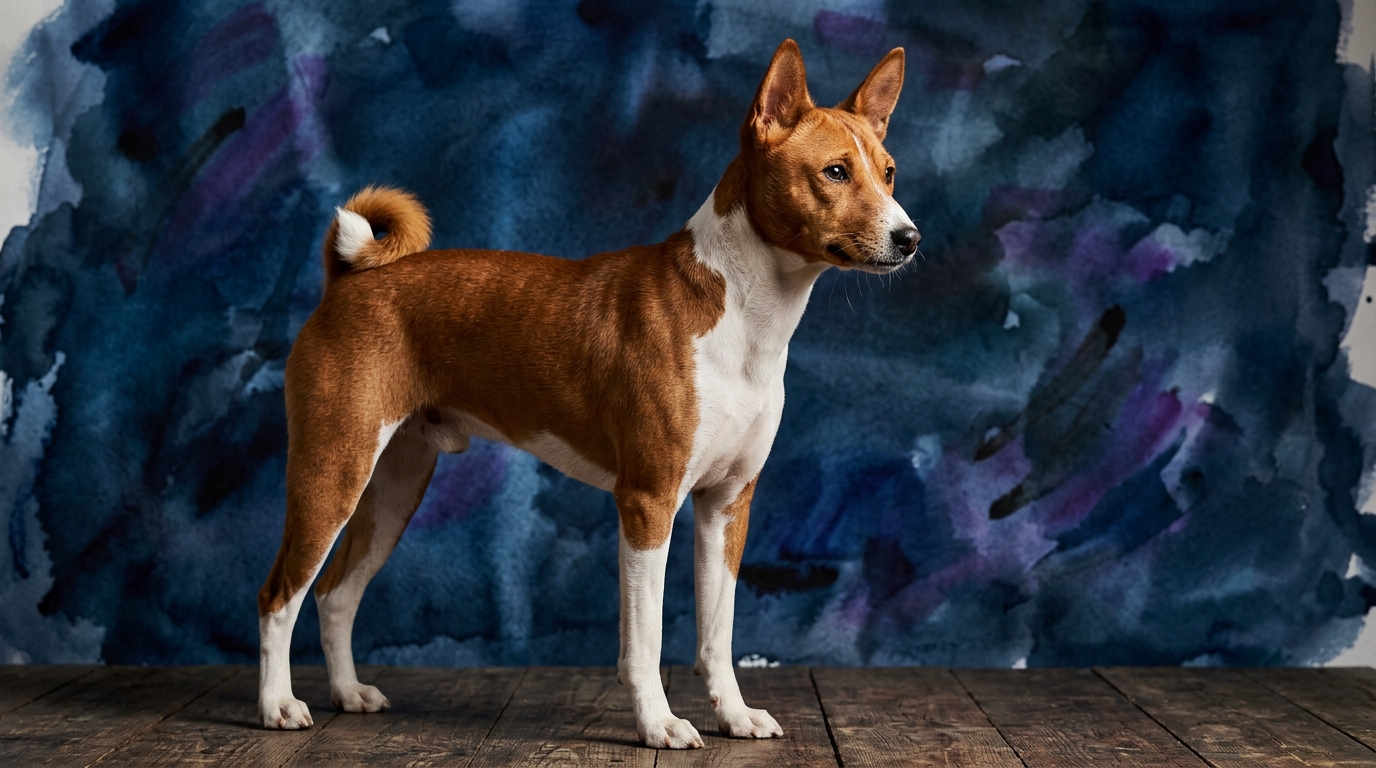
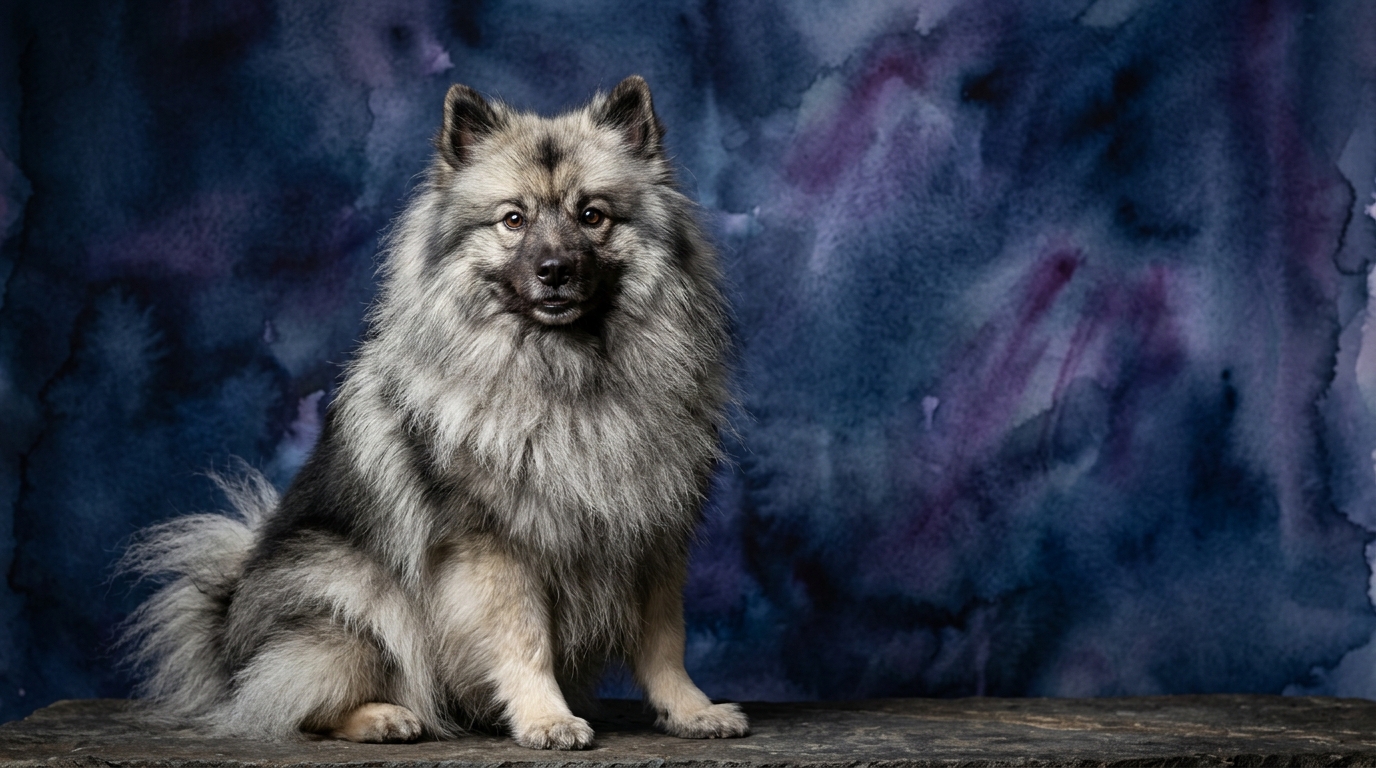
Side-by-side IQ profile: Basenji vs Keeshond Cognitive Blueprint
At The Cosmic Pet Pet IQ Lab, we dissect canine cognition to understand what makes each breed uniquely wired. Comparing the independent Basenji (Coren rank #78) with the amiable Keeshond (Coren rank #16) offers a compelling study in divergent canine minds, revealing how distinct evolutionary pressures shape their intellectual strengths and operational styles.
The Basenji, a true "barkless dog," presents a fascinating cognitive profile. Their Problem Solving is rated a perfect 5/5, indicating an exceptional capacity for independent thought and ingenuity when tackling obstacles. However, their Training Speed registers a challenging 1/5, reflecting their strong self-determination. Social Intelligence sits at 3/5, suggesting a discerning approach to interactions. A commanding 5/5 Instinctive Drive fuels their ancient hunting heritage, while Memory scores a robust 4/5, demonstrating their ability to retain information pertinent to their pursuits.
In contrast, the Keeshond, a captivating "Dutch Barge Dog," offers a different cognitive blueprint. Their Problem Solving is a respectable 4/5, showing competence in navigating new situations. Where they truly shine is in Training Speed, scoring an impressive 4/5, indicative of their willingness and aptitude for learning human-directed tasks. Social Intelligence matches the Basenji at 3/5, pointing to selective but meaningful connections. Their Instinctive Drive is a moderate 3/5, reflecting a balanced prey drive. A perfect 5/5 in Memory underscores their capacity for retaining complex command sequences and routines over time.
These profiles highlight a fundamental divergence: the Basenji excels as an independent, instinct-driven problem-solver, while the Keeshond thrives as an eager, responsive learner with remarkable recall. Their Coren ranks further underscore this, with the Keeshond's #16 placing them among the quickest to learn and obey new commands, in stark contrast to the Basenji’s #78, which signifies a breed that requires considerably more repetition and patience in training.
Where Basenji Cognitively Excels
The Basenji's perfect 5/5 in Problem Solving is not merely theoretical; it's a lived reality for their owners. This score reflects an innate ability to independently assess situations, devise strategies, and execute solutions to achieve their own goals, whether that's figuring out how to open a seemingly secure gate or scaling fences. Their ingenuity is often applied to challenges *they* deem worthy, making them formidable strategists in their own right, rather than simply following human cues.
Complementing this problem-solving prowess is their formidable 5/5 Instinctive Drive. This isn't just about physical energy; it's a deep cognitive preoccupation with their ancestral hound behaviors. Their senses are acutely tuned to the environment, constantly processing scents and movements, which can override learned commands. This drive means they are consistently analyzing their surroundings for opportunities to chase, explore, or investigate, making them highly independent and self-motivated in their pursuits.
Where Keeshond Cognitively Excels
The Keeshond truly shines with its impressive 4/5 Training Speed. This dimension reflects their inherent aptitude for quickly grasping and executing new commands and routines. They possess a genuine desire to engage with their human companions in cooperative learning, which makes positive reinforcement highly effective and yields rapid progress in obedience. This quick uptake means they can build a broad and diverse repertoire of behaviors, from basic manners to complex tricks, with relative ease and enthusiasm.
Moreover, the Keeshond’s perfect 5/5 in Memory is a significant cognitive asset. This superior recall allows them to retain learned information and experiences with remarkable fidelity over extended periods. They can remember intricate command sequences, recall specific individuals and locations, and adhere to established routines without much prompting, making them exceptionally reliable in tasks requiring consistent recall and adherence to previously taught behaviors.
Which is Easier to Train and Why
When it comes to ease of training, the Keeshond holds a distinct advantage, as evidenced by their 4/5 Training Speed and their impressive Coren rank of #16. Their intrinsic motivation to please their owners, combined with their strong memory, means they absorb new commands rapidly and perform them reliably. They thrive on positive reinforcement, seeing training as a collaborative and rewarding interaction, which makes the learning process generally straightforward and enjoyable for both dog and handler.
In stark contrast, the Basenji, with a challenging 1/5 Training Speed and a Coren rank of #78, represents a more demanding training journey. Their independent nature often leads them to question the utility of a command from their perspective, rather than simply complying. While they possess excellent problem-solving skills, these are often directed towards their own agendas. Training a Basenji requires immense patience, creative motivation, and an understanding that compliance is frequently conditional. Their powerful 5/5 Instinctive Drive can easily override learned behaviors, especially when faced with compelling environmental stimuli, making consistent recall a lifelong endeavor.
Which Suits Active Owners vs Relaxed Owners
The Basenji, despite its moderate size, demands owners who are actively engaged in providing both mental and physical stimulation, making them suitable for active, hands-on individuals. Their high Problem Solving (5/5) and Instinctive Drive (5/5) mean they require outlets for their curiosity and hunting instincts, whether through scent work, agility, or complex puzzle toys. A Basenji needs an owner prepared to manage their independent spirit and channel their ingenuity into constructive activities, preventing them from devising their own, potentially destructive, entertainment.
The Keeshond, with its moderate Instinctive Drive (3/5) and strong social inclinations, generally thrives with owners who enjoy consistent companionship and a balanced lifestyle. They are content with regular walks, interactive play sessions, and being an integral part of family activities. While they appreciate mental engagement through training (4/5 Training Speed, 5/5 Memory), their needs are less about constant, self-directed problem-solving and more about consistent social interaction, affection, and being present with their human family. They fit well into homes where a relaxed, yet attentive, approach to pet ownership is valued.
The Verdict
Choose the Basenji if you admire an independent thinker who thrives on mental puzzles and offers a unique, cat-like companionship, provided you are prepared for a consistent, creative training approach.
Opt for the Keeshond if you seek an eager, affectionate companion who excels in obedience and thrives on social interaction, offering a rewarding and relatively straightforward training experience.
🧠 Find Your Pet's IQ Score
Our Pet IQ Lab assessment covers 25+ tests across 5 cognitive dimensions — personalized to your breed.
Take the Full IQ Test →Frequently Asked Questions
Is the Basenji truly untrainable?
No, the Basenji is not untrainable, but their 1/5 training speed score indicates they require significant patience and creative motivation due to their independent nature. They understand commands but often choose whether to comply based on their own assessment of the situation.
What does a Coren rank difference mean for daily life?
A Coren rank difference, like the Basenji's #78 versus the Keeshond's #16, primarily reflects their responsiveness to human direction and their ability to learn simple commands quickly. The Keeshond's higher rank suggests they'll grasp new cues faster and perform them more reliably, while the Basenji will require more repetition and motivation.
How does "instinctive drive" manifest differently in these breeds?
The Basenji's 5/5 instinctive drive translates into a strong urge to hunt, chase, and explore independently, often leading them to follow their nose or eyes over owner commands. The Keeshond's 3/5 drive is more moderate, focused less on prey drive and more on their traditional role as a watchful companion, making them less prone to wandering off.