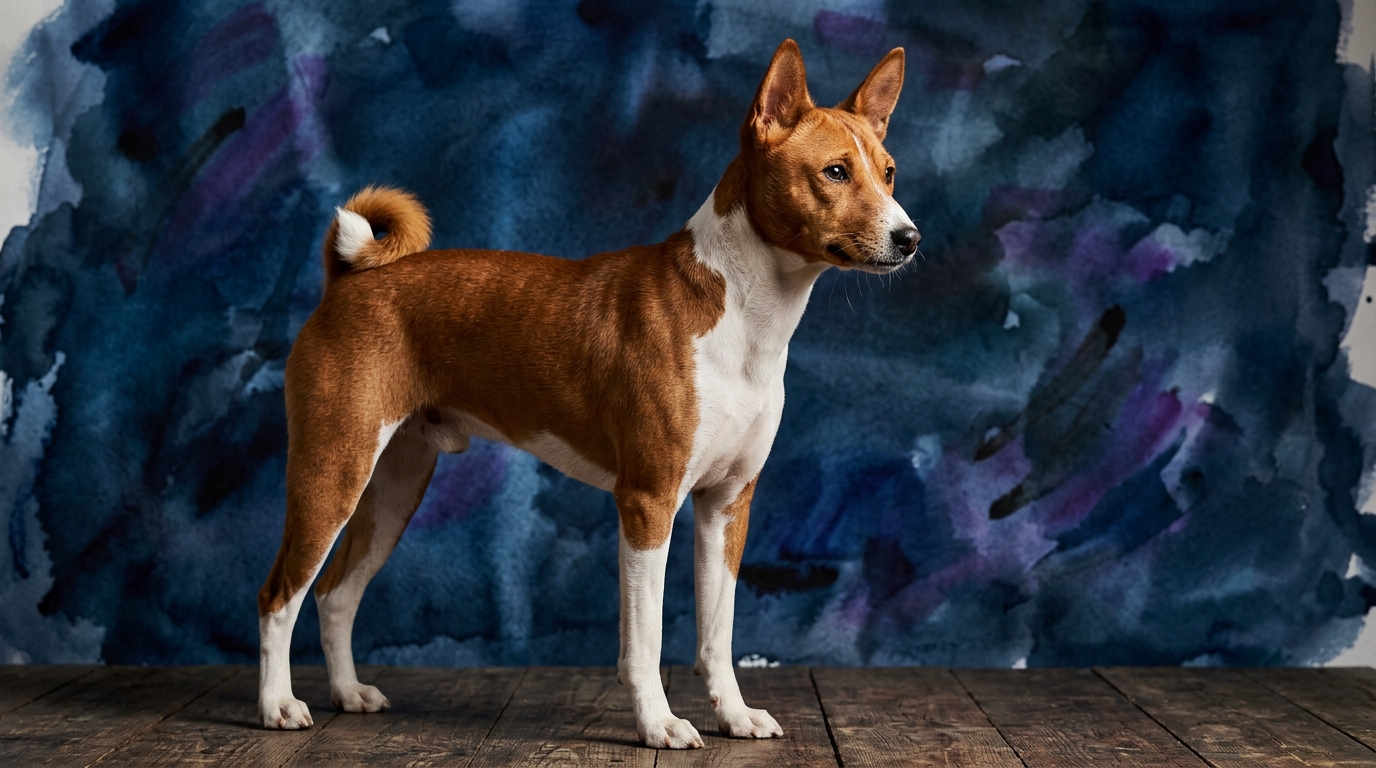
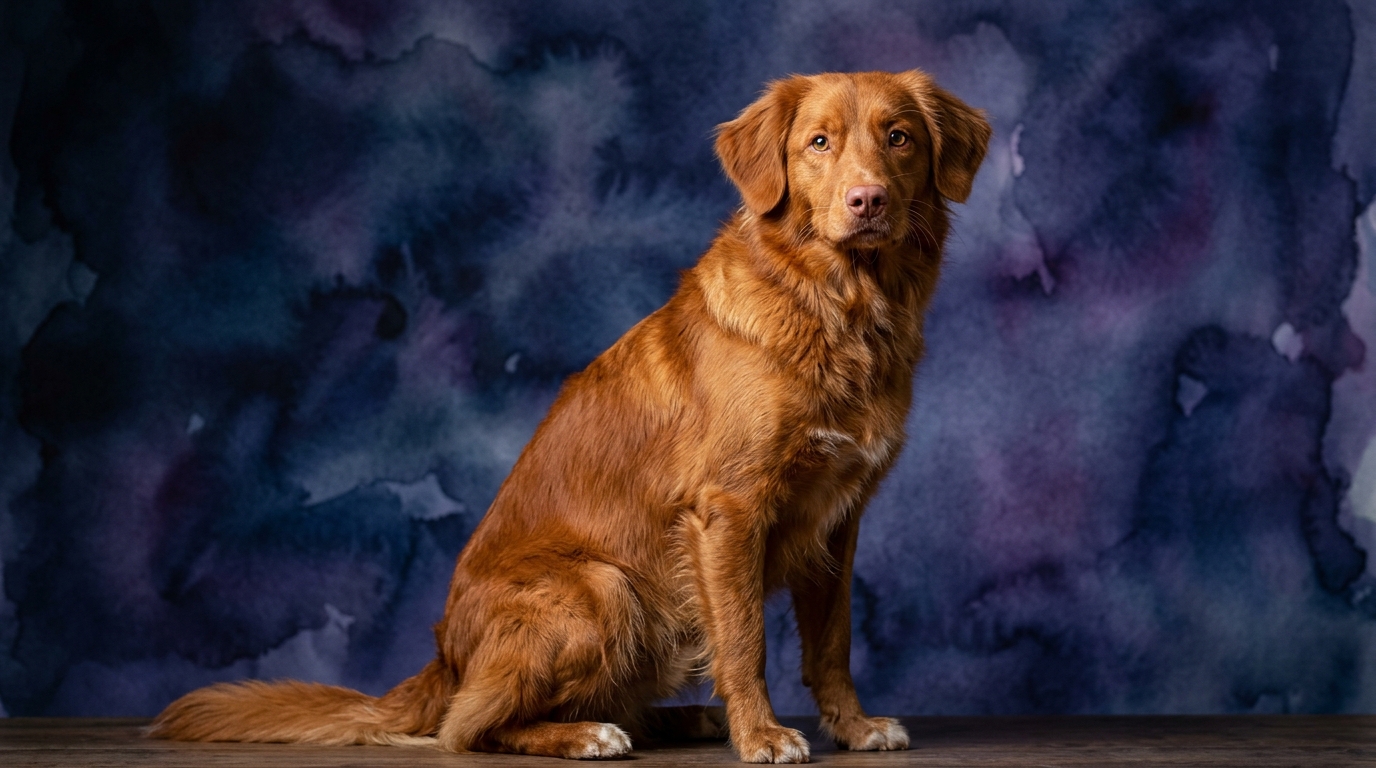
Side-by-Side IQ Profile: Basenji vs. Nova Scotia Duck Tolling Retriever
The Cosmic Pet Pet IQ Lab employs a five-dimensional framework to assess canine cognitive abilities, offering a nuanced understanding beyond simple obedience. Let's delve into how the Basenji and the Nova Scotia Duck Tolling Retriever (Toller) measure up, highlighting their unique mental strengths and challenges.
For the Basenji, a hound originating from Central Africa, their cognitive profile paints a picture of cunning independence. Their Problem Solving is rated an exceptional 5/5, reflecting a profound capacity for devising self-serving solutions to environmental challenges, often without human direction. Training Speed, however, stands at a challenging 1/5, indicating a strong disinterest in repetitive compliance. Social Intelligence is a moderate 3/5, suggesting they understand social cues but often maintain a reserved demeanor. Their Instinctive Drive is a powerful 5/5, rooted in ancient hunting behaviors and a constant engagement with scent and exploration. Memory is strong at 4/5, allowing them to recall complex sequences and past experiences, both positive and negative.
The Nova Scotia Duck Tolling Retriever, a Canadian sporting dog, presents a more collaborative yet still capable cognitive blueprint. Their Problem Solving registers at 3/5, indicating a good ability to navigate tasks, especially when motivated by a clear goal or human interaction, though not with the same independent ingenuity as a Basenji. Training Speed is a solid 3/5, signifying a reasonable eagerness and responsiveness to learning commands and routines. Social Intelligence mirrors the Basenji at 3/5, meaning they are generally adaptable and form strong family bonds. Their Instinctive Drive is also 3/5, primarily focused on retrieving, swimming, and engaging in purposeful activities. Memory is rated 3/5, providing sufficient recall for learned tasks and routines.
Where the Basenji Excels Cognitively
The Basenji's cognitive prowess shines brightest in two distinct areas. Their Problem Solving, rated 5/5, is a dominant trait that sets them apart. This isn't just about figuring out simple puzzles; it's about an innate, self-directed ingenuity. A Basenji's mind is constantly assessing its environment for opportunities to achieve personal goals, whether that means methodically testing every latch on a gate, scaling a fence using a discarded object, or strategically accessing a forbidden treat. This exceptional ability to innovate and circumvent obstacles, often without human instruction, makes them masters of escape artistry and resourceful mischief.
Furthermore, the Basenji's Instinctive Drive, a powerful 5/5, represents a constant, deep cognitive engagement with their surroundings. Their minds are perpetually processing scents, tracking subtle movements, and identifying potential prey or interesting avenues for exploration. This profound drive is more than a physical urge; it's a mental state of heightened awareness and unwavering focus on their environment, making them incredibly attuned to the world around them and relentless in pursuing a compelling trail or investigating a novel stimulus. This deep-seated cognitive wiring for hunting and exploration profoundly shapes their perception and decision-making.
Where the Nova Scotia Duck Tolling Retriever Excels Cognitively
The Toller's cognitive strengths are found in their capacity for collaborative learning and practical application. Their Training Speed, rated 3/5, is a clear advantage over the Basenji. Tollers possess a natural inclination to work alongside humans, making them significantly more receptive to learning commands and performing tasks on cue. Their minds are wired for cooperation, understanding what humans desire, and finding satisfaction in successful collaboration, which translates to quicker grasp and execution of obedience commands, tricks, or complex retrieving sequences. This willingness to engage in structured learning is a key cognitive difference, reflecting a mindset oriented towards partnership.
While their general problem-solving score is moderate, Tollers demonstrate superior cognitive flexibility for task-oriented learning. Their blend of moderate problem-solving, social intelligence, and instinctive drive creates a dog adept at applying its cognitive abilities to goals set by an owner, particularly in canine sports or working roles. They excel at learning sequences, understanding rules, and adjusting their approach based on feedback, showcasing a practical cognitive adaptability geared towards collaborative performance. This means they can take complex instructions and translate them into effective actions, a skill vital for their traditional retrieving duties.
Which Is Easier to Train and Why
Without question, the Nova Scotia Duck Tolling Retriever is the easier breed to train. Their 3/5 Training Speed, combined with their moderate Social Intelligence and Instinctive Drive, means they are generally eager to please and respond remarkably well to positive reinforcement. Tollers possess a natural inclination to work alongside humans, making them inherently more receptive to learning commands and routines. They find satisfaction in successful collaboration and can direct their attention more readily towards an owner's instructions, making the training process a rewarding partnership.
Conversely, the Basenji presents a significant challenge in traditional training scenarios, reflected by their 1/5 Training Speed. Their profound Problem Solving (5/5) means they are constantly evaluating situations for their own benefit, not necessarily seeking to obey. Basenjis often perceive commands as suggestions and find repetitive training tedious, preferring to engage their powerful instinctive drive (5/5) in self-directed activities like scent tracking or independent exploration. Training a Basenji demands immense patience, creativity, and finding motivators that appeal to their self-serving cleverness, rather than relying on conventional obedience methods. Their strong memory (4/5) also means they quickly recall negative training experiences or previous attempts to outsmart their handler.
Which Suits Active Owners vs. Relaxed Owners
Both breeds demand active engagement, but their needs diverge significantly in nature. For active owners, the Basenji suits those who appreciate a mental challenge and are prepared for a dog with a strong independent streak. Their high instinctive drive (5/5) and problem-solving skills mean they require extensive mental stimulation through puzzle toys, scent work, and varied exploration. Physical activity is important to burn off energy, but consistent mental engagement is crucial to prevent boredom-induced mischief. Owners must be proactive in managing their environment to prevent escapes or destructive behaviors stemming from their ingenuity.
The Nova Scotia Duck Tolling Retriever is an ideal match for active owners who enjoy structured activities and seek a collaborative partner. Their moderate instinctive drive (3/5) is best channeled into retrieving, swimming, and canine sports like agility or dock diving. They thrive on having a 'job' to do and genuinely enjoy engaging with their owners in vigorous, purposeful activities. Tollers are excellent companions for hiking, running, or any outdoor adventure where they can work alongside their human. Neither breed is suitable for truly relaxed owners seeking a low-maintenance companion, as both require consistent physical and mental outlets to prevent boredom and potential behavioral issues.
The Verdict
Choose the Basenji if you are an experienced owner who cherishes a dog's independent thought, possesses a deep understanding of hound instincts, and is prepared for a lifelong puzzle of creative management and unconventional training.
Choose the Nova Scotia Duck Tolling Retriever if you seek a collaborative, energetic partner for outdoor adventures and canine sports, value a dog that enjoys learning and working alongside you, and can provide consistent mental and physical engagement.
🧠 Find Your Pet's IQ Score
Our Pet IQ Lab assessment covers 25+ tests across 5 cognitive dimensions — personalized to your breed.
Take the Full IQ Test →Frequently Asked Questions
Are Basenjis difficult to live with due to their intelligence?
Basenjis possess exceptional problem-solving abilities and a strong independent streak, which can make them challenging for owners who expect traditional obedience. Their intelligence often manifests as clever ways to get what they want, requiring owners to be equally clever in management and training to ensure a harmonious home.
Do Nova Scotia Duck Tolling Retrievers require a lot of mental stimulation?
While not as independently cunning as a Basenji, Tollers still require significant mental stimulation to thrive. They benefit from puzzle toys, consistent training sessions, and activities that engage their natural retrieving instincts, keeping their minds active and preventing boredom and potential destructive behaviors.
Can a Basenji and a Toller get along in the same household?
Yes, with proper introductions and management, a Basenji and a Toller can coexist. Their distinct play styles and communication might require careful supervision initially, but both breeds can form strong bonds with other dogs when properly socialized and given adequate individual attention and exercise.