Side-by-Side IQ Profile: Basenji vs. Scottish Terrier
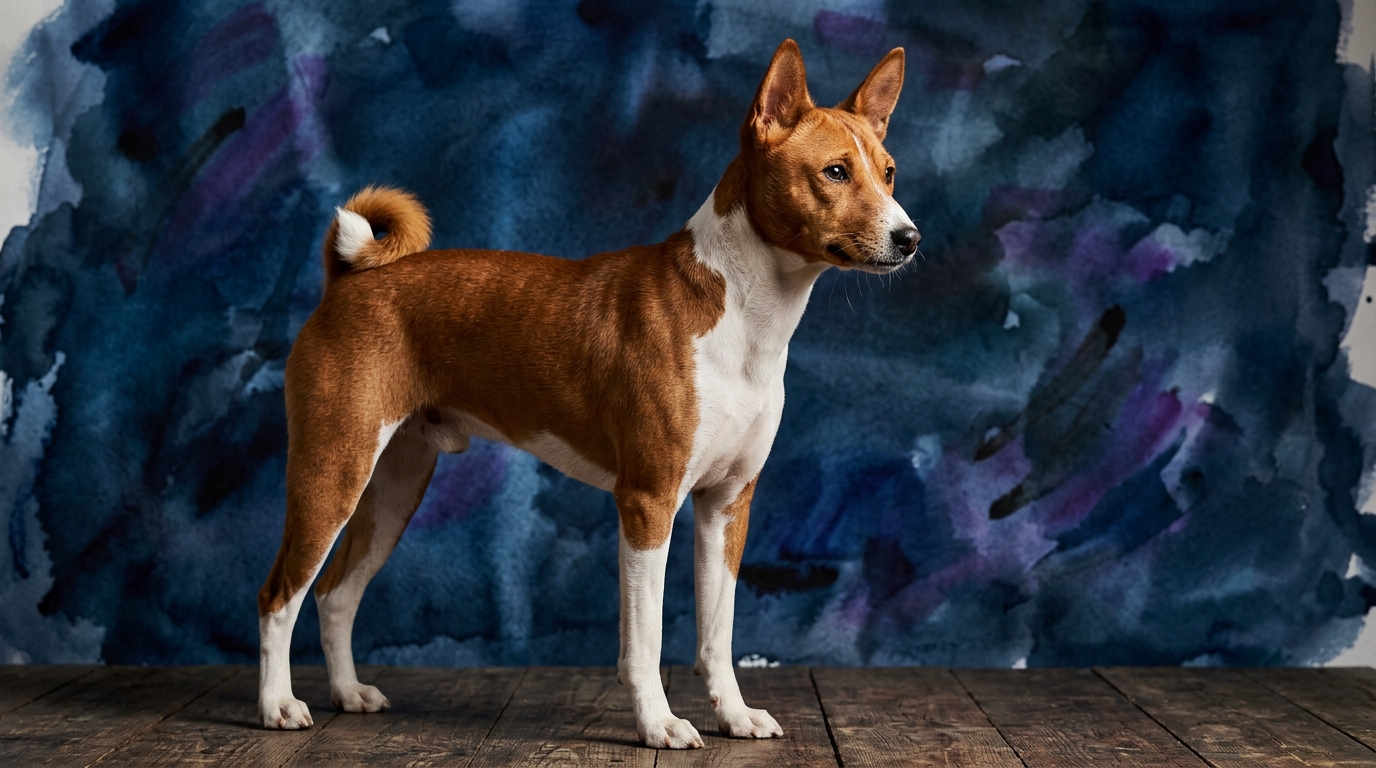
The Cosmic Pet Pet IQ Lab employs a five-dimensional framework to assess canine cognition, providing a nuanced understanding beyond simple obedience. For the Basenji, an ancient sighthound originating from central Africa, we observe a Coren rank of 78, placing them in the category of fair working intelligence. Their cognitive profile is marked by exceptional Problem Solving (5/5) and Instinctive Drive (5/5), indicating a profound capacity for independent thought and strong innate behaviors. However, their Training Speed is notably low (1/5), suggesting a significant challenge in traditional obedience. Social Intelligence sits at a moderate 3/5, implying they can form bonds but might not always prioritize human directives, complemented by a strong Memory (4/5) which aids complex learning over time.
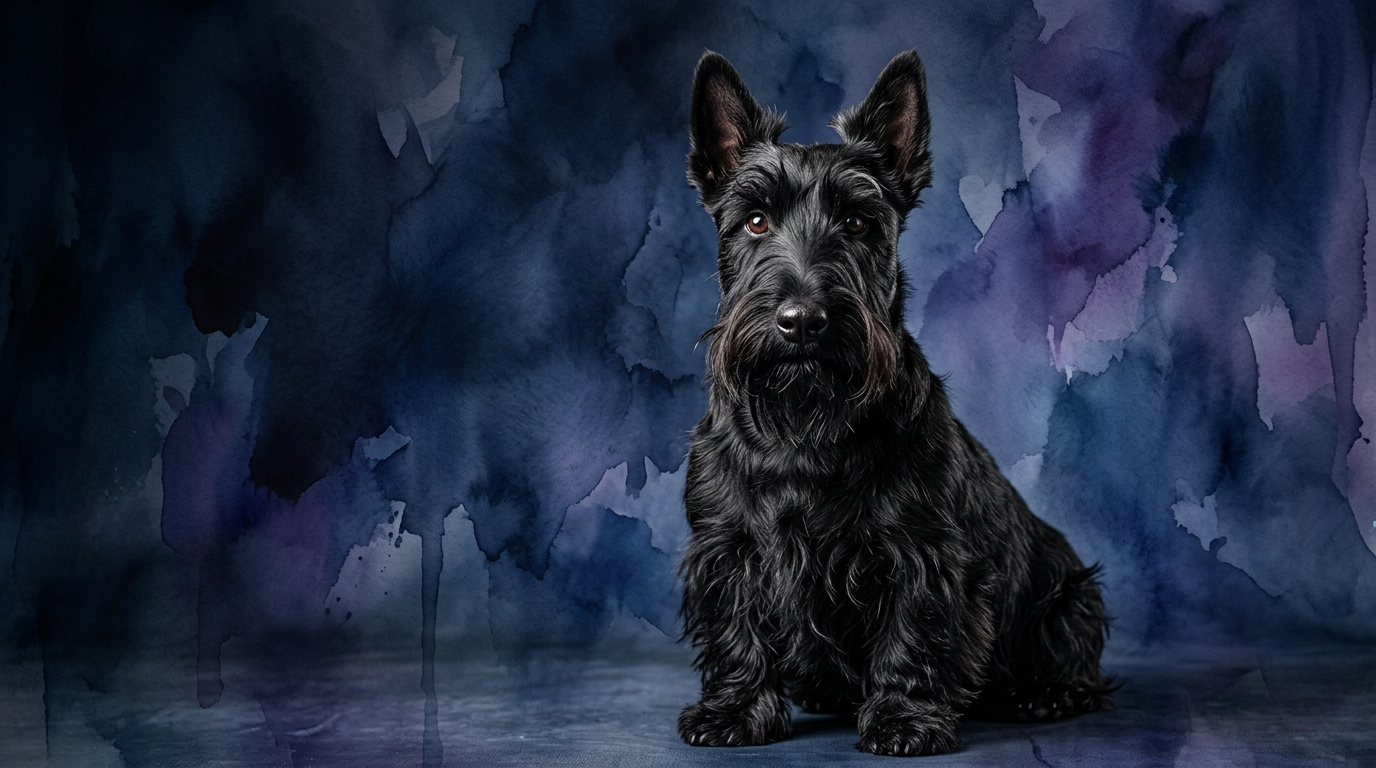
In contrast, the Scottish Terrier, a robust earthdog bred for tenacity, holds a Coren rank of 65, indicating a slightly higher working intelligence in the traditional sense. Their IQ profile is more balanced across the board: Problem Solving (3/5) shows a respectable ability to navigate challenges, while Training Speed (3/5) indicates a willingness to learn commands at a moderate pace. Social Intelligence (3/5) mirrors the Basenji's, suggesting a capacity for connection without extreme dependency. Instinctive Drive (3/5) is present but more focused than the Basenji's, and Memory (3/5) is solid, allowing for consistent retention of learned behaviors. This balance paints a picture of a capable, if sometimes stubborn, companion.
Analyzing these profiles side-by-side immediately highlights distinct cognitive philosophies. The Basenji's high Problem Solving and Instinctive Drive, paired with low Training Speed, suggest a breed that excels at independent action and complex environmental navigation, but not necessarily at immediate human compliance. They are self-thinkers, adept at figuring things out on their own terms. The Scottish Terrier, with its more even scores, presents a dog that is more amenable to partnership, capable of learning and adapting within a structured human environment, while still retaining a terrier's characteristic determination.
Where the Basenji Excels Cognitively
The Basenji's cognitive strengths are profoundly rooted in their ancestral role as self-sufficient hunters, reflected in their maximum Problem Solving score of 5/5. These dogs possess an innate ability to independently assess situations, devise strategies, and execute solutions without direct human instruction. This manifests in behaviors such as figuring out how to open gates, escape enclosures, or retrieve inaccessible items through complex sequences of actions. Their mental agility allows them to adapt quickly to novel environments and challenges, often outsmarting conventional containment methods.
Coupled with their exceptional Problem Solving is an equally high Instinctive Drive (5/5). This isn't just about a strong prey drive, but a deep-seated motivation to engage with their environment through scent, sight, and exploration. A Basenji's cognitive processes are constantly active, scanning for stimuli, processing information, and formulating responses based on their primal instincts. This drive fuels their independent problem-solving, making them relentless in pursuing an objective, whether it's a squirrel in the yard or a puzzle toy that needs to be dismantled.
Furthermore, the Basenji's strong Memory (4/5) supports their complex problem-solving and instinctive behaviors. While their training speed is low, indicating a reluctance to perform on command, their memory allows them to retain intricate sequences of events, spatial layouts, and learned associations over long periods. This means they remember exactly how they outwitted a particular barrier last week, or the precise location of a hidden treat, contributing to their reputation as resourceful and often cunning individuals. Their cognitive architecture is built for autonomous action and environmental mastery.
Where the Scottish Terrier Excels Cognitively
The Scottish Terrier's cognitive advantages stem from their history as working terriers, where tenacity and a degree of cooperation were essential. Their balanced Training Speed (3/5) and Social Intelligence (3/5) are key strengths. Unlike the Basenji's more autonomous approach, a Scottie demonstrates a greater willingness to engage in structured learning and respond to human cues. This means they are more receptive to commands and can form associations between actions and consequences with moderate effort, making them more predictable and manageable in a domestic setting.
Their moderate Problem Solving (3/5) is expressed through practical intelligence, focused on achieving specific goals rather than broad exploration. A Scottish Terrier might not devise elaborate escape plans, but they will persistently work at digging under a fence to pursue a scent or figure out how to manipulate a toy to get a treat. This problem-solving is often driven by their instinctive terrier nature, but it's channeled in a way that allows for human intervention and guidance more readily than the Basenji's unbridled curiosity.
The Scottish Terrier's balanced Instinctive Drive (3/5) and Memory (3/5) also contribute to their cognitive strengths in a domestic context. Their drive is sufficient to motivate them for tasks and play, but not so overwhelming that it constantly overrides human direction. They remember routines, learned commands, and social interactions consistently, which fosters a more harmonious co-existence. This combination allows them to be reliable companions who can learn and retain a repertoire of behaviors, making them adaptable to various household dynamics and expectations.
Training: Basenji's Independence vs. Scottish Terrier's Tenacity
When it comes to training, the Basenji (Training Speed 1/5) and Scottish Terrier (Training Speed 3/5) present vastly different experiences. The Basenji's low training speed is not an indicator of inability to learn, but rather a reflection of their profound independence and lack of inherent desire to please. They learn quickly what benefits them and often choose to ignore commands that don't align with their immediate interests. Training a Basenji requires immense patience, creativity, and a deep understanding of their motivations. Traditional obedience methods focused on repetition and compliance often prove frustrating, as the Basenji will frequently assess if a command is worth their effort or if they can find a more engaging alternative.
For instance, a Basenji might learn 'sit' but will only perform it if a high-value treat is presented, or if they perceive it as a step towards something they genuinely desire. Their high Problem Solving means they can outmaneuver an inexperienced trainer, quickly learning to ignore cues or find loopholes in training setups. Real behavioral differences include their tendency to 'selective hearing' when off-leash, their skill at counter-surfing, and their general disinterest in repetitive drills. Owners must embrace positive reinforcement, make training a game, and understand that consistency and making it rewarding from the Basenji's perspective are paramount.
The Scottish Terrier, while possessing the characteristic terrier determination, offers a more amenable training experience due to their moderate Training Speed (3/5). They are generally more willing to engage with their owners and find satisfaction in cooperative tasks. While they can be stubborn, especially when their terrier instincts kick in, they are far more receptive to consistent instruction and positive reinforcement. They learn commands at a reasonable pace and are more likely to perform them reliably once understood, especially if they see a clear benefit or enjoy the interaction.
A Scottish Terrier might dig relentlessly in the yard, driven by instinct, but they can also be trained to 'leave it' or redirect their energy to appropriate digging spots with consistent effort. Their moderate Social Intelligence means they value the partnership with their human more directly than a Basenji. Training a Scottie involves firm but fair leadership, clear expectations, and leveraging their desire for routine and companionship. While they won't be as effortlessly compliant as some retriever breeds, their trainability is significantly higher than the Basenji's, making them a more straightforward prospect for general obedience.
Matching Breeds to Lifestyles: Active Explorers vs. Steadfast Companions
The Basenji, with its high Problem Solving (5/5) and Instinctive Drive (5/5), is an ideal match for active owners who relish exploration, mental engagement, and a dog with an independent spirit. These are not dogs content to be couch potatoes; they thrive on activities that challenge their intellect and satisfy their deep-seated urges to hunt, track, and explore. Owners who enjoy hiking, running, or engaging in scent work, lure coursing, or agility will find a Basenji a willing, albeit self-directed, partner. Their need for physical and mental stimulation is constant, and without adequate outlets, their problem-solving skills might be directed towards destructive or mischievous endeavors within the home.
This breed suits owners who appreciate a companion that thinks for itself and doesn't demand constant validation or instruction. They require a secure environment, as their high drive and problem-solving can lead to escapes if boundaries are not robust. An active owner for a Basenji is someone who understands that 'active' means not just physical exercise but also providing complex puzzle toys, rotating enrichment, and engaging in brain games that tap into their natural curiosity and ingenuity. They are best for experienced dog owners who are prepared for a consistent, creative approach to management and training, and who can appreciate a dog's unique, often cat-like, personality.
Conversely, the Scottish Terrier, with its more balanced IQ profile, fits well with owners seeking a steadfast companion who appreciates routine and enjoys a moderate level of activity. While they possess a terrier's zest for life and require daily walks and playtime, their Instinctive Drive (3/5) and Problem Solving (3/5) are more manageable. They are less likely to embark on elaborate escape missions or tirelessly seek out complex mental challenges compared to a Basenji. A Scottish Terrier is comfortable with a predictable schedule and finds comfort in the presence of their human family.
This breed is suitable for owners who prefer a dog that enjoys being part of the family's daily rhythm, whether that's a stroll around the neighborhood, playtime in a securely fenced yard, or quiet evenings at home. They can adapt to various living situations, including apartments, provided their exercise needs are met. Relaxed owners, or those new to dog ownership, might find the Scottie's moderate energy and more cooperative nature a better fit than the Basenji's intense independence. They offer loyalty and companionship without the constant demand for complex mental stimulation that a Basenji typically requires, making them excellent choices for those seeking a devoted, yet spirited, friend.
The Verdict
Choose the Basenji if you are an experienced, active owner who appreciates an independent, highly intelligent problem-solver and can provide consistent, creative mental and physical challenges.
Opt for the Scottish Terrier if you seek a loyal, moderately active companion who is more amenable to training and enjoys a predictable routine with their human family.
🧠 Find Your Pet's IQ Score
Our Pet IQ Lab assessment covers 25+ tests across 5 cognitive dimensions — personalized to your breed.
Take the Full IQ Test →Frequently Asked Questions
Is a Basenji difficult to train?
Yes, Basenjis are generally considered challenging to train in traditional obedience due to their low Training Speed (1/5) and strong independent nature. They require immense patience, positive reinforcement, and a creative approach, as they respond best when training is made into a game that benefits them directly.
Are Scottish Terriers good family dogs?
Scottish Terriers can be excellent family dogs, especially with proper socialization and consistent training from a young age. Their moderate Social Intelligence (3/5) means they form strong bonds with their family but may be reserved with strangers, offering a loyal and protective presence in the home.
Which breed requires more exercise?
While both breeds benefit from regular activity, the Basenji, with its high Instinctive Drive (5/5) and Problem Solving (5/5), typically requires more intense and varied physical and mental exercise. The Scottish Terrier's moderate drives mean they are content with daily walks and playtime, rather than the Basenji's need for extensive exploration and problem-solving activities.