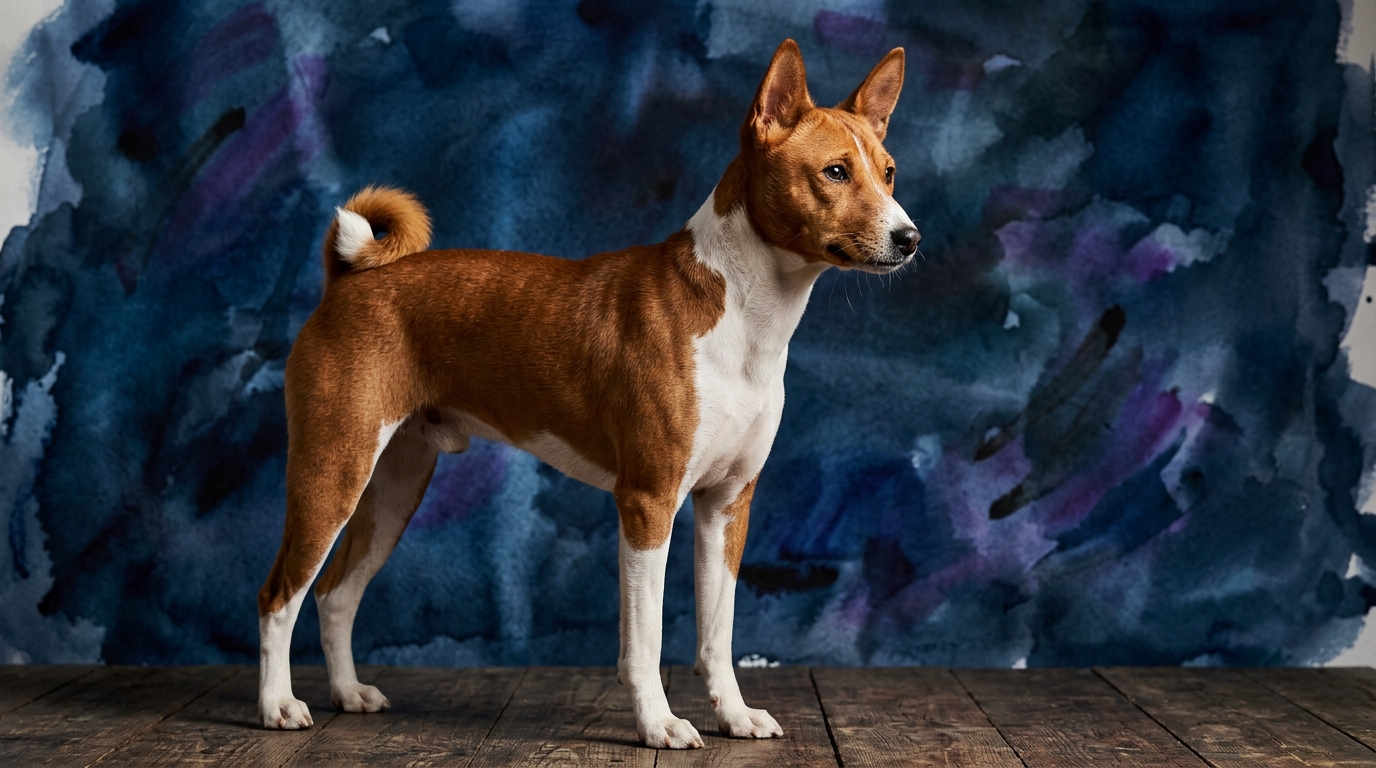
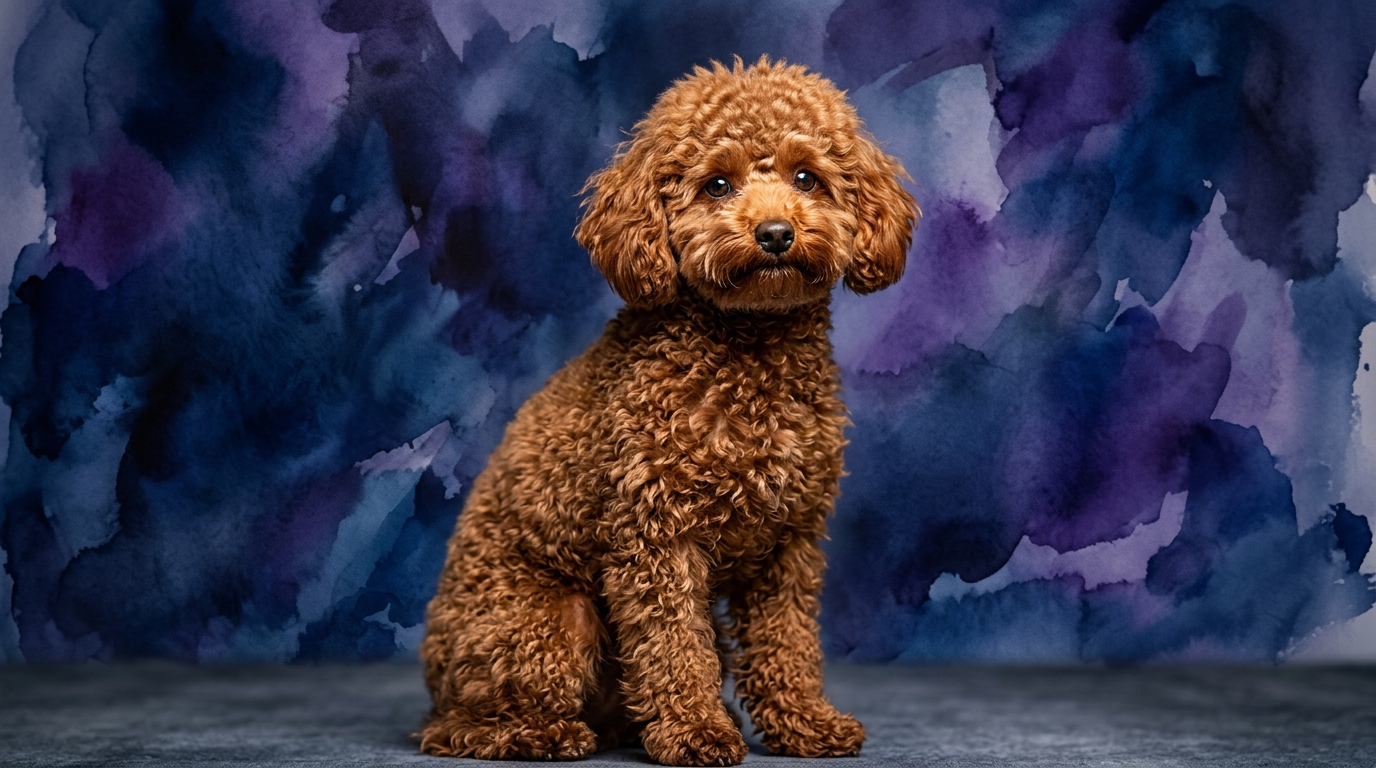
Side-by-Side IQ Profile: Basenji vs. Toy Poodle
The Cosmic Pet Pet IQ Lab categorizes canine intelligence across five key dimensions, offering a nuanced view beyond simple obedience. For the Basenji, an ancient hound, their profile shows Problem Solving at 5/5, Training Speed at a challenging 1/5, Social Intelligence at 3/5, Instinctive Drive at a powerful 5/5, and Memory at 4/5. This paints a picture of a resourceful, self-reliant thinker.
In contrast, the Toy Poodle, a beloved companion breed, boasts a Problem Solving score of 5/5, an impressive Training Speed of 5/5, Social Intelligence at 3/5, Instinctive Drive at 3/5, and a perfect Memory score of 5/5. This profile suggests a highly adaptable, quick-learning, and retentive mind, adept at understanding and performing human-directed tasks.
Where the Basenji Wins Cognitively
The Basenji's cognitive strengths truly shine in their autonomous problem-solving and profound instinctive drive. With a perfect 5/5 in both Problem Solving and Instinctive Drive, these dogs are masters at figuring things out independently, especially when their innate drives are engaged. This isn't about following human instruction, but about an intrinsic, self-directed cognitive process that allows them to thrive in environments demanding independence and resourcefulness.
Their problem-solving manifests as a remarkable ability to navigate complex situations, whether it's outwitting a fence or devising a strategy to reach a forbidden treat. This cognitive style is deeply rooted in their historical role as hunters who needed to make rapid, effective decisions without human guidance, showcasing a capacity for independent thought often misconstrued as stubbornness.
Where the Toy Poodle Wins Cognitively
The Toy Poodle's cognitive superiority is evident in their exceptional capacity for directed learning and information retention. Scoring a perfect 5/5 in both Training Speed and Memory, they absorb and recall new commands, tricks, and complex routines with remarkable efficiency. This makes them incredibly responsive to training and highly adaptable to new learning situations.
Their outstanding memory allows them to build vast repertoires of behaviors and cues, making them stars in performance sports like obedience and agility. This aptitude for understanding and executing intricate sequences demonstrates a deep comprehension of human communication and expectations, highlighting a cognitive framework geared towards cooperative learning and performance.
Which is Easier to Train and Why
There's a significant divergence in trainability between these two breeds, with the Toy Poodle being demonstrably easier to train. The Basenji's 1/5 training speed score reflects their ancient heritage as independent hunters; they are wired to make their own decisions rather than slavishly follow human directives. Their problem-solving prowess, while high, is often applied to circumventing rules or finding personal advantage, making consistent obedience a long-term, patient endeavor.
Conversely, the Toy Poodle's 5/5 training speed and eagerness to engage with their human partners means they pick up cues rapidly and find satisfaction in successful task completion. Their Social Intelligence (3/5) often translates into a desire to please and cooperate, making them highly responsive to positive reinforcement methods and structured learning environments. They thrive on mental stimulation through training, viewing it as an engaging activity rather than an imposition.
Which Suits Active Owners vs. Relaxed Owners
Neither breed truly fits the 'relaxed owner' profile in the sense of minimal engagement, but their activity needs differ significantly. Basenjis, with their 5/5 instinctive drive and high problem-solving capacity, require active owners who can channel their boundless energy and independent spirit into constructive outlets. This means engaging in activities like scent work, lure coursing, or extensive, varied walks that stimulate their minds and bodies, as boredom in a Basenji often leads to destructive or escape-artist behaviors.
Toy Poodles, while appearing delicate, are far from couch potatoes. Their cognitive agility and moderate instinctive drive (3/5, often for play and interaction) mean they thrive with owners who provide consistent mental stimulation through training, puzzle toys, and interactive games. They are adaptable to various activity levels but require owners who are prepared to engage their sharp minds daily, making them suitable for active owners who enjoy structured activities like dog sports, but also adaptable to a more 'relaxed' owner who is dedicated to daily training sessions and mental enrichment.
The Verdict
Choose a Basenji if you are an experienced, patient owner who values an independent spirit, enjoys outdoor adventures, and is prepared for a cognitive challenge rather than strict obedience.
Opt for a Toy Poodle if you seek a highly trainable, engaged companion who enjoys learning, thrives on interaction, and excels in structured activities like dog sports or trick training.
🧠 Find Your Pet's IQ Score
Our Pet IQ Lab assessment covers 25+ tests across 5 cognitive dimensions — personalized to your breed.
Take the Full IQ Test →Frequently Asked Questions
Are Basenjis difficult to live with due to their independence?
Basenjis can present challenges due to their strong independence and high instinctive drive. Their problem-solving skills are often applied to mischievous pursuits, requiring consistent management, creative enrichment, and secure environments to prevent boredom and unwanted behaviors like escaping or counter-surfing.
Can Toy Poodles truly perform complex tasks?
Absolutely. Toy Poodles, with their 5/5 training speed and memory, are perfectly capable of learning and executing complex tasks and multi-step commands. They excel in dog sports like obedience, agility, and even advanced trick training, demonstrating impressive cognitive flexibility and retention.
Does a high Coren rank automatically mean a dog is 'smarter'?
Coren rank primarily measures obedience and working intelligence, which heavily relies on training speed and responsiveness to human command. While a high rank like the Toy Poodle's (#2) indicates exceptional trainability and a desire to please, a lower rank like the Basenji's (#78) doesn't imply a lack of cognitive capacity, but rather a different kind of intelligence, often more independent and instinct-driven.