
Side-by-Side Cognitive Profiles: Scent vs. Companion
The Basset Hound, a distinguished member of the Hound group with a Coren ranking of #71, exhibits a consistent 3/5 across all five cognitive dimensions: problem Solving, training Speed, social Intelligence, instinctive Drive, and memory. For the Basset, problem Solving often manifests as relentless persistence in tracking a scent, using its powerful nose to navigate complex environments and unravel olfactory puzzles. Its training Speed, while moderate, can be influenced by its independent nature and singular focus on scent, meaning lessons might stick but compliance requires motivation. Social Intelligence for a Basset typically involves a calm, amiable demeanor within its human 'pack,' though its primary 'conversations' might be with the ground. Its instinctive Drive is overwhelmingly geared towards scenting and trailing, a deeply ingrained behavioral pattern. Finally, its memory is particularly adept at recalling scent trails and learned routines that align with its drive.
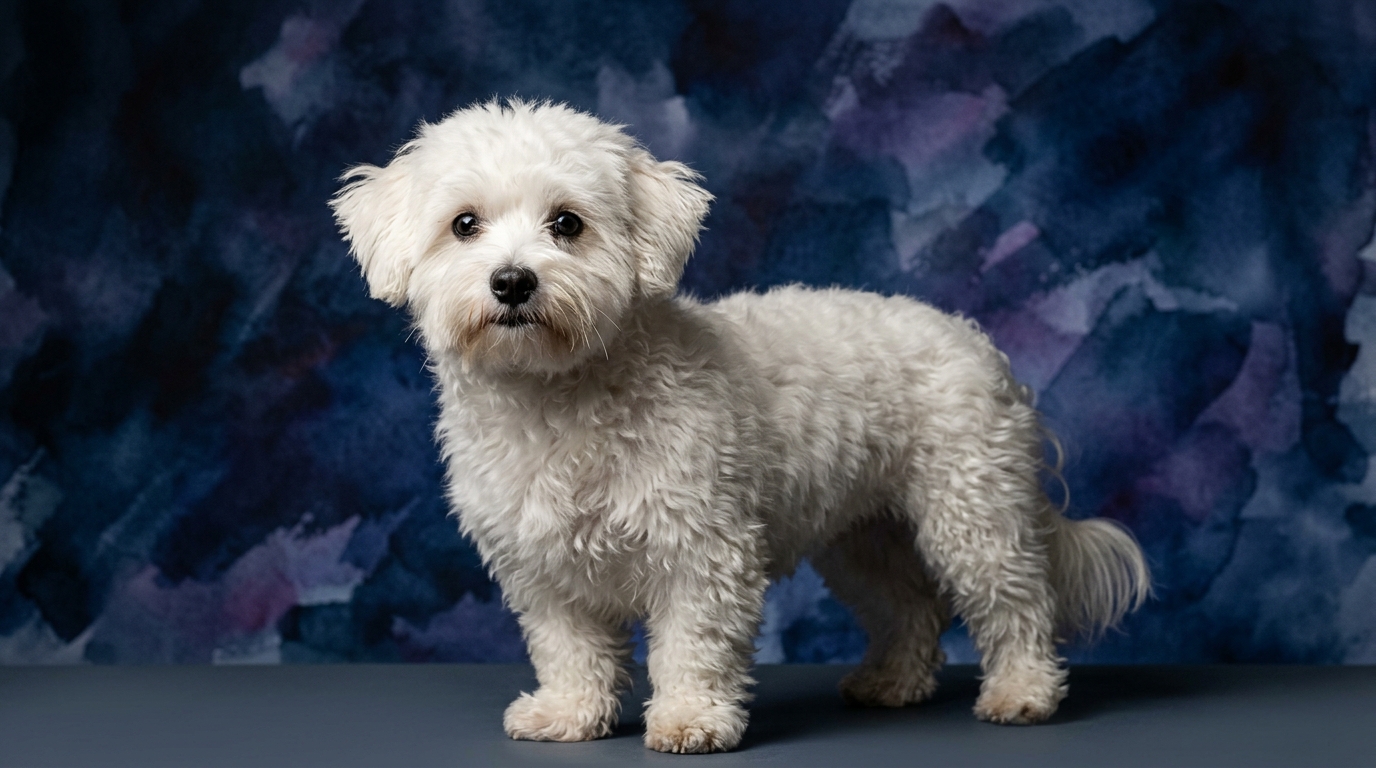
The Coton de Tuléar, a delightful Non-Sporting breed not listed on Coren's ranking, also scores 3/5 across the board for problem Solving, training Speed, social Intelligence, instinctive Drive, and memory. For the Coton, problem Solving often involves navigating household dynamics, figuring out how to gain attention or access to a favorite toy, or adapting to new social situations with cleverness. Its training Speed is moderate, but often bolstered by a strong desire to please its human companions, making it responsive to positive reinforcement and engagement. Social Intelligence is a hallmark of the Coton, as they are highly attuned to human emotions and seek close interaction, thriving as integral family members. Its instinctive Drive is primarily for companionship, play, and perhaps a mild protective instinct for its family. The Coton's memory is generally good for routines, faces, and learned commands, which supports its role as an adaptable house dog.
Where the Basset Hound Excels Cognitively
The Basset Hound's cognitive strengths are profoundly rooted in its ancestral purpose: scent work. While its problem Solving is rated 3/5, this score shines brightest when applied to olfactory challenges. A Basset can meticulously follow a faint scent trail for miles, demonstrating an unparalleled ability to process complex scent information and maintain focus on a singular objective for extended periods. This isn't just about nose power; it's about the cognitive mapping of scents, differentiating between layers of odors, and using memory to reconstruct a path. Their instinctive Drive, also 3/5, is a concentrated force in this domain, allowing them to block out distractions that would overwhelm other breeds, showcasing a specialized form of cognitive resilience in their element. For tasks requiring sustained, independent sensory analysis, the Basset Hound stands out, demonstrating a unique form of 'intelligence' that prioritizes instinctual tracking over abstract reasoning or human-centric problem-solving.
Where the Coton de Tuléar Excels Cognitively
The Coton de Tuléar, with its 3/5 scores across the board, truly excels in the realm of social and adaptive intelligence, particularly within a domestic setting. Its social Intelligence, rated 3/5, translates into a keen ability to read human cues and adapt its behavior to fit various family dynamics, making it an exceptionally harmonious companion. This breed often demonstrates a cleverness in problem Solving (3/5) that involves understanding human routines and anticipating events, such as knowing when a walk is imminent or how to solicit attention. Their moderate training Speed is often enhanced by their strong desire for interaction and positive reinforcement, suggesting a cognitive profile that thrives on partnership and connection. The Coton's memory (3/5) is particularly adept at recalling social interactions and the preferences of its human family, which contributes to its remarkable adaptability and ability to integrate smoothly into diverse lifestyles. They demonstrate a capacity for emotional intelligence, intuiting moods and responding with comforting presence or playful antics, a cognitive strength distinct from the Basset's sensory focus.
Training Dynamics: Independence vs. Eagerness to Please
When considering ease of training, the nuanced behavioral differences between the Basset Hound and the Coton de Tuléar become apparent, even with identical 3/5 training Speed scores. The Basset Hound's inherent independence and powerful instinctive Drive for scenting can make training a patient endeavor. When a Basset's nose is engaged, its attention to human commands can wane significantly; they are not inherently motivated by constant human approval in the same way many companion breeds are. Training a Basset often requires understanding their drive and incorporating it, perhaps using scent games as rewards or making commands more compelling than a captivating odor. Their moderate memory is excellent for patterns, but their stubborn streak means consistency and high-value rewards are essential to overcome their self-directed focus.
The Coton de Tuléar, on the other hand, often presents as easier to train for typical obedience. Their social Intelligence (3/5) and desire for companionship mean they are generally more eager to engage with their human trainers and respond positively to praise and treats. While their training Speed is also 3/5, their motivation to please and integrate into the family structure often makes the process feel more cooperative. They are less likely to be distracted by external stimuli in the same intense way a Basset is by a scent. Their good memory for routines and commands, coupled with their inherent biddability, helps them pick up new behaviors and retain them, making them generally more responsive to traditional obedience methods and less prone to selective hearing.
Lifestyle Suitability: Active Engagement vs. Relaxed Companionship
The cognitive profiles of these two breeds naturally align with different owner lifestyles. The Basset Hound, despite its often-perceived lazy demeanor, thrives with owners who appreciate and can channel its powerful instinctive Drive. 'Active' for a Basset doesn't necessarily mean high-impact running, but rather engaging in mentally stimulating activities like scent work, tracking games, or long, meandering walks where their nose can explore. Owners who are relaxed about adherence to a strict schedule but enthusiastic about providing opportunities for their Basset to engage its specialized problem Solving skills in the field will find a rewarding companion. They are not suited for owners seeking a constantly attentive, highly responsive dog in all situations; instead, they suit those who value independent thought and a dog's profound connection to its primal instincts.
The Coton de Tuléar is an ideal match for owners seeking a relaxed yet engaging companion deeply integrated into daily life. Their social Intelligence and moderate instinctive Drive for companionship mean they flourish in environments where they receive consistent attention and interaction. While they enjoy play and walks, their cognitive needs are met more by being part of family activities, learning new tricks, or simply being present with their humans. Owners who enjoy a dog that is attentive, adaptable, and eager to participate in domestic life will find the Coton's intelligence perfectly suited. They are excellent for those who appreciate a dog that can read their mood, offer comfort, and engage in reciprocal social interaction, making them a superb choice for a variety of relaxed home settings, including those with less outdoor space.
The Verdict
Choose the Basset Hound if you appreciate a dog with an independent spirit and a profound, specialized cognitive drive for scent, and you are prepared to engage their unique problem-solving abilities through tracking and exploration.
Opt for the Coton de Tuléar if you desire an adaptable, socially intelligent companion that thrives on close human interaction and integrates seamlessly into a family-oriented, relaxed lifestyle.
🧠 Find Your Pet's IQ Score
Our Pet IQ Lab assessment covers 25+ tests across 5 cognitive dimensions — personalized to your breed.
Take the Full IQ Test →Frequently Asked Questions
Do Basset Hounds make good family dogs?
Yes, Basset Hounds are generally amiable and patient, making them suitable for families. Their calm temperament and tolerance with children are often noted, though their independent nature means they might not always be the first to initiate play, preferring to observe or follow a scent.
Are Coton de Tuléars prone to barking?
Coton de Tuléars can be prone to barking, especially if left alone for long periods or if they perceive something unusual. Their alert nature and strong social intelligence mean they communicate readily, which can sometimes manifest as barking to get attention or warn their family.
What kind of mental stimulation does a Basset Hound need?
A Basset Hound requires mental stimulation primarily focused on scent work; think scent games, tracking exercises, or long walks where they are allowed to follow interesting smells. Puzzles that involve sniffing out treats are also highly engaging for their specialized problem-solving skills.