
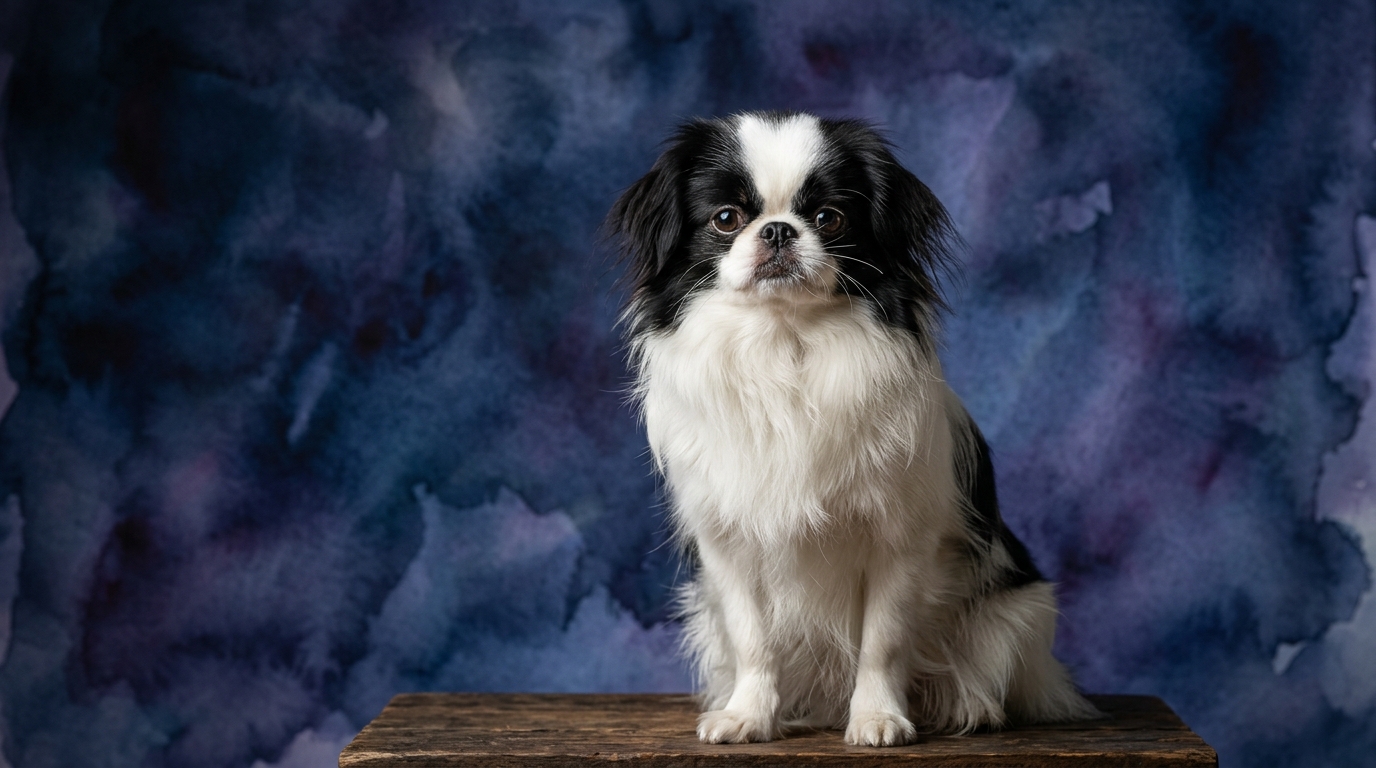
Side-by-Side IQ Profile: Basset Hound vs. Japanese Chin
The Cosmic Pet Pet IQ Lab rates both the Basset Hound and the Japanese Chin with a consistent 3/5 across all five measured cognitive dimensions: Problem Solving, Training Speed, Social Intelligence, Instinctive Drive, and Memory. While these numerical scores are identical, the expression and application of these cognitive abilities are remarkably distinct, reflecting their diverse breed histories and physical attributes.
For the Basset Hound, a 3/5 in Problem Solving reflects a methodical, scent-driven approach. Their problem-solving often revolves around navigating complex scent trails or locating hidden objects, utilizing their extraordinary nose rather than abstract visual reasoning. They excel at persistent, focused tasks once a scent is engaged, often finding solutions that are slow but incredibly thorough, driven by an inherent desire to follow a trail to its conclusion. Conversely, the Japanese Chin’s 3/5 in Problem Solving manifests as cleverness within a domestic setting. They might figure out how to access a forbidden treat, manipulate a toy to achieve a desired outcome, or even subtly 'train' their owners through nuanced cues. Their problem-solving is less about physical endurance or tracking and more about social navigation or optimizing their immediate environment for comfort and attention, often learning by observation and finding creative, sometimes mischievous, solutions to their desires.
Training Speed, rated 3/5 for the Basset Hound, indicates a capacity for learning, but often with a distinct 'what's in it for me?' attitude. Bassets learn at a moderate pace, especially if the motivation, typically food or scent-based rewards, is compelling. Their independent hound nature means they aren't always eager to please, and distractions, particularly interesting smells, can significantly impact their focus during training sessions. Consistency and patience are paramount to overcome their selective engagement. The Japanese Chin’s 3/5 in Training Speed highlights a moderate learning curve, often tied to their strong desire for interaction and approval from their favored humans. They can pick up commands relatively quickly in a distraction-free environment, especially when training is presented as an engaging game. However, their sensitive nature means harsh methods are counterproductive, and an occasional stubborn streak, common in many toy breeds, can slow progress if they decide a task isn't worth their effort. They respond best to positive reinforcement and engaging, short sessions.
Social Intelligence at 3/5 for the Basset Hound is demonstrated through their generally amiable and tolerant disposition. They are good-natured with family and often other pets, displaying a calm, accepting demeanor. Their social interactions are usually straightforward; they enjoy companionship but aren't typically attention-demanding. They read human emotions to a degree, often seeking comfort or offering a quiet presence, but their interactions are less about complex emotional mirroring and more about comfortable coexistence and gentle affection. The Japanese Chin's 3/5 social intelligence underscores their highly attuned, companion-oriented nature. They are skilled at reading human moods and often adapt their behavior to match the household's atmosphere. They form strong bonds with their primary caregivers and excel at reciprocal social interactions, often initiating play or cuddling. Their expressiveness, using both body language and vocalizations, demonstrates a clear understanding of social cues, making them effective communicators of their needs and desires within their family unit.
The Basset Hound’s 3/5 Instinctive Drive is almost entirely dominated by their profound olfactory capabilities. Their world is a tapestry of smells, and their instinct to track a scent to its origin is incredibly powerful. This drive means they are prone to following their nose wherever it leads, potentially ignoring calls or commands once a compelling trail is discovered. This isn't aggression or prey drive in the typical sense, but an unwavering dedication to their hound purpose – a deeply ingrained, ancient hunting instinct. For the Japanese Chin, a 3/5 Instinctive Drive is rooted in their history as companion animals. This manifests as a strong desire for closeness, comfort, and being an integral part of their human's life. Their instinct is not to hunt or herd, but to be present, to observe, and to offer companionship. They possess a natural inclination towards cleanliness, often self-grooming like a cat, and a gentle, attentive nature. Their 'drive' is towards social bonding and maintaining a harmonious domestic environment, often expressed through quiet affection and a watchful presence.
Finally, Memory, rated 3/5 for the Basset Hound, means they retain learned commands and routines, particularly those associated with positive outcomes or established daily schedules. They remember places where interesting scents were found and can recall the layout of familiar environments. However, their memory is also influenced by their independent nature; they might 'forget' a command if a more stimulating scent-based distraction presents itself, not due to a poor memory but a strong competing instinct. They remember kindness and routines well. The Japanese Chin’s 3/5 Memory allows them to recall people, places, and learned behaviors effectively. They remember household rules, where their favorite toys are kept, and the schedules of their human companions. Their memory often extends to remembering past interactions, both positive and negative, influencing their future responses. They are adept at associating specific actions with rewards or consequences, making them consistent in their learned behaviors once established.
Where the Basset Hound Wins Cognitively
The Basset Hound truly shines in specialized cognitive areas tied to their original purpose. Their unparalleled Olfactory Problem Solving and Endurance are a clear cognitive win. They possess a superior scenting ability and an unwavering focus when on a trail, allowing them to solve 'puzzles' that are invisible to humans by navigating complex scent landscapes with remarkable precision and stamina. This highly specialized cognitive function, deeply ingrained, allows them to process and interpret an enormous amount of olfactory data that other breeds cannot, making them masters of their scent-driven world. Furthermore, their Emotional Stability under Pressure, particularly within their domain of scent work, is notable. While not easily stressed by complex abstract mental tasks, their calm, steady demeanor allows them to work through challenging scent puzzles methodically, without succumbing to frustration or overstimulation that might affect more reactive breeds. This unflappable persistence is a distinct cognitive advantage when faced with their preferred type of intellectual challenge.
Where the Japanese Chin Wins Cognitively
The Japanese Chin demonstrates cognitive strengths that cater to their role as a sophisticated companion. Their refined Social Nuance and Adaptability are a significant cognitive advantage. Their highly developed social intelligence allows them to adapt quickly to different social situations and human moods, making them exceptionally intuitive companions. They are masters of subtle communication, adept at reading body language and vocal tones, which enables them to anticipate needs and respond appropriately within a family unit. This level of social awareness fosters deep, reciprocal bonds. Additionally, their Environmental Awareness and Home Management skills are a cognitive strong suit. They excel at understanding the domestic environment, quickly learning household routines, identifying key people, and often anticipating needs or changes within the home. Their 'problem-solving' is frequently geared towards optimizing their comfort and interaction within this space, demonstrating a keen understanding of their immediate surroundings and how to best navigate them for their own benefit and the harmony of the household.
Which is Easier to Train and Why
When considering general obedience training, the Japanese Chin is typically considered easier to train than the Basset Hound. The Chin's strong desire for companionship and approval, combined with their inherent sensitivity, makes them highly responsive to positive reinforcement and gentle guidance. They are motivated by human interaction, praise, and treats, and their focus is often keenly directed at their trainer. Their smaller size also makes them physically easier to manage during training sessions, and they generally thrive on the one-on-one attention that training provides, viewing it as a bonding activity. Their natural inclination to please their favored human contributes significantly to their trainability.
The Basset Hound, conversely, presents more challenges for traditional obedience training. Their independent nature and powerful instinctive drive to follow scents mean they often prioritize their nose over human commands. Once a compelling scent is discovered, their profound hound instincts take over, making them appear 'deaf' to calls. Training Bassets requires immense patience, creativity, and a very high-value reward system to make training more compelling than the myriad of environmental distractions. They are not intentionally disobedient but are profoundly distracted by their environment, which demands a trainer capable of understanding and working with, rather than against, their deeply ingrained drives. Consistent, positive reinforcement and short, engaging sessions are crucial, but their inherent stubbornness can still make progress slower and more demanding.
Which Suits Active Owners vs. Relaxed Owners
Neither the Basset Hound nor the Japanese Chin are typically suited for highly active owners seeking a running, hiking, or intense agility partner. However, if 'active' is defined by engagement in scent work, leisurely exploratory walks, or consistent, moderate outdoor activity, the Basset Hound is the better fit. Their physical endurance for tracking is substantial, even if their speed is not, and they thrive on opportunities to use their nose extensively. An owner who enjoys long, meandering strolls through varied environments, allowing their dog to follow scent trails, will find a compatible partner in the Basset Hound, provided they can manage their independent nature and potential for selective hearing when on a trail.
The Japanese Chin is an ideal match for relaxed owners. Their moderate exercise needs, preference for indoor comfort, and strong companion drive make them perfect for quiet households, apartment living, and owners who enjoy close, gentle companionship. They are content with short, regular walks and indoor play, preferring to spend much of their time by their human’s side, observing and interacting. While they enjoy occasional bursts of playful energy, their overall lifestyle aligns perfectly with a more laid-back pace. The Basset Hound could also fit a relaxed owner, but that owner must be prepared to commit to the breed's need for daily, dedicated scent walks, even if they aren't fast-paced, and manage their strong independent streak.
The Verdict
Opt for the Basset Hound if you appreciate a dog with profound specialized instincts, a calm demeanor, and are prepared to engage with their independent, scent-driven mind through patient, reward-based training and leisurely, exploratory walks.
Select the Japanese Chin if you seek an intuitive, emotionally attuned companion who thrives on close human interaction, adapts gracefully to indoor living, and offers delightful, sensitive companionship without demanding extensive physical exercise.
🧠 Find Your Pet's IQ Score
Our Pet IQ Lab assessment covers 25+ tests across 5 cognitive dimensions — personalized to your breed.
Take the Full IQ Test →Frequently Asked Questions
Do Basset Hounds really have 'selective hearing' or is it a training issue?
Basset Hounds don't have true selective hearing; rather, their powerful olfactory drive often overpowers their attention to human commands. When a compelling scent is present, their ancient instincts to track become their primary focus, making them appear to ignore you, even if they are aware of your presence.
Are Japanese Chins good for first-time dog owners?
Yes, Japanese Chins can be excellent for first-time dog owners due to their manageable size, moderate exercise needs, and strong desire for companionship, provided the owner is prepared for their sensitivity and committed to consistent, positive reinforcement training methods.
How do identical IQ scores manifest so differently between these breeds?
Identical raw IQ scores indicate similar *potential* for learning and processing, but their manifestation differs dramatically based on breed purpose and inherent drives. A Basset's 3/5 problem-solving is primarily scent-focused, while a Chin's 3/5 is often geared towards social dynamics and optimizing domestic comfort, reflecting their distinct evolutionary paths.