Side-by-Side IQ Profile: Basset Hound vs. Schipperke
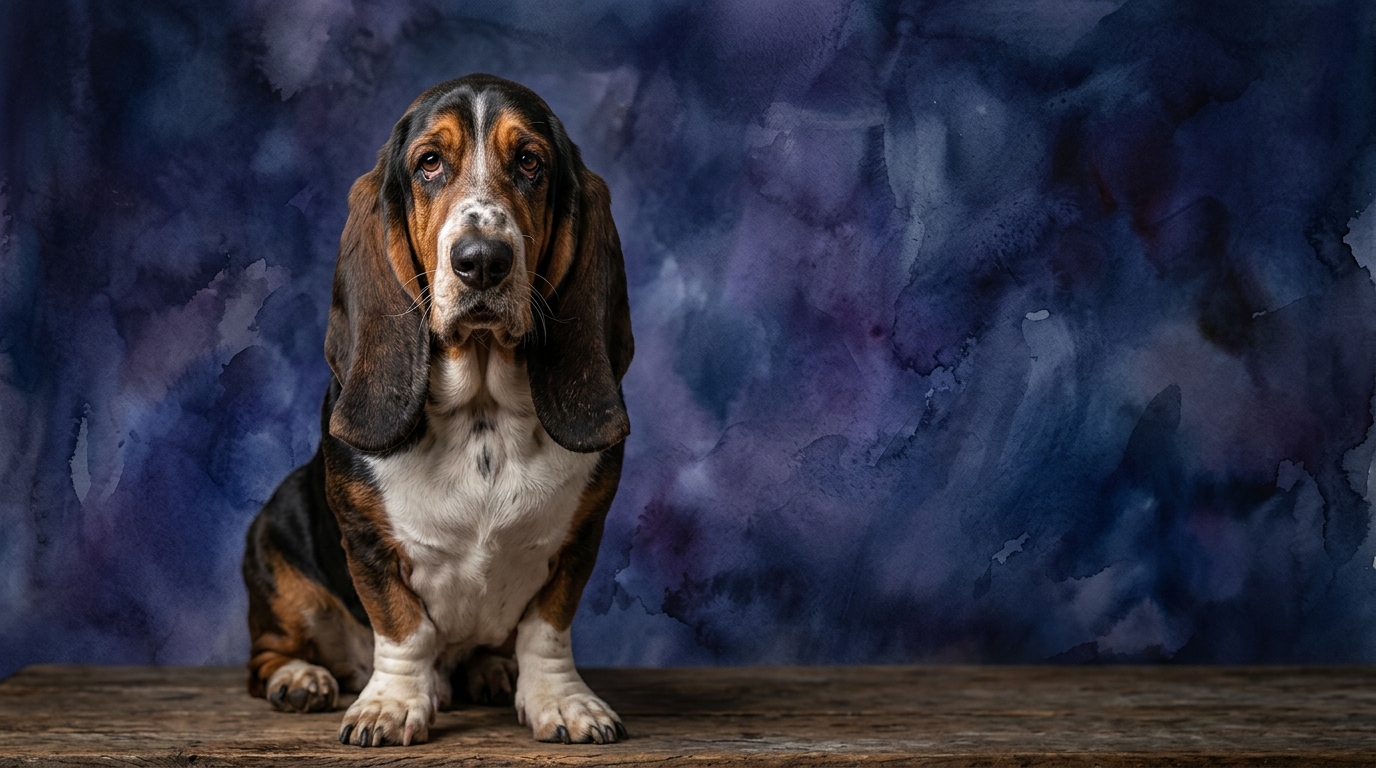
The Basset Hound, a charming scent hound, registers a Coren rank of #71, placing it in the category of fair working/obedience intelligence. Its IQ profile, as assessed by The Cosmic Pet Pet IQ Lab, shows a balanced but moderate score across the board: Problem Solving 3/5, Training Speed 3/5, Social Intelligence 3/5, Instinctive Drive 3/5, and Memory 3/5. This indicates a dog that can learn and adapt, but often at its own pace and with a strong influence from its primary instincts. Their problem-solving typically revolves around scent-related tasks, demonstrating a methodical, persistent approach rather than rapid innovation, and their memory is solid for routines and scent trails, though not necessarily for complex sequences of commands.
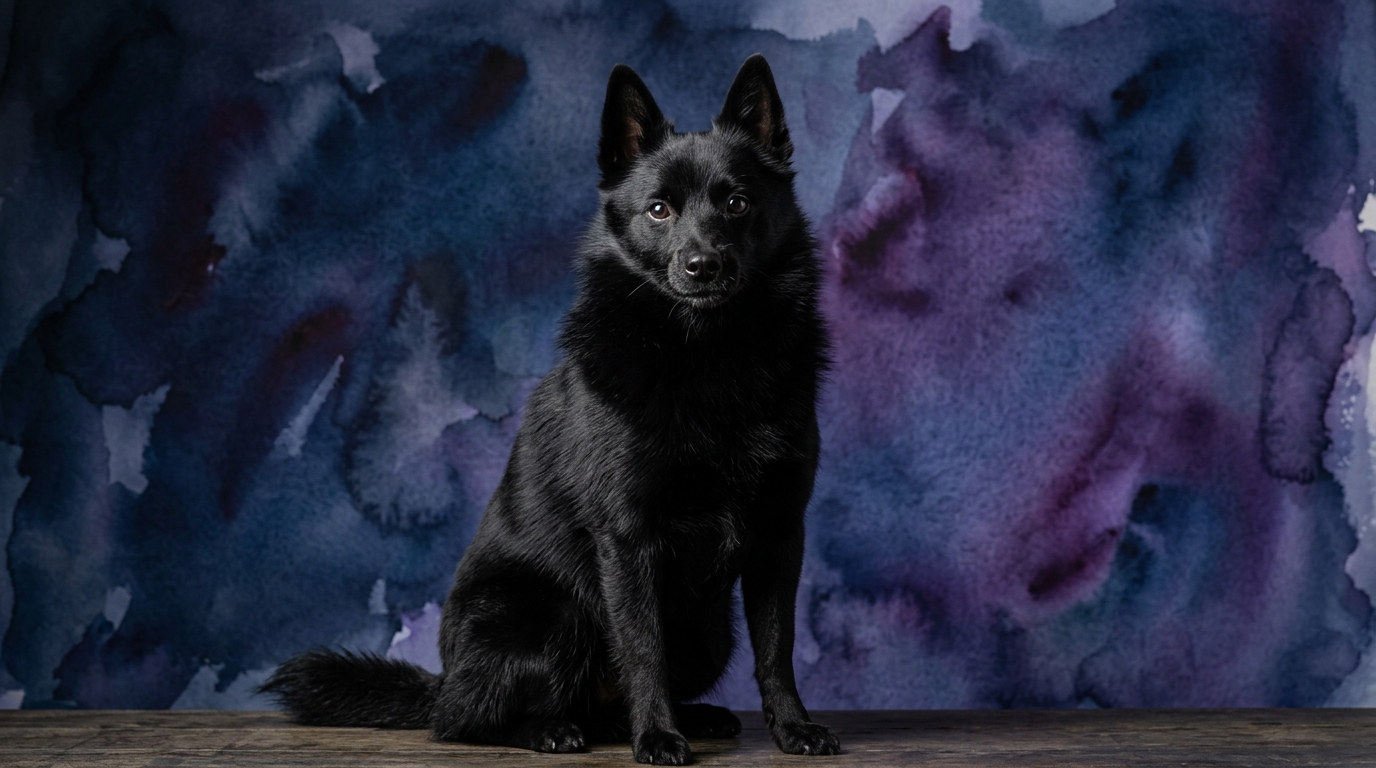
In stark contrast, the Schipperke, a spirited Belgian barge dog, holds a Coren rank of #15, signifying excellent working/obedience intelligence. Its IQ profile reveals a sharp mind: Problem Solving 5/5, Training Speed 5/5, Social Intelligence 3/5, Instinctive Drive 3/5, and Memory 5/5. This breed exhibits a remarkable capacity for quick learning and ingenious solutions to new challenges. Their memory is exceptional, allowing them to retain complex commands and routines with ease, and their training speed is among the fastest. While their social intelligence and instinctive drive mirror the Basset Hound's at 3/5, these traits manifest differently due to their superior problem-solving and memory, often leading to a more independent and watchful demeanor shaped by their historical role as guardians.
Where the Basset Hound Shines Cognitively
While the Schipperke outperforms in several cognitive dimensions, the Basset Hound's unique strengths lie in its specialized instinctive drive and the patient application of its moderate memory. Their 3/5 instinctive drive is almost singularly focused on scent work, giving them an unparalleled ability to track and follow a trail, often to the exclusion of other stimuli. This isn't a flaw in their cognitive architecture but a highly refined specialization. Their problem-solving (3/5) within this domain is about relentless, methodical pursuit rather than quick-witted solutions, making them exceptionally good at tasks requiring sustained focus on a singular sensory input.
Furthermore, their 3/5 social intelligence, while not as high as some breeds, fosters a gentle, amiable disposition. This makes them adept at integrating into a family unit with a calm, tolerant presence. Their memory (3/5) might not be for intricate tricks, but it is reliable for remembering familiar people, places, and the comforting routines of home, contributing to a sense of stability and predictability in their environment. The Basset Hound’s cognitive profile is geared towards a steadfast, companionable existence where consistent scent-driven exploration is a primary joy.
Where the Schipperke Excels Cognitively
The Schipperke’s cognitive profile is marked by exceptional agility and speed in mental processing. With a perfect 5/5 in Problem Solving, these dogs are natural innovators, quickly assessing situations and devising solutions, whether it's figuring out how to open a cabinet or navigate a complex obstacle course. This isn't just about physical dexterity; it's a testament to their capacity for abstract thought and strategic planning. Their problem-solving manifests as a keen observation of their environment, coupled with a willingness to experiment to achieve desired outcomes.
Complementing this is their 5/5 Training Speed and 5/5 Memory. A Schipperke can grasp new commands and concepts with remarkable swiftness, often requiring fewer repetitions than many other breeds. They retain this information long-term, making advanced training and complex routines well within their capabilities. This combination of rapid learning and robust recall allows them to master a vast repertoire of behaviors and adapt quickly to new rules or environments, making them highly versatile and mentally stimulating companions for owners who appreciate a sharp-witted dog.
Which is Easier to Train and Why
Based on their cognitive profiles, the Schipperke is unequivocally easier to train than the Basset Hound. The Schipperke’s 5/5 Training Speed means they pick up new commands and behaviors almost instantly, often after just a few repetitions. Their 5/5 Problem Solving also means they're not just rote learners; they understand the 'why' behind actions and can generalize learned behaviors to new situations. For instance, if taught to 'stay' in one room, they will quickly apply that concept to other rooms or outdoor settings without extensive re-training. This mental alacrity translates into a highly responsive and adaptable training partner.
Conversely, the Basset Hound’s 3/5 Training Speed and 3/5 Problem Solving suggest a more deliberate learning curve. While they are capable of learning, their progress is slower, often requiring more patience and repetition. Their strong instinctive drive (3/5), particularly for scent, can also make them easily distracted during training sessions, pulling their focus away from commands towards an intriguing smell. This means an owner needs to be more persistent, engaging, and perhaps more creative in maintaining the Basset Hound's attention, understanding that their cognitive strengths lie elsewhere than rapid obedience.
Which Suits Active Owners vs. Relaxed Owners
For owners seeking a highly engaged and mentally stimulating companion, the Schipperke is the clear choice. Their 5/5 Problem Solving and 5/5 Training Speed mean they thrive on mental challenges, puzzle toys, and consistent training in advanced obedience, agility, or even trick training. An active owner for a Schipperke isn't just about physical exercise, though they certainly need it; it's about providing consistent mental enrichment to prevent boredom-induced mischief. These dogs benefit from owners who enjoy teaching new things and can keep pace with a quick-thinking, often independent, canine mind.
The Basset Hound, with its more moderate cognitive scores and deep-seated scent drive, generally suits more relaxed owners. While they do require regular, moderate exercise, often involving sniffing expeditions, their cognitive demands are less about complex problem-solving and more about consistent routines and the freedom to explore their olfactory world. An owner who appreciates a calm, affectionate presence and is content with a dog that learns at its own pace, perhaps enjoying leisurely walks where the Basset can follow its nose, would find a perfect match. They are less about performing intricate tasks and more about providing steadfast, low-key companionship.
The Verdict: When to Choose Each Breed
The Verdict
Choose the Basset Hound if you value a calm, amiable companion who excels at methodical scent-work and offers unwavering affection, and you're prepared for a more patient training journey.
Opt for the Schipperke if you seek a quick-witted, highly trainable dog that thrives on mental challenges, enjoys learning new skills rapidly, and will keep you engaged with its sharp intellect.
🧠 Find Your Pet's IQ Score
Our Pet IQ Lab assessment covers 25+ tests across 5 cognitive dimensions — personalized to your breed.
Take the Full IQ Test →Frequently Asked Questions
Do Basset Hounds struggle with learning new commands?
Basset Hounds can learn new commands, but their Training Speed of 3/5 suggests they require more repetition and patience than some other breeds. Their focus can be easily diverted by interesting scents, so consistent, positive reinforcement in a low-distraction environment is key to their success.
Are Schipperkes good at solving new puzzles or tasks?
Absolutely. With a Problem Solving score of 5/5, Schipperkes are adept at figuring out new puzzles and tasks. They enjoy mental challenges and can often find ingenious ways to achieve their goals, making them excellent candidates for interactive toys and complex training exercises.
How does instinctive drive differ between these two breeds?
Both breeds have an Instinctive Drive of 3/5, but it manifests differently. The Basset Hound's drive is predominantly for scent tracking, often overriding other impulses. The Schipperke's drive leans towards vigilant guarding and independent exploration, reflecting its historical role as a barge protector and rat catcher.