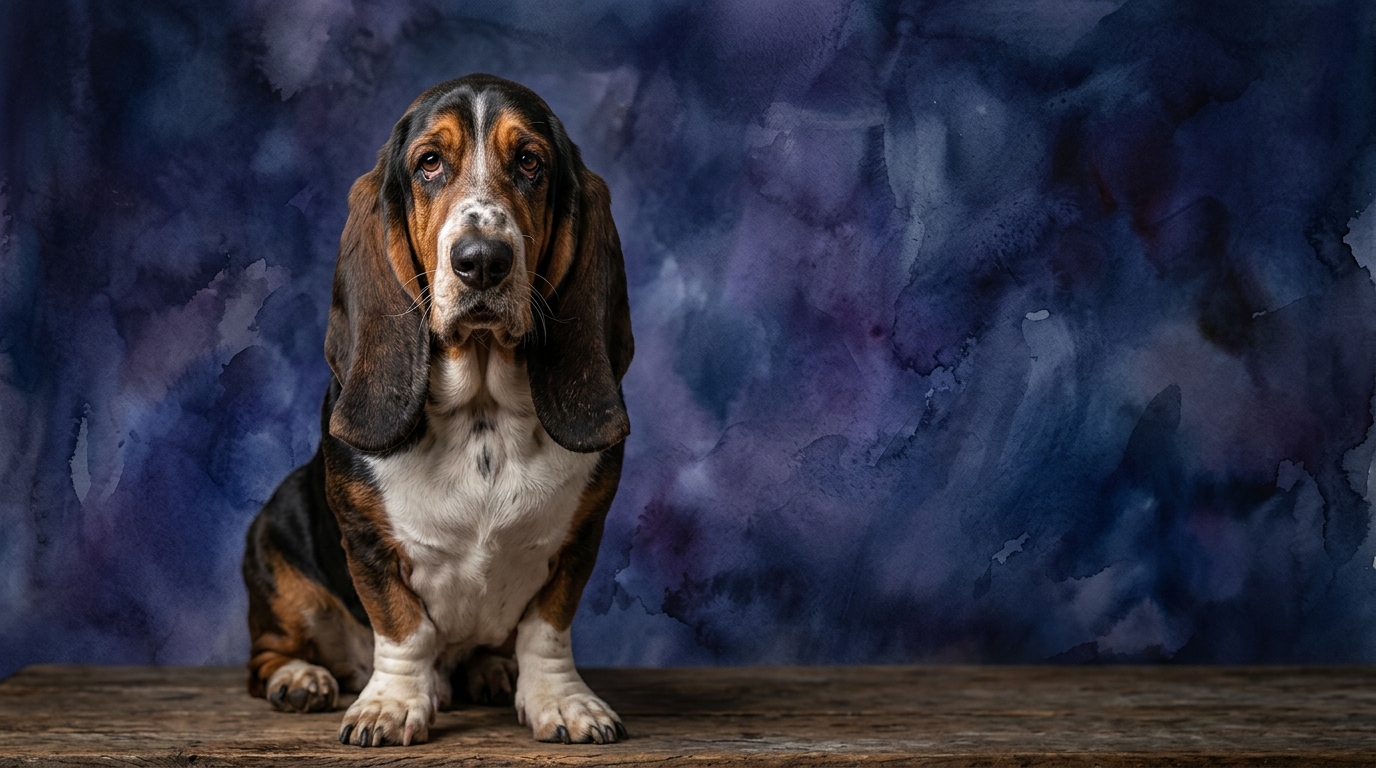
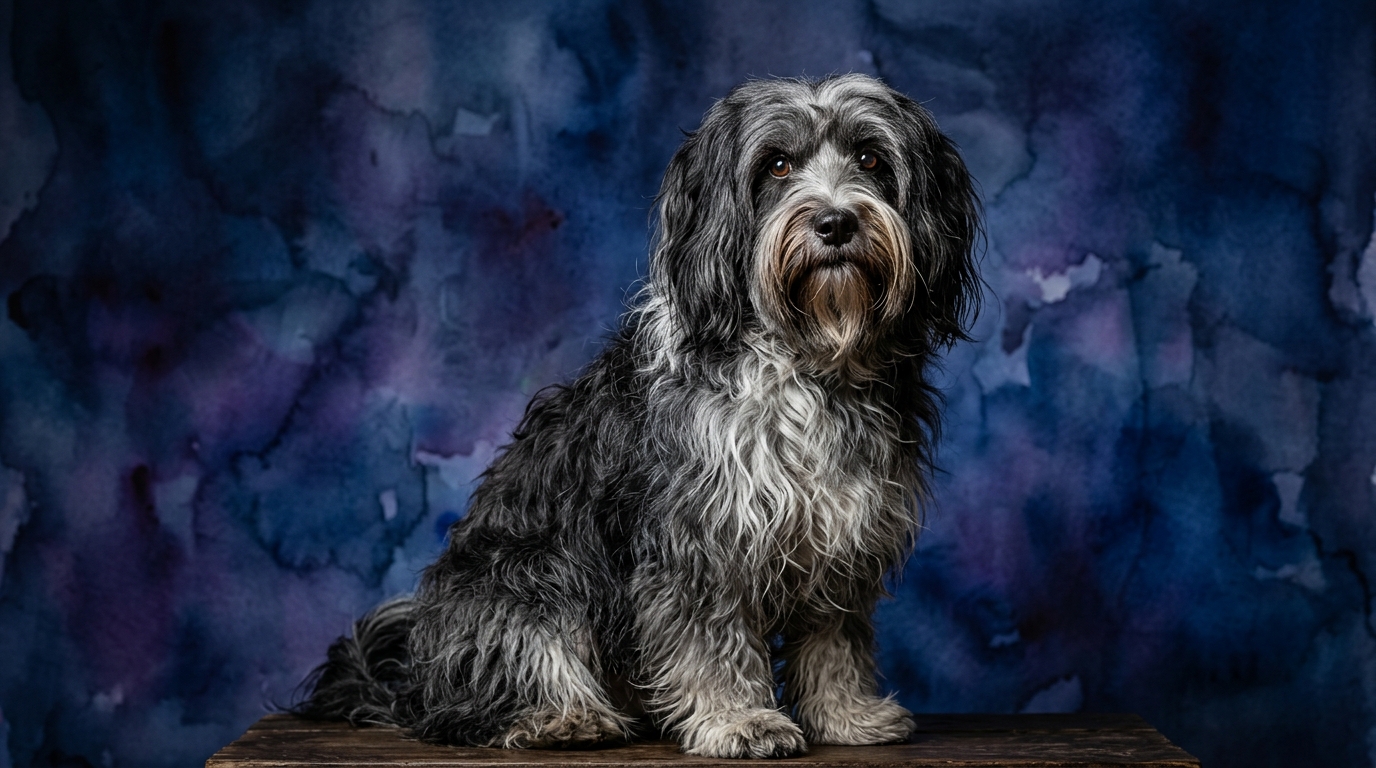
Side-by-Side Cognitive Profiles: Decoding the '3/5' Score
When we examine the Basset Hound and Tibetan Terrier through the lens of The Cosmic Pet Pet IQ Lab, a surprising uniformity emerges: both breeds score a consistent 3 out of 5 across all five measured cognitive dimensions. This identical numerical rating, however, belies the profound differences in how these scores manifest in their daily lives and interactions, shaped by their breed groups and historical roles. Understanding these nuances requires looking beyond the raw number to the context of their breed's inherent predispositions.
For the Basset Hound, a '3/5' in Problem Solving often relates to their adeptness at navigating scent puzzles or finding their way through complex environments following a trail. Their '3/5' Training Speed reflects their independent nature; while capable of learning, their primary motivation often lies outside human directives, making training a patient endeavor. Their Social Intelligence at '3/5' speaks to their generally affable, pack-oriented temperament, though they might not always be keenly attuned to subtle human emotional shifts. The '3/5' Instinctive Drive is overwhelmingly dominated by their powerful olfactory capabilities, compelling them to follow a scent regardless of other distractions. Finally, their '3/5' Memory is particularly strong for scent trails and locations associated with rewarding smells, rather than complex chains of commands.
The Tibetan Terrier, on the other hand, interprets these '3/5' scores through a different behavioral framework. Their '3/5' Problem Solving might manifest in their ability to adapt to new situations or cleverly manipulate their environment to achieve a desired outcome, such as reaching a favorite toy. A '3/5' Training Speed for the Tibetan Terrier suggests a moderate capacity for learning new commands, but often accompanied by a thoughtful, sometimes stubborn, assessment of whether a given task is worthwhile. Their '3/5' Social Intelligence allows them to form strong bonds with their family and be quite perceptive of household dynamics, often acting as alert companions. Their '3/5' Instinctive Drive is more generalized, encompassing a watchfulness and a desire to be involved, a legacy of their historical role as companions and guardians in monasteries. Their '3/5' Memory is often expressed through remembering routines, people, and the layout of their territory, contributing to their reliable nature as home guardians.
Where the Basset Hound Cognitively Excels
Despite their moderate overall scores, Basset Hounds possess a truly exceptional cognitive strength in their olfactory processing and memory. Their '3/5' in Instinctive Drive, specifically, is a specialized win; it reflects an unparalleled ability to analyze, follow, and remember scent trails with incredible persistence and accuracy. This isn't merely about detecting a smell; it's about interpreting a complex tapestry of odors, understanding their age and direction, and committing this sensory information to a long-term memory bank dedicated almost exclusively to their primary sense.
A Basset's problem-solving, rated '3/5', often shines brightest when it involves scent-related challenges. They can methodically work through intricate paths, overcoming obstacles or detours, driven by the singular focus of their nose. This highly specialized form of intelligence, while perhaps not broad, is profound within its domain, allowing them to excel in activities like scent work or tracking where other breeds might falter due to lack of sustained interest or sensory acuity. Their memory '3/5' for these scent-based experiences is formidable, enabling them to return to areas of interest or recall specific trails even after significant time has passed.
Where the Tibetan Terrier Cognitively Excels
The Tibetan Terrier, with its '3/5' scores, demonstrates a more generalized yet robust cognitive profile, particularly in adaptability and perceptive social awareness. While their Instinctive Drive is rated similarly to the Basset, it manifests as a keen observational instinct and a desire to participate, rather than a singular sensory focus. This allows them to quickly assess new situations and learn from their environment, making them highly versatile companions.
Their '3/5' Social Intelligence, combined with their role as companions, means Tibetan Terriers often exhibit a nuanced understanding of household dynamics and human routines. They are adept at picking up on subtle cues from their owners, making them responsive and engaged family members. This adaptability (part of their '3/5' Problem Solving) extends to various living situations and activities, showcasing a flexible mindset that allows them to thrive in diverse environments, from urban apartments to country homes, as long as they are involved with their people. Their spatial memory '3/5' also contributes to their comfort in varied surroundings, allowing them to quickly map and navigate new territories.
Training Dynamics: Basset Hound vs. Tibetan Terrier
When it comes to training, the identical '3/5' Training Speed scores for both breeds can be misleading, as their underlying motivations and challenges differ significantly. For the Basset Hound, training is often a test of patience against their formidable independent streak and single-minded scent drive. A Basset's nose is their world, and once a compelling scent is detected, all other commands often fade into the background. While they are capable of learning, their '3/5' speed is heavily influenced by their tendency to prioritize their instincts over human instruction. Effective training for a Basset requires consistent positive reinforcement, high-value rewards, and an understanding that you are often competing with the most captivating smell in the vicinity. Their stubbornness isn't a lack of comprehension, but a strong preference for self-directed exploration.
The Tibetan Terrier, with its Coren rank of #63 compared to the Basset's #71, generally presents a slightly more amenable training experience, though still requiring commitment. Their '3/5' Training Speed is influenced by their thoughtful, sometimes independent nature; they are not always eager to comply if they don't see a clear benefit or if the task seems arbitrary. However, unlike the Basset's single-minded scent focus, the Tibetan Terrier's motivation can be more varied, responding well to praise, play, and treats. They learn through consistency and clear communication, and while they can be stubborn, they are generally more inclined to engage in cooperative tasks with their owners. Their social intelligence helps them understand the context of commands, making them more responsive when they perceive a clear purpose and connection to their human.
Matching Breeds to Lifestyles: Active vs. Relaxed Owners
The Basset Hound is an ideal companion for relaxed owners who appreciate a leisurely pace of life but are prepared to manage a powerful natural instinct. While they enjoy a comfortable spot on the sofa, their '3/5' Instinctive Drive for scent work means they still require mental engagement that satisfies their nose. Owners who are content with short, sniff-filled walks, or who enjoy introducing their dog to simple scent games in the yard, will find a Basset deeply content. They are not built for intense physical activity, but their strong drive means they need supervision in unfenced areas, as a compelling scent will lead them on an adventure regardless of calls. Their social intelligence '3/5' makes them wonderful, calm companions for families who seek a loyal, laid-back presence.
The Tibetan Terrier, while adaptable, generally thrives with more active owners who can provide consistent mental and moderate physical stimulation. Their '3/5' problem-solving and social intelligence mean they enjoy being involved in family activities and appreciate varied experiences, from walks to puzzle toys, or even dog sports like agility or obedience. They are not hyperactive, but they benefit from regular engagement that challenges their mind and body. Owners who enjoy teaching new tricks, engaging in interactive play, and ensuring their dog feels like a central part of the family will find the Tibetan Terrier a fulfilling and dynamic companion. Their adaptability '3/5' means they can adjust to various activity levels, but they truly shine when their inquisitive nature is regularly satisfied.
The Verdict
Choose the Basset Hound if you are a relaxed owner seeking a calm, affectionate companion who finds profound joy in scent exploration and values a leisurely pace, understanding that their independent nose is their greatest guide. You must be prepared for patient training and managing a breed whose primary motivation is often olfactory.
Opt for the Tibetan Terrier if you are a more active owner who appreciates a perceptive, adaptable, and engaging companion eager to participate in family life and varied activities. You should be ready to provide consistent mental stimulation and embrace their thoughtful independence during training.
🧠 Find Your Pet's IQ Score
Our Pet IQ Lab assessment covers 25+ tests across 5 cognitive dimensions — personalized to your breed.
Take the Full IQ Test →Frequently Asked Questions
Do Basset Hounds and Tibetan Terriers have the same intelligence?
According to The Cosmic Pet Pet IQ Lab, both breeds share identical '3/5' scores across Problem Solving, Training Speed, Social Intelligence, Instinctive Drive, and Memory. However, how these scores manifest behaviorally differs greatly due to their distinct breed histories and primary instincts.
Which breed is easier to train, a Basset Hound or a Tibetan Terrier?
While both have a '3/5' Training Speed, Tibetan Terriers (Coren rank #63) are generally considered slightly more amenable to training than Basset Hounds (Coren rank #71). Basset Hounds are easily distracted by scent, while Tibetan Terriers, though independent, are more responsive to varied motivations like praise and play, making training feel less like a constant negotiation.
Are Basset Hounds or Tibetan Terriers better for apartment living?
Both breeds can adapt to apartment living with proper exercise and mental stimulation. Basset Hounds require less intense physical activity but need outlets for their scent drive. Tibetan Terriers are adaptable and thrive in apartments if their owners provide consistent mental engagement and regular, varied walks or play sessions to satisfy their inquisitive nature.