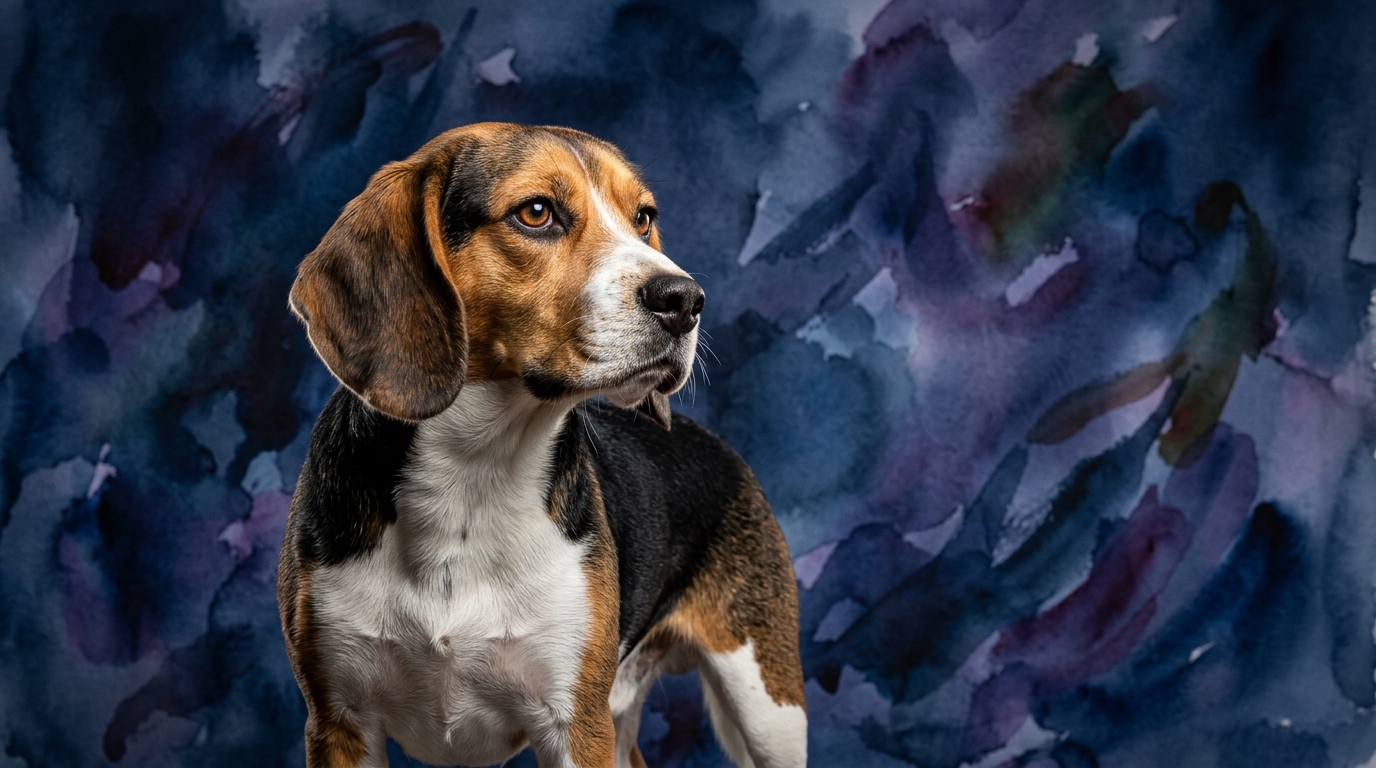
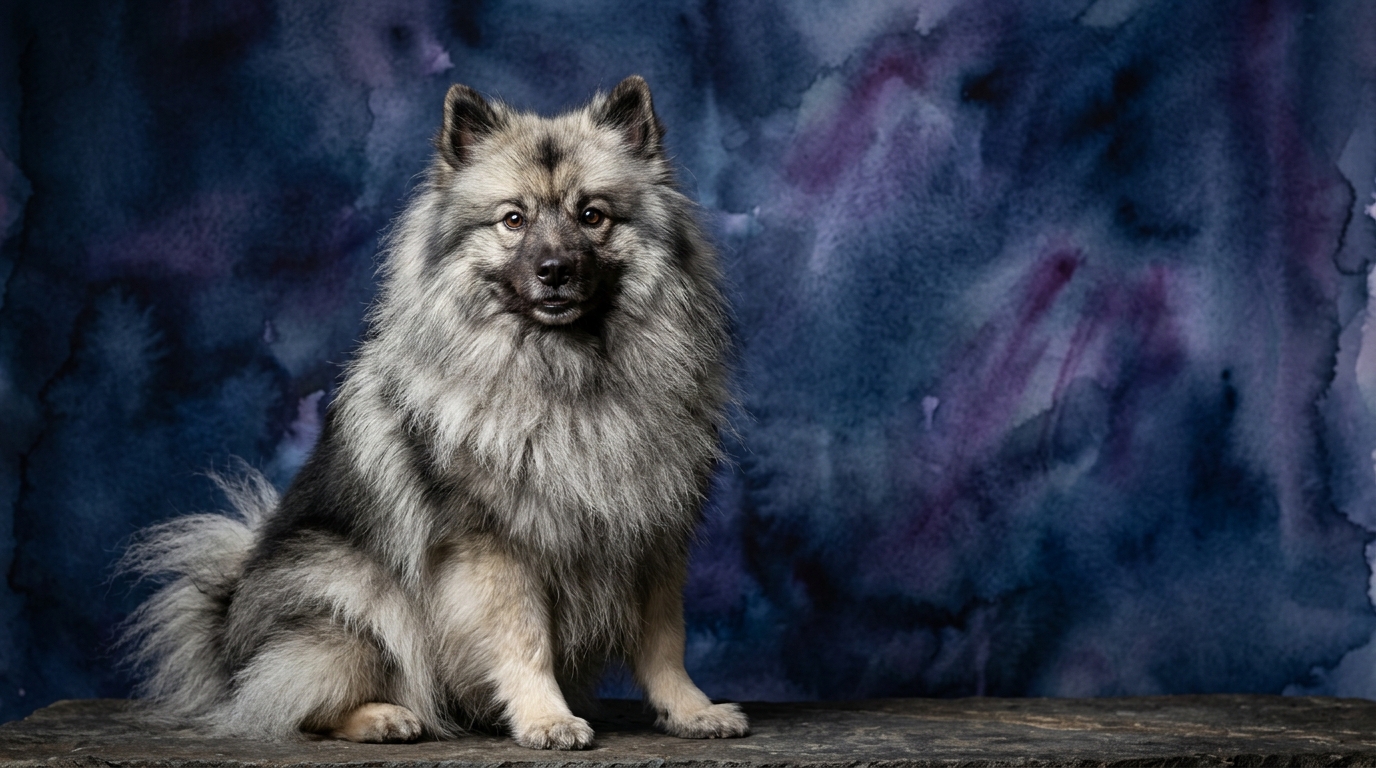
Side-by-Side IQ Profile
To understand the unique cognitive landscapes of the Beagle and the Keeshond, The Cosmic Pet Pet IQ Lab employs a five-dimensional metric. This allows us to move beyond generalizations and pinpoint specific strengths and inclinations for each breed.
The Beagle, a Hound with a Coren rank of #72, exhibits a distinct cognitive profile shaped by its historical role as a scent tracker. Its Problem Solving is rated 4/5, demonstrating an ability to navigate complex situations primarily driven by olfactory cues. Training Speed is 2/5, indicating that while capable, their independent nature often makes rapid command acquisition challenging. Social Intelligence stands at 3/5, reflecting their generally agreeable but often self-focused demeanor when a scent is present. Instinctive Drive is a remarkable 5/5, highlighting their intense, unwavering pursuit of odors. Finally, their Memory is 4/5, particularly strong for scent locations and routines.
The Keeshond, a Non-Sporting breed holding a Coren rank of #16, presents a different set of mental aptitudes. Its Problem Solving is also 4/5, often applied to understanding household dynamics and achieving desired interactions. Training Speed is 4/5, showing a readiness to learn and a cooperative spirit. Social Intelligence is 3/5, indicating a strong bond with family while often being reserved with strangers. Instinctive Drive is 3/5, manifesting as alertness and a watchfulness rather than a strong prey or scent drive. Crucially, their Memory is 5/5, signifying an exceptional ability to recall commands and routines over extended periods.
Where Beagle Wins Cognitively
The Beagle's cognitive strengths are undeniably rooted in its olfactory prowess and the relentless drive that accompanies it. While both breeds score similarly in general problem-solving, the Beagle's 5/5 instinctive drive gives it an edge in tasks requiring sustained, independent focus on a sensory goal. No other breed can match its single-minded dedication to following a scent trail, a complex cognitive feat involving discrimination, memory of scent patterns, and navigation. This isn't just sniffing; it's a sophisticated form of sensory data processing and environmental mapping, allowing them to track elusive targets across varied terrains and through distracting environments, demonstrating a specialized, highly evolved form of intelligence for their specific purpose.
Where Keeshond Wins Cognitively
The Keeshond's cognitive advantages become apparent in its superior training speed (4/5 vs. Beagle's 2/5) and exceptional memory (5/5 vs. Beagle's 4/5). This combination makes them highly responsive to instruction and capable of retaining a vast repertoire of commands and behaviors. While the Beagle’s problem-solving is often self-directed by scent, the Keeshond’s problem-solving is more readily guided by human interaction and a desire for cooperation. Their strong memory means that once a concept is grasped, it tends to stick, requiring less repetition for maintenance. This cognitive profile makes them particularly adept at learning complex tricks, participating in dog sports like obedience or agility, and adapting quickly to new household rules and routines.
Which is Easier to Train and Why
Based on their Coren ranks (Keeshond #16, Beagle #72) and our IQ metrics, the Keeshond is significantly easier to train. The Keeshond's 4/5 training speed and 5/5 memory mean they grasp commands quickly and retain them reliably. They are attentive and generally eager to please, making them responsive to positive reinforcement. For instance, teaching a Keeshond "stay" often requires fewer repetitions and they will remember it consistently.
In contrast, the Beagle's 2/5 training speed is a direct consequence of its powerful 5/5 instinctive drive. While they possess good memory (4/5), their nose often dictates their actions. A Beagle might understand "come," but if a compelling scent trail presents itself, their instinct to follow it can override their learned obedience. This isn't a lack of capacity, but a difference in motivational hierarchy. Training a Beagle requires immense patience, creativity to make training more rewarding than scenting, and a deep understanding of their innate impulses. Recall, in particular, can be a lifelong challenge for a Beagle due to their independent, scent-driven nature.
Which Suits Active Owners vs. Relaxed Owners
The Beagle, with its boundless energy and intense instinctive drive, is better suited for active owners. These dogs require substantial daily exercise, ideally involving opportunities for scent work or long walks where they can explore with their noses. An owner who enjoys hiking, scent games, or even participates in tracking sports would find the Beagle a fulfilling companion. Their need for mental and physical stimulation is significant; without it, their pent-up energy and drive can lead to destructive behaviors or persistent baying.
The Keeshond, while not a couch potato, is more adaptable to a range of owner activity levels. Their moderate instinctive drive (3/5) means they enjoy regular walks and playtime but are typically content with moderate exercise. They thrive on companionship and mental engagement through training and interactive play rather than solely intense physical exertion. A Keeshond would suit an owner who enjoys consistent, engaging training sessions, regular walks around the neighborhood, and plenty of indoor family time. They are often happy to curl up with their family after their exercise needs are met, making them suitable for both moderately active and more relaxed households that prioritize mental stimulation and companionship.
The Verdict
For those seeking a dog whose primary joy and cognitive strength lies in independent scent exploration and relentless tracking, the Beagle is the unmatched choice, ideal for active individuals ready to channel its formidable drive.
If your preference leans towards a companion who quickly learns, remembers commands with remarkable fidelity, and thrives on cooperative interaction and consistent training, the Keeshond will prove to be a highly rewarding partner.
🧠 Find Your Pet's IQ Score
Our Pet IQ Lab assessment covers 25+ tests across 5 cognitive dimensions — personalized to your breed.
Take the Full IQ Test →Frequently Asked Questions
Is a Beagle or Keeshond better for first-time dog owners?
A Keeshond is generally more forgiving for first-time owners due to its higher trainability and eagerness to please, making the learning curve for both dog and owner smoother. Beagles require more experience and patience to manage their strong independent instincts.
Do Beagles and Keeshonds get along with children?
Both breeds can be wonderful with children. Beagles are typically robust and playful, enjoying family activities, while Keeshonds are often gentle and watchful, forming strong bonds within their family unit. Supervision is always recommended with any dog and child interaction.
Which breed is more prone to barking?
Beagles are well-known for their vocalizations, including baying and howling, especially when on a scent trail or feeling neglected. Keeshonds are also vocal, often using barks to alert their owners to new sights or sounds, a remnant of their watchdog heritage.