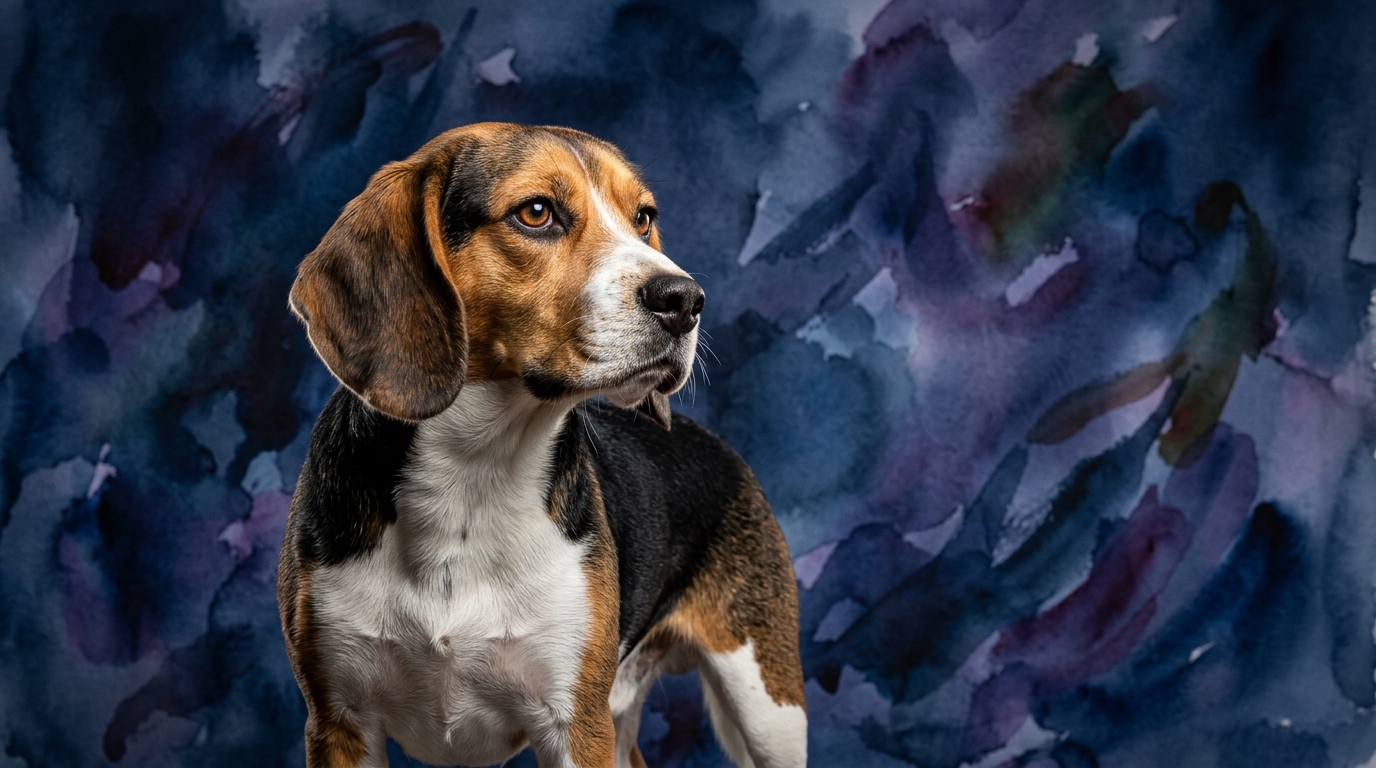

Side-by-Side IQ Profile: Beagle vs. Nova Scotia Duck Tolling Retriever
The Cosmic Pet Pet IQ Lab offers a nuanced perspective on canine cognition, moving beyond simple 'smart or not' labels to evaluate five critical dimensions. For the Beagle, we observe a Problem Solving score of 4/5, a Training Speed of 2/5, Social Intelligence at 3/5, an Instinctive Drive peaking at 5/5, and Memory at 4/5. This profile suggests a highly independent thinker with an almost all-consuming drive, particularly related to scent. Their strong memory and impressive problem-solving allow them to navigate complex environments, often in pursuit of a scent, but their enthusiasm can sometimes overshadow their willingness to follow human directives quickly. Their social intelligence is average, indicating they can interact appropriately but might prioritize their own agenda over constant human-centric engagement.
The Nova Scotia Duck Tolling Retriever (Toller) presents a remarkably balanced cognitive profile: Problem Solving 3/5, Training Speed 3/5, Social Intelligence 3/5, Instinctive Drive 3/5, and Memory 3/5. This consistency across all dimensions suggests a dog that is moderately adept in most areas without extreme strengths or weaknesses. This balance indicates a capable learner, able to solve moderate challenges and retain information, with a manageable level of instinctive drive. They possess a reasonable capacity for social interaction, making them generally adaptable companions, and they learn at a steady pace. Unlike the Beagle, the Toller is not Coren-ranked, meaning we rely solely on our lab's comprehensive IQ assessment for this comparison.
Where the Beagle Wins Cognitively
The Beagle excels significantly in Problem Solving (4/5) and boasts an unparalleled Instinctive Drive (5/5), a potent combination that directly supports their original purpose as scent hounds. Their ability to independently decipher complex scent trails, overcoming obstacles and distractions, showcases a remarkable cognitive tenacity. This isn't about solving human-designed puzzles, but about persistent, goal-oriented exploration driven by their powerful olfactory senses. Their problem-solving is intrinsically linked to their drive to follow a scent to its conclusion, often requiring intricate mental mapping and strategy.
Furthermore, the Beagle's Memory (4/5) is a significant cognitive asset, allowing them to recall specific scents or locations where interesting odors were detected, making them incredibly effective at tracking and pattern recognition within their sensory world. This superior memory aids their ability to navigate familiar territories or remember where a particularly compelling scent was last detected, even if it was days ago. This cognitive strength, combined with their drive, makes them formidable sensory explorers.
Where the Nova Scotia Duck Tolling Retriever Wins Cognitively
The Toller's cognitive strengths lie in its balanced and consistent performance across the board, particularly its Training Speed (3/5) and moderate, manageable Instinctive Drive (3/5). While not having extreme peaks in any single dimension like the Beagle, their steady 3/5 across problem-solving, training speed, social intelligence, instinctive drive, and memory makes them reliably adaptable and predictable. This consistency is a strength in itself, as it indicates a dog less prone to extreme behaviors or singular obsessions.
Their moderate training speed, compared to the Beagle's 2/5, suggests they pick up new commands and routines with greater ease and fewer repetitions. This consistent cognitive processing means they are less likely to be overwhelmed or underwhelmed by typical training tasks, offering a predictable and cooperative learning experience for their handlers. The Toller's balanced profile means their natural urges are present but more readily channeled into structured activities, making them highly receptive to direction and eager to engage in collaborative tasks.
Which Is Easier to Train and Why
Based on The Cosmic Pet Pet IQ Lab data, the Nova Scotia Duck Tolling Retriever (Training Speed 3/5) generally proves easier to train than the Beagle (Training Speed 2/5). The Toller's higher training speed indicates a quicker grasp of new commands and a greater inclination to comply with human instruction. Their moderate instinctive drive (3/5) means their natural urges, while present, are typically more manageable and less likely to override their focus on their handler during training sessions. They are often eager to work alongside their human, valuing the cooperative aspect of learning and responding well to positive reinforcement.
In contrast, the Beagle's powerful Instinctive Drive (5/5), primarily focused on scent, can be a significant hurdle in training. While they possess strong problem-solving skills, these are often applied to their own agenda of following a scent, rather than understanding or performing a human-initiated task. Their lower training speed means they require more patience, repetition, and creative motivation to learn and consistently execute commands, especially when a compelling scent is nearby. Their independent nature, profoundly driven by their nose, can make them appear stubborn or distracted, requiring an owner who understands how to work with, rather than against, this profound natural inclination, often by incorporating scent work into their training.
Which Suits Active Owners vs. Relaxed Owners
For active owners seeking a dynamic partner for outdoor adventures and structured activities, the Nova Scotia Duck Tolling Retriever is often a more cohesive fit. Their balanced instinctive drive (3/5) means they enjoy engaging in activities like fetching, agility, or hiking, but their drive is more easily directed and managed. They thrive on having a 'job' and enjoy structured physical and mental stimulation, making them excellent companions for owners who appreciate regular, purposeful activity. Their moderate energy levels, coupled with their willingness to learn, mean they can keep pace with an active lifestyle while also being capable of settling down indoors.
The Beagle, while possessing a supreme instinctive drive (5/5) for scent work, might paradoxically suit a more relaxed owner in terms of structured activity, provided that owner is prepared for a different kind of 'activity.' A relaxed owner who enjoys long, meandering sniff-walks, or who is content to let their dog explore a securely fenced yard, might find the Beagle's independent exploration satisfying. However, a relaxed owner seeking a truly sedentary companion will struggle with the Beagle's profound need to follow its nose. Their high drive means they need outlets for their instincts, even if those outlets are less about vigorous exercise and more about sustained mental engagement through scent-based activities, which can be less physically demanding for the human. Owners who prioritize a quiet home life and are unprepared for the Beagle's vocalizations or escape artistry driven by scent will find them challenging.
The Verdict
Choose the Beagle if you are captivated by a dog with a profound, focused instinctive drive, relish the challenge of engaging an independent mind with a powerful nose, and are prepared for a companion whose problem-solving is often self-directed towards scent exploration.
Choose the Nova Scotia Duck Tolling Retriever if you seek a consistently adaptable, cooperative canine partner with a balanced cognitive profile, one that is generally eager to learn and participate in structured activities, making them an excellent choice for a variety of active family lifestyles.
🧠 Find Your Pet's IQ Score
Our Pet IQ Lab assessment covers 25+ tests across 5 cognitive dimensions — personalized to your breed.
Take the Full IQ Test →Frequently Asked Questions
Are Beagles difficult to train?
Beagles can present training challenges due to their very strong instinctive drive (5/5) for scent and a lower training speed (2/5). This means they often prioritize following scents over human commands, requiring significant patience, consistency, and creative, scent-based motivation from their owner to achieve reliable obedience.
What kind of mental stimulation do Tollers need?
Nova Scotia Duck Tolling Retrievers thrive on mental stimulation that engages their moderate problem-solving (3/5) and training speed (3/5) capabilities. Activities like puzzle toys, obedience training, retrieving games, and even agility or scent work can keep their balanced minds engaged and prevent boredom.
How do their social intelligence scores impact household dynamics?
Both breeds score 3/5 in social intelligence, indicating they are generally capable of appropriate interactions with humans and other animals. This means they are neither overly clingy nor excessively aloof, but will require proper socialization to develop good manners and adapt smoothly to various social situations within a family environment.