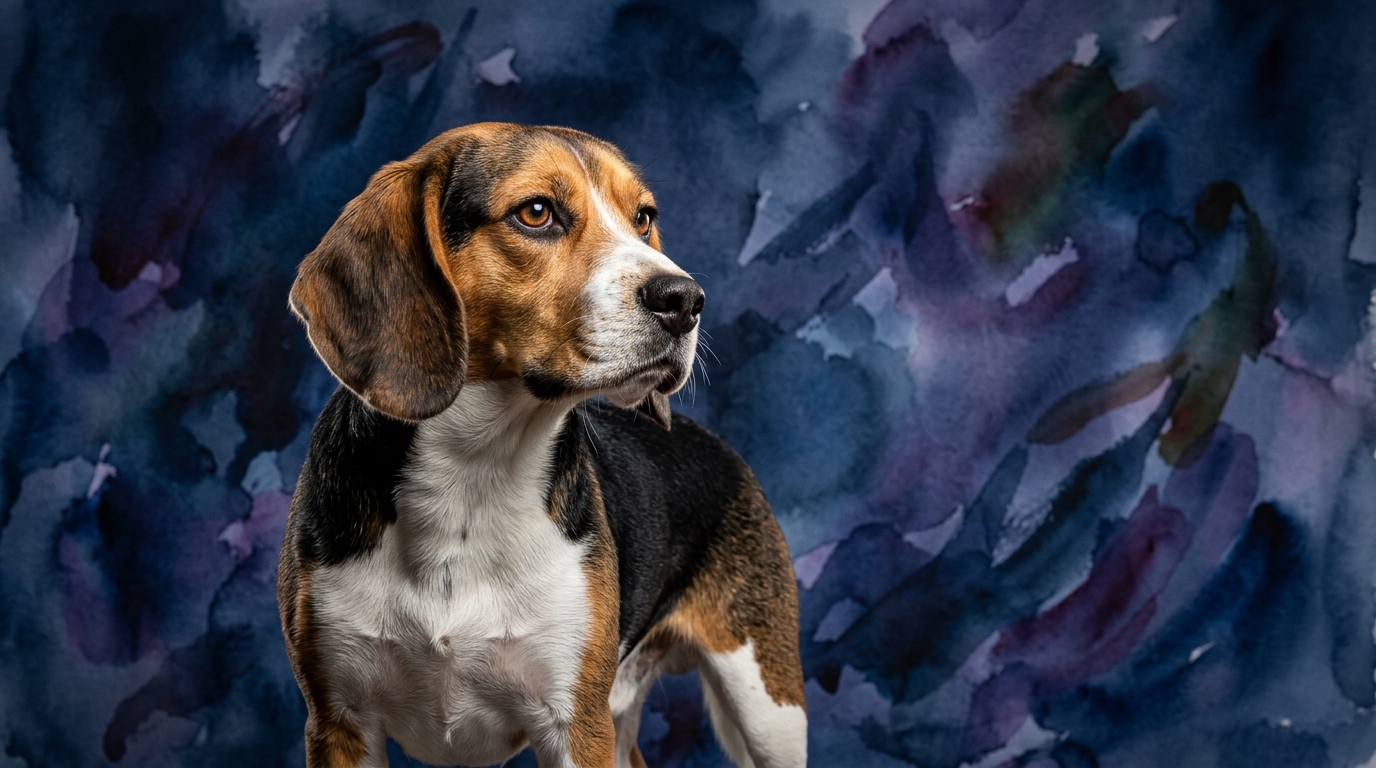
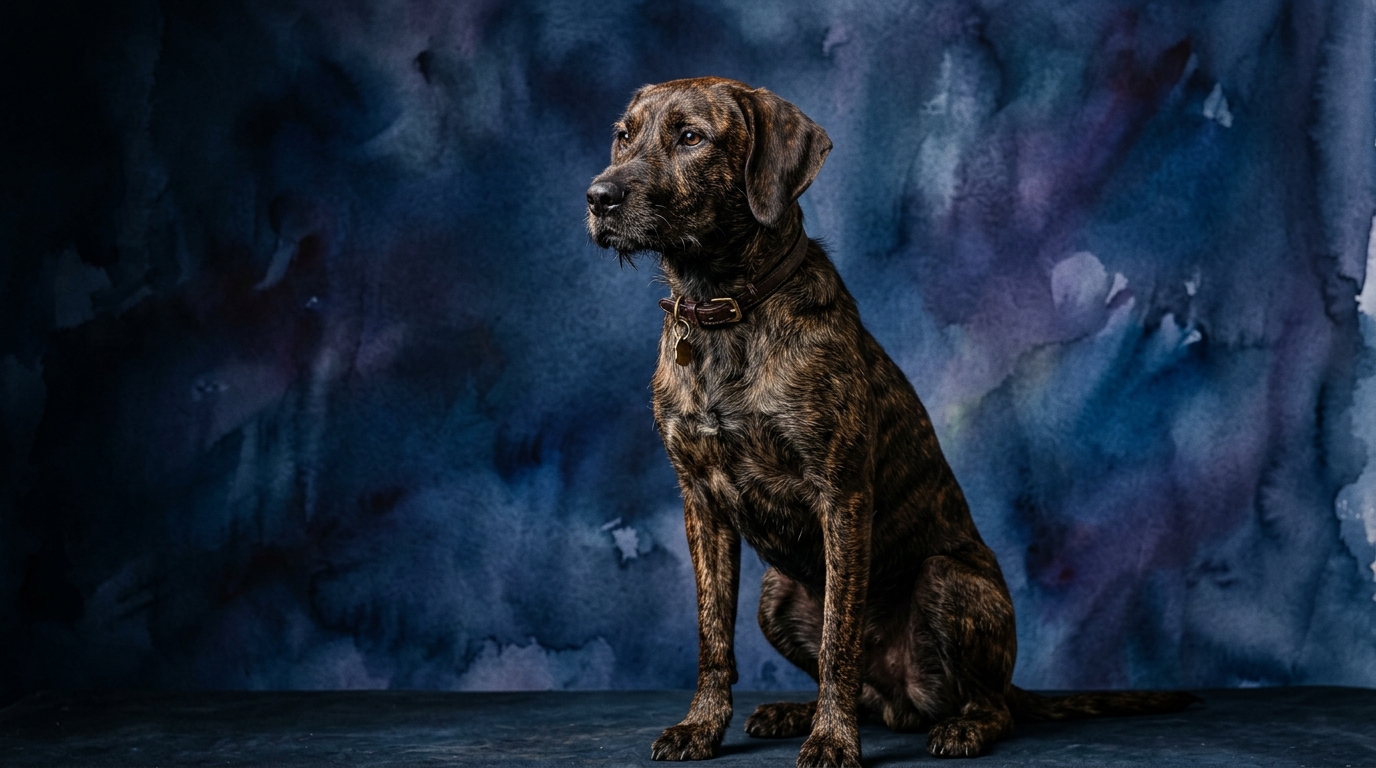
Side-by-Side IQ Profile
The Cosmic Pet Pet IQ Lab employs a five-dimensional framework to assess canine intelligence, moving beyond simple obedience to encompass problem-solving, training speed, social acumen, instinctive drives, and memory. This comprehensive approach allows us to dissect the nuanced cognitive abilities of breeds like the Beagle and Plott Hound.
The Beagle, a Coren-ranked #72 breed, demonstrates strong problem-solving at 4/5, often tied to navigating complex scent trails with remarkable persistence. However, their training speed is a modest 2/5, influenced by their independent, scent-driven focus. Social intelligence rates at 3/5, indicating amiable interactions but sometimes overshadowed by their primary passion. An unparalleled instinctive drive scores 5/5, making them relentless trackers, supported by a robust memory of 4/5, particularly for olfactory details and learned routines.
The Plott Hound, though not Coren-ranked, brings a different cognitive blueprint. Their problem-solving stands at 3/5, typically practical and goal-oriented in hunting scenarios rather than abstract puzzles. Training speed is a more favorable 3/5, suggesting a greater willingness to engage in structured learning. Social intelligence matches the Beagle at 3/5, forming strong family bonds while potentially being reserved with strangers. Their instinctive drive is 3/5, present but often more controlled than a Beagle's, focused on big game pursuit. Memory is also 3/5, solid for commands and experiences, though perhaps less detailed in sensory recall than their smaller counterpart.
Where Beagle Wins Cognitively
The Beagle undeniably excels in cognitive areas directly tied to their scent hound heritage. Their superior problem-solving (4/5) shines in tasks requiring persistent investigation and intricate navigation of olfactory puzzles, demonstrating a profound capacity for sustained focus when a compelling scent is involved. This is bolstered by their exceptional memory (4/5), allowing them to recall complex scent patterns and environmental cues over extended periods, a vital asset for tracking. Furthermore, their instinctive drive (5/5) is a cognitive powerhouse, representing an unwavering, almost single-minded dedication to their primary purpose that overrides most other stimuli, making them formidable in their chosen field.
Where Plott Hound Wins Cognitively
The Plott Hound's cognitive strengths offer a different set of advantages, particularly in a domestic partnership. Their training speed (3/5) surpasses the Beagle's (2/5), suggesting a more direct and cooperative approach to learning human commands and structures. This means they are often more attentive and less prone to scent-induced distraction during formal training sessions. While their problem-solving (3/5) might be less intricate than a Beagle's, it is often more practically applied and less swayed by extraneous sensory input, leading to more straightforward solutions. Crucially, their instinctive drive (3/5), while still robust, is generally more manageable in a home environment, allowing for a better balance between natural impulse and adherence to owner expectations.
Which is Easier to Train and Why
When considering ease of training, the Plott Hound generally presents a smoother journey than the Beagle. The Plott Hound's training speed of 3/5, coupled with a more moderate instinctive drive of 3/5, means they are often more receptive to instruction and less prone to complete absorption by environmental distractions. While still an independent hound, they tend to form strong working partnerships and respond well to consistent, positive reinforcement, making the initial learning phases more straightforward.
Conversely, the Beagle's formidable instinctive drive (5/5) and lower training speed (2/5) make them notoriously challenging. Their world is dominated by scent, leading to "selective hearing" when a fascinating trail beckons. Training a Beagle demands exceptional patience, creativity, and high-value rewards to compete with their natural inclination to follow their nose, often requiring owners to develop novel ways to capture and maintain their attention against powerful olfactory distractions. Their independent tracking heritage means they often perceive commands as suggestions rather than directives, especially if a more interesting scent is present.
Which Suits Active Owners vs Relaxed Owners
Neither the Beagle nor the Plott Hound is suitable for a truly relaxed owner, as both are working hounds requiring significant engagement and activity. However, they cater to different types of active lifestyles. The Beagle, with its overwhelming instinctive drive (5/5) and strong problem-solving for scent, thrives with owners dedicated to channeling their olfactory talents through specific activities like scent work, tracking, or extended walks in stimulating environments where they can "hunt" with their nose. An owner who doesn't provide this outlet will likely face a bored, vocal, and potentially destructive dog.
The Plott Hound, while equally requiring vigorous daily exercise, might be a more adaptable partner for general outdoor adventures such as hiking, jogging, or long nature walks where the dog is a cooperative companion. Their more balanced instinctive drive (3/5) and higher training speed (3/5) mean they are often more amenable to structured physical activity alongside their owner, less likely to become completely lost in a scent trail. Therefore, an owner seeking a focused scent-work partner might prefer a Beagle, while an active outdoor enthusiast desiring a robust, slightly more biddable companion might lean towards a Plott Hound.
The Verdict
If you are an owner fascinated by the intricate world of canine scent and are prepared to dedicate substantial time and creative energy to engaging a dog whose primary motivation is olfactory exploration, the Beagle is an exceptional companion. They thrive with owners who appreciate and can channel their intense, independent tracking drive and sophisticated memory for scent, even if it means a more challenging training journey.
For an active owner seeking a loyal, robust partner for outdoor adventures like hiking or jogging, who values a dog with a strong but generally more manageable working drive and a slightly more cooperative training disposition, the Plott Hound offers a rewarding experience. They suit those who appreciate a dog with practical problem-solving skills and a solid social bond without the overwhelming scent-driven focus of a Beagle.
🧠 Find Your Pet's IQ Score
Our Pet IQ Lab assessment covers 25+ tests across 5 cognitive dimensions — personalized to your breed.
Take the Full IQ Test →Frequently Asked Questions
Is a Beagle or Plott Hound more prone to running off?
A Beagle is generally more prone to running off due to their exceptionally high instinctive drive (5/5) for following scents. Once a compelling trail is detected, their focus becomes almost singular, making recall incredibly difficult. Plott Hounds, while still hounds, have a more moderate instinctive drive (3/5) and are often more responsive to their handler, making them slightly less likely to bolt.
Do Beagles and Plott Hounds get along with other pets?
Both breeds generally possess moderate social intelligence (3/5) and can get along with other pets, especially if socialized early. Beagles are often quite gregarious, though their prey drive can be an issue with very small animals, requiring careful supervision. Plott Hounds are typically loyal to their 'pack' and can integrate well, but individual temperaments vary, and proper introductions are always key.
Which breed is better for a first-time dog owner?
Neither breed is ideal for a truly novice dog owner due to their strong hound instincts and significant exercise requirements. However, if forced to choose, a Plott Hound might present fewer training hurdles due to their slightly higher training speed and more manageable instinctive drive compared to the highly scent-driven and independent Beagle. Both require commitment and understanding of their breed-specific traits.