Side-by-Side IQ Profile
To truly understand the cognitive landscape of these two breeds, The Cosmic Pet Pet IQ Lab provides a detailed breakdown across five key dimensions. While both are dogs, their breed histories have shaped vastly different cognitive strengths and inclinations.
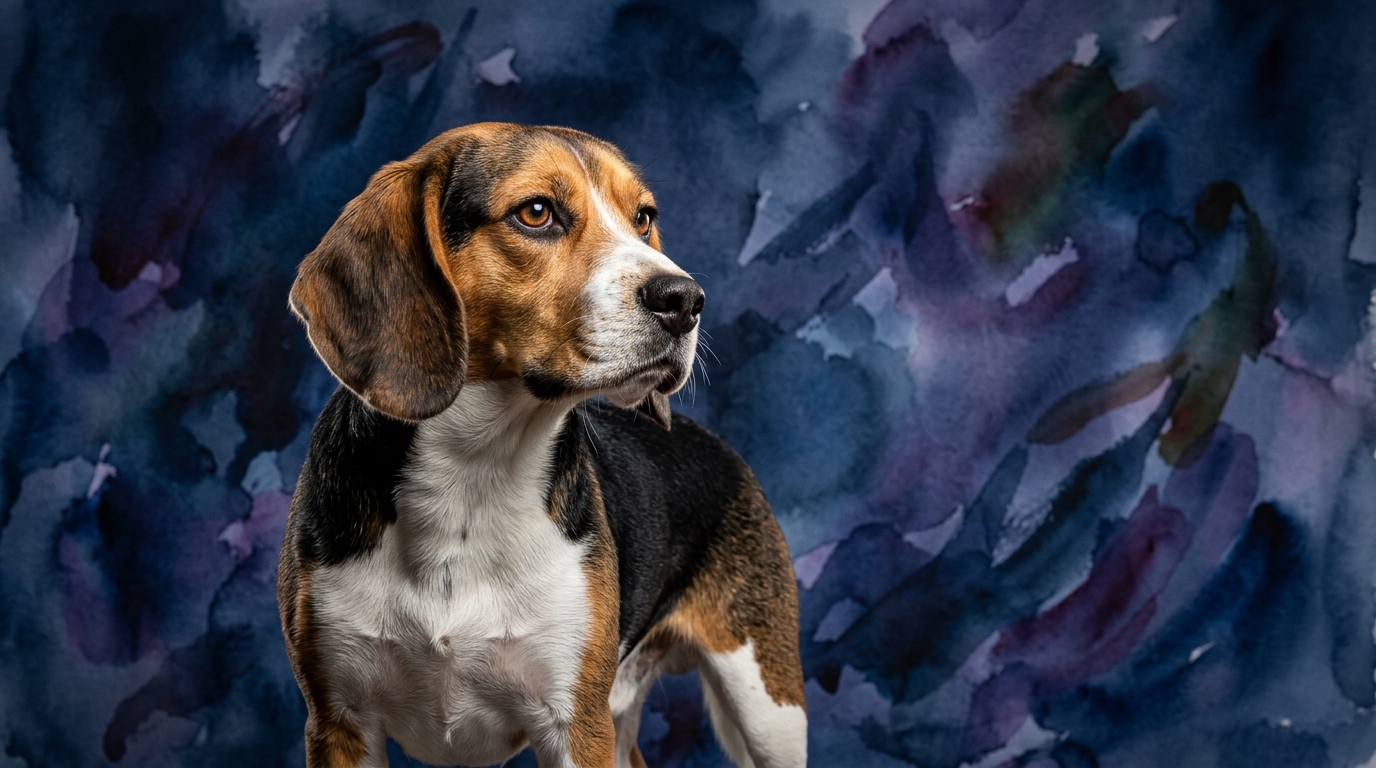
**Beagle (Coren Rank #72):** This hound breed's intelligence is deeply specialized. Their **Problem Solving (4/5)** excels in unraveling complex scent trails, navigating obstacles and diversions with focused determination; this is practical, sensory-driven deduction, perfect for their ancient purpose. Their **Training Speed (2/5)** is often slow, as their strong independent nature and intense focus on scent make them less inclined to immediately respond to human commands, especially when a compelling smell is present. **Social Intelligence (3/5)** sees Beagles as pack animals, generally displaying good social skills with other dogs and friendly dispositions towards people, but their understanding is more about harmonious coexistence than nuanced human communication. The Beagle's defining trait is their **Instinctive Drive (5/5)**, a profoundly powerful drive to hunt and follow scent that shapes almost every aspect of their behavior, acting as a deeply ingrained, almost compulsive biological imperative. Finally, their **Memory (4/5)** is impressive, particularly for routes, locations, and critically, scent profiles, allowing them to recall specific scents and paths over long periods, though their memory for human-taught commands is often overshadowed by this instinctive recall.
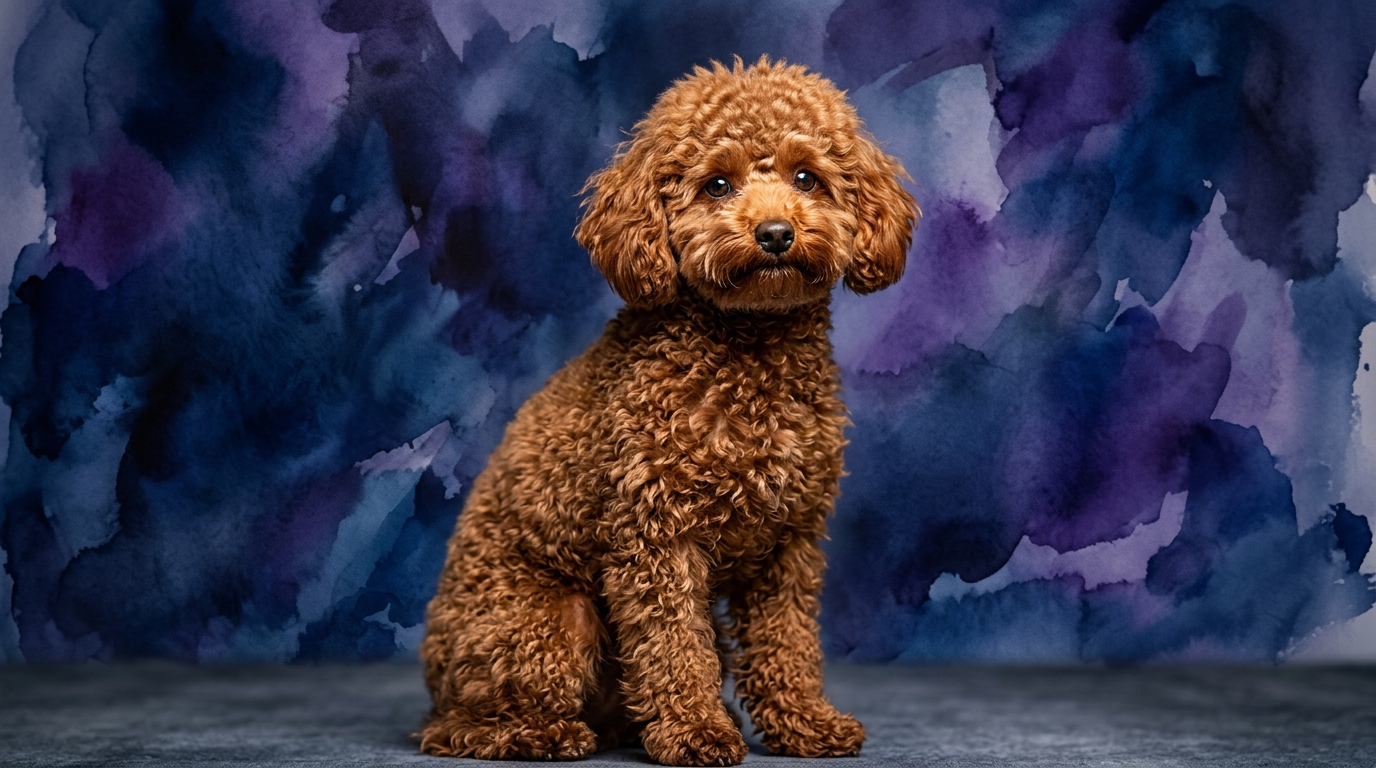
**Toy Poodle (Coren Rank #2):** This toy breed showcases a remarkable general cognitive aptitude. Their **Problem Solving (5/5)** demonstrates exceptional cognitive flexibility and abstract abilities; they quickly grasp novel concepts, figure out how to manipulate objects, and adapt strategies in new situations, often appearing to 'think through' challenges. With a **Training Speed (5/5)**, this breed is incredibly eager to learn and responds with remarkable speed to new commands and behaviors; their attentiveness and capacity for quick association make them highly receptive students. **Social Intelligence (3/5)** for Toy Poodles means they are generally attuned to their human companions, capable of forming strong bonds and understanding emotional cues, sensitive and able to navigate social interactions effectively, though sometimes with a preference for their immediate family. Their **Instinctive Drive (3/5)**, while rooted in water retrieving, has been significantly modulated in the toy variety; they retain some drive for play but are far less compelled by a singular, all-consuming instinct like scent tracking, making their drives more adaptable and less overwhelming. The Toy Poodle boasts an outstanding **Memory (5/5)**, particularly for learned behaviors, commands, and routines, retaining a vast repertoire of tricks and instructions over their lifetime, demonstrating robust recall that supports their high trainability and adaptability.
Where Beagle Wins Cognitively
The Beagle's cognitive strengths are undeniably rooted in their ancient purpose: the pursuit of scent. Their Problem Solving score of 4/5, while not matching the Poodle's abstract capacity, shines brightest in the field. A Beagle can unravel a complex scent puzzle, following faint traces across varied terrain, demonstrating a highly specialized form of intelligence that involves intricate sensory processing and persistent deduction. This isn't about solving a puzzle box for a treat; it's about reconstructing an invisible narrative from olfactory cues, a task few other breeds can match. Their Instinctive Drive of 5/5 isn't just a trait; it's a cognitive engine, fueling an unwavering focus that allows them to ignore distractions that would derail many other dogs. This drive, combined with a 4/5 Memory for scent trails, means a Beagle can consistently and reliably perform complex tracking tasks, recalling specific olfactory information and the paths associated with it even hours later. Their singular focus, while challenging in a domestic setting, represents a pinnacle of specialized canine cognition.
Where Toy Poodle Wins Cognitively
The Toy Poodle's cognitive profile showcases a remarkable versatility and capacity for abstract thought, earning them a Coren rank of #2. Their Problem Solving score of 5/5 means they are adept at figuring out novel situations, whether it's opening a cabinet or understanding a complex sequence of commands. This isn't just about repetition; it's about applying learned principles to new challenges, demonstrating a flexible and adaptive mind. Coupled with a 5/5 Training Speed, Toy Poodles absorb new information with astonishing alacrity, quickly forming associations between actions and consequences. They process and retain commands with minimal effort, making them exceptionally responsive. Their 5/5 Memory further solidifies this, allowing them to maintain a vast lexicon of learned behaviors and cues throughout their lives. Unlike the Beagle's specialized memory for scent, the Toy Poodle's memory is broad and applicable to diverse learning contexts, making them highly adaptable companions who thrive on mental engagement and varied tasks.
Which is Easier to Train and Why
When considering ease of training, the Toy Poodle holds a distinct advantage, primarily due to their stellar 5/5 Training Speed and 5/5 Memory. They are inherently motivated to engage with their human companions, quickly understanding and retaining commands. A Toy Poodle will often attempt to anticipate what is desired, eager to please and to earn rewards. This quick grasp of concepts and robust recall means that new behaviors can be taught in fewer repetitions, and existing commands remain solid over time, even with breaks in practice.
In contrast, the Beagle’s 2/5 Training Speed and powerful 5/5 Instinctive Drive present a different set of challenges. A Beagle's nose is their world; when a compelling scent presents itself, their focus on human instruction can diminish dramatically. Their independent hunting mentality means they are less inclined to automatically defer to human wishes, particularly if it interferes with their olfactory pursuits. Training a Beagle requires immense patience, consistent high-value rewards, and often, a battle against an environment rich with distracting smells. While they can learn, their learning pace is slower, and their retention of non-instinctive commands can be less reliable when their natural drives are activated.
Which Suits Active Owners vs Relaxed Owners
The choice between a Beagle and a Toy Poodle often hinges on an owner's lifestyle and energy levels. Beagles, with their 5/5 Instinctive Drive and the need to follow their nose, are best suited for active owners who relish outdoor adventures and can provide ample opportunities for mental and physical stimulation related to scent work. They require substantial daily exercise to manage their energy and satisfy their deep-seated need to explore and track. Owners who enjoy long walks, hikes, or even scent-based games will find a fulfilling companion in a Beagle. Their independent spirit means they thrive with owners who understand and respect their drive, rather than trying to suppress it entirely.
For more relaxed owners or those living in urban environments with less access to varied outdoor spaces, the Toy Poodle is often a more suitable choice. While they enjoy play and walks, their exercise needs are generally more moderate. Their high adaptability and strong bond with their human family mean they are content with indoor activities, puzzle toys, and consistent mental engagement through training and games. They thrive on being close to their people and are generally more amenable to a calmer, indoor-centric lifestyle, provided their cognitive needs are met through regular interaction and learning.
The Verdict
Choose a Beagle if you are an active, patient owner who understands and embraces a powerful scent drive, valuing a companion for outdoor exploration and specialized tracking activities.
Opt for a Toy Poodle if you seek a highly trainable, adaptable companion eager for mental engagement, thriving in a more domestic setting and bonding closely with their human family.
🧠 Find Your Pet's IQ Score
Our Pet IQ Lab assessment covers 25+ tests across 5 cognitive dimensions — personalized to your breed.
Take the Full IQ Test →Frequently Asked Questions
Are Beagles stubborn or just easily distracted?
Beagles are often perceived as stubborn due to their intense 5/5 Instinctive Drive; however, it's more accurate to say they are powerfully driven by scent and can be highly distracted by environmental stimuli. Their focus on following a trail often overrides their attention to human commands, making them seem unresponsive rather than willfully disobedient.
Can a Toy Poodle be a good working dog despite its 'Toy' classification?
Absolutely. Despite their size, Toy Poodles retain the exceptional Problem Solving (5/5) and Training Speed (5/5) of their larger Poodle relatives. They excel in obedience, agility, and even some assistance roles, demonstrating their capacity for complex tasks and their eagerness to learn, making them far more than just lap dogs.
What kind of mental stimulation is best for a Beagle given its IQ profile?
For a Beagle, mental stimulation that engages their 5/5 Instinctive Drive is paramount. Scent games, 'nose work' activities, or even controlled tracking exercises are ideal. These activities allow them to utilize their natural problem-solving skills (4/5) and memory (4/5) in a way that is deeply satisfying and mentally enriching for their breed.