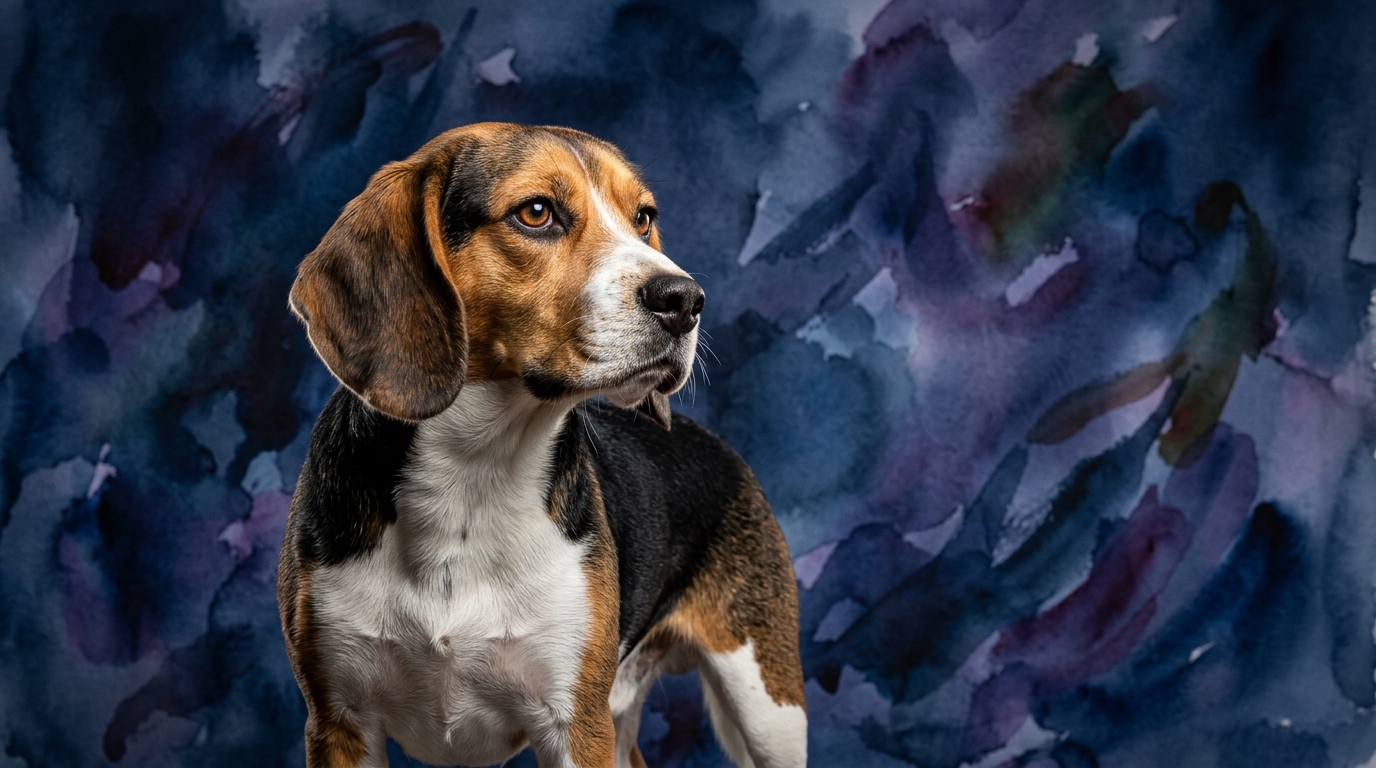
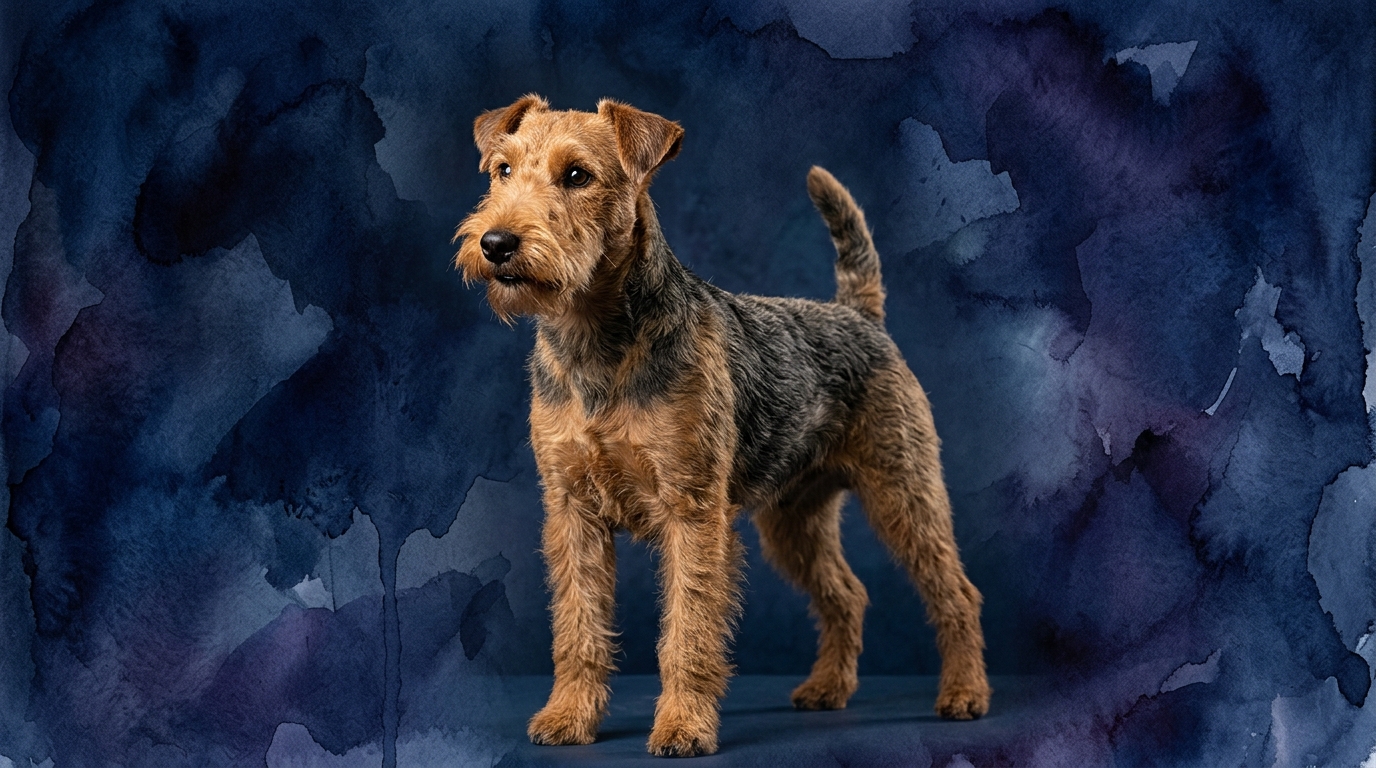
Side-by-Side IQ Profile: Beagle vs. Welsh Terrier
The Cosmic Pet Pet IQ Lab employs a five-dimensional framework to map canine cognition, offering a granular view beyond generic notions of 'smartness.' For the Beagle, a hound with a Coren ranking of #72, this profile highlights a deep specialization. Their Problem Solving is rated at 4/5, a reflection of their exceptional ability to untangle complex scent trails and locate hidden objects through persistent olfactory work. Training Speed, however, stands at 2/5, indicating an independent spirit often more compelled by a captivating smell than a human directive. Social Intelligence scores 3/5; while generally affable pack animals, a Beagle's nose can often override social cues. Their Instinctive Drive is a commanding 5/5, a testament to their powerful, unwavering pursuit of scent. Finally, Memory registers 4/5, particularly strong for retaining spatial information related to scent sources and established routes.
In contrast, the Welsh Terrier, a feisty terrier breed not included in Coren's traditional ranking, presents a more balanced, albeit distinct, cognitive signature. Their Problem Solving is marked at 3/5, demonstrating resourcefulness in tasks like digging out burrowing prey or navigating tight spaces, though perhaps less abstractly than a hound. Training Speed is rated 3/5, suggesting a willingness to learn but with the characteristic terrier independence requiring engaging methods. Social Intelligence, at 3/5, indicates they are typically devoted to their immediate family but can be reserved with strangers and sometimes selective with other dogs. Instinctive Drive is 3/5, present and directed towards small game, but not as overwhelmingly singular as a Beagle's scent obsession. Their Memory also scores 3/5, sufficient for routines and learned commands but possibly less expansive for complex sequences or subtle environmental details.
Where the Beagle Wins Cognitively
The Beagle's cognitive prowess shines brightest in arenas where their specialized senses and unwavering focus on scent are paramount. Their 4/5 Problem Solving score, coupled with a 5/5 Instinctive Drive, means they excel at tasks demanding sustained, detailed sensory analysis. Imagine a Beagle meticulously dissecting a complex scent puzzle, following an invisible thread through a myriad of distractions – this is where their brain truly thrives. Their superior Memory (4/5) further enhances this, allowing them to recall the exact location of a scent source, the twists and turns of a previous trail, or the rewards associated with successful tracking. This isn't just about finding; it's about processing, mapping, and retaining a rich tapestry of olfactory information. While other breeds might offer quick bursts of understanding, the Beagle offers a deep, methodical, and tenacious cognitive engagement with the world through its nose. Their ability to 'work a problem' through scent is a unique cognitive strength, making them unparalleled in fields like detection work or search and rescue where olfactory information is key.
Where the Welsh Terrier Wins Cognitively
While the Welsh Terrier may not boast a singularly dominant cognitive dimension like the Beagle's scent drive, their strength lies in a more generalized, adaptable intelligence, particularly evident in their Training Speed (3/5 vs Beagle's 2/5). This slight edge suggests a quicker receptiveness to novel commands and a greater capacity for varied learning experiences when properly motivated. Their 3/5 Instinctive Drive, while present, is less all-consuming than a Beagle's, allowing them to pivot more readily between tasks and be less distracted by a single compelling sensory input. This balance means a Welsh Terrier's problem-solving (3/5) is often applied to more immediate, practical challenges, like figuring out how to access a desired toy or outmaneuver a perceived obstacle, rather than abstract sensory tracking. They demonstrate a resourceful, 'can-do' attitude, often relying on their physical capabilities and quick thinking to achieve their goals. Their slightly more flexible focus allows them to engage with a wider array of training exercises and environmental stimuli without becoming singularly fixated.
Which Is Easier to Train and Why
When assessing ease of training, the raw scores provide a clear initial indication, but the underlying behavioral drivers tell a more complete story. The Beagle's Training Speed of 2/5 is significantly impacted by their overwhelming 5/5 Instinctive Drive. A Beagle encountering an intriguing scent is, by design, incredibly difficult to deter. This means that while they can learn commands, achieving consistent, immediate obedience in a stimulating environment is a considerable challenge. Their independence, a hallmark of their hound heritage, means they often prioritize their own investigations over human directives. Training a Beagle demands immense patience, high-value rewards that can compete with a fascinating smell, and creative methods to keep them engaged. Distractions are not merely minor hurdles; they are powerful, intrinsic motivators for the Beagle brain.
The Welsh Terrier, with its 3/5 Training Speed and more moderate 3/5 Instinctive Drive, presents a different set of challenges but generally offers a smoother training journey. While they possess the typical terrier independence and can be stubborn, their drive is not as singularly focused or as potent as a Beagle's scent obsession. They are more likely to engage in a give-and-take during training, responding well to positive reinforcement, variety, and clear expectations. Their problem-solving (3/5) often manifests in finding creative ways to get what they want, which, when channeled correctly, can make them quick learners of new behaviors. Consistency is key with a Welsh Terrier, but their attention is less likely to be completely hijacked by an environmental stimulus, making them marginally easier to teach and manage in varied settings.
Which Suits Active Owners vs. Relaxed Owners
Neither the Beagle nor the Welsh Terrier is a suitable companion for a truly 'relaxed' owner in the sense of minimal engagement. Both breeds require significant mental and physical stimulation to thrive and prevent undesirable behaviors.
For active owners, both present engaging opportunities, but with distinct requirements. An owner who embraces long, exploratory walks, scent work, and perhaps even formal tracking sports will find the Beagle an immensely rewarding partner. Their 5/5 Instinctive Drive and 4/5 Memory for scent-related information mean they need consistent outlets for their primary cognitive function. A Beagle without sufficient scent enrichment might become restless, vocal, or destructive, not out of malice but out of an unfulfilled biological imperative. Their activity needs are less about constant high-speed running and more about sustained, mentally taxing sensory exploration.
The Welsh Terrier also demands an active lifestyle, but one that is perhaps more varied in its demands. Owners who enjoy agility, interactive play, regular brisk walks, and providing puzzle toys will find the Welsh Terrier a fitting match. Their energy is often expressed in bursts, and their 3/5 Instinctive Drive, while not as consuming as a Beagle's, still means they will enjoy 'hunting' for toys or engaging in digging activities. They are often up for anything their family suggests, provided it's engaging and consistent. A Welsh Terrier left to their own devices without sufficient activity and mental challenges is more likely to invent their own entertainment, which can manifest as excessive digging, chewing, or boisterous behavior. While neither is a lap dog, the Welsh Terrier's more balanced drive might make them slightly more adaptable to different types of active engagement, whereas the Beagle's activity needs are very specifically tied to their nose.
The Verdict
Opt for a Beagle if your lifestyle embraces their profound scent drive, offering them ample opportunities for scent work, long exploratory walks, and a patient, consistent training approach.
Select a Welsh Terrier if you appreciate a spirited companion with a balanced cognitive profile, thriving on varied mental challenges, consistent training, and active engagement from their family.
🧠 Find Your Pet's IQ Score
Our Pet IQ Lab assessment covers 25+ tests across 5 cognitive dimensions — personalized to your breed.
Take the Full IQ Test →Frequently Asked Questions
Is a Beagle or Welsh Terrier better for urban living?
A Beagle can adapt to urban life if their intense scent drive is managed with leashed walks and scent games, preventing them from following intriguing smells into trouble. A Welsh Terrier also requires exercise and mental stimulation in an urban setting, but their moderate prey drive might make them slightly less prone to bolting than a Beagle if off-leash opportunities are rare.
Do Beagles or Welsh Terriers get along better with other pets?
Beagles, being pack animals, often integrate well with other dogs, though their strong prey drive might pose a challenge with small non-canine pets. Welsh Terriers can be more selective with other dogs and retain a strong prey drive towards smaller animals, requiring careful introductions and supervision.
Which breed learns tricks faster?
The Welsh Terrier, with its slightly higher training speed (3/5 vs 2/5) and less all-consuming instinctive drive, may learn a broader range of tricks faster than a Beagle. Beagles can learn tricks, but their focus is often redirected by environmental scents, demanding more patience and specific motivation.