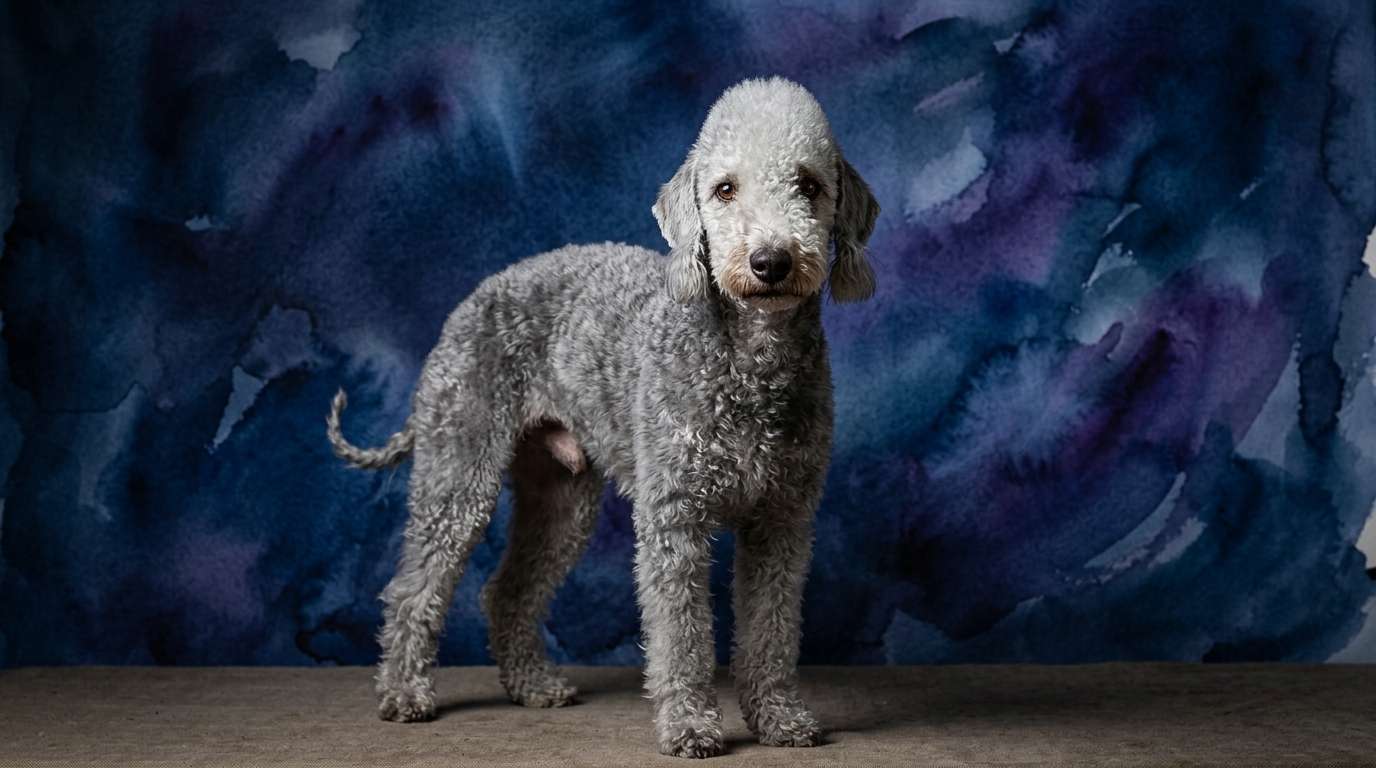
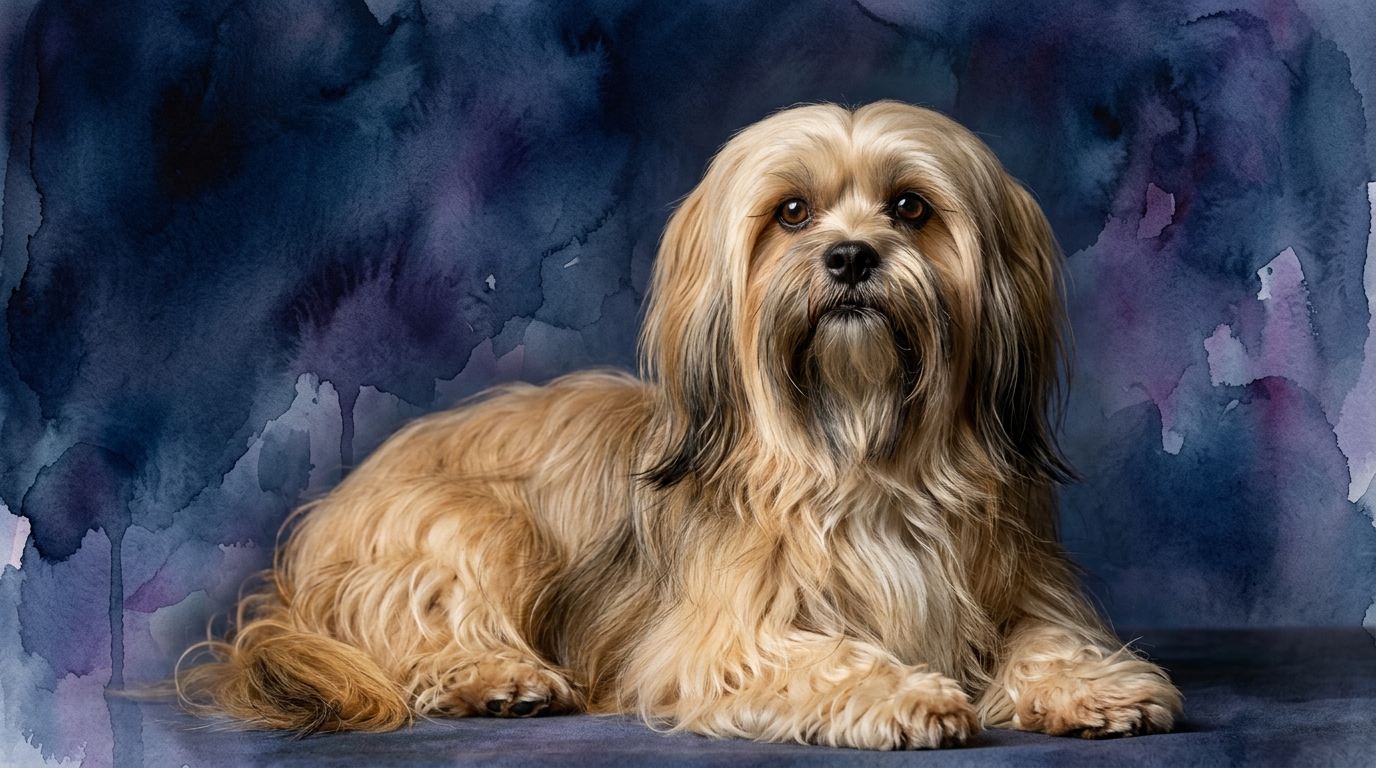
Side-by-Side IQ Profile: Bedlington Terrier vs. Lhasa Apso
At The Cosmic Pet Pet IQ Lab, we assess canine cognition across five critical dimensions to provide a comprehensive view of a breed's mental landscape. Both the Bedlington Terrier and the Lhasa Apso register a consistent score of 3/5 in every category, indicating a moderate level of aptitude across the board. However, the true insight comes from understanding how these scores translate into their everyday behaviors and learning styles, heavily influenced by their breed origins.
The Bedlington Terrier, a breed hailing from Northumberland, England, was historically employed as a poacher's companion, requiring a unique blend of cunning and independence. Its Problem Solving score of 3/5 reflects a resourceful mind, adept at navigating complex environments or figuring out how to get to a desired object, often with a terrier's characteristic determination. Training Speed at 3/5 suggests they are capable learners, but their independent streak means lessons must be engaging and consistent to hold their interest. Social Intelligence, also 3/5, manifests as strong bonds with their immediate family, though they can be reserved with strangers. Their Instinctive Drive of 3/5 points to a moderate but present prey drive, often expressed through chasing small animals or digging. Finally, a Memory score of 3/5 indicates they retain learned commands and routines effectively, and can also remember past experiences, both positive and negative, shaping future interactions.
Conversely, the Lhasa Apso, originating from the harsh climate of Tibet, served as a sentinel dog in monasteries and noble homes, valued for its keen senses and independent judgment. Its Problem Solving score of 3/5 often translates into clever strategies for getting its own way or skillfully navigating household dynamics to achieve a desired outcome. The Training Speed of 3/5 for the Lhasa Apso, while numerically identical to the Bedlington, is often perceived differently by owners; they learn quickly but frequently choose not to comply if they don't see the immediate benefit, a trait reflected in their Coren rank of #68, placing them lower on the obedience intelligence scale. Social Intelligence at 3/5 shines in their deep devotion to their family, coupled with a naturally discerning and often aloof demeanor towards outsiders, making them excellent watchdogs. Their Instinctive Drive of 3/5 is primarily expressed as territorial vigilance and alert barking, rather than a strong prey drive. A Memory score of 3/5 means they recall routines, people, and perceived injustices with clarity, contributing to their reputation for holding grudges.
Where Bedlington Terrier Cognition Shines
Despite identical numerical scores, the Bedlington Terrier often demonstrates a particular cognitive advantage in tasks requiring physical ingenuity and persistence, rooted in its working heritage. Their Problem Solving at 3/5 is frequently applied to more tangible challenges, such as figuring out how to access a forbidden treat, or navigating a tricky obstacle course, often employing a trial-and-error approach fueled by their terrier tenacity. This practical application of their problem-solving skills makes them adept at activities like earthdog trials or agility, where quick, independent decisions are rewarded.
The Bedlington's Instinctive Drive, also 3/5, while moderate, fuels a specific type of observational intelligence. They possess a keen awareness of their surroundings, particularly for movement and scent, making them excellent at spotting small prey or noticing subtle changes in their environment. This translates into a focused attention during training games that mimic hunting or chasing, allowing their Memory (3/5) to quickly associate actions with rewards in these contexts. Their Social Intelligence (3/5) encourages them to actively engage with their human companions in playful, often boisterous, interactions, indicating a cognitive preference for dynamic, shared activities.
Where Lhasa Apso Cognition Excels
The Lhasa Apso, with its sentinel background, exhibits cognitive strengths that lean towards social acumen and environmental awareness. Their Problem Solving (3/5) is often directed at understanding and influencing human behavior, learning how to manipulate situations to their advantage within the home environment. This might involve subtly communicating desires, or cleverly avoiding unwanted commands, showcasing a different facet of intelligence compared to the Bedlington's more physical problem-solving.
The Lhasa Apso's Social Intelligence (3/5) is particularly pronounced in its discerning ability to differentiate between family members and strangers, and to interpret social cues. They are astute judges of character, quickly assessing newcomers and deciding whether they pose a threat or are trustworthy, a critical trait for their historical role as guardians. Their Memory (3/5) is particularly strong for routines, human patterns, and social interactions, allowing them to anticipate events and respond appropriately. This contributes to their effective role as a watchdog, as they remember who belongs and who doesn't, making their Instinctive Drive (3/5) for vigilance incredibly effective.
Which Is Easier to Train and Why?
While both breeds share a Training Speed score of 3/5, indicating a moderate capacity for learning, the practical experience of training them can differ significantly due to their inherent temperaments and motivations. The Bedlington Terrier, with its terrier spirit, can be stubborn but often responds well to positive reinforcement, especially when training is framed as a fun game or involves elements of chase and reward. Their moderate prey drive can be harnessed to motivate them, making them eager participants in activities that tap into their natural inclinations. Consistency and patience are key, but their desire to engage in 'work' with their owner can make them feel more receptive to structured learning.
The Lhasa Apso, despite its identical Training Speed score, is frequently perceived as more challenging to train for obedience. This is largely due to its independent and self-willed nature, a direct legacy of its sentinel role where independent judgment was prized over strict adherence to commands. They are certainly capable of learning, but they often require a compelling reason to comply, and may choose to ignore commands if they deem them unnecessary or prefer their own agenda. Their Coren ranking of #68 further underscores this, indicating they are among the breeds that require more repetitions to learn new commands and are less reliable in obeying them without consistent reinforcement. Training a Lhasa Apso demands exceptional patience, creativity, and a deep understanding of their unique motivations, focusing on building a strong bond and making training a collaborative effort rather than a command-and-control dynamic.
Suitability for Active vs. Relaxed Owners
Considering their distinct cognitive applications and temperaments, the Bedlington Terrier and Lhasa Apso naturally align with different owner lifestyles. The Bedlington Terrier, despite its elegant appearance, is a true terrier at heart, requiring a moderately active owner who can provide ample physical exercise and mental stimulation. Owners who enjoy long walks, interactive play sessions, or even dog sports like agility or earthdog trials will find a highly engaged and satisfied companion in a Bedlington. Their problem-solving abilities thrive when given challenges, and a lack of engagement can lead to boredom-driven behaviors like digging or excessive barking. They are best suited for individuals or families who can channel their energetic and clever minds into constructive activities.
The Lhasa Apso, while not a couch potato, generally suits more relaxed owners who appreciate a discerning and independent companion. They require regular, moderate exercise, such as daily walks, but do not typically demand the intense physical output of a terrier. Owners who are patient, understand the nuances of an independent breed, and value a vigilant presence will find the Lhasa Apso a rewarding companion. Their cognitive strengths lie in observation and social interaction within the home, making them ideal for individuals who enjoy a loyal, watchful presence but are comfortable with a dog that values its own space and opinions. They thrive in environments where their independent spirit is respected, and their role as a discerning guardian is appreciated.
The Verdict
Choose the Bedlington Terrier if you seek an engaging, energetic companion who thrives on physical and mental challenges, and you appreciate a clever, tenacious spirit eager to participate in activities.
Opt for the Lhasa Apso if you value a discerning, loyal, and independent companion that excels as a vigilant home guardian, and you are prepared for a training journey that respects a self-willed nature.
🧠 Find Your Pet's IQ Score
Our Pet IQ Lab assessment covers 25+ tests across 5 cognitive dimensions — personalized to your breed.
Take the Full IQ Test →Frequently Asked Questions
Are Bedlington Terriers prone to barking?
Like many terriers, Bedlingtons can be vocal, especially if bored, unexercised, or if their keen senses detect something unusual. Consistent training and mental stimulation are crucial to manage excessive barking.
Are Lhasa Apsos good with children?
Lhasa Apsos can be good with children, particularly older, respectful ones, but they are discerning and prefer calm interactions. They may not tolerate rough play and are often best suited for families who understand their independent and sometimes aloof nature.
How do their grooming needs compare?
The Bedlington Terrier has a unique, woolly, non-shedding coat that requires regular clipping every 6-8 weeks to maintain its distinctive lamb-like appearance. The Lhasa Apso boasts a long, flowing double coat that needs daily brushing to prevent mats and tangles, along with regular professional grooming.