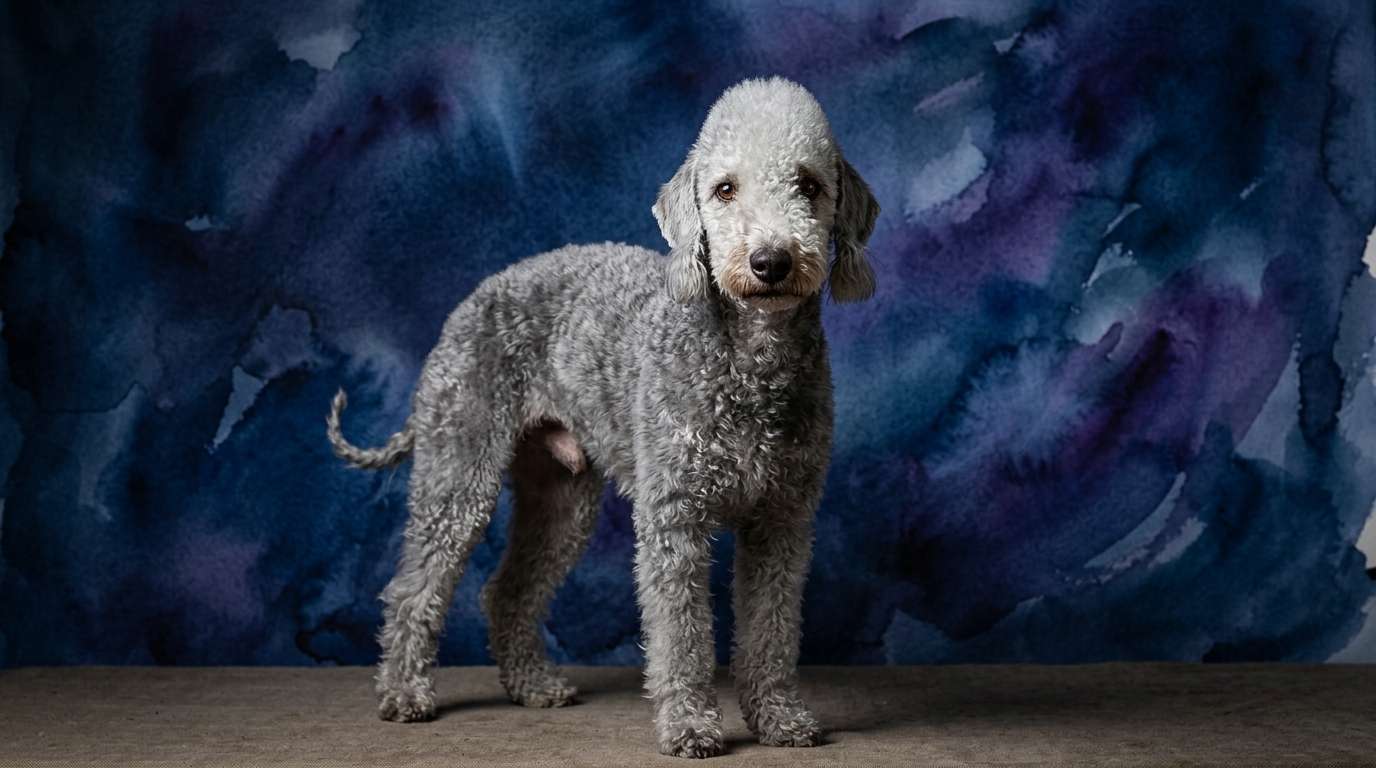

Side-by-Side Cognitive Profiles
On paper, the Bedlington Terrier and the Parson Russell Terrier share an identical cognitive blueprint, each scoring a solid 3 out of 5 across all five measured dimensions. This indicates a good, functional level of intelligence, but the true nuance lies in how these scores manifest within their distinct breed temperaments and physical attributes.
For the **Bedlington Terrier**, a 3/5 in **Problem Solving** suggests they are capable of navigating moderately complex situations, often with an agile and somewhat cautious approach. Their unique build, resembling a lamb, belies a tenacious terrier spirit, which means they can figure out how to access desired areas or overcome obstacles, but perhaps with less overt brute force than some other terriers. A 3/5 in **Training Speed** indicates they can pick up new commands and routines at a respectable pace. They are often eager to please their primary caregivers, yet their sensitive nature means they respond best to positive reinforcement and can become withdrawn if training is harsh or inconsistent. Their **Social Intelligence** at 3/5 points to a capacity for forming deep bonds with their family, often reading human cues effectively, though they can be reserved or discerning with strangers. This sensitivity can make them attuned to household dynamics. An **Instinctive Drive** of 3/5 means they possess a noticeable prey drive, typical of terriers, which they might channel into chasing small animals or excelling in dog sports like lure coursing, but it may not be as constantly 'on' as in some other working breeds. Finally, a 3/5 in **Memory** suggests they retain learned behaviors, routines, and past experiences well, remembering both positive and negative interactions with clarity.
The **Parson Russell Terrier**, mirroring these scores, also exhibits a 3/5 in **Problem Solving**, but their approach is often characterized by relentless determination and a robust, independent spirit. Bred for working underground, they excel at persistent pursuit and finding solutions through sheer tenacity, whether it's unearthing a toy or navigating a complex agility course. Their 3/5 in **Training Speed** means they are certainly capable learners, but their independent nature and strong will require consistent, engaging, and varied training methods to prevent boredom or stubbornness from taking root. Repetitive drills might be met with disinterest. A 3/5 in **Social Intelligence** for the Parson Russell means they are alert and observant of their surroundings, often quite social and outgoing, though they might communicate their needs and desires more directly and less subtly than a Bedlington. They are typically confident in new social settings. Their **Instinctive Drive** at 3/5 is pronounced, reflecting their heritage as dedicated hunting dogs. This translates to an intense prey drive, a love for digging, and an enduring stamina, often requiring significant outlets. Lastly, a 3/5 in **Memory** indicates they have an excellent recall for patterns, scent trails, and effective strategies for achieving their goals, including remembering where they buried a prized possession or how to outsmart a baby gate.
Where the Bedlington Terrier Wins Cognitively
While their raw scores are identical, the Bedlington Terrier often demonstrates a nuanced cognitive edge in areas requiring sensitivity and a more refined social understanding. Their generally less intense instinctive drive (though still present) compared to the Parson Russell can free up cognitive resources for more sophisticated social navigation within a domestic setting. This might mean a Bedlington is quicker to pick up on subtle emotional shifts in their family members, potentially leading to more empathetic responses.
Their unique appearance and sometimes more reserved demeanor can also contribute to a different kind of problem-solving. A Bedlington might employ agility and careful observation to achieve a goal, rather than sheer force or relentless pursuit. For instance, they might more readily adapt to novel, less 'prey-driven' puzzle toys, using a delicate paw or nose to manipulate parts, whereas a Parson might attempt to deconstruct it more vigorously.
Where the Parson Russell Terrier Wins Cognitively
The Parson Russell Terrier's cognitive strengths shine particularly in situations demanding tenacity, independent decision-making, and sustained focus on a task, especially those involving their strong prey drive. Their problem-solving (3/5) is often characterized by an unwavering resolve; they are less likely to give up on a challenge once engaged, a trait honed by generations of hunting work. This makes them exceptional at tasks requiring persistence, such as tracking games or complex scent work, where they will methodically work through a problem until a solution is found.
Their instinctive drive (3/5), while present in both, is arguably more central to the Parson Russell's cognitive application. This drive fuels their intellectual engagement in activities like earthdog trials or agility, where quick, independent thinking and decisive action are paramount. They might excel at quickly assessing and reacting to environmental changes in a dynamic outdoor setting, relying on their keen senses and robust memory for terrain.
Which is Easier to Train and Why
Determining which breed is 'easier' to train is less about raw intelligence and more about temperament and motivation. The Bedlington Terrier's sensitivity (part of their social intelligence and training speed profile) can make them highly responsive to positive reinforcement and gentle guidance. They often possess a desire to please their primary handler, which, when coupled with a calm and consistent approach, can lead to rapid learning. However, this sensitivity also means they can be easily discouraged or shut down by harsh corrections, making patience and a light touch essential. Their training might feel more like a cooperative partnership, relying on mutual understanding and trust.
The Parson Russell Terrier, while equally capable of learning (3/5 training speed), presents a different training dynamic. Their strong will and independent nature, rooted in their working heritage, mean they require a trainer who is consistent, firm, and inventive. They can become bored quickly with repetitive drills and might offer their own 'solutions' if not adequately engaged. Training a Parson often involves channeling their boundless energy and intense focus into productive outlets, making it feel more like a dynamic challenge. Owners must be prepared to be more creative with their training sessions, incorporating games, puzzles, and varied environments to hold the Parson's attention and harness their persistent drive.
Which Suits Active Owners vs. Relaxed Owners
The distinction between these two terriers becomes clearer when considering owner lifestyle. The Parson Russell Terrier is undeniably suited for highly active owners. Their robust instinctive drive and problem-solving tenacity mean they require significant daily physical exercise and mental stimulation. Owners who enjoy long hikes, running, dog sports like agility or earthdog trials, and who can provide consistent, engaging training will find the Parson Russell a tireless and enthusiastic companion. A relaxed owner might quickly find themselves overwhelmed by a Parson's unmet needs, potentially leading to destructive behaviors born of boredom and excess energy.
The Bedlington Terrier, while certainly an active breed that enjoys exercise and mental challenges, can be a better fit for owners who are active but perhaps not quite as intensely driven as those suited for a Parson. Bedlingtons thrive on varied activities, from brisk walks to puzzle toys and agility, but their energy output is often more manageable. They appreciate quality time with their family, and while they need consistent engagement, they might be more content with periods of quiet companionship after a good exercise session. A moderately active owner who enjoys daily walks and indoor play, and can provide a sensitive and consistent home environment, would likely find a Bedlington a delightful partner.
The Verdict: When to Choose Each
The Verdict
Choose the Bedlington Terrier if you appreciate a sensitive, agile companion who thrives on positive interaction and a moderately active lifestyle, offering a unique blend of terrier tenacity and gentle charm. They are an excellent choice for those seeking a devoted family member who is observant of subtle cues and responds well to a calm, consistent approach.
Opt for the Parson Russell Terrier if you are a highly active individual or family ready to embrace a dog with relentless drive, independent problem-solving skills, and a boundless zest for adventure. They are ideal for owners committed to extensive physical exercise, creative mental stimulation, and consistent, engaging training that channels their formidable terrier spirit.
🧠 Find Your Pet's IQ Score
Our Pet IQ Lab assessment covers 25+ tests across 5 cognitive dimensions — personalized to your breed.
Take the Full IQ Test →Frequently Asked Questions
Do Bedlington Terriers and Parson Russell Terriers require similar amounts of mental stimulation?
Both breeds, scoring 3/5 in problem-solving and memory, definitely benefit from consistent mental engagement. However, the Parson Russell Terrier's intense instinctive drive often necessitates more vigorous and varied mental challenges to prevent boredom and destructive behaviors, whereas a Bedlington might be content with a slightly less demanding routine, albeit still requiring daily enrichment.
Are Bedlington Terriers or Parson Russell Terriers better with children?
Both breeds can be good with children when properly socialized and raised, though their temperaments differ. Bedlingtons, with their sensitive social intelligence, can be gentle and devoted, but might prefer calmer interactions. Parson Russells, with their robust and energetic nature, might thrive with active, respectful children who understand how to engage them in play, but supervision is always key due to their strong prey drive and boisterousness.
Given their identical IQ scores, what's the most significant differentiator between their cognitive application?
The most significant differentiator is how their instinctive drive and temperament influence their problem-solving and training approaches. The Bedlington's sensitivity often leads to a more nuanced, agile problem-solving style and a greater responsiveness to gentle training, while the Parson Russell's relentless tenacity and independent nature drive a more direct, persistent problem-solving approach, requiring more creative and consistent training methods.