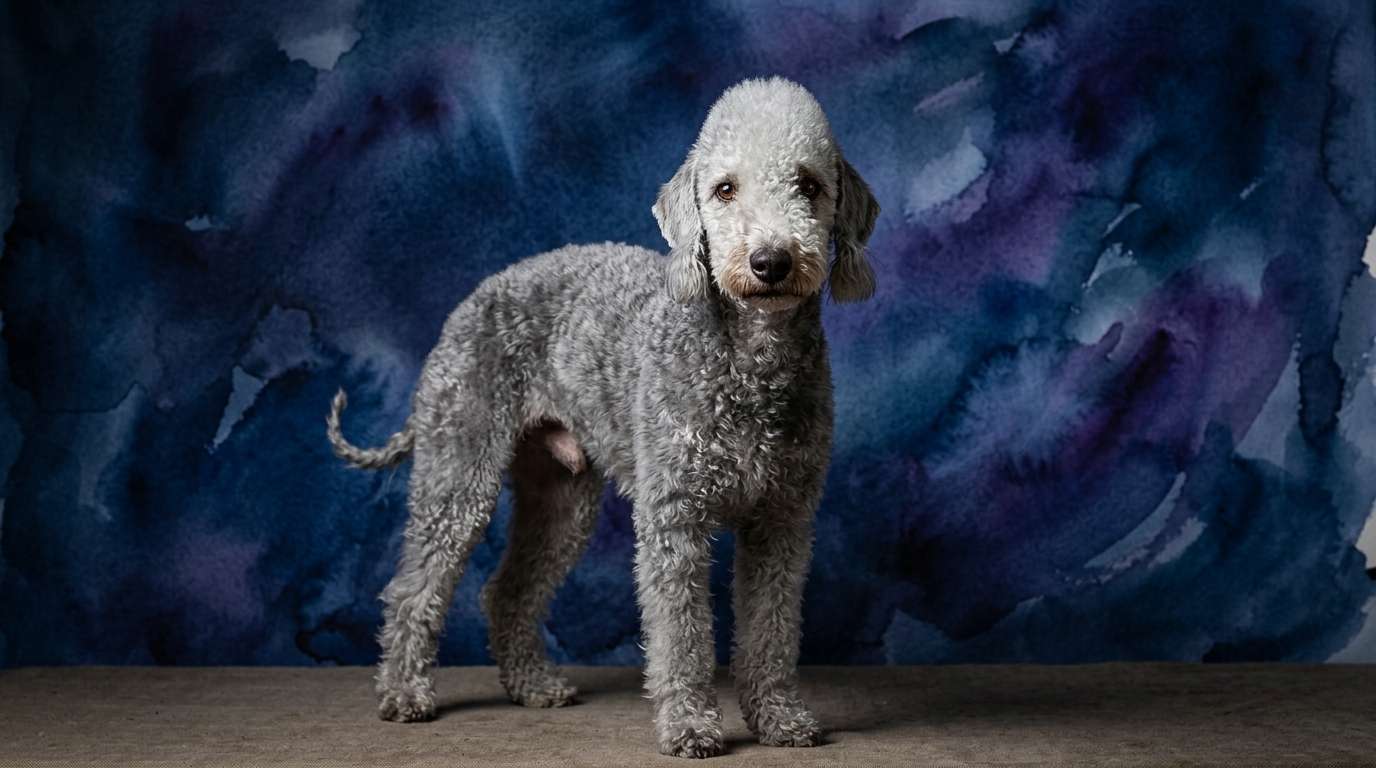

Side-by-Side IQ Profile: Bedlington Terrier vs. Rat Terrier
The Cosmic Pet Pet IQ Lab assesses canine intelligence across five critical dimensions, providing a granular view of a breed’s cognitive strengths. For both the Bedlington Terrier and the Rat Terrier, all five categories — Problem Solving, Training Speed, Social Intelligence, Instinctive Drive, and Memory — are rated at a balanced 3 out of 5, suggesting a moderate yet capable intellectual foundation.
For the Bedlington Terrier, a 3/5 in Problem Solving indicates an ability to navigate moderately complex challenges, often employing a thoughtful, somewhat deliberate approach to overcome obstacles or achieve desired outcomes, particularly when motivated by companionship or comfort. Their Training Speed at 3/5 suggests they grasp new commands and routines at a steady pace, responding well to consistent, positive reinforcement methods that build upon their desire to please their primary caregivers. Social Intelligence, also 3/5, points to a moderate capacity for interpreting human emotions and social cues, allowing them to integrate effectively into family dynamics with a keen awareness of their environment, though they may reserve their deepest bonds for a select few. An Instinctive Drive of 3/5 reflects a moderate expression of their terrier heritage, manifesting as a balanced prey drive and alertness without being overwhelmingly hyper-focused, capable of engaging in appropriate terrier activities. Finally, a 3/5 in Memory signifies a good retention of learned behaviors, routines, and experiences, enabling them to recall commands and adapt to familiar situations over time.
Similarly, the Rat Terrier's 3/5 in Problem Solving reveals a practical and often quick-witted approach to figuring things out, especially when tasks involve exploration or achieving a tangible goal like accessing a hidden treat or navigating a new space. Their Training Speed, rated at 3/5, indicates they learn at a comparable pace to the Bedlington, but their independent streak may require more engaging and varied training sessions to maintain focus and enthusiasm. Social Intelligence at 3/5 means they are adept at reading their surroundings and interacting with both humans and other animals, often displaying a friendly yet somewhat reserved demeanor, observing before fully engaging. Their Instinctive Drive, also 3/5, manifests as a robust and persistent prey drive, characteristic of their historical role as vermin hunters, requiring appropriate outlets for this natural inclination. A 3/5 in Memory suggests a reliable capacity to remember commands, boundaries, and the layout of their territory, contributing to their adaptability and independent nature.
Where the Bedlington Terrier Wins Cognitively
Despite identical numerical scores, the Bedlington Terrier often demonstrates a unique cognitive strength in their refined social attunement and emotional responsiveness within a settled domestic environment. Their 3/5 social intelligence, while not exceptional, often translates into a more nuanced understanding of subtle human mood shifts and a greater inclination towards reciprocal emotional engagement, making them particularly adept at forming deep, empathetic bonds with their chosen family members. This manifests as a thoughtful consideration of their owner's presence and a subtle communication style, perhaps appearing more 'tuned-in' to the emotional atmosphere of a home.
Furthermore, their problem-solving, while rated 3/5, can lean towards tasks that require a more patient, analytical approach when the reward is comfort or affection. They might excel at puzzles that involve gentle manipulation or observation rather than brute force or rapid-fire trial and error, showcasing a quiet determination to figure things out for a desired outcome, such as getting a favorite toy from under furniture. Their memory, at 3/5, often seems particularly strong for routines and the emotional tenor of past interactions, contributing to their consistent and affectionate behavior within a stable home.
Where the Rat Terrier Wins Cognitively
The Rat Terrier's cognitive advantages often lie in their practical, action-oriented problem-solving and their robust instinctive drive, stemming from their heritage as versatile farm dogs. Their 3/5 problem-solving frequently shines in dynamic, real-world scenarios where quick assessment and independent action are required, such as figuring out how to navigate complex outdoor spaces or outsmarting a clever squirrel. This isn't just about raw speed, but an intelligent application of their physical capabilities and keen senses to immediate environmental challenges.
Their 3/5 instinctive drive, while shared numerically, translates into a more pronounced and adaptable predatory sequence, making them exceptionally skilled at tasks involving scent work, tracking, or engaging with moving objects. This drive fuels a persistent curiosity and a desire to explore and 'work,' which can be channeled into highly engaging cognitive tasks that leverage their natural inclinations. Their memory, also 3/5, is often particularly strong for spatial layouts and the locations of interesting scents or prey, making them excellent navigators and persistent explorers within their established territories.
Which is Easier to Train and Why
When considering ease of training, both breeds score 3/5 in training speed, implying they learn at a moderate pace. However, their underlying behavioral differences significantly impact the training experience. The Bedlington Terrier, with its social intelligence leaning towards strong human bonding and a more moderate instinctive drive, often responds well to training methods that emphasize partnership and positive reinforcement, especially when the reward is praise or close interaction. They tend to be more sensitive to their owner's emotions, which can make them eager to please and relatively compliant once a strong relationship is established, making them 'easier' in the sense of being more emotionally responsive to guidance.
The Rat Terrier, conversely, while equally capable of learning new commands at a 3/5 speed, brings a more independent and sometimes stubborn streak to the training arena, fueled by their robust instinctive drive and inherent self-reliance. Their training often requires more creativity, variety, and a clear demonstration of 'what's in it for them,' whether it's a high-value treat, a stimulating game, or the opportunity to engage their prey drive in a controlled manner. They are not less capable, but their training requires an owner who understands how to harness their independent spirit and keep sessions engaging, perhaps feeling 'harder' for a novice trainer due to their need for consistent motivation and mental stimulation beyond simple obedience.
Which Suits Active Owners vs. Relaxed Owners
For owners seeking a companion that balances activity with periods of calm companionship, the Bedlington Terrier often presents a more suitable choice. Their moderate instinctive drive and social intelligence mean they enjoy regular exercise, walks, and structured play, but are generally content to settle down indoors, often curling up close to their family. They appreciate consistent routines and a comfortable home environment, making them adaptable to owners who enjoy moderate daily activity but also cherish relaxed evenings and quiet indoor time, provided their needs for interaction and mental stimulation are met.
The Rat Terrier, with its history as a working farm dog and a slightly more pronounced instinctive drive, typically thrives with active owners who can provide ample opportunities for varied physical exercise and mental engagement. They excel in activities like agility, earthdog trials, or long hikes where their problem-solving skills and keen senses can be fully utilized. A Rat Terrier is less likely to be content with solely sedentary periods and will require consistent outlets for their boundless energy and curiosity, making them an ideal match for individuals or families who embrace an active, outdoor-oriented lifestyle and can integrate their dog into dynamic adventures.
The Verdict
Choose the Bedlington Terrier if you value a deeply bonded companion who offers refined social interaction and a graceful presence, thriving on consistent routines and emotional connection within a moderately active home. They are a good fit for owners who appreciate a dog that is engaged but also content with periods of quiet companionship.
Opt for the Rat Terrier if you seek an independent, spirited partner for varied adventures and active engagement, one who excels at practical problem-solving and has a robust drive for exploration and 'work.' They are best suited for owners who can provide consistent, stimulating outlets for their energy and sharp mind.
🧠 Find Your Pet's IQ Score
Our Pet IQ Lab assessment covers 25+ tests across 5 cognitive dimensions — personalized to your breed.
Take the Full IQ Test →Frequently Asked Questions
Do Bedlington Terriers bark a lot?
Bedlington Terriers can be vocal, especially when alerting to strangers or unusual sounds, reflecting their terrier vigilance. However, with proper training and socialization, their barking can be managed, and they are not typically considered excessive barkers compared to some other terrier breeds.
Are Rat Terriers good with children?
Rat Terriers can be excellent family dogs, often forming strong bonds with children due to their playful and energetic nature. Supervision is always recommended, especially with younger children, to ensure respectful interactions from both the dog and the child.
Which breed is more prone to separation anxiety?
Both breeds can potentially develop separation anxiety if not properly acclimated to being alone or if their social and exercise needs are not met. Bedlington Terriers, due to their strong bonding, might show signs of distress if left alone for very long periods, while Rat Terriers might channel their anxiety into destructive chewing or barking due to boredom or lack of mental stimulation.