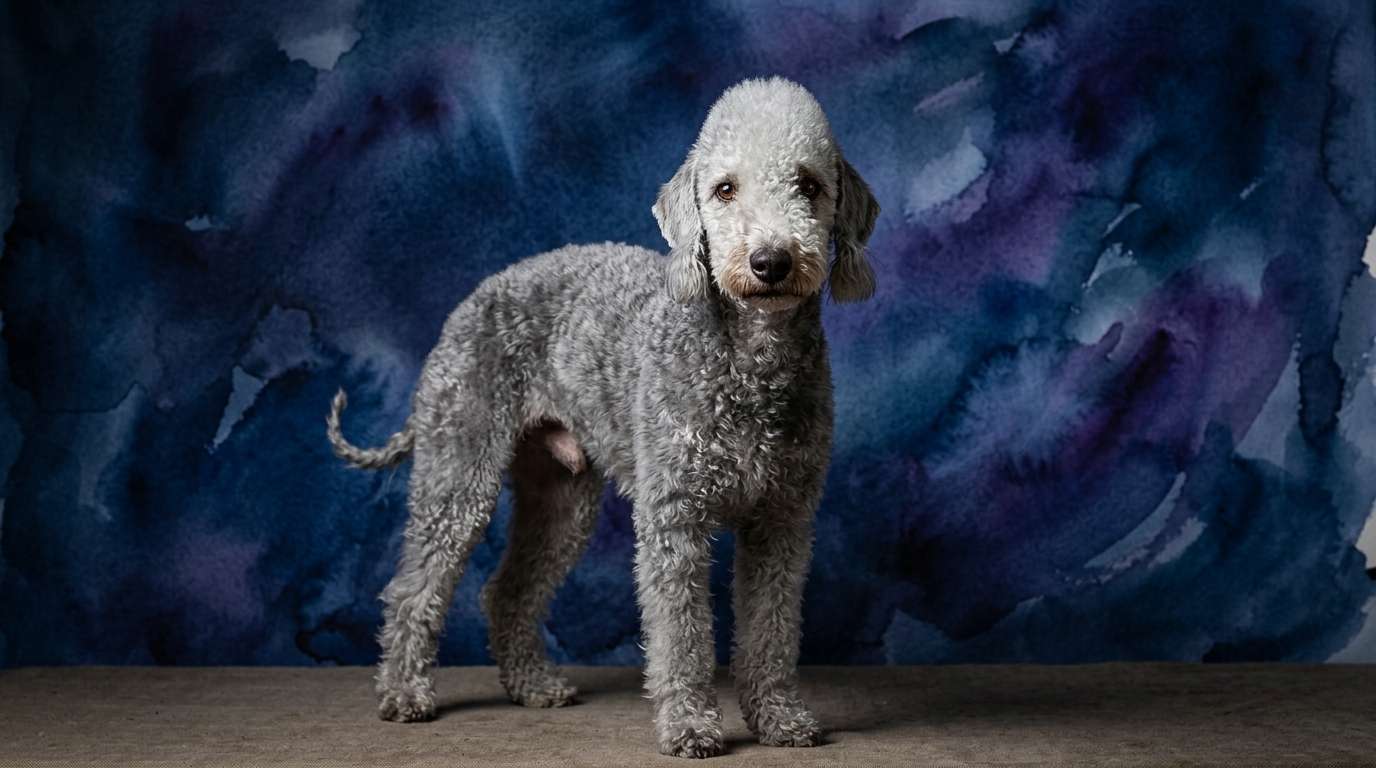

Side-by-Side Cognitive Profile: Bedlington vs Skye Terrier
At first glance, the Pet IQ Lab scores for both the Bedlington Terrier and the Skye Terrier present a remarkable congruence, with each breed scoring 3/5 across all five measured cognitive dimensions. This alignment suggests that neither breed exhibits extreme capabilities or deficiencies in these areas, instead demonstrating a solid, moderate level of cognitive function typical of many terrier breeds. However, understanding what a 3/5 truly means requires delving into the specific ways these moderate scores manifest within each breed's unique temperament and historical background.
For the Bedlington Terrier, a 3/5 in Problem Solving indicates a capable mind that can navigate common challenges and learn from experience. Their historical role as agile ratters and vermin hunters suggests a practical, adaptable approach to figuring things out, often involving quick movements and assessing their environment for opportunities. In Training Speed, a 3/5 means they are receptive to learning new commands and routines, but require consistency and positive reinforcement to solidify behaviors, rather than picking things up instantly. Their Social Intelligence at 3/5 points to a capacity for forming strong bonds with their human family and understanding social cues, while still possessing a degree of terrier independence. An Instinctive Drive of 3/5 highlights their moderate prey drive and natural inclination towards chasing and digging, a heritage from their working past. Finally, a Memory score of 3/5 indicates they retain learned behaviors and recall experiences reliably, though perhaps not with the intricate detail of breeds specializing in complex multi-step tasks.
The Skye Terrier, sharing identical 3/5 scores, interprets these dimensions through a different lens. Their Problem Solving at 3/5 often manifests as a tenacious, focused effort, particularly when pursuing a goal or investigating something of interest. Historically bred to hunt vermin in rocky burrows, their problem-solving tends towards persistence and determination rather than rapid agility. Their Training Speed, also 3/5, means they are perfectly capable of learning, but their strong will and independent nature might demand more creative, patient, and highly motivating training methods to engage their cooperation fully. A 3/5 in Social Intelligence indicates they are deeply loyal to their chosen few, capable of profound connection and understanding of their family's dynamics, though they tend to be more reserved with strangers than the Bedlington. Their Instinctive Drive of 3/5, like the Bedlington, reflects their terrier heritage, often expressed through scent tracking, digging, and a watchful guardianship. A Memory score of 3/5 means they too remember routines and commands, with a particular capacity for recalling specific locations or sequences relevant to their interests, often with a subtle, observant precision.
Where the Bedlington Terrier Shines Cognitively
Despite sharing identical numerical scores, the Bedlington Terrier often demonstrates a particular cognitive advantage in areas requiring adaptability and fluid responsiveness. Their lithe, athletic build and history as versatile working dogs imbue their 3/5 problem-solving with a distinct agility. They are adept at quickly assessing and navigating dynamic physical environments, making split-second decisions to maneuver around obstacles or pursue a moving target. This manifests as a more fluid and less rigid approach to cognitive challenges, where quick adjustments are key.
The Bedlington's generally more outgoing and less independently-minded temperament also gives them a perceived edge in certain training scenarios. While their Training Speed is 3/5, their eagerness to engage and please their human companions can make training feel more straightforward and less resistant. They are often more receptive to verbal praise and positive reinforcement, which can accelerate the apparent learning process for tasks requiring active cooperation and interaction with their handler. This makes their moderate training speed feel more accessible to a wider range of owners.
Furthermore, their 3/5 social intelligence often expresses itself with greater versatility in varied social contexts. Bedlingtons tend to adapt more readily to new people, pets, and environments, showcasing a flexible understanding of social dynamics. This means their ability to read and respond to social cues, while numerically moderate, appears more broadly applicable and less selective, contributing to a smoother integration into diverse family and public settings.
Where the Skye Terrier Excels Cognitively
The Skye Terrier's cognitive strengths, while also rooted in a 3/5 profile, lie in areas demanding deep focus and unwavering persistence. Their historical purpose, often involving solitary work in challenging terrain, has honed their 3/5 problem-solving into a formidable tool for sustained effort. They are exceptionally good at tasks requiring prolonged concentration, such as intricate scent work or figuring out complex puzzle toys through methodical, repeated attempts. This isn't about speed, but about an unyielding dedication to reaching a solution.
Their 3/5 social intelligence, though more reserved, often translates into a profound and nuanced understanding of their immediate family. Skye Terriers are keen observers, capable of picking up on subtle emotional shifts and routines within their household. This leads to a deep, intuitive bond where they anticipate needs and respond with quiet loyalty, demonstrating a sophisticated internal processing of social cues that might not be outwardly expressive but is deeply felt and remembered. Their memory for these specific social patterns and individual preferences is particularly strong.
Moreover, the Skye's 3/5 instinctive drive, combined with their independent streak, fosters a strong capacity for self-directed cognitive engagement. When faced with a task or an interesting scent, a Skye Terrier is less likely to wait for human instruction and more inclined to initiate their own investigation and problem-solving process. This independent thought, while sometimes challenging in training, showcases a robust internal motivation and a self-reliant application of their cognitive abilities, allowing them to pursue goals with impressive autonomy.
Which is Easier to Train and Why?
When comparing ease of training, despite both breeds scoring 3/5 in Training Speed, the Bedlington Terrier generally presents a more straightforward experience for the average owner. Their often more agreeable nature and inherent desire to please make them more responsive to positive reinforcement and praise. They tend to be less prone to stubbornness, meaning once they understand a command, they are usually willing to execute it consistently, especially if a valued reward is involved. Their natural agility also aids in picking up physical commands quickly.
The Skye Terrier, while equally capable of learning, often requires a more patient, creative, and understanding approach to training. Their strong independent streak and discerning nature mean they might not see the immediate 'point' of a command unless the motivation is exceptionally high. They can be selectively deaf if they are more interested in an environmental stimulus or have decided they'd rather do something else. Training a Skye often involves convincing them that cooperation is their idea or offers a superior reward, leveraging their persistence rather than fighting against their will. This doesn't make them less 'smart,' but rather more challenging to motivate consistently.
Which Suits Active Owners vs. Relaxed Owners?
For owners with an active lifestyle, the Bedlington Terrier is typically a more congruent match. These dogs possess a vivacious energy that thrives on regular, engaging exercise, including brisk walks, playful romps, and even dog sports like agility. Their cognitive abilities are often best stimulated through active participation in their environment and learning new physical tasks. They enjoy being an integral, active part of family outings and adventures, making them ideal for individuals or families who enjoy daily structured play and physical activity.
The Skye Terrier, while not a couch potato, often suits a slightly more relaxed owner, though 'relaxed' here refers to the pace of life rather than a lack of need for stimulation. Skye Terriers require consistent, moderate daily exercise, such as purposeful walks where they can explore scents and observe their surroundings. While they are capable of bursts of energy, their true contentment often comes from being a dignified, observant companion within the home, with their mental faculties engaged by puzzle toys, scent games, or simply observing their human family. Owners who appreciate a loyal, somewhat reserved presence and are willing to provide consistent mental and moderate physical engagement will find a Skye a rewarding companion.
The Verdict
Choose the Bedlington Terrier if you seek an agile, enthusiastic, and generally more biddable terrier companion eager to participate actively in family life and training endeavors.
Opt for the Skye Terrier if you appreciate a dignified, independent, and deeply loyal companion, willing to invest patience in training, and who enjoys a more reserved yet equally observant and tenacious presence.
🧠 Find Your Pet's IQ Score
Our Pet IQ Lab assessment covers 25+ tests across 5 cognitive dimensions — personalized to your breed.
Take the Full IQ Test →Frequently Asked Questions
Do Bedlington Terriers or Skye Terriers get bored easily?
Both breeds, scoring 3/5 in instinctive drive and problem-solving, require consistent mental and physical stimulation to prevent boredom. Bedlingtons may express boredom through mischief or excessive barking, while Skyes might become more withdrawn or subtly destructive if not adequately engaged. Providing puzzle toys, regular walks, and consistent interaction is crucial for both.
Are Bedlington Terriers good at learning tricks?
Yes, Bedlington Terriers, with their 3/5 training speed and eagerness to please, are generally quite adept at learning tricks. Their agile nature makes them well-suited for physical commands and sequences, and they often enjoy the interactive engagement involved in trick training. Consistency and positive reinforcement will yield good results.
How do the social intelligence scores impact their family life?
With a 3/5 social intelligence, both breeds are capable of forming strong family bonds and understanding household dynamics. Bedlingtons tend to be more outwardly affectionate and adaptable to new people, while Skyes, though reserved with strangers, develop profound loyalty and a nuanced understanding of their immediate human family, often expressing their affection more subtly but deeply.