
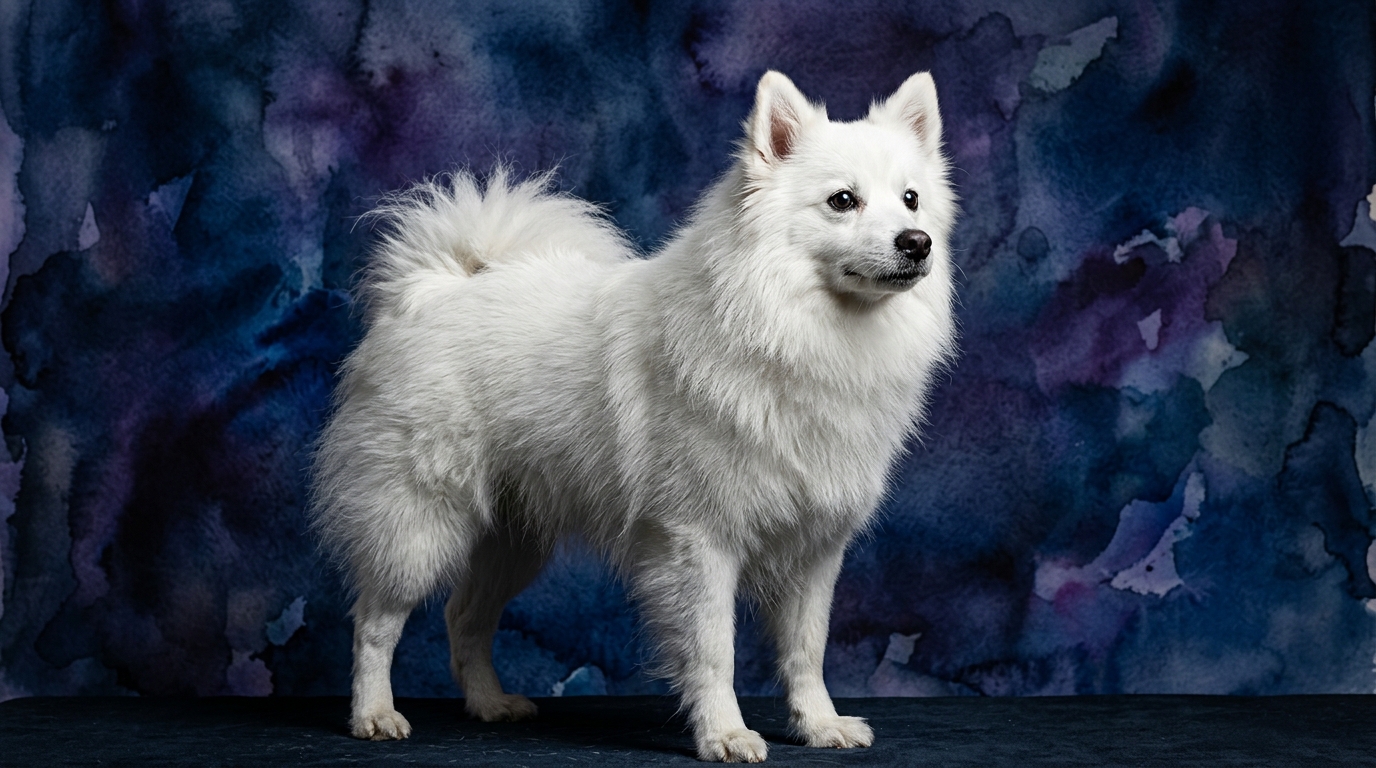
Side-by-Side Cognitive Profile
To truly understand the cognitive landscape of these two breeds, we examine five key dimensions of their intellectual makeup, as assessed by The Cosmic Pet Pet IQ Lab. These dimensions offer a granular view beyond general perceptions, revealing specific strengths and nuances.
Problem Solving: The Belgian Sheepdog (Groenendael) registers an exceptional 5/5 in problem-solving. This breed displays a remarkable capacity for analytical thought, readily assessing novel situations and formulating effective solutions. They often exhibit independent strategic thinking, capable of figuring out complex puzzles or navigating intricate environments without constant human direction. In contrast, the American Eskimo Dog scores a 3/5 for problem-solving. Eskies are perfectly capable of tackling straightforward challenges and learning sequential tasks, but they may require more explicit guidance or trial-and-error to conquer highly abstract or multi-layered problems. Their approach tends to be more direct, relying on learned patterns rather than spontaneous, intricate planning.
Training Speed: Here, the Groenendael again stands out with a 5/5. Their ability to acquire new commands and routines is notably swift, often grasping concepts and executing them reliably after just a few repetitions. This rapid assimilation makes them highly receptive to advanced obedience, intricate tricks, and specialized working roles. The American Eskimo Dog, with a 3/5 in training speed, learns at a consistent and steady pace. They absorb new information effectively but benefit significantly from clear, repetitive instruction and positive reinforcement to solidify behaviors. While not as immediate in their grasp as the Groenendael, their willingness to engage ensures progress with a dedicated approach.
Social Intelligence: Both breeds share a 3/5 rating in social intelligence, but their expressions of this capacity differ. The Groenendael forms deep, protective bonds with its immediate family, demonstrating an acute awareness of their emotional states and intentions within this established circle. They can be discerning and reserved with strangers, meticulously interpreting unfamiliar social cues. The American Eskimo Dog also exhibits strong social ties with its human companions, often displaying a keen sensitivity to their moods and a desire to be involved in family activities. Their social interactions are often more outwardly expressive, using a range of vocalizations and body language to communicate their feelings and observations to their people.
Instinctive Drive: A 3/5 score for both breeds in instinctive drive indicates a moderate level of inherent predispositions. For the Groenendael, this manifests as a persistent herding instinct, an innate urge to gather, guide, and protect. This drive can be channeled into productive activities like canine sports or structured play, or it may emerge as a tendency to 'herd' family members. The American Eskimo Dog’s moderate drive often translates into a spirited enthusiasm for activity and companionship, rooted in their Spitz heritage. They possess a natural curiosity and an inclination to explore, coupled with a desire for engagement that often expresses itself through playful energy and vocal alerts to their environment.
Memory: The Belgian Sheepdog (Groenendael) achieves a superior 5/5 in memory. This breed possesses an extraordinary capacity for long-term recall, remembering complex command sequences, routines, and even specific environmental details with remarkable accuracy, often over extended periods. This contributes significantly to their reliability in performance and loyalty. The American Eskimo Dog scores a 3/5 in memory. They retain learned behaviors and familiar routines effectively, particularly when consistently reinforced. While they may not recall intricate details or less-practiced commands with the same precision as a Groenendael, their memory is robust enough for typical companion dog expectations and consistent daily interactions.
Where the Belgian Sheepdog (Groenendael) Excels Cognitively
The Groenendael's cognitive strengths lie profoundly in its capacity for advanced learning and retention. Their exceptional problem-solving ability means they don't just follow commands; they understand the 'why' behind them, often anticipating next steps or finding creative solutions to obstacles. For example, a Groenendael tasked with retrieving a specific item might navigate a cluttered room by strategizing the most efficient path, rather than simply bulldozing through. This breed's rapid training speed, combined with its robust memory, allows for the acquisition and long-term retention of complex multi-step routines, making them prime candidates for competitive obedience, agility, or specialized assistance roles. They can master an intricate sequence of commands, then reliably execute it weeks or months later without extensive refreshers. This cognitive profile makes them highly adaptable to diverse and demanding tasks, consistently demonstrating precision and focus in their work.
Where the American Eskimo Dog Shines Cognitively
While the American Eskimo Dog’s cognitive scores are moderate compared to the Groenendael's peaks, their particular blend of attributes fosters a distinct set of strengths. Their moderate social intelligence, paired with their history as companion and performance dogs, often translates into a nuanced emotional responsiveness towards their family. An Eskie can be remarkably attuned to human moods, offering comfort or initiating play at opportune moments, indicating a subtle understanding of social dynamics within their trusted circle. Their instinctive drive, while moderate, frequently manifests as a keen sense of alertness and vocal communication. This isn't merely barking; it's a form of environmental monitoring and information relay, where they effectively communicate changes or perceived threats to their owners. They are observant and often quick to 'report' unusual occurrences, making them excellent, albeit sometimes vocal, watchdogs. Their cognitive makeup supports a strong, engaging companionship, where their expressiveness and attentiveness contribute significantly to family life.
Training Ease: Groenendael vs. American Eskimo Dog
When it comes to training, the Belgian Sheepdog (Groenendael) generally presents an easier path for experienced handlers due to their top-tier training speed and memory. They grasp new concepts with astonishing rapidity, often requiring minimal repetitions to solidify a command. Their problem-solving acumen further aids training, as they can generalize learned behaviors to new contexts and understand complex instructions. This makes them highly responsive to precision work and advanced obedience, thriving on challenges that engage their mental faculties.
The American Eskimo Dog, with its moderate training speed, requires a more consistent and patient approach. While eager to please their family, Eskies can sometimes exhibit a spirited independence or be prone to distractions, necessitating engaging and clear training sessions. Their moderate memory means that regular reinforcement is key to ensuring long-term retention of commands. Positive reinforcement methods work best, leveraging their desire for companionship and their expressive nature to build a strong, cooperative training relationship. While they might not learn as quickly as a Groenendael, their dedication to their family ensures steady progress with persistent effort.
Matching Breeds to Lifestyles: Active vs. Relaxed Owners
For the highly active owner seeking a canine partner for demanding activities, the Belgian Sheepdog (Groenendael) is an ideal match. Their strong herding background, coupled with exceptional cognitive abilities and drive, means they require substantial physical exercise and consistent mental engagement. Groenendaels excel in dog sports like agility, competitive obedience, protection work, and even search and rescue, where their problem-solving and memory can be fully utilized. An owner who can channel their boundless energy and intellect into structured, challenging activities will find a deeply fulfilled and responsive companion, preventing boredom that could lead to undesirable behaviors.
The American Eskimo Dog, while not a sedentary breed, is better suited for owners with a moderately active lifestyle. They thrive on daily walks, engaging playtime in a secure yard, and consistent family interaction, without the intense demand for specialized work or competitive sports. Their moderate energy levels and drive make them adaptable to a less rigorous activity schedule than the Groenendael. A relaxed owner who can still commit to regular, enjoyable exercise, consistent companionship, and engaging their Eskie's social and communicative nature will find a devoted and lively companion who enjoys being at the heart of family life.
The Verdict
Opt for the Belgian Sheepdog (Groenendael) if you seek a highly engaged canine partner for advanced training, dog sports, or a working role, prepared to consistently challenge their exceptional problem-solving and memory abilities.
Select the American Eskimo Dog if you desire an affectionate, alert companion that thrives on family interaction and moderate activity, appreciating a steady training approach and their expressive nature.
🧠 Find Your Pet's IQ Score
Our Pet IQ Lab assessment covers 25+ tests across 5 cognitive dimensions — personalized to your breed.
Take the Full IQ Test →Frequently Asked Questions
Can an American Eskimo Dog participate in dog sports?
Yes, American Eskimo Dogs can certainly excel in dog sports like obedience, rally, and even agility. While their training speed is moderate, their eagerness to please and moderate drive make them capable and enthusiastic participants with consistent training and positive reinforcement.
How do Groenendael's herding instincts influence their behavior as pets?
A Groenendael's herding instinct can manifest as a desire to 'gather' family members, especially children, or to chase moving objects. This drive requires appropriate outlets through structured play, training, or herding-specific activities to prevent it from becoming misdirected or problematic in a home environment.
Are American Eskimo Dogs prone to excessive barking?
American Eskimo Dogs are often quite vocal, using barks, howls, and 'woo-woos' to communicate their alertness and emotions. While this can be a charming trait, without proper training and management, their natural vigilance can lead to excessive barking, especially if bored, anxious, or left alone for extended periods.