
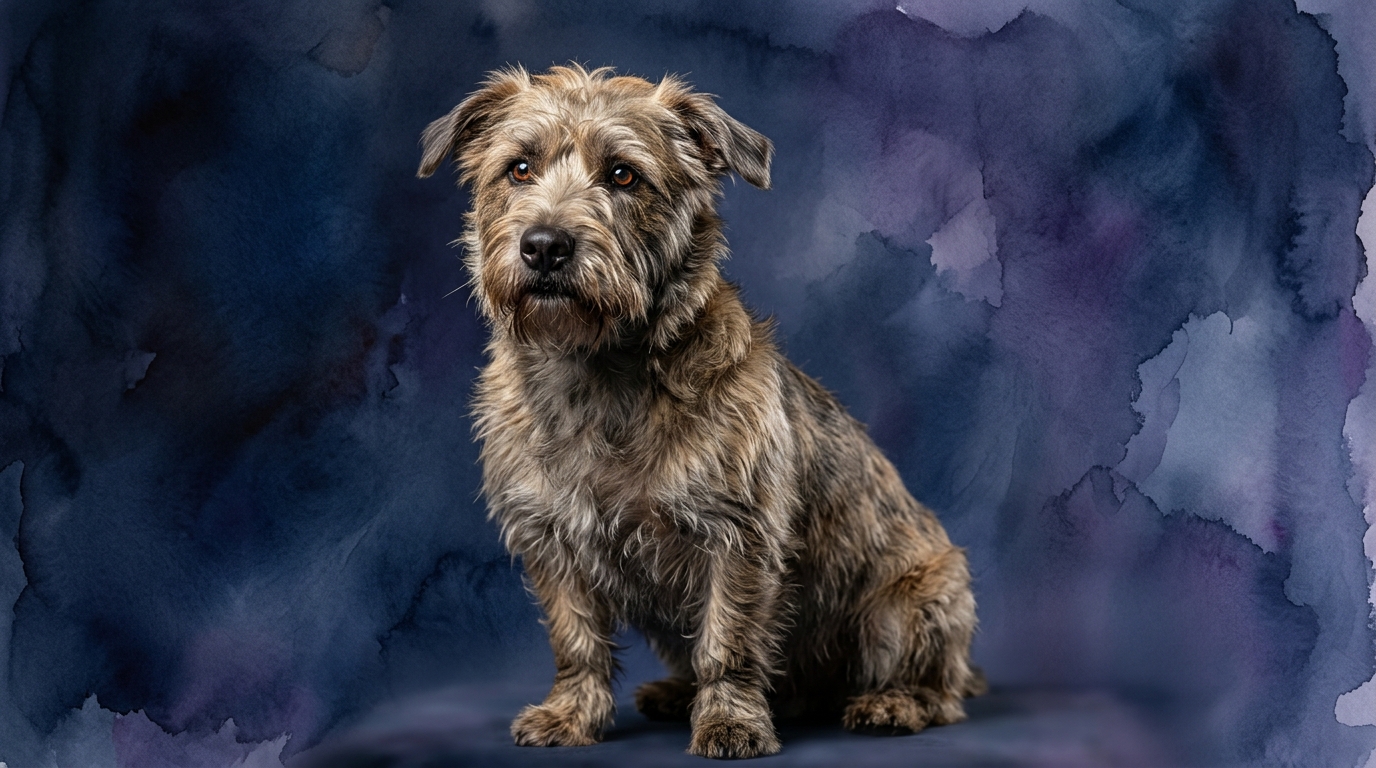
Side-by-side IQ profile
To truly understand these breeds, we examine their cognitive profiles across five key dimensions. The Belgian Sheepdog (Groenendael), a Herding group member with a Coren rank of #15, presents a profile geared for complex work. Its Problem Solving is rated 5/5, indicating an exceptional capacity for analytical thought and strategic planning, often anticipating multi-step solutions. Training Speed is also 5/5, reflecting their rapid assimilation of new commands and routines, often after just a few repetitions. Social Intelligence stands at 3/5; they are attuned to their family's cues but can be reserved with strangers. Instinctive Drive, at 3/5, is present as a strong desire to work and protect, yet it is generally well-managed. Finally, their Memory is a remarkable 5/5, allowing for long-term retention of intricate tasks and experiences.
The Glen of Imaal Terrier, a Terrier group member without a Coren ranking, offers a different, equally compelling cognitive makeup. Its Problem Solving is rated 3/5, characterized by a resourceful, persistent, and often independent approach, favoring practical trial-and-error solutions. Training Speed is 3/5, meaning they learn at a moderate pace, requiring patience and engaging methods due to their self-reliant nature. Social Intelligence is 3/5; they connect well with their immediate family, showing good understanding of household dynamics, though they can be discerning about outsiders. Instinctive Drive is also 3/5, manifesting as strong terrier impulses for digging, scent work, and independent hunting, reflecting their historical role. Their Memory is 3/5, competent for retaining essential commands and routines, albeit perhaps not with the same depth for complex sequences as the Groenendael.
Where Belgian Sheepdog (Groenendael) wins cognitively
The Groenendael's cognitive strengths distinctly outshine the Glen's in areas demanding systematic thought, rapid learning, and profound retention. Their exceptional problem-solving ability, rated 5/5, empowers them to analyze intricate situations, such as mastering a sophisticated obedience routine or navigating a complex search and rescue scenario, and then devise precise, effective responses. This deep analytical capacity is seamlessly integrated with their 5/5 training speed; they don't merely learn commands quickly, they internalize concepts and apply them across varying contexts with remarkable efficiency. Furthermore, their 5/5 memory is a cornerstone of their cognitive prowess, enabling them to recall vast amounts of information—from detailed scent trails to specific behavioral sequences—over extended periods. This enduring recall makes them exceptionally reliable partners in demanding roles where consistency and precision are non-negotiable, allowing them to perform complex tasks with high accuracy and minimal error.
Where Glen of Imaal Terrier wins cognitively
While the Glen of Imaal Terrier's scores are consistently at 3/5 across the board, their unique cognitive profile translates into distinct advantages, particularly in situations demanding self-reliance, tenacity, and practical ingenuity. Their problem-solving, though not as systematically analytical as the Groenendael's, is characterized by a robust, independent, and persistent approach. They excel at practical, real-world challenges, such as figuring out how to bypass an obstacle to reach a desired object or persistently pursuing a scent trail, relying on their strong will and inherent terrier resourcefulness rather than intricate, pre-planned strategies. Their moderate social intelligence allows them to operate effectively without constant human direction, fostering a significant sense of self-sufficiency. This independence means they are adept at making decisions based on their immediate environment and instincts, a crucial trait for a dog originally bred to work autonomously underground. The Glen's cognitive strengths lie in their resilience, their ability to adapt to changing circumstances with a 'can-do' attitude, and their capacity to find creative, sometimes surprisingly clever, solutions through sheer determination.
Which is easier to train and why
When evaluating ease of training, the Belgian Sheepdog (Groenendael) undeniably possesses a significant advantage. With a training speed rated 5/5, they exhibit an impressive receptiveness to instruction, often grasping new commands and complex sequences after only a few repetitions. Their high memory (5/5) ensures that once a lesson is learned, it is deeply ingrained and reliably recalled, leading to remarkably consistent performance. This breed thrives on structured learning environments and seeks to engage cooperatively with their handler, eager to understand and fulfill expectations. In stark contrast, the Glen of Imaal Terrier, with a training speed of 3/5, demands a more patient, creative, and highly motivating approach. Their independent nature, a defining characteristic of their terrier heritage, means they are not always intrinsically inclined to follow directives if their own instincts or a more interesting distraction presents itself. Training a Glen involves leveraging positive reinforcement, making sessions highly engaging and fun, and often incorporating games to capture and maintain their attention. While they are certainly capable of learning, their progress is typically slower and requires more ingenuity from the trainer to overcome their inherent self-determination and less pronounced desire to simply please, as they are often driven more by their own internal agenda.
Which suits active owners vs relaxed owners
The suitability of each breed largely depends on an owner's lifestyle and commitment to canine engagement. The Belgian Sheepdog (Groenendael), despite a 3/5 instinctive drive score indicating modulated impulses, possesses a profound need for consistent mental and physical stimulation. Their herding background instills an innate desire to work, learn, and be given a purpose, meaning they thrive in environments offering activities like advanced obedience, agility, protection sports, or even complex scent work. They are best suited for active, experienced owners who can provide daily, structured exercise, ongoing training, and a clear, engaging role within the family. Without sufficient outlets for their considerable cognitive and physical energy, a Groenendael can quickly become bored, leading to potential behavioral issues like excessive vocalization or destructive tendencies.
Conversely, the Glen of Imaal Terrier, also with a 3/5 instinctive drive, expresses its drives differently, often with a focus on independent exploration and digging. While they certainly enjoy walks, playtime, and opportunities for scent work, their overall exercise requirements are generally more moderate than the Groenendael's. They are content with regular, but not necessarily intense, daily activity and deeply appreciate a comfortable, settled home life. Their independent problem-solving means they can often entertain themselves to a degree, making them a more fitting companion for owners who appreciate a dog with a robust, spirited personality but prefer a less demanding, structured exercise regimen. While not sedentary, the Glen is typically more adaptable to a relaxed household pace, provided their core terrier needs for companionship and occasional adventures are met.
The Verdict
Choose the Belgian Sheepdog (Groenendael) if you are an experienced, active owner seeking a highly trainable, intelligent partner for competitive dog sports, service work, or complex obedience. Their exceptional learning capacity, analytical problem-solving, and reliable memory make them ideal for intricate tasks and consistent, high-level performance.
Choose the Glen of Imaal Terrier if you appreciate a resilient, independent, and good-natured companion who offers robust character and a moderate activity level. They suit owners who value persistence, a spirited self-reliant approach to life, and a dog that thrives on companionship without demanding constant, intensive structured activity.
🧠 Find Your Pet's IQ Score
Our Pet IQ Lab assessment covers 25+ tests across 5 cognitive dimensions — personalized to your breed.
Take the Full IQ Test →Frequently Asked Questions
Are Groenendaels good family dogs?
Yes, Groenendaels can be excellent family dogs, forming strong, protective bonds with their immediate human pack. Their social intelligence allows them to understand family dynamics, though they might be reserved with strangers and require early, consistent socialization to foster confidence.
Do Glen of Imaal Terriers bark a lot?
Glen of Imaal Terriers are not typically excessive barkers, but they will certainly alert their owners to new arrivals, unusual sounds, or perceived threats. Their terrier nature means they are observant and will use their voice judiciously when they deem it necessary to communicate.
What kind of mental stimulation does a Groenendael need?
A Groenendael needs consistent and varied mental stimulation through advanced training, interactive puzzle toys, and engaging activities like obedience, agility, or scent work. Their high problem-solving and memory capacities thrive on regularly learning new skills and solving complex challenges.