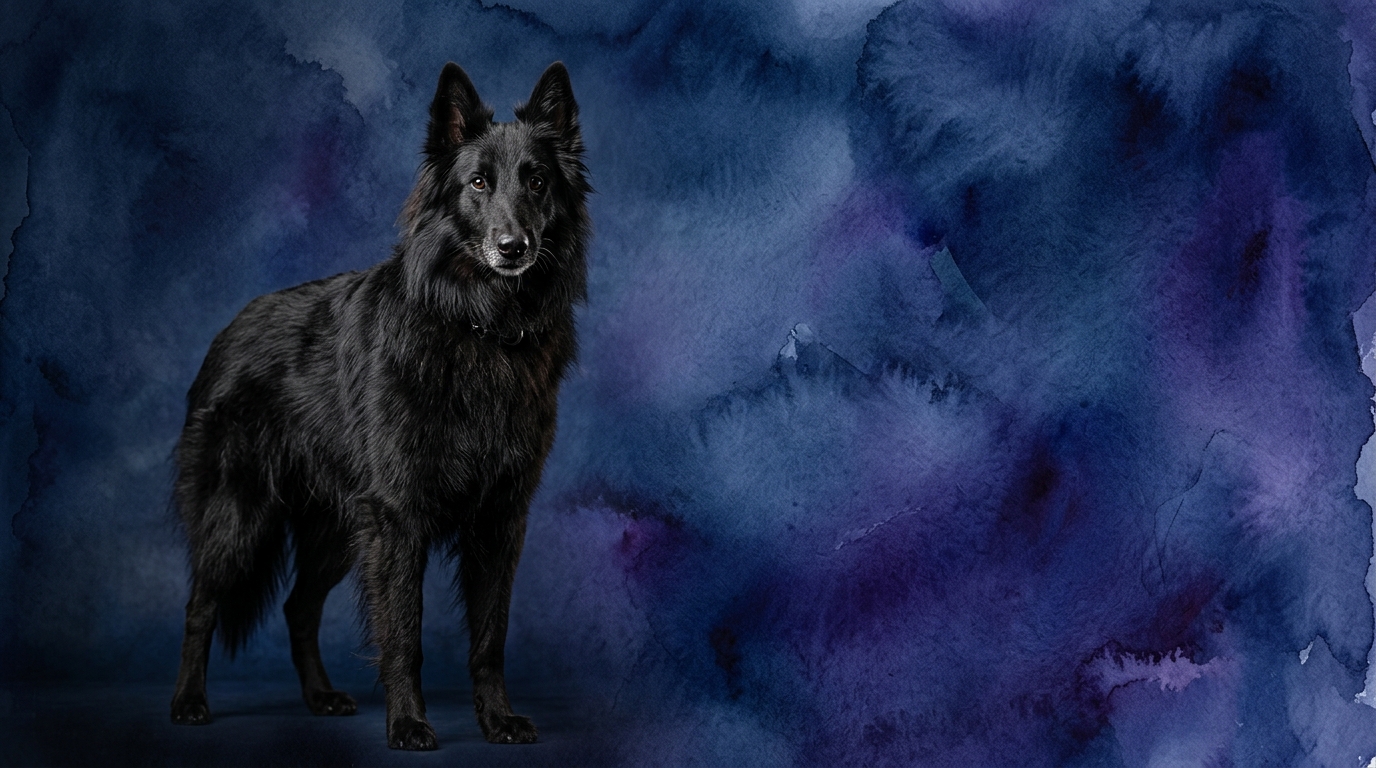
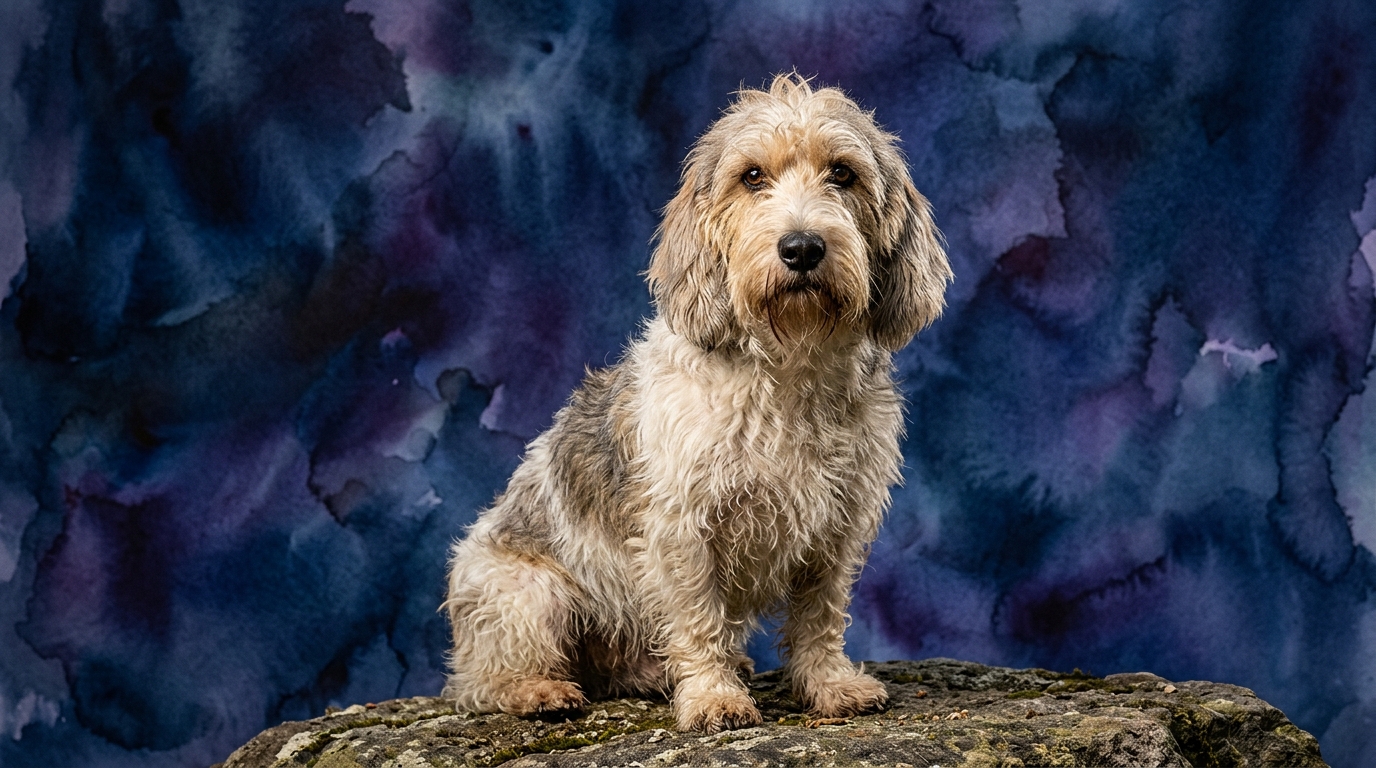
Side-by-Side IQ Profile: Groenendael vs. PBGV
The Cosmic Pet Pet IQ Lab employs five distinct dimensions to map a breed's cognitive architecture, and examining these for the Belgian Sheepdog (Groenendael) and the Petit Basset Griffon Vendéen (PBGV) reveals two remarkably different mental blueprints.
The Belgian Sheepdog (Groenendael), a breed recognized for its working heritage, earns a Coren rank of #15, signifying its strong aptitude for obedience and working intelligence. Its IQ profile is notably robust: Problem Solving is rated 5/5, indicating an exceptional capacity for strategic thinking, complex task mastery, and overcoming obstacles with logical approaches. Training Speed also stands at a remarkable 5/5, reflecting its eagerness to learn, quick grasp of new commands, and consistent execution. Social Intelligence is marked at 3/5; while capable of understanding human cues, the Groenendael can be reserved with strangers and often prioritizes its bond with its primary handler. Instinctive Drive is 3/5, representing its moderate but manageable herding impulses. Finally, Memory is a perfect 5/5, showcasing an outstanding ability to recall learned behaviors, routines, and past experiences with precision.
In contrast, the Petit Basset Griffon Vendéen, a charming hound breed, is not Coren-ranked, highlighting that its specific cognitive strengths lie outside traditional obedience metrics. Its IQ scores paint a picture of an independent, scent-driven companion: Problem Solving is 3/5, meaning it can navigate everyday challenges effectively, but typically approaches them with practical, often sensory-led solutions rather than abstract reasoning. Training Speed is 3/5; the PBGV learns at a steady pace, but its independence means training requires consistent engagement and patience. Social Intelligence, also 3/5, manifests as an outgoing, cheerful demeanor, though its understanding of human subtleties might be overshadowed by its desire for interaction and exploration. Instinctive Drive is 3/5, dominated by a powerful, persistent drive to follow interesting scents. Memory is rated 3/5, sufficient for retaining basic commands and routines, but perhaps not with the same depth or longevity as breeds with higher scores.
Where the Belgian Sheepdog (Groenendael) Wins Cognitively
The Groenendael's cognitive victories are rooted in its exceptional capacity for structured learning and task execution. Its 5/5 Problem Solving score means it doesn't just learn a task; it understands the underlying principles, enabling it to adapt to variations and solve novel challenges within a given framework. For instance, a Groenendael can quickly grasp the mechanics of advanced agility courses, then generalize those skills to new course layouts without extensive re-training, demonstrating true cognitive flexibility within a directed context.
The 5/5 Training Speed works in tandem with its problem-solving prowess, allowing it to absorb complex command sequences and perform multi-step tasks with minimal repetition. This breed doesn't just memorize cues; it actively seeks to understand and comply, making it a dream for competitive obedience or protection work. Its perfect 5/5 Memory ensures that these intricate lessons, once learned, are retained with remarkable fidelity over long periods. This means a Groenendael can perform a complex routine flawlessly even after a break, showcasing enduring cognitive recall that few breeds can match. This combination of rapid learning, deep understanding, and lasting memory makes the Groenendael particularly proficient in roles requiring precision, consistency, and a strong partnership with its handler.
Where the Petit Basset Griffon Vendéen Wins Cognitively
While the Groenendael excels in structured, human-directed tasks, the PBGV's cognitive strengths shine in a different arena: autonomous exploration and sensory processing. Their instinctive Drive, rated 3/5, is specifically tuned to the intricate world of scent, making them masters of olfactory problem-solving. A PBGV's brain is constantly processing environmental cues through its nose, piecing together complex 'scent puzzles' that would be invisible to other breeds. This drive allows them to independently navigate varied terrains, follow trails with remarkable persistence, and make on-the-spot decisions based on sensory input, a form of practical intelligence crucial for their hunting heritage.
Their Social Intelligence, also 3/5, manifests as an outgoing, adaptable demeanor, allowing them to engage cheerfully with a wide range of individuals and situations, often charming their way through interactions rather than strictly adhering to social protocols. They demonstrate a robust, self-reliant form of intelligence that prioritizes exploration and sensory engagement over strict adherence to human directives, making them uniquely adept at their ancestral role. The PBGV's wins are in its ability to operate independently, relying on its keen senses and cheerful persistence to navigate and enjoy its world, rather than requiring constant human guidance for validation or direction.
Which Is Easier to Train and Why?
The Belgian Sheepdog (Groenendael) is definitively easier to train for traditional obedience and complex tasks. Their 5/5 Training Speed and 5/5 Memory mean they grasp new concepts with astonishing rapidity and retain them long-term. They possess an inherent desire to work collaboratively with their handler, often anticipating cues and striving for precision. This biddability, coupled with their focus, allows for the efficient teaching of intricate commands and routines, from advanced obedience to protection work or agility. Their cognitive makeup makes them incredibly responsive to consistent, positive reinforcement, and they genuinely enjoy the mental engagement that training provides, often viewing it as a rewarding partnership.
The Petit Basset Griffon Vendéen, with its 3/5 Training Speed and 3/5 Memory, presents a different training challenge. Their strong instinctive drive for scent exploration means that while they are capable of learning, their attention can be easily diverted by compelling odors in the environment. Training a PBGV requires more patience, creativity, and a keen understanding of their independent, hound nature. They are not defiant, but rather their primary motivation often lies in following their nose, making human-centric commands secondary if an interesting scent is present. Successful PBGV training involves making lessons fun, keeping sessions short, using high-value rewards, and consistently competing with environmental distractions. While they can learn a great deal, their independent spirit means their performance might not always be as consistently precise as a Groenendael's, and their recall, if a scent trail is hot, can be a test of a handler's resolve.
Which Suits Active Owners vs. Relaxed Owners?
For the active owner, the Belgian Sheepdog (Groenendael) is an ideal match. This breed demands significant mental and physical engagement, thriving on structured activities that tap into its problem-solving and training speed. Owners who enjoy dog sports like agility, obedience, protection work, or even search and rescue will find a dedicated and capable partner in the Groenendael. Their cognitive strengths are such that they require a 'job' to feel fulfilled; without sufficient mental stimulation and physical exercise, they can become bored and potentially destructive. They need an owner who can consistently challenge their intellect and provide outlets for their boundless energy, making them excellent companions for those with an active, structured lifestyle.
The Petit Basset Griffon Vendéen, while certainly an active dog outdoors, is better suited for owners who might be described as 'relaxed' in terms of *structured* mental demands. PBGVs love long, sniffy walks and outdoor adventures where they can indulge their powerful scent drive, but they are generally less demanding of formal, intense mental work once their physical needs are met. After a good romp, they are often content to relax by their owner's side, enjoying companionship without constantly seeking direction or complex tasks. Their independent nature means they don't necessarily need an owner to orchestrate every minute of their day, making them a good fit for individuals who appreciate a cheerful, self-sufficient companion who is happy to explore the world at their own pace and then settle down for a cozy evening.
The Verdict
Choose the Belgian Sheepdog (Groenendael) if you seek a highly trainable, dedicated partner for complex tasks, dog sports, or a protective companion who thrives on consistent mental engagement and precision.
Opt for the Petit Basset Griffon Vendéen if you appreciate an independent, cheerful companion with a strong sense of adventure, a charming personality, and are willing to embrace a dog primarily driven by its nose.
🧠 Find Your Pet's IQ Score
Our Pet IQ Lab assessment covers 25+ tests across 5 cognitive dimensions — personalized to your breed.
Take the Full IQ Test →Frequently Asked Questions
How does Coren's rank relate to the IQ scores for these breeds?
Coren's ranking primarily assesses obedience and working intelligence, aligning closely with our 'Training Speed' and aspects of 'Problem Solving.' The Groenendael's #15 rank reflects its exceptional trainability and aptitude for structured tasks, while the PBGV's unranked status suggests its primary drives lie outside of traditional obedience competitions.
Can a PBGV be trained for advanced obedience or dog sports?
Yes, a PBGV can learn advanced obedience, but it will require more patience, creativity, and consistency than with a Groenendael. Their independent nature and strong scent drive mean training needs to be engaging and highly rewarding to compete with environmental distractions.
Which breed is better for a first-time dog owner?
For a first-time owner, the Groenendael's mental demands and need for consistent, experienced handling might be overwhelming. The PBGV, while independent, can be a good choice for those prepared for its scent-driven nature and who appreciate a less intensely focused companion, often proving more adaptable to a novice owner's learning curve if they commit to positive reinforcement.