
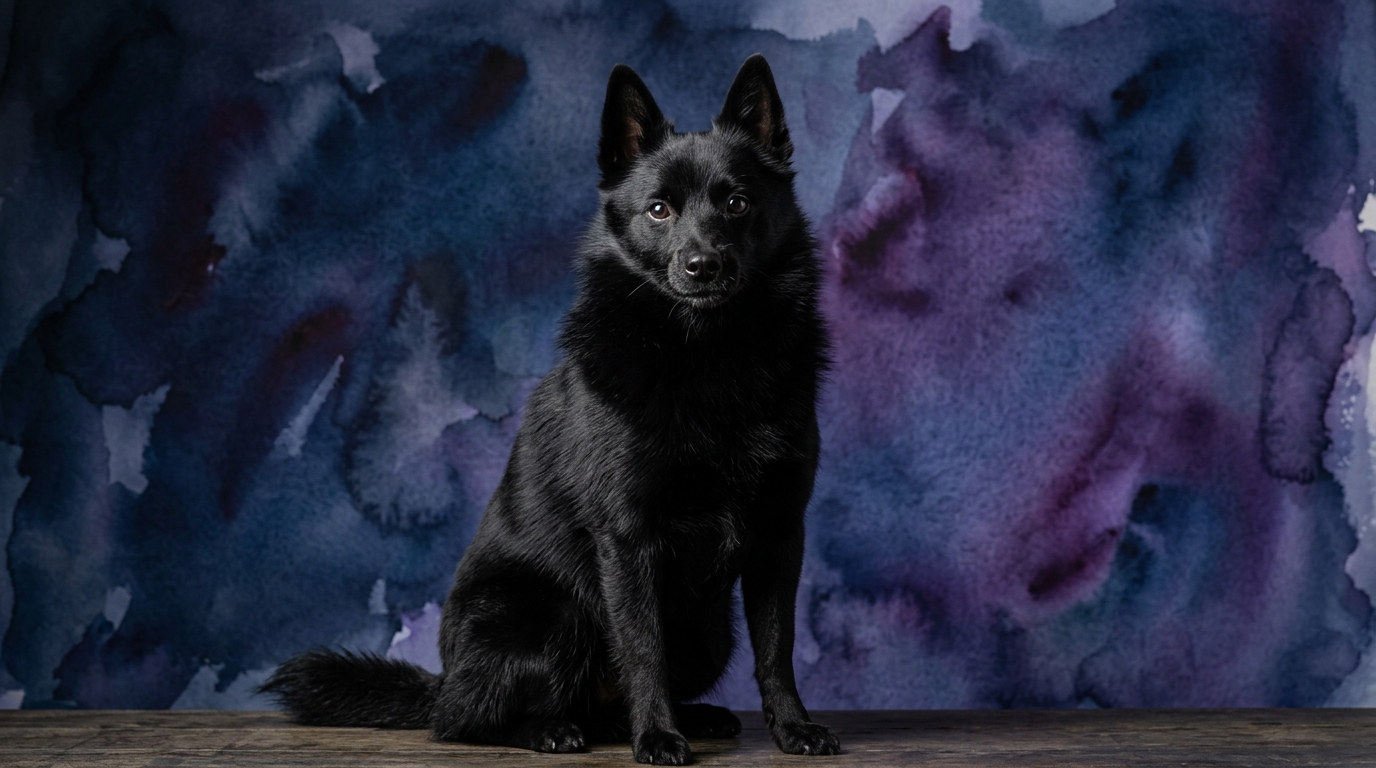
Side-by-Side IQ Profile
Problem Solving (5/5): The Belgian Sheepdog (Groenendael), a herding breed, applies its exceptional problem-solving to complex, dynamic situations like anticipating livestock movement or navigating intricate terrain to gather a flock, devising effective real-time strategies. For the Schipperke, this top-tier problem-solving often translates into resourcefulness in confined spaces, outsmarting vermin, or finding creative solutions to access objects, demonstrating a sharp, independent intellect focused on immediate challenges.
Training Speed (5/5): Both breeds exhibit remarkable capacity for rapid learning, absorbing new commands and sequences efficiently. The Groenendael’s quick grasp is evident in advanced obedience, protection, and agility, linking multiple actions seamlessly. The Schipperke’s equally swift training speed allows them to master a wide array of commands and tricks, often surprising owners by picking up routines after just a few repetitions, showcasing keen mental agility.
Social Intelligence (3/5): A 3/5 score suggests that while capable of strong bonds and understanding human cues, their primary focus isn’t solely on social harmony. The Groenendael’s social intelligence manifests as discerning loyalty and a deep connection with their primary handler, observing subtle human body language within their family, yet maintaining distance with strangers. The Schipperke displays selective sociability, forming intense bonds with their chosen few while exhibiting confident independence and sometimes a cautious demeanor towards new acquaintances.
Instinctive Drive (3/5): Their shared 3/5 instinctive drive indicates a moderate yet potent internal motivation rooted in ancestral purposes. For the Groenendael, this drive links to herding heritage, manifesting as an urge to patrol, observe, and direct, fueling engagement in activities simulating original work. The Schipperke’s equally rated drive expresses itself through vigilance, a propensity for chasing small prey, and strong territorial instinct, reflecting their history as watchdogs and ratters.
Memory (5/5): Both possess exceptional long-term and short-term memory. A Groenendael’s perfect memory is vital for recalling complex training sequences, large area layouts, and intricate behavioral patterns, allowing consistent sophisticated tasks. Similarly, the Schipperke’s flawless memory aids in recalling specific routes, hidden objects, and a vast repertoire of commands and learned experiences, making them incredibly consistent once established.
Where Belgian Sheepdog (Groenendael) Wins Cognitively
While both breeds share impressive cognitive profiles, the Groenendael's large stature and herding lineage grant them a distinct advantage in applying their intelligence to grander, more spatially complex scenarios. Their problem-solving (5/5) and memory (5/5) are optimized for tasks demanding sustained focus across wide areas, such as strategically maneuvering a flock, understanding complex multi-stage commands, or navigating intricate search and rescue environments. They excel in 'big picture' thinking, processing multiple variables simultaneously over a broad physical or conceptual landscape. Their cognitive strength lies in their ability to synthesize information from a larger environment, anticipate movements, and execute sequential tasks with precision and endurance, making them adept at orchestrating complex scenarios rather than just reacting to immediate stimuli.
Where Schipperke Wins Cognitively
Conversely, the Schipperke, with its compact size and history as a barge dog, demonstrates a cognitive edge in areas requiring quick, independent decision-making within more confined or rapidly changing environments. Their problem-solving (5/5) and memory (5/5) shine in scenarios demanding agility of thought and action, such as independently navigating tight spaces, outmaneuvering small prey, or quickly assessing and reacting to new, small-scale stimuli. Their cognitive strength is in their sharp, focused attention to detail and their capacity for innovative, self-directed solutions when faced with immediate, tangible challenges. They are masters of efficient, localized problem-solving, making them exceptionally adept at tasks requiring cunning, swift adaptation, and a degree of self-reliance where a larger dog might rely on broader spatial awareness.
Which Is Easier to Train and Why
Despite identical 5/5 scores in training speed, the practical experience of training these two breeds can differ due to their distinct expressions of social intelligence (3/5) and instinctive drive (3/5). The Belgian Sheepdog (Groenendael), driven by a strong desire to work in partnership with their handler and a historical need for precise direction in herding, often exhibits a more overt eagerness to please and follow complex command sequences. Their instinct to collaborate makes them highly receptive to structured training, finding satisfaction in performing intricate tasks alongside their human. The Schipperke, while equally quick to learn, often presents a more independent and spirited approach to training. Their deep-rooted self-reliance and vigilant nature mean they might require more creative motivation and consistent engagement to maintain focus, as their problem-solving intellect can sometimes be applied to finding ways to entertain themselves rather than strictly adhering to commands. Neither is 'difficult' to train, but the Groenendael's inherent collaborative spirit often makes them appear more compliant and easier to guide through advanced, handler-directed work.
Which Suits Active Owners vs. Relaxed Owners
The Belgian Sheepdog (Groenendael) is definitively better suited for active owners. Their robust physical build, combined with a cognitive profile geared towards sustained mental and physical engagement, necessitates a lifestyle that includes extensive exercise, advanced training, and opportunities for problem-solving activities like agility, obedience, or protection sports. Their intelligence thrives on having a 'job' to do, and a lack of stimulation can lead to boredom and potentially undesirable behaviors. Conversely, while the Schipperke is also an active and spirited dog, their exercise requirements are generally more manageable for owners who might not dedicate hours daily to structured activities. Their mental stimulation is still crucial, but it can often be satisfied with shorter, more intense play sessions, puzzle toys, and consistent training reinforcement within a more contained environment. Therefore, a Groenendael demands an owner who is committed to a highly active, engaged lifestyle, whereas a Schipperke can thrive with an owner who enjoys regular activity but perhaps not to the same demanding degree as their larger counterpart.
The Verdict
Choose the Belgian Sheepdog (Groenendael) if you are an experienced, highly active owner seeking a devoted, intelligent partner for advanced dog sports, protection work, or a dynamic lifestyle that can provide extensive mental and physical challenges.
Opt for the Schipperke if you appreciate a spirited, independent, and clever companion in a smaller package, suitable for a moderately active household that values vigilance, quick wit, and a dog capable of entertaining itself while still excelling in training.
🧠 Find Your Pet's IQ Score
Our Pet IQ Lab assessment covers 25+ tests across 5 cognitive dimensions — personalized to your breed.
Take the Full IQ Test →Frequently Asked Questions
Do both breeds require a lot of mental stimulation?
Yes, absolutely. Both the Belgian Sheepdog (Groenendael) and the Schipperke possess exceptional problem-solving abilities and memory, meaning they thrive on consistent mental challenges like puzzle toys, advanced obedience, or learning new tricks to prevent boredom and destructive behaviors.
Are these breeds good for first-time dog owners?
While both are highly trainable, their strong drives and discerning social intelligence (3/5) mean they benefit immensely from experienced handling and consistent training; thus, they might present a steeper learning curve for first-time dog owners.
How do their social intelligence scores of 3/5 impact their family life?
A 3/5 social intelligence score indicates they form deep bonds with their immediate family but may be more reserved or selective with strangers, meaning they aren't typically 'everyone's friend' but offer profound loyalty and connection within their trusted circle.