
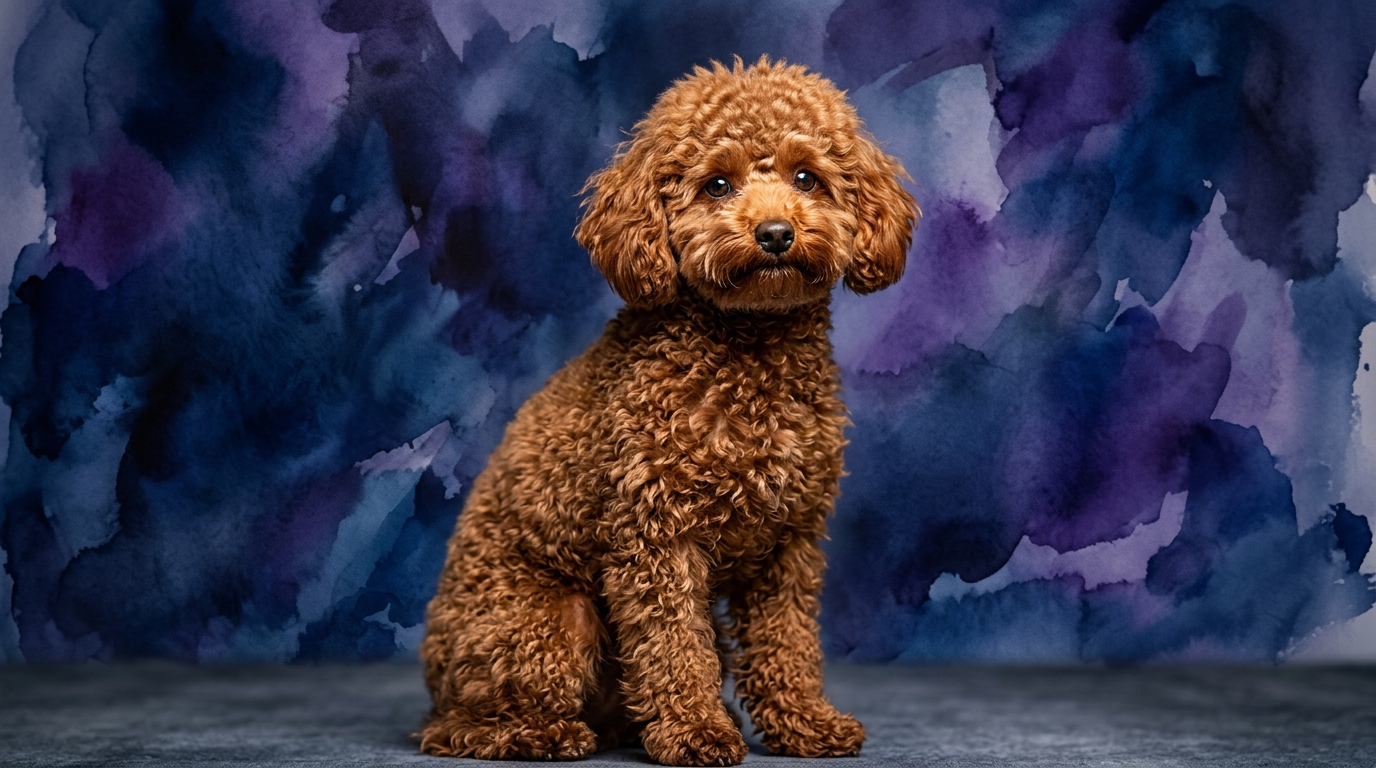
Side-by-Side IQ Profile: Groenendael vs. Toy Poodle
The Cosmic Pet Pet IQ Lab provides a detailed look at five key cognitive dimensions for each breed. Interestingly, both the Belgian Sheepdog (Groenendael) and the Toy Poodle share remarkably similar scores across these specific metrics, yet Coren's broader assessment of working and obedience intelligence places the Toy Poodle at a noteworthy #2, while the Groenendael ranks #15. This suggests that while both breeds possess the capacity for high-level problem-solving and rapid learning, their inherent breed characteristics influence how these skills are applied and perceived in different contexts.
For the **Belgian Sheepdog (Groenendael)**, a Herding group dog ranked #15 by Coren:
**Problem Solving (5/5):** This breed's ancestral role in livestock management demands quick, independent decision-making. A Groenendael's problem-solving manifests in its ability to assess dynamic situations, such as a scattering flock or an unfamiliar environment, and devise effective strategies to achieve a goal, often with minimal direct handler instruction. Their solutions tend to be practical and focused on control or order.
**Training Speed (5/5):** Groenendaels absorb new commands and routines with remarkable rapidity. Their eager-to-please nature, combined with sharp focus, means they can master complex sequences of actions in very few repetitions, making them adept at advanced obedience, protection sports, and competitive dog activities.
**Social Intelligence (3/5):** While capable of forming deep bonds with their primary family, Groenendaels often exhibit a more reserved or watchful demeanor towards strangers. Their social intelligence is geared towards discerning threats or anomalies within their established social group, rather than an indiscriminate friendliness. They are perceptive of their family's moods and intentions but may not seek extensive social interaction beyond that circle.
**Instinctive Drive (3/5):** The Groenendael possesses a strong, inherent drive rooted in its herding lineage. This drive isn't just about chasing; it's about control, movement, and a desire to 'work.' While a 3/5 score suggests it's present and influential, it's typically manageable and trainable, channeling into activities like herding trials, agility, or scent work, rather than being an overwhelming, unfocused energy.
**Memory (5/5):** Their exceptional memory allows Groenendaels to recall complex command sequences, learned routes, and past interactions with great accuracy. This cognitive strength is vital for tasks requiring sustained learning, such as tracking, advanced obedience routines, or remembering the layout of a large property and its inhabitants.
For the **Toy Poodle**, a Toy group dog ranked #2 by Coren:
**Problem Solving (5/5):** The Toy Poodle’s 5/5 in problem-solving is evident in its ingenuity and adaptability. This manifests in quickly figuring out how to manipulate puzzle toys, navigating novel environments, or even devising clever ways to get attention or access forbidden areas. Their solutions are often characterized by quick thinking and a surprising resourcefulness for their size.
**Training Speed (5/5):** Toy Poodles are renowned for their swift grasp of new concepts and commands. Their attentiveness and desire to engage with their human companions mean they pick up tricks, obedience cues, and complex routines with impressive speed, often seeming to anticipate the next step. This makes them stars in various dog sports, from agility to rally obedience.
**Social Intelligence (3/5):** Though often perceived as outgoing, Toy Poodles also score 3/5 in social intelligence, reflecting a nuanced approach. They are highly attuned to their family's emotions and social cues, often mirroring their moods. While generally friendly, they can be discerning about strangers, preferring to observe before fully engaging, and excel at forming strong, communicative bonds within their immediate human circle.
**Instinctive Drive (3/5):** Don't let their dainty appearance fool you; Toy Poodles carry a robust instinctive drive, stemming from their larger Poodle ancestors' water retrieving heritage. This 3/5 drive often expresses itself as a keen interest in retrieving games, a love for water, or a persistent curiosity to explore. It's a focused energy that can be readily channeled into interactive play, scent work, or even mini-agility.
**Memory (5/5):** Toy Poodles possess an outstanding memory, enabling them to retain a vast repertoire of commands, remember specific people and places, and recall past experiences with precision. This cognitive asset is crucial for long-term learning, consistency in training, and the development of intricate routines in performance activities.
Where the Belgian Sheepdog (Groenendael) Wins Cognitively
The Groenendael's cognitive strengths truly shine in scenarios demanding independent judgment and a robust work ethic, particularly when overseeing or managing a dynamic environment. Their problem-solving (5/5) is uniquely geared towards practical, real-world challenges where decisions impact a group or a task requiring sustained focus. For instance, while a Toy Poodle might excel at solving a complex puzzle box, a Groenendael's mind is wired for the intricate spatial reasoning required to gather and move livestock, or to patrol a perimeter, making autonomous decisions based on changing variables. Their memory (5/5) is exceptionally suited for recalling vast territories, intricate routines in protection work, or the subtle cues of livestock, enabling them to execute complex, multi-stage tasks over extended periods with minimal human intervention once trained. This blend of independent problem-solving and enduring memory makes them superior in roles requiring self-directed, long-duration application of learned skills.
Where the Toy Poodle Wins Cognitively
The Toy Poodle's cognitive edge lies in its profound adaptability and willingness to engage in a wide array of human-centric activities, often with a delightful flair. While sharing a 5/5 in problem-solving and training speed, the Toy Poodle’s manifestation of these traits is frequently characterized by a cheerful enthusiasm and a remarkable capacity for generalization. They tend to transfer learned concepts across different contexts with ease, making them exceptionally versatile for diverse dog sports, trick training, or therapy work. Their problem-solving often involves creative solutions within a structured game or training session, frequently seeking human approval. The Toy Poodle’s social intelligence (3/5), though numerically equal, manifests as a keen sensitivity to human emotional states and a strong desire for cooperative interaction, often leading to a more intuitive partnership in activities where close human-dog communication is paramount. This breed often brings a playful ingenuity to cognitive tasks, making the learning process a joyful, shared experience.
Which is Easier to Train and Why
Despite both breeds scoring 5/5 in training speed, the Toy Poodle generally presents as easier to train for the average owner, largely due to differences in their instinctive drives and how they channel their cognitive abilities. The Toy Poodle's drive (3/5) is typically more amenable to redirection into obedience, tricks, or retrieving games, often fueled by a strong desire to please and engage with their human companions. Their smaller size also makes managing any training challenges inherently less physically demanding. In contrast, the Belgian Sheepdog (Groenendael), while equally quick to learn, possesses a powerful herding and protective drive (3/5) that, if not consistently channeled through rigorous, specific training, can manifest as behaviors like nipping at heels, intense vigilance, or territoriality. For an owner seeking a dog that readily adapts to diverse training methods and requires less specialized instinctual channeling, the Toy Poodle typically offers a smoother, more universally accessible training experience, leveraging its keen social intelligence for cooperative learning.
Which Suits Active Owners vs. Relaxed Owners
For the highly active owner seeking a true partner in demanding physical and mental pursuits, the Belgian Sheepdog (Groenendael) is an ideal match. Their robust build, combined with high problem-solving, training speed, and enduring memory, means they excel in activities like advanced obedience, agility, protection sports, or long-distance hiking. They thrive on a structured routine that challenges their intellect and provides an outlet for their strong instinctive drive. A relaxed owner, however, would likely find the Groenendael's needs overwhelming, as their mental and physical stimulation requirements are substantial and non-negotiable for a well-adjusted dog. Conversely, the Toy Poodle, while capable of tremendous athleticism and mental feats, also adapts well to moderately active lifestyles. Their smaller size and adaptable nature make them suitable for owners who enjoy daily walks, interactive play, and regular training sessions, but perhaps not the intensity or duration required by a Groenendael. A relaxed owner who enjoys consistent, engaging mental stimulation and moderate physical activity would find a Toy Poodle a delightful and fulfilling companion, whereas a Groenendael would likely become frustrated and destructive without a significant daily 'job'.
The Verdict
Choose the Belgian Sheepdog (Groenendael) if you are an experienced, dedicated owner ready to commit to extensive, consistent training and provide a demanding outlet for a formidable working intellect and robust physical needs.
Opt for the Toy Poodle if you seek a highly trainable, versatile companion for a moderately active household, appreciating a keen intellect in a smaller package that thrives on close partnership and mental engagement.
🧠 Find Your Pet's IQ Score
Our Pet IQ Lab assessment covers 25+ tests across 5 cognitive dimensions — personalized to your breed.
Take the Full IQ Test →Frequently Asked Questions
Do Groenendaels need a job to be happy?
Yes, Groenendaels thrive on having a purpose. Their high problem-solving and training speed, coupled with a strong instinctive drive, mean they need regular mental and physical challenges to prevent boredom and potential behavioral issues.
Are Toy Poodles good for first-time dog owners?
Toy Poodles can be excellent for first-time owners who are committed to consistent training and socialization. Their quick learning ability and desire for companionship make them responsive, but their intelligence also means they need mental engagement to stay happy.
How do their guarding instincts differ?
The Groenendael's guarding instinct is robust, stemming from its herding and protection background, leading to a watchful and often reserved demeanor with strangers. The Toy Poodle, while observant, typically expresses its protective tendencies through alert barking rather than physical intervention, with its social intelligence geared more towards family interaction.