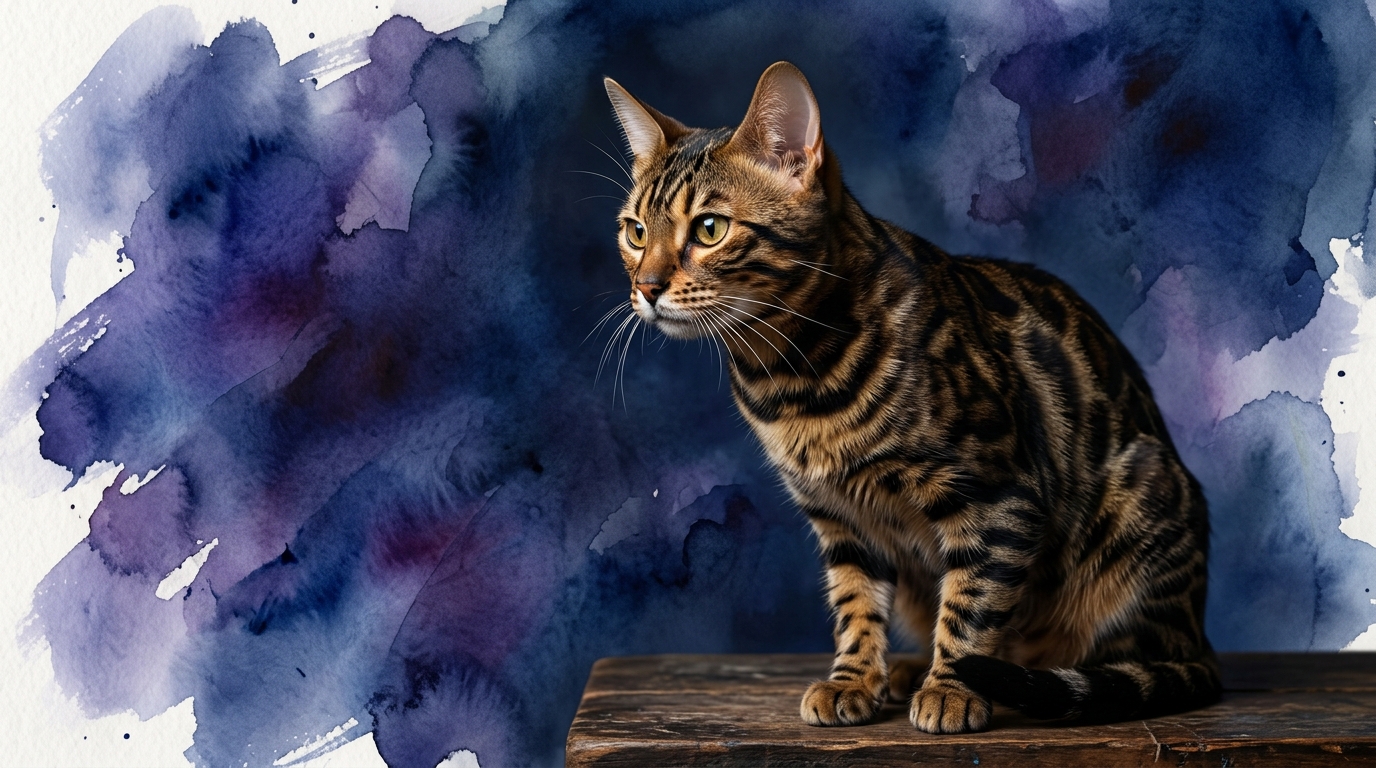
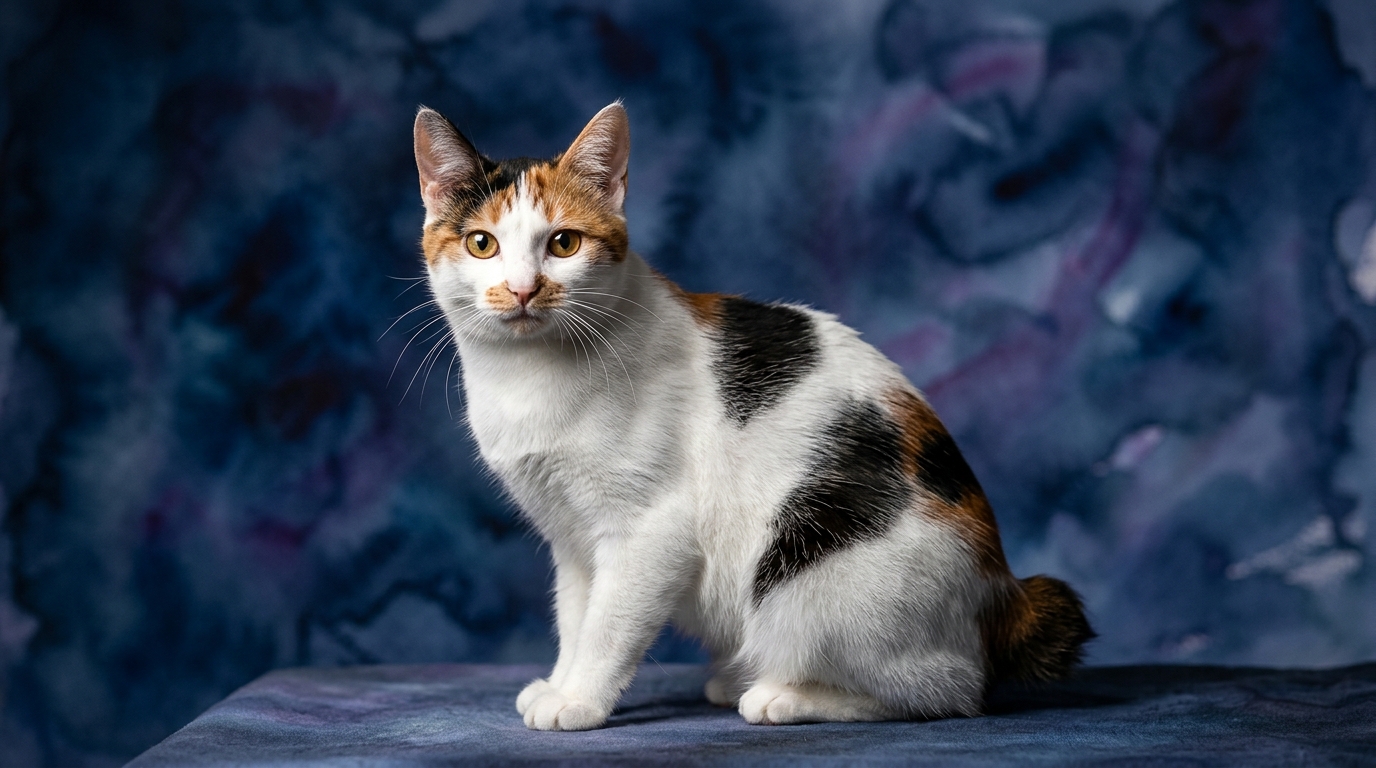
Side-by-Side IQ Profile: Bengal vs. Japanese Bobtail
The Cosmic Pet Pet IQ Lab offers a structured way to evaluate feline cognition, assessing five key dimensions. For the Bengal, we observe a robust cognitive profile, reflecting its energetic and curious nature. Its Problem Solving is rated 5/5, indicating a profound capacity to navigate complex environments and figure out solutions. Training Speed stands at 4/5, showing a quick grasp of new commands and routines, while Social Intelligence is 4/5, meaning they form strong bonds and understand human cues effectively. An Instinctive Drive of 5/5 highlights their strong inherent urges for hunting and exploration, complemented by a Memory score of 5/5, suggesting they retain learned behaviors and experiences over time.
In contrast, the Japanese Bobtail presents a more balanced and moderately paced cognitive profile across all metrics. Its Problem Solving is rated 3/5, suggesting an ability to learn routines and solve straightforward challenges but perhaps less inclination for complex, novel problem-solving. Training Speed at 3/5 indicates they learn at a steady pace, requiring consistent reinforcement for new skills. Social Intelligence also registers 3/5, demonstrating affection and engagement with their families, yet potentially with less intensity than some breeds. Their Instinctive Drive is 3/5, pointing to a moderate prey drive and curiosity, and a Memory score of 3/5 means they retain information adequately for daily life and familiar interactions.
Where the Bengal's Cognition Shines
The Bengal’s cognitive strengths are particularly evident in its exceptional problem-solving abilities. A 5/5 in this dimension means these cats are constantly engaging with their environment, often finding innovative ways to achieve their goals, whether that’s opening a cabinet door, manipulating a complex puzzle feeder, or even figuring out how to turn on a faucet. This isn't just about mischief; it's a deep-seated drive to explore and understand the mechanics of their world.
Their 5/5 Memory combined with a 4/5 Training Speed allows Bengals to master intricate sequences and commands with remarkable efficiency. Owners often report Bengals learning to fetch, walk on a leash, or perform complex tricks that require multiple steps. This capacity for retention and rapid learning means they thrive on mental challenges and can become bored if not adequately stimulated. Furthermore, their 5/5 Instinctive Drive fuels this cognitive exploration, pushing them to interact physically and mentally with their surroundings in a highly engaged manner, making them formidable hunters and explorers within the home.
Where the Japanese Bobtail's Balanced Profile Shines
While the Japanese Bobtail's scores are consistently 3/5, this moderate cognitive profile offers its own distinct advantages, particularly for certain lifestyles. Their 3/5 Problem Solving means they are less likely to constantly seek out new challenges or invent complex ways to get into trouble. They are generally content with established routines and familiar environments, which can translate to a more predictable and less demanding household companion. This isn't a lack of intelligence, but rather a preference for a steady, comfortable existence over constant mental gymnastics.
The Japanese Bobtail's 3/5 Social Intelligence indicates they are affectionate and enjoy companionship but may not demand the intense, constant interaction that a higher-scoring breed might. They are happy to be part of the family, offering gentle purrs and playful moments without being overly intrusive or requiring constant attention. Their moderate Instinctive Drive (3/5) means they still enjoy play and exploration, but perhaps with less intensity than a Bengal, making them less prone to intense prey drives or destructive behaviors rooted in under-stimulation. This overall balanced cognitive approach contributes to their reputation as adaptable and amiable companions, fitting seamlessly into various home environments without requiring excessive mental management.
Which is Easier to Train and Why?
When considering ease of training, the Bengal generally offers a more responsive experience for complex tasks, primarily due to its 4/5 Training Speed and 5/5 Memory. These cats quickly associate actions with rewards and retain those lessons, allowing them to learn sophisticated tricks, respond to voice commands, and even navigate obstacle courses. However, their 5/5 Problem Solving and Instinctive Drive mean they require consistent, engaging training to channel their mental energy constructively. Without sufficient mental stimulation, a Bengal might 'train itself' in less desirable behaviors, like opening doors or exploring restricted areas, simply because they are seeking an intellectual outlet.
The Japanese Bobtail, with its 3/5 Training Speed and Memory, may take a little longer to grasp new concepts compared to a Bengal. Training them often involves more repetition and patience, focusing on positive reinforcement and clear, consistent cues. However, their moderate Instinctive Drive means they are typically less prone to challenging boundaries or seeking out complex mischief if their basic needs are met. Training a Japanese Bobtail might focus more on establishing good household manners and simple games, rather than advanced tricks, and their generally agreeable nature can make the process smooth, albeit at a slightly slower pace.
Suited for Active vs. Relaxed Owners
The Bengal is unequivocally suited for active owners who can meet its significant cognitive and physical needs. Their 5/5 Problem Solving and Instinctive Drive mean they thrive in environments rich with interactive toys, puzzle feeders, and opportunities for exploration and play. Owners who enjoy teaching tricks, taking their cat on walks, or engaging in prolonged play sessions will find a Bengal to be an incredibly rewarding and engaging companion. They need daily mental stimulation to prevent boredom, which can manifest as destructive behavior or excessive vocalization. An owner who can dedicate time to regular, structured play and training will see the Bengal's cognitive strengths flourish.
Conversely, the Japanese Bobtail’s balanced cognitive profile makes it an excellent match for more relaxed owners. While they certainly enjoy play and interaction, their moderate scores across all dimensions mean they are generally content with simpler routines and less intense stimulation. They appreciate a comfortable home, regular affection, and perhaps a few gentle play sessions throughout the day. Owners who prefer a companion that is affectionate and present but not constantly demanding high-level engagement will find the Japanese Bobtail’s temperament and cognitive leanings to be a perfect fit. They adapt well to quieter households and are often happy to observe the world from a cozy lap or a sunny window perch.
The Verdict: When to Choose Each Feline Companion
Choosing between a Bengal and a Japanese Bobtail ultimately depends on an owner's lifestyle, expectations, and capacity to engage with their cat's specific cognitive needs. Both breeds offer unique joys, but their mental landscapes diverge significantly, shaping their ideal living situations.
If you are an active, experienced cat owner eager for a highly interactive companion that thrives on mental challenges and physical engagement, the Bengal’s superior problem-solving, memory, and intense drive make it an exhilarating choice. If you prefer a more laid-back, adaptable companion that offers affectionate company without demanding constant high-level stimulation, the Japanese Bobtail's balanced and amiable cognitive profile will bring quiet joy to your home.
The Verdict
Choose a Bengal if you are an active owner prepared to provide extensive mental stimulation and consistent training for a highly engaged, problem-solving companion. Their cognitive intensity requires an owner who delights in interactive play, teaching tricks, and managing a deeply curious feline.
Opt for a Japanese Bobtail if you seek an adaptable, affectionate companion that is content with a more relaxed pace and consistent routines, offering a delightful balance of companionship without demanding intense cognitive management.
🧠 Find Your Pet's IQ Score
Our Pet IQ Lab assessment covers 25+ tests across 5 cognitive dimensions — personalized to your breed.
Take the Full IQ Test →Frequently Asked Questions
Do Bengals get bored easily?
Yes, Bengals, with their 5/5 Problem Solving and 5/5 Instinctive Drive, have a profound need for mental stimulation and physical activity. They can become bored if their environment lacks sufficient enrichment, potentially leading to inventive but sometimes undesirable behaviors as they seek engagement.
Are Japanese Bobtails good family pets?
Japanese Bobtails generally make excellent family pets due to their 3/5 Social Intelligence and adaptable nature. They are affectionate and enjoy being part of family activities, though they may not demand constant attention and are typically gentle with children who understand how to interact respectfully with cats.
Can Bengals be trained to walk on a leash?
Absolutely, Bengals often take well to leash training, thanks to their 4/5 Training Speed and 5/5 Memory, coupled with a strong desire for exploration. Starting early with positive reinforcement can lead to successful outdoor adventures, providing another outlet for their considerable energy and curiosity.