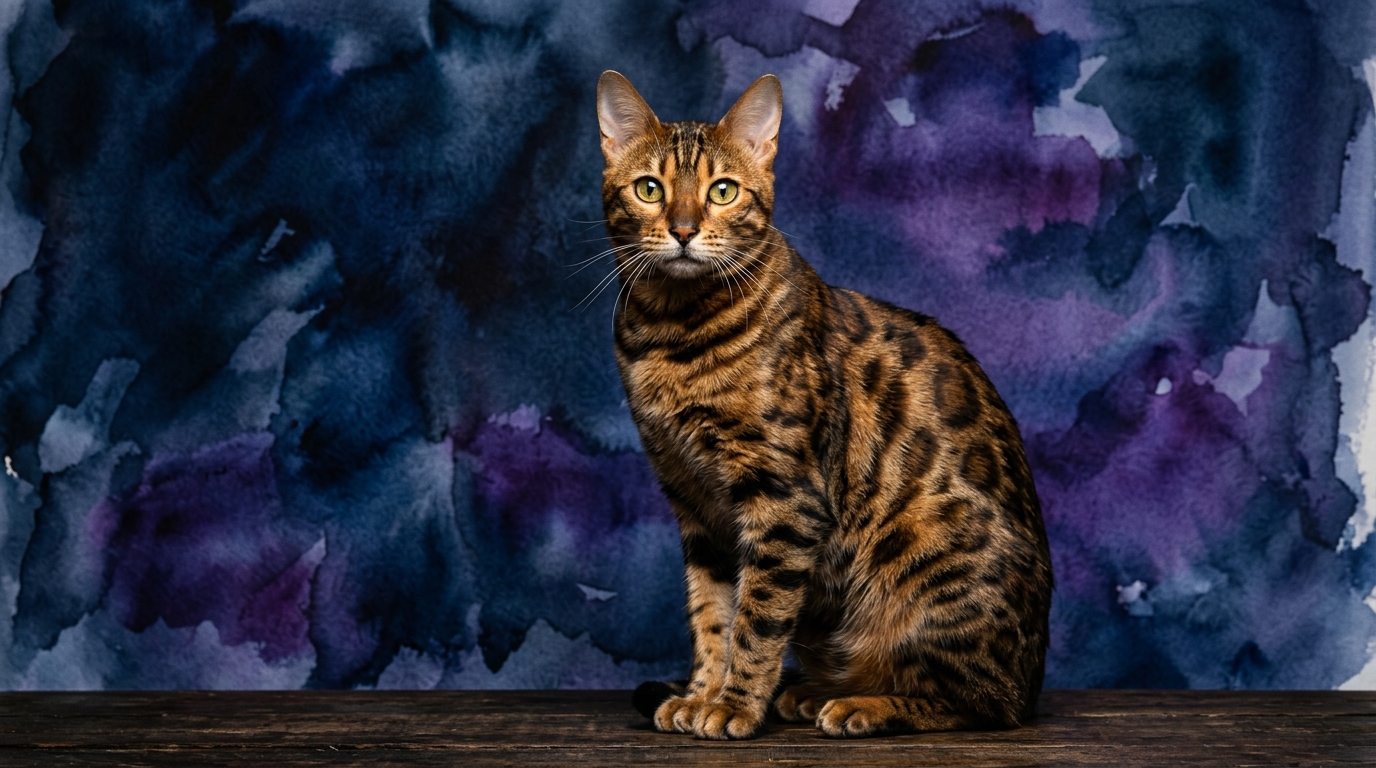
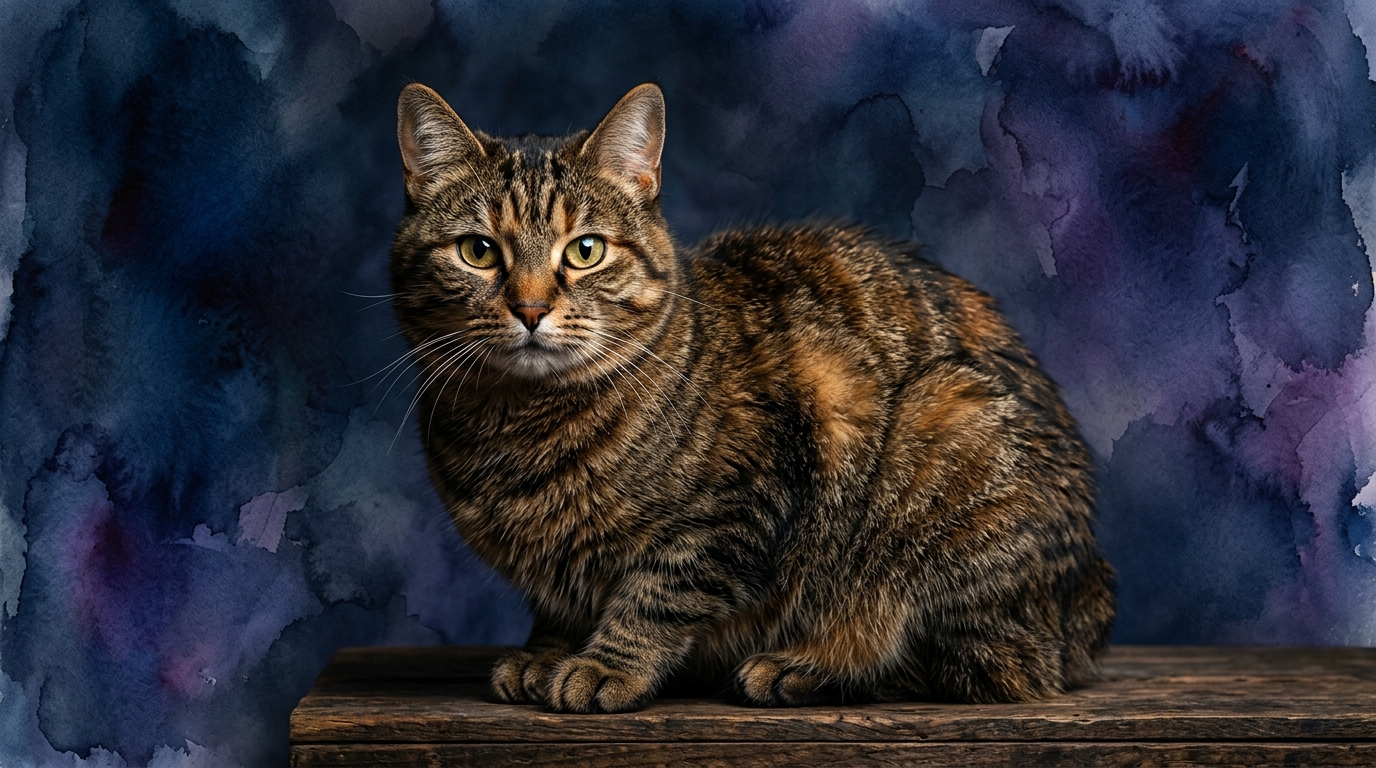
Side-by-Side IQ Profile: Bengal vs. Manx
The Cosmic Pet Pet IQ Lab's framework offers a detailed look at the cognitive strengths of each breed across five dimensions. For the Bengal, their profile is marked by exceptional mental agility: Problem Solving 5/5 – Exhibits exceptional ingenuity in navigating challenges, often devising multi-step solutions. Training Speed 4/5 – Demonstrates a rapid grasp of new commands and routines, forming associations quickly. Social Intelligence 4/5 – Capable of nuanced interactions, often reading human cues and responding in ways that suggest a deep understanding of social dynamics. Instinctive Drive 5/5 – Possesses a robust innate drive, manifesting as a strong inclination for exploration and hunting simulations. Memory 5/5 – Shows remarkable recall for locations, learned behaviors, and social interactions, retaining complex information over extended periods.
The Manx, in contrast, presents a more balanced and moderate cognitive profile across these same dimensions. Their scores indicate a steady capability without the same intensity of mental demand: Problem Solving 3/5 – Capable of solving common household puzzles and navigating familiar environments efficiently, though less inclined towards highly complex challenges. Training Speed 3/5 – Learns routines and basic commands at a steady pace, benefiting from consistent repetition. Social Intelligence 3/5 – Engages socially with family members, showing affection and recognizing familiar faces, though less adept at intricate social cues. Instinctive Drive 3/5 – Displays a moderate level of innate drive, enjoying play and exploration but generally content with less intense hunting-like engagement. Memory 3/5 – Possesses a functional memory for daily routines, resource locations, and familiar individuals, retaining information adequately.
Where the Bengal Wins Cognitively
The Bengal's cognitive profile showcases a significant advantage in areas demanding mental agility and complex thought. With a 5/5 in Problem Solving, these cats frequently impress by figuring out intricate puzzle feeders, opening latched cabinets, or even learning to retrieve specific toys on command. Their high Instinctive Drive (5/5) isn't just about physical activity; it fuels a persistent curiosity and a desire to understand and manipulate their surroundings, making them adept at mastering new environments. This drive, combined with a 5/5 in Memory, means a Bengal can quickly recall and apply past solutions to novel situations, demonstrating an adaptive cognitive style. They are adept at learning sequences and remembering multi-step processes, translating into a pet capable of a wide array of tricks or even simple tasks like fetching. Their 4/5 in Social Intelligence also means they often pick up on subtle human emotional states, fostering a deeper bond rooted in mutual understanding.
Where the Manx Wins Cognitively
While the Manx's cognitive scores are more moderate across the board, these traits translate into a unique set of advantages for particular lifestyles. Their balanced Problem Solving (3/5) means they are perfectly capable of navigating their environment and learning household routines without being overly prone to complex, often mischievous, problem-solving that can lead to unintended consequences. A moderate Instinctive Drive (3/5) ensures they enjoy play and exploration but are generally content with less intense mental stimulation. This can be a significant "win" for owners who appreciate a companion content with simpler forms of enrichment and less prone to boredom-induced mischief. Their 3/5 in Social Intelligence suggests they form strong, affectionate bonds without necessarily demanding constant, intricate interaction, making them excellent companions for those who value warmth and presence. The Manx's more subdued cognitive demands mean they integrate smoothly into a household without requiring an owner to constantly devise new mental exercises, offering a more predictable and often calmer presence.
Training: Bengal's Quick Study vs. Manx's Steady Learner
When it comes to training, the Bengal cat generally presents a more straightforward and often faster learning curve. Their 4/5 Training Speed indicates a rapid ability to associate commands with actions, quickly picking up tricks, leash training, or even complex agility courses. This is heavily supported by their 5/5 Problem Solving, which allows them to understand a task's mechanics more readily, and their 5/5 Memory, ensuring learned behaviors are retained with ease. A Bengal often thrives on the mental engagement training provides, viewing it as another puzzle to solve or a way to interact with their human, making them highly receptive. In contrast, the Manx, with a 3/5 Training Speed, requires more patience and consistent repetition. While certainly trainable for basic commands and litterbox habits, they may take longer to form associations and might not generalize learned behaviors as quickly to new contexts. Their more moderate Problem Solving means they respond best to clear, simple cues and positive reinforcement. An owner training a Manx should focus on short, frequent sessions and positive reinforcement to maintain engagement.
Matching Cats to Lifestyles: Active vs. Relaxed Owners
The cognitive profiles of these two breeds paint a clear picture of their suitability for different owner lifestyles. The Bengal, with its high Problem Solving (5/5), Instinctive Drive (5/5), and Memory (5/5), is an ideal match for active owners who relish providing consistent mental and physical enrichment. These cats thrive in environments where they can engage with puzzle toys, learn new tricks, go on supervised outdoor adventures, or participate in interactive play sessions that simulate hunting. An owner who enjoys teaching and interacting on a deep, cognitively stimulating level will find a Bengal a truly engaging companion. Conversely, the Manx, with its more moderate scores across all cognitive dimensions, is well-suited for relaxed owners. These individuals appreciate a pet that is affectionate and present but does not demand constant mental challenges or extensive, high-energy interactive play. A Manx will be content with regular but not necessarily intense play sessions, a comfortable routine, and a warm lap. They fit seamlessly into quieter homes where their balanced cognitive needs are easily met without requiring significant daily dedication to complex mental exercises.
The Verdict
If you seek a cat that will constantly challenge you with its mental prowess and thrive on complex interactions, the Bengal is an unparalleled choice.
For those who prefer a more placid, affectionate cat content with simpler routines and less intensive mental stimulation, the Manx offers a wonderfully balanced presence.
🧠 Find Your Pet's IQ Score
Our Pet IQ Lab assessment covers 25+ tests across 5 cognitive dimensions — personalized to your breed.
Take the Full IQ Test →Frequently Asked Questions
Can Manx cats be taught tricks despite their moderate training speed?
Absolutely. Manx cats are quite capable of learning tricks and commands, especially with consistent positive reinforcement and patience. Their 3/5 training speed means they may take longer than a Bengal, but they can certainly master basic commands and even some fun tricks.
Do Bengal cats need constant attention due to their high social intelligence and drive?
While Bengals are highly social and possess a strong drive, "constant" attention isn't necessarily the requirement. They need consistent, quality engagement that stimulates their problem-solving and instinctive drives, through interactive play, puzzle feeders, or training sessions, rather than just passive presence.
How does a Bengal's high memory score impact their daily life?
A Bengal's 5/5 memory means they quickly learn and retain household routines, the location of their favorite toys, and even complex sequences of events. This can make them excellent at anticipating your actions or remembering where you've hidden a treat, adding a sophisticated layer of interaction to daily life.