
Side-by-Side IQ Profile: A Tale of Two Cognitive Styles
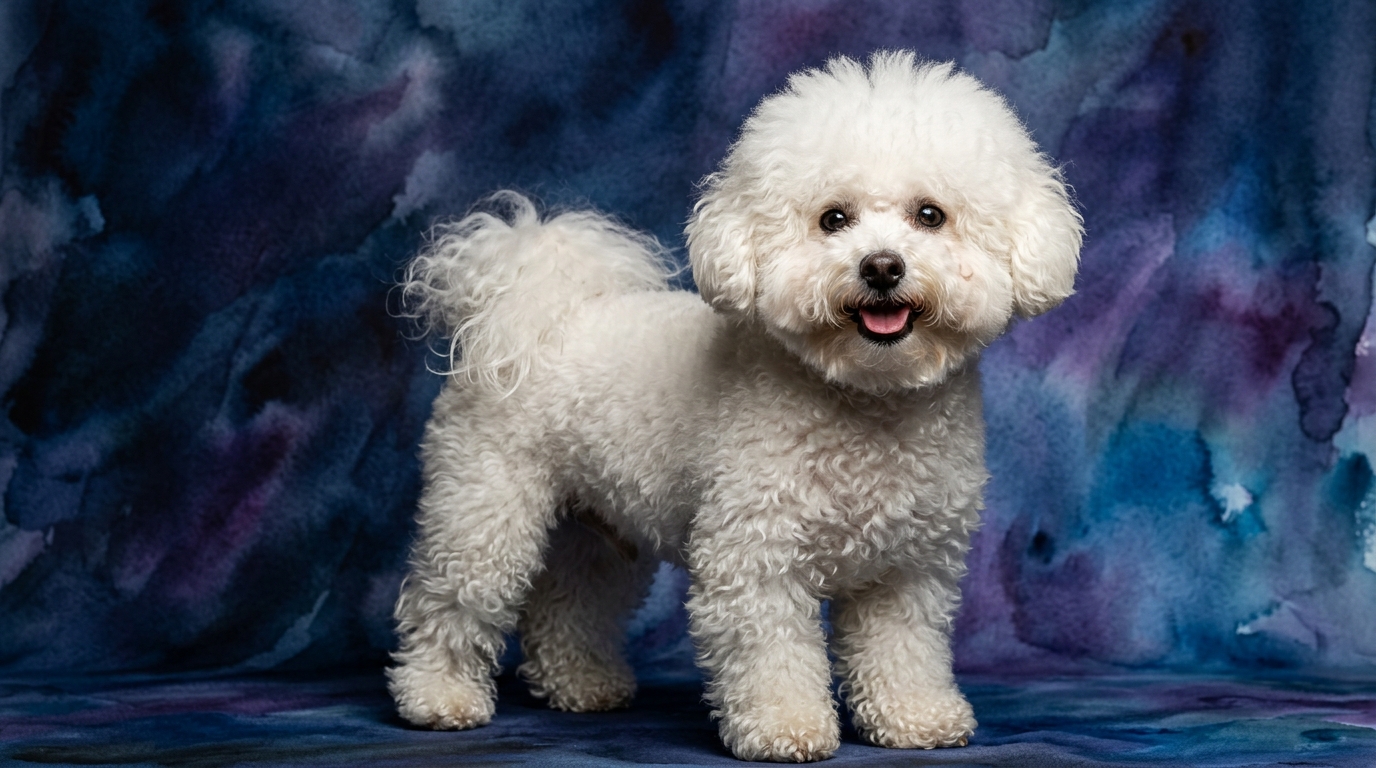
The Cosmic Pet Pet IQ Lab employs a multi-dimensional framework to assess canine intelligence, moving beyond a single score to reveal a breed's cognitive landscape. For the Bichon Frisé, ranked #45 by Coren, their profile highlights a balanced, socially-oriented mind: Problem Solving 3/5, Training Speed 3/5, Social Intelligence 5/5, Instinctive Drive 2/5, and Memory 3/5. This suggests a dog adept at understanding social cues and forming strong bonds, with a moderate capacity for learning and independent thought.
In stark contrast, the Belgian Sheepdog (Groenendael), a Herding breed ranked #15 by Coren, presents a profile geared for complex tasks and rapid acquisition of skills: Problem Solving 5/5, Training Speed 5/5, Social Intelligence 3/5, Instinctive Drive 3/5, and Memory 5/5. This breed exhibits a superior capacity for abstract thought, rapid learning, and retention of information, reflecting their heritage as capable working dogs. Their social intelligence, while still good, is less pronounced than their problem-solving and memory skills, suggesting a more task-focused approach to their environment.
Where the Bichon Frisé's Mind Shines Brightest
The Bichon Frisé truly excels in the realm of Social Intelligence, scoring a perfect 5/5. This means they possess an exceptional ability to interpret human emotions, body language, and vocal tones, making them remarkably attuned companions. A Bichon Frisé can often anticipate a change in mood or a need for comfort, responding with intuitive affection or subtle invitations to play. This cognitive strength translates into a dog that integrates seamlessly into family life, often becoming the emotional anchor of the household, understanding the nuances of human interaction with remarkable clarity.
Furthermore, their lower Instinctive Drive (2/5) can be seen as a cognitive advantage for certain lifestyles. Unlike breeds driven by strong herding or hunting instincts, the Bichon Frisé is less prone to independently pursuing environmental stimuli like chasing squirrels or attempting to 'herd' children. This makes them inherently more adaptable to indoor living and less demanding in terms of requiring complex outlets for ingrained urges. Their moderate Problem Solving (3/5) and Training Speed (3/5) are sufficient for learning household manners and charming tricks, but it's their social acumen that truly sets them apart, fostering deep, reciprocal bonds based on mutual understanding and emotional sensitivity.
The Belgian Sheepdog (Groenendael): A Master of Cognitive Challenges
The Belgian Sheepdog (Groenendael) demonstrates a formidable cognitive architecture, particularly in Problem Solving (5/5), Training Speed (5/5), and Memory (5/5). Their top-tier problem-solving ability means they are adept at navigating complex situations, figuring out how to open gates, retrieve hidden objects, or devise strategies to achieve a goal. This isn't just about following commands; it's about independent thought and analytical processing, allowing them to adapt and innovate in challenging scenarios, whether in competitive dog sports or real-world working tasks.
Their exceptional Training Speed (5/5) signifies a capacity to grasp new commands and concepts with remarkable swiftness, often requiring fewer repetitions than many other breeds. Coupled with their outstanding Memory (5/5), once a lesson is learned, it is deeply ingrained, allowing for consistent performance over time. This makes them highly receptive to advanced training, capable of mastering intricate sequences and retaining a vast repertoire of behaviors. While their Social Intelligence (3/5) is not as dominant as their practical cognitive skills, they form strong bonds with their primary handlers, viewing them as partners in their various intellectual pursuits, rather than solely as sources of comfort.
Training Aptitude: Precision vs. Patience
When considering ease of training, the Belgian Sheepdog (Groenendael) holds a distinct advantage due to its exceptional Training Speed (5/5) and high Coren rank (#15). These dogs process information rapidly and are eager to engage in structured learning, often thriving on the mental stimulation that training provides. Their focus and ability to retain complex sequences mean they can advance quickly through obedience, agility, or protection work, often excelling in roles that demand precision and consistency. Their innate drive to work alongside a handler, combined with superior memory, makes the training process efficient and rewarding for an experienced owner.
Conversely, the Bichon Frisé, with a Training Speed of 3/5 and a Coren rank of #45, requires a more patient and creatively engaging approach to training. While perfectly capable of learning a wide array of commands and tricks, they may take more repetitions to solidify a behavior. Their motivation often stems from social interaction and positive reinforcement rather than an inherent drive to perform complex tasks. Behavioral differences include a potential for shorter attention spans during formal sessions, or a tendency to prioritize social interaction over strict adherence to a command if not properly motivated. Successful training with a Bichon Frisé often leverages their social intelligence, making learning a fun, bonding experience rather than a rigorous exercise in discipline.
Lifestyle Match: Active Engagement vs. Relaxed Companionship
The cognitive profiles of these two breeds clearly delineate their suitability for different owner lifestyles. The Belgian Sheepdog (Groenendael), with its top scores in Problem Solving, Training Speed, and Memory, coupled with a moderate Instinctive Drive (3/5), is an ideal match for active owners who relish engaging in dog sports, advanced obedience, or working roles. These dogs require consistent mental stimulation and physical exercise to thrive; without it, their keen minds and moderate drive can lead to boredom and potentially destructive behaviors. They need an owner who can channel their cognitive prowess into meaningful activities, providing structure and challenges that satisfy their intellectual needs.
The Bichon Frisé, with its strong Social Intelligence (5/5) and lower Instinctive Drive (2/5), is perfectly suited for more relaxed owners seeking a devoted and emotionally responsive companion. Their moderate needs for problem-solving and training speed mean they are content with regular walks, interactive play, and ample cuddle time. While they benefit from mental engagement, it doesn't need to be as intense or structured as with a working breed. Their cognitive makeup makes them adaptable to apartment living and less demanding in terms of requiring constant 'jobs' to do, making them excellent partners for those who prioritize companionship and a calm, affectionate presence in their home.
The Verdict
Choose the Bichon Frisé if you seek an emotionally intuitive companion who thrives on social interaction and a relaxed home environment. They are perfect for owners who prioritize affection and a dog that seamlessly integrates into family life with moderate exercise needs.
Opt for the Belgian Sheepdog (Groenendael) if you are an active, experienced owner eager to engage in advanced training, dog sports, or working activities. This breed will flourish with consistent mental challenges and a partnership built on shared tasks and intellectual pursuits.
🧠 Find Your Pet's IQ Score
Our Pet IQ Lab assessment covers 25+ tests across 5 cognitive dimensions — personalized to your breed.
Take the Full IQ Test →Frequently Asked Questions
Does a higher Coren rank mean a dog is 'smarter' in all aspects?
Not necessarily; a Coren rank primarily reflects a breed's 'working and obedience intelligence' or how quickly they learn commands. It doesn't fully encompass social intelligence or problem-solving in novel situations, which are better reflected in multi-dimensional IQ profiles like ours.
Can a Bichon Frisé learn complex tricks despite its moderate training speed?
Absolutely. While they may take more repetitions than a Belgian Sheepdog, a Bichon Frisé's moderate training speed means they are fully capable of learning complex tricks and routines. Success hinges on consistent, positive reinforcement and making the training sessions enjoyable and engaging, leveraging their social intelligence.
How does a Belgian Sheepdog's high memory score impact daily life?
A high memory score means a Belgian Sheepdog will remember commands, routines, and experiences for a long time, leading to consistent behavior once learned. This also means they can recall negative experiences or inadequate training, emphasizing the importance of positive and structured early learning for this breed.