A Side-by-Side Look at Cognitive Profiles
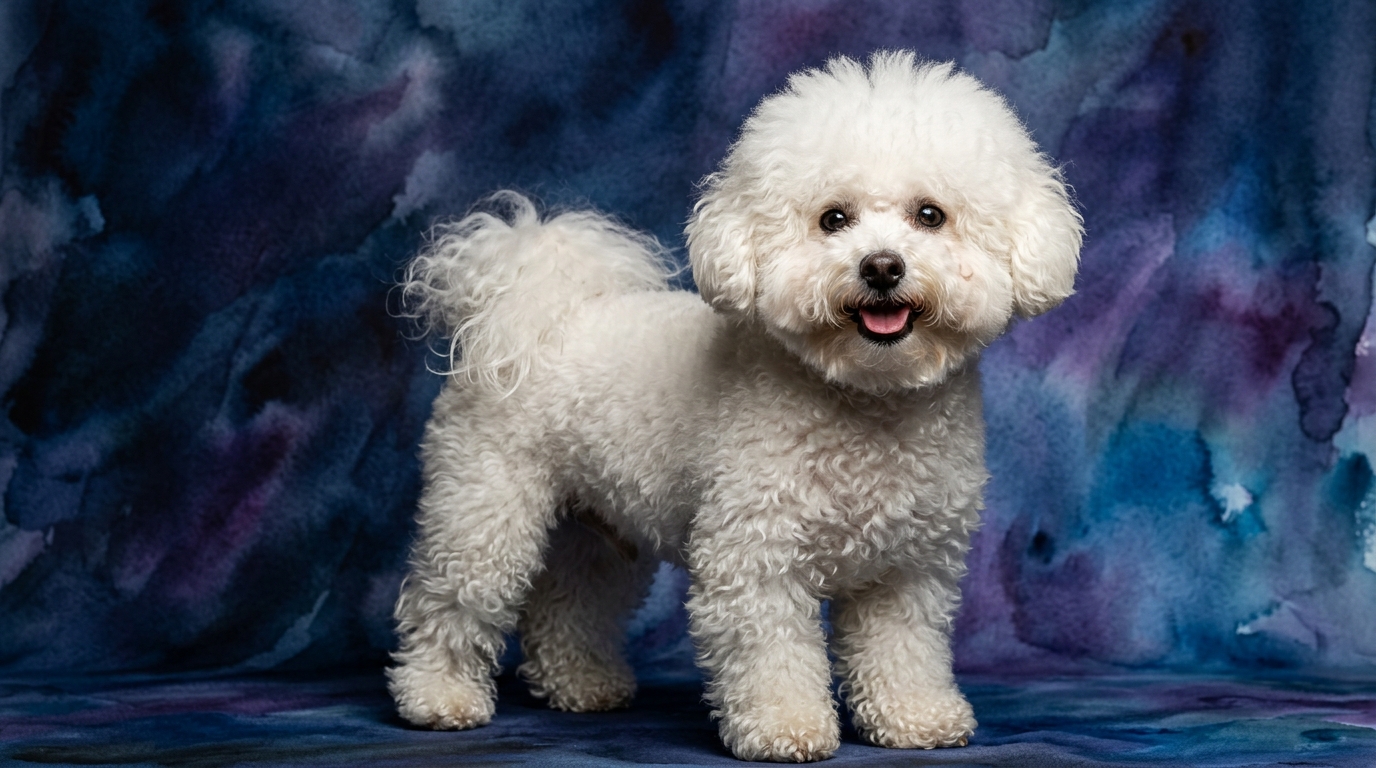
The Cosmic Pet Pet IQ Lab employs a unique five-dimensional framework to assess canine intelligence, offering a granular view beyond simple obedience. For the Bichon Frisé, a charming member of the Non-Sporting Group, its profile paints a picture of a moderately capable problem-solver and learner, but an exceptional social partner. Their Problem Solving is rated at 3/5, indicating an ability to navigate moderately complex tasks and puzzles. Training Speed also sits at 3/5, suggesting they absorb new commands and routines at a steady, average pace. Where the Bichon truly shines is in Social Intelligence, scoring an impressive 5/5, reflecting a profound capacity to interpret human cues, moods, and social dynamics. Instinctive Drive is lower at 2/5, meaning they possess a less pronounced inclination towards independent hunting, herding, or guarding behaviors. Their Memory is rated 3/5, indicating an average recall of experiences and learned behaviors.
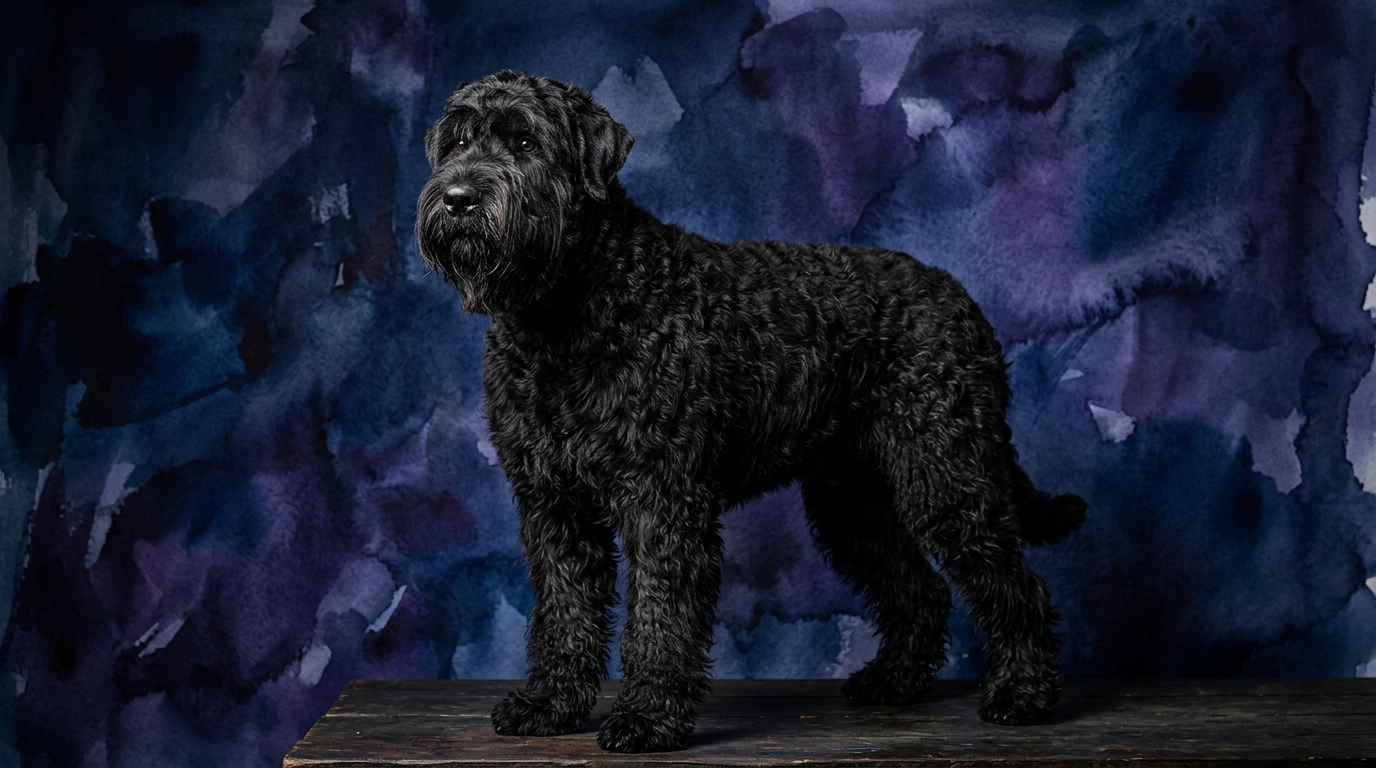
In contrast, the Black Russian Terrier, a powerful Working Group breed, presents a profile that, on paper, appears remarkably similar in several key areas, yet carries different implications due to its heritage and physical presence. Like the Bichon, the Black Russian Terrier also scores 3/5 in Problem Solving, demonstrating a comparable aptitude for figuring out challenges. Their Training Speed is also 3/5, meaning they too learn new behaviors at a moderate rate. The Black Russian Terrier's Social Intelligence, however, is rated 3/5, indicating a solid understanding of social cues but perhaps not the same nuanced empathy observed in the Bichon. Their Instinctive Drive is a moderate 3/5, a score that hints at a purposeful inclination often associated with their guarding and protective roots. Memory for the Black Russian Terrier also stands at 3/5, reflecting an average retention of information.
Where the Bichon Frisé Demonstrates Cognitive Edge
The Bichon Frisé’s most significant cognitive advantage lies squarely in its extraordinary Social Intelligence, rated at a perfect 5/5. This isn't merely about being friendly; it speaks to a deep, intuitive understanding of human emotion and social structures. A Bichon is exceptionally adept at reading facial expressions, interpreting vocal tones, and sensing shifts in household dynamics. This acute social awareness allows them to adapt seamlessly to new situations and bond profoundly with their human companions, often anticipating needs or offering comfort without explicit instruction. They can quickly discern who is pleased or displeased, and adjust their behavior accordingly, making them highly responsive and emotionally attuned family members.
This superior social cognition means a Bichon Frisé often integrates into family life with remarkable ease, requiring less explicit training for social graces than breeds with lower scores. Their desire to be involved and their sensitivity to human interaction can make them particularly receptive to positive reinforcement, as they thrive on the social reward of pleasing their people. While their problem-solving and training speed are average, their exceptional social understanding amplifies their overall adaptability and makes them incredibly perceptive companions in everyday life.
Where the Black Russian Terrier Holds a Cognitive Advantage
While the Black Russian Terrier doesn't boast a numerically higher score in any single cognitive dimension compared to the Bichon Frisé, its advantage emerges from its balanced profile and particularly its higher Instinctive Drive of 3/5. This moderate drive, especially when combined with its physical capabilities, suggests a canine purpose-built for specific, demanding roles, often related to protection or guarding. This isn't just about raw strength; it's about a cognitive predisposition to engage with and manage perceived threats or tasks with a focused intensity.
The Black Russian Terrier’s 3/5 Instinctive Drive, in contrast to the Bichon's 2/5, indicates a greater inherent inclination towards independent action and task-oriented engagement. This manifests as a more profound sense of territory, a natural wariness towards strangers, and a capacity for sustained vigilance. While the Bichon's social intelligence drives its interaction, the Black Russian Terrier's balanced profile, anchored by its instinctive drive, points to a cognitive framework that supports reliability and purpose in specific, structured environments. This breed is cognitively predisposed to take on responsibilities that require a certain level of independence and steadfastness, making it a powerful and discerning partner for protective roles.
Training Dynamics: Which is Easier and Why?
When considering ease of training, both the Bichon Frisé and the Black Russian Terrier share an identical Training Speed score of 3/5, implying they learn new commands at an average pace. However, the true 'ease' often stems from other cognitive factors and breed temperament. The Bichon Frisé, with its exceptional 5/5 Social Intelligence, often feels easier to train, especially for the average pet owner. Their strong desire to please, coupled with their acute ability to understand human cues and motivations, means they are highly responsive to positive reinforcement and eager to cooperate. A Bichon quickly grasps what their human wants and is intrinsically motivated by social approval, making basic obedience and even complex tricks often a joyful and relatively smooth process. They thrive on interaction and connection during training sessions, which can make them seem more 'willing' learners.
The Black Russian Terrier, while also scoring 3/5 in Training Speed, might present a different training experience. Its moderate 3/5 Social Intelligence means it understands cues, but might not possess the same innate people-pleasing drive as the Bichon. Furthermore, its 3/5 Instinctive Drive suggests a more independent and purposeful mindset. Training a Black Russian Terrier often requires a handler who can channel this drive effectively, providing clear, consistent, and structured guidance. They are capable learners, but might require more motivation beyond mere social approval, potentially responding best to task-oriented rewards or a strong sense of purpose in their training. Their size and working heritage also mean that any lack of early, consistent training can lead to significant management challenges, whereas a smaller breed like the Bichon might be more forgiving.
Matching Canine Cognition to Owner Lifestyles
The distinct cognitive profiles of the Bichon Frisé and Black Russian Terrier make them suitable for vastly different owner lifestyles. The Bichon Frisé is an excellent match for more relaxed owners who prioritize companionship, emotional connection, and a relatively low-key daily routine. Their high Social Intelligence (5/5) means they thrive on close interaction and being an integral part of family life, often content with moderate exercise like daily walks and indoor play. Their lower Instinctive Drive (2/5) means they are less prone to independent pursuits or intense task-orientation, preferring to be near their people. Owners seeking a highly empathetic, adaptable, and emotionally responsive companion who will happily curl up on the couch after a gentle stroll will find the Bichon Frisé a perfect fit.
Conversely, the Black Russian Terrier is best suited for active and experienced owners who are prepared for consistent engagement, structured training, and significant physical and mental stimulation. Their moderate Instinctive Drive (3/5) and working heritage imply a need for purpose and activity beyond casual companionship. These dogs benefit from owners who can provide clear leadership, consistent training, and opportunities for meaningful work, whether that's advanced obedience, protection sports, or extensive outdoor adventures. Their robust nature and moderate social intelligence mean they thrive with owners who understand the importance of establishing boundaries and providing outlets for their inherent capabilities. Owners who enjoy a challenging yet rewarding partnership with a powerful, discerning canine will appreciate the Black Russian Terrier.
The Verdict
Choose the Bichon Frisé if you seek a highly empathetic, adaptable companion who excels in social dynamics and thrives on close, emotionally rich interaction within a relaxed home environment.
Opt for the Black Russian Terrier if you are an active, experienced owner prepared for consistent training and significant engagement with a robust, purpose-driven canine partner capable of demanding tasks.
🧠 Find Your Pet's IQ Score
Our Pet IQ Lab assessment covers 25+ tests across 5 cognitive dimensions — personalized to your breed.
Take the Full IQ Test →Frequently Asked Questions
Is the Bichon Frisé easy to house train?
While their Social Intelligence helps them understand expectations, their average Training Speed means house training requires consistency and patience. Regular potty breaks and positive reinforcement are key to success, as with most breeds.
Do Black Russian Terriers require a lot of grooming?
Yes, Black Russian Terriers possess a dense, coarse double coat that necessitates regular and thorough grooming. This includes frequent brushing, professional trimming every 6-8 weeks, and attention to their beard and leg furnishings to prevent matting.
Are Bichon Frisé dogs prone to separation anxiety?
Due to their exceptional Social Intelligence and strong bond with their owners, Bichon Frisé dogs can be prone to separation anxiety if not properly conditioned. Early training for alone time and providing mental stimulation can help mitigate this tendency.