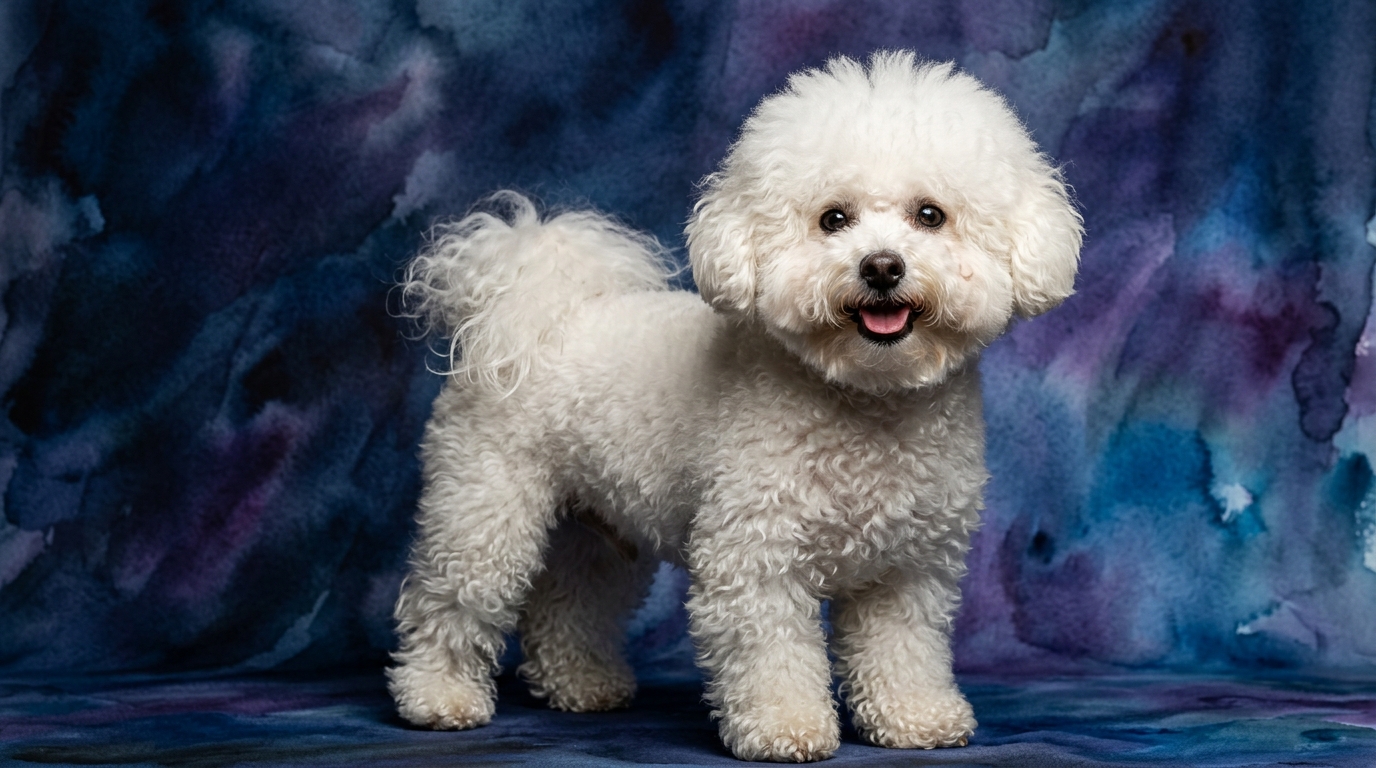
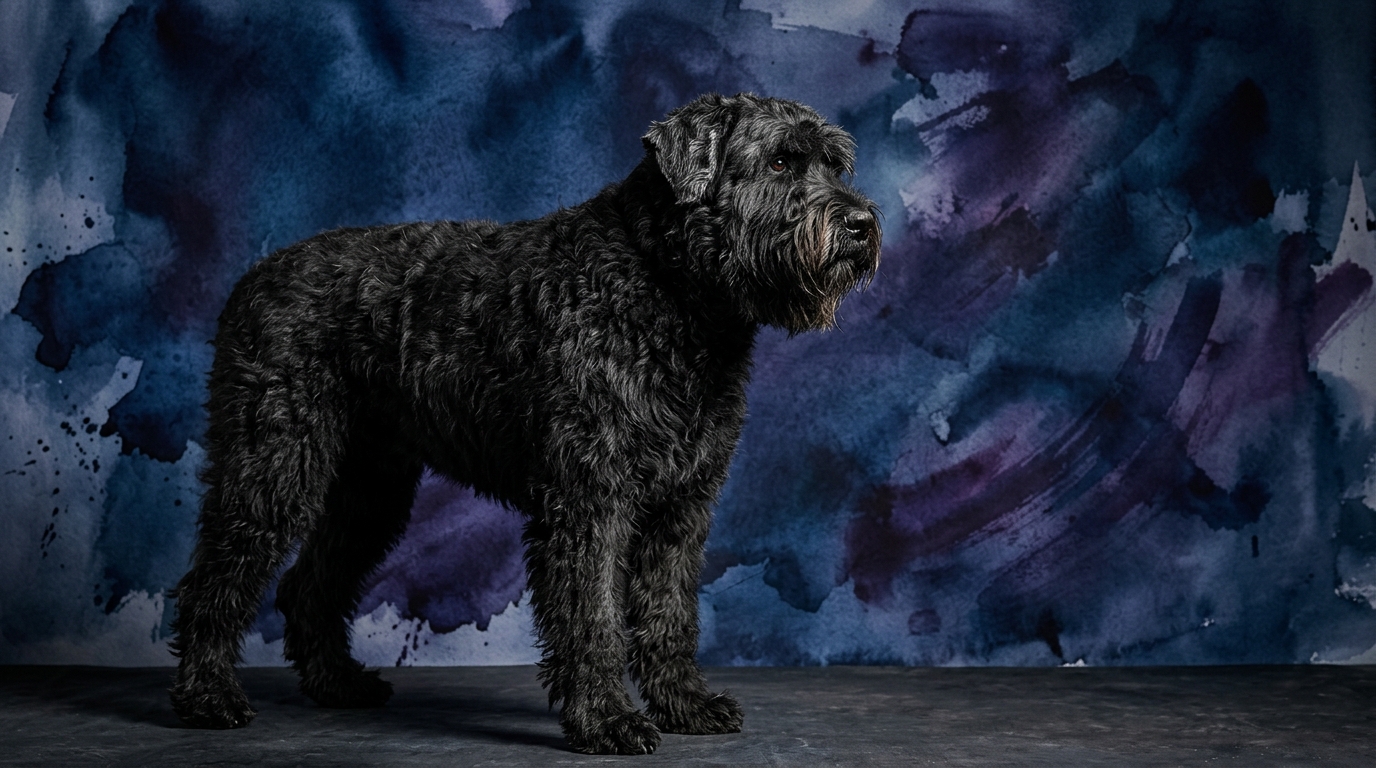
Side-by-Side Cognitive Profiles
The Cosmic Pet Pet IQ Lab employs a five-dimensional framework to map canine intelligence, offering a nuanced view beyond simple 'smart' labels. Let's delve into how the Bichon Frisé and Bouvier des Flandres stack up.
For the **Bichon Frisé**, their Problem Solving ability rates at 3/5, indicating a capacity for navigating common household puzzles or learning routine sequences without exceptional abstract reasoning. Their Training Speed, also 3/5, suggests they learn new commands at an average pace, requiring consistent, positive reinforcement. Where the Bichon truly shines is in Social Intelligence, scoring an impressive 5/5; they are remarkably attuned to human emotions, social cues, and family dynamics, thriving on interaction. Their Instinctive Drive is 2/5, meaning they have minimal innate urges for complex tasks like herding or guarding, preferring companionship over work. Memory for the Bichon is 3/5, allowing them to retain learned behaviors and routines effectively over time.
The **Bouvier des Flandres**, while not Coren-ranked, presents a distinct profile. Their Problem Solving capability stands at 3/5, similar to the Bichon, but often applied to practical, environmental challenges rather than social ones. Training Speed is also 3/5, requiring a patient and consistent approach to master commands. Their Social Intelligence is 3/5, indicating they are aware of their human companions and family structure, but perhaps less overtly expressive or socially dependent than the Bichon, often displaying a more reserved or observant demeanor. The Bouvier's Instinctive Drive is 3/5, reflecting their heritage as robust herding and guarding dogs, possessing a moderate inclination towards purposeful work. Memory for the Bouvier is 3/5, ensuring they can recall learned tasks and commands reliably.
Where the Bichon Frisé Excels Cognitively
The Bichon Frisé's undeniable cognitive strength lies in their exceptional Social Intelligence, scoring a perfect 5/5. This isn't merely about being friendly; it's a deep-seated capacity to interpret human moods, adapt their behavior to social cues, and forge profound emotional bonds. A Bichon will often seem to 'understand' when you're sad, offering comfort, or know precisely how to elicit a laugh. This high social acumen makes them extraordinarily responsive to human interaction and highly motivated by positive social feedback, contributing significantly to their role as engaging companions. Their ability to integrate seamlessly into diverse family structures and connect with multiple individuals stems directly from this acute social perception.
While their problem-solving and training speed are average, their social intelligence compensates by making them eager participants in activities that involve their human family. They learn social routines quickly, like greeting guests politely or understanding household dynamics, not through complex abstract thought, but through an intuitive grasp of social reciprocity. This cognitive advantage means a Bichon often appears to be 'reading your mind,' making them uniquely empathetic and capable of enriching human-animal companionship on a deeply emotional level.
Where the Bouvier des Flandres Excels Cognitively
The Bouvier des Flandres' cognitive strengths are rooted in their working heritage, particularly in their balanced Instinctive Drive (3/5) combined with their practical Problem Solving (3/5) and solid Memory (3/5). While their raw problem-solving score mirrors the Bichon's, the application differs significantly. A Bouvier's problem-solving is often geared towards environmental navigation, task completion, or protective duties, such as figuring out how to move a gate or intelligently patrol a perimeter. Their moderate instinctive drive means they possess an inherent desire to work and a resilience in facing challenges, which translates into a robust, practical intelligence.
Unlike the Bichon's social-centric intellect, the Bouvier's cognitive strengths manifest in their ability to learn and execute complex, multi-step tasks with a sense of purpose and independence. They can remember intricate routines for herding or protection and apply their problem-solving skills to real-world scenarios. This breed's intellect is less about charming their way through life and more about understanding and fulfilling a role, making them exceptionally capable in environments requiring diligence, focus, and a degree of self-reliance, even if their social expression is more reserved.
Training Dynamics: Bichon Frisé vs. Bouvier des Flandres
When considering ease of training, both breeds share a 3/5 Training Speed, suggesting neither is a lightning-fast learner, but their underlying motivations and behavioral nuances make their training experiences quite distinct. The Bichon Frisé's exceptional Social Intelligence makes them inherently eager to please and highly responsive to positive reinforcement that emphasizes connection and praise. They thrive on being involved and receiving attention, which can make early obedience training a joyful bonding experience. However, their lower Instinctive Drive (2/5) means they might not be intrinsically motivated by repetitive, task-oriented training that lacks human interaction or perceived social reward. They might lose interest if a task feels monotonous or solitary, requiring trainers to keep sessions engaging and connection-focused.
The Bouvier des Flandres, with their 3/5 Social Intelligence and 3/5 Instinctive Drive, approaches training with a different mindset. They respond well to clear, consistent leadership and purpose-driven tasks. Their working background means they are often more inclined to understand and commit to a 'job,' even if it's repetitive, provided they see the utility or receive consistent direction. While they might be more independent and less overtly demonstrative in their desire to please than a Bichon, their solid memory and practical problem-solving mean they can master complex sequences with patience. Training a Bouvier requires a firm yet fair hand, focusing on mutual respect and establishing clear expectations, rather than relying solely on effusive praise, as their motivation is often tied to fulfilling a role rather than pure social validation.
Matching Breeds to Lifestyles: Active vs. Relaxed Owners
Choosing between a Bichon Frisé and a Bouvier des Flandres often comes down to aligning their cognitive and behavioral tendencies with an owner's lifestyle. For **relaxed owners**, the Bichon Frisé is an ideal match. Their high Social Intelligence means they thrive on companionship and indoor family life, content with moderate daily exercise like walks and playtime in the yard. They are intrinsically motivated by being near their humans, offering comfort and seeking engagement that doesn't demand extensive physical exertion or complex tasks. A Bichon will happily curl up on the couch for an evening, making them perfectly suited for individuals or families who prioritize affectionate, low-key interaction.
Conversely, the **active owner** will find a rewarding companion in the Bouvier des Flandres. Their moderate Instinctive Drive and practical problem-solving skills mean they require consistent mental and physical engagement. Bouviers excel in structured activities, long hikes, obedience trials, or even acting as a watchful family guardian. They need a 'job' or a sense of purpose to truly flourish, making them less suitable for purely sedentary lifestyles. Owners who enjoy outdoor adventures, consistent training routines, or have a property that benefits from a vigilant, task-oriented presence will appreciate the Bouvier's robust capabilities and steady disposition.
The Verdict
Choose the Bichon Frisé if your home thrives on constant, effusive social interaction and you seek a companion whose greatest joy is simply being with you, making them the heart of a relaxed, affectionate household.
Opt for the Bouvier des Flandres if you lead an active life, value a dog with a strong sense of purpose, and are prepared to engage their practical intelligence with consistent training and meaningful tasks, finding satisfaction in their steadfast loyalty and working spirit.
🧠 Find Your Pet's IQ Score
Our Pet IQ Lab assessment covers 25+ tests across 5 cognitive dimensions — personalized to your breed.
Take the Full IQ Test →Frequently Asked Questions
How do their problem-solving skills differ despite similar scores?
While both breeds score 3/5 in Problem Solving, the Bichon typically applies this to social navigation and household routines, understanding cause-and-effect in interactions. The Bouvier, however, often uses its problem-solving for practical, environmental challenges or task-oriented situations, reflecting its working heritage in a more physically engaged manner.
Which breed is better for first-time dog owners?
The Bichon Frisé might be a more forgiving choice for first-time dog owners due to their high social intelligence and eagerness to please, which can simplify early training and bonding. The Bouvier des Flandres, with its independent nature and stronger drive, generally benefits from an owner experienced in consistent leadership and task-oriented training.
Do either of these breeds shed a lot?
Neither the Bichon Frisé nor the Bouvier des Flandres are considered heavy shedder breeds, which can be a plus for many owners. However, both require regular grooming to maintain their coats and prevent matting, differing in the texture and density of their respective fur types.