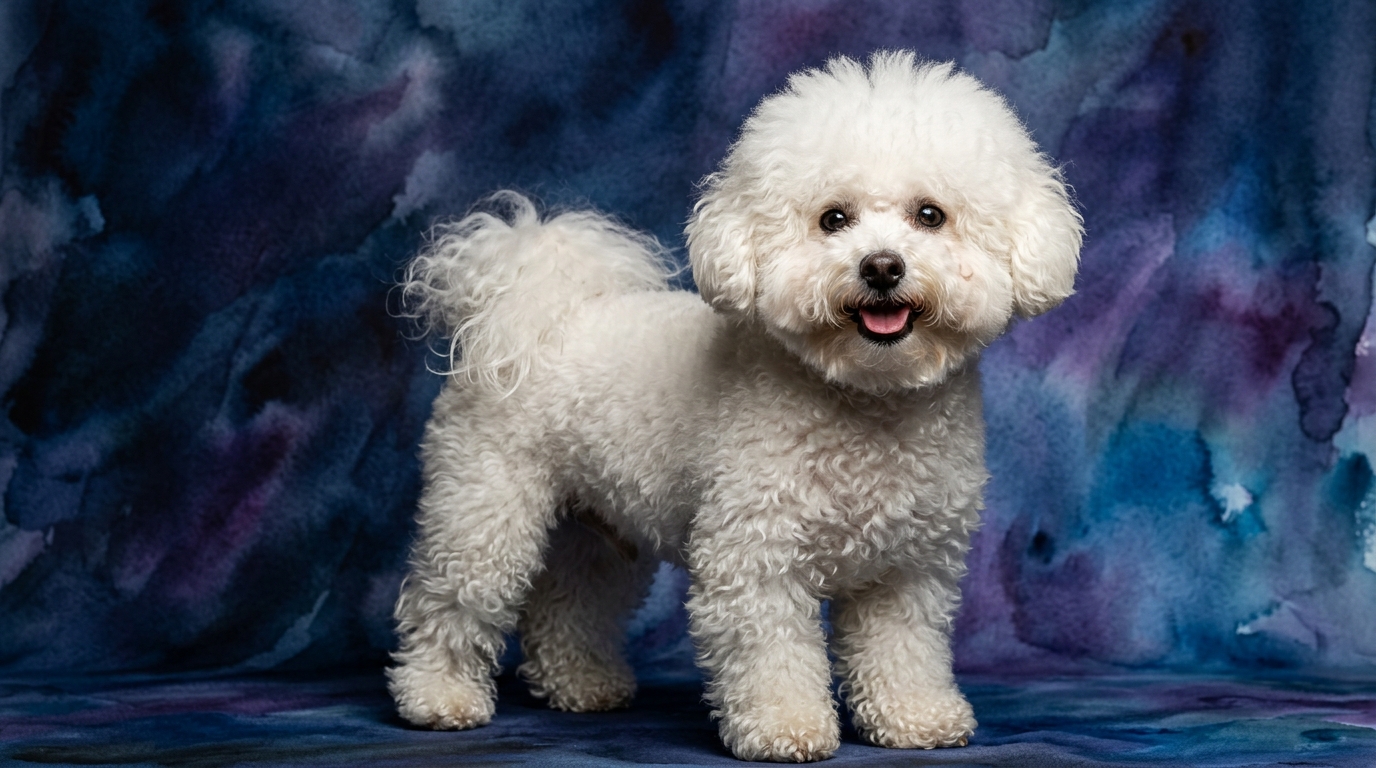
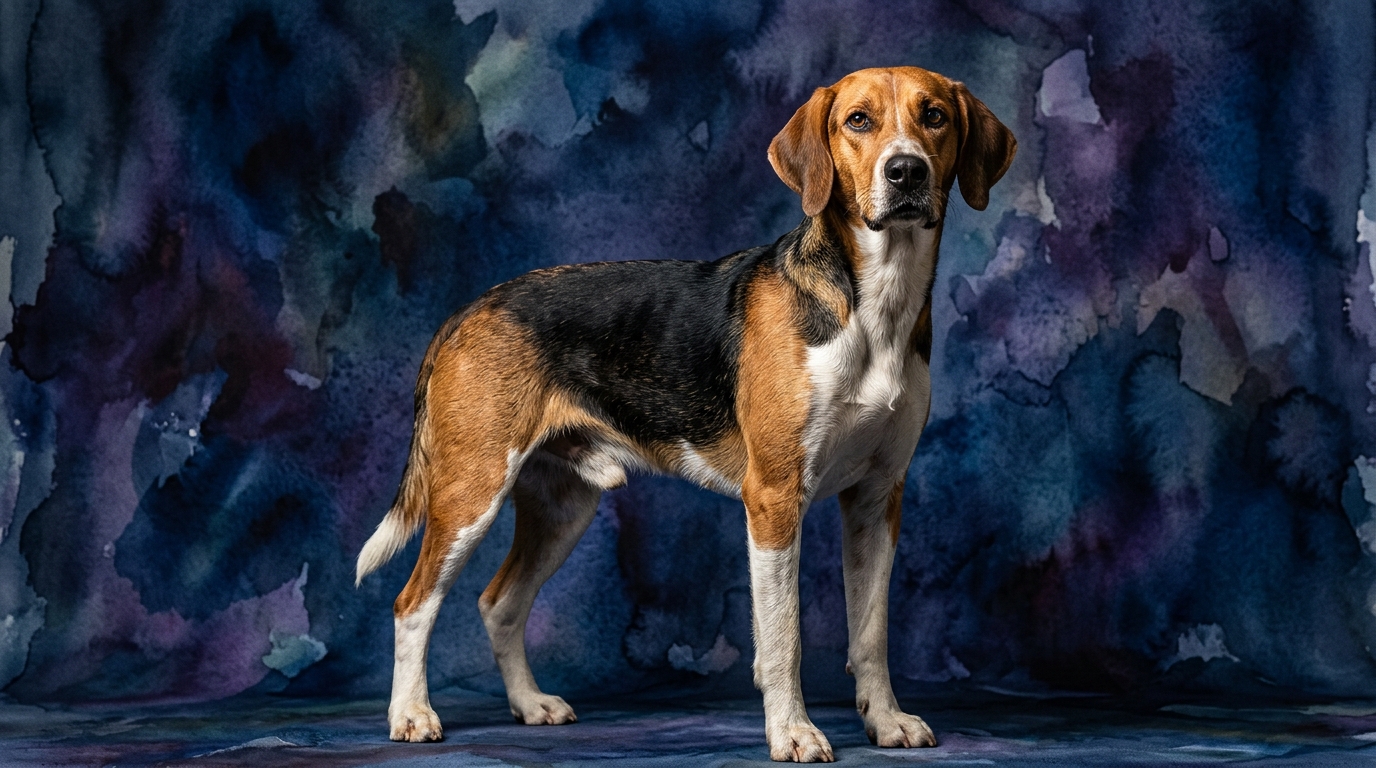
Side-by-Side IQ Profile: Bichon Frisé vs. English Foxhound
The Cosmic Pet Pet IQ Lab provides a unique framework for understanding canine cognition across five key dimensions. For the Bichon Frisé, a companion breed, and the English Foxhound, a dedicated scent hound, these scores illuminate distinct cognitive architectures tailored to their historical roles.
**Bichon Frisé Cognitive Profile:** With a Coren rank of #45, the Bichon Frisé demonstrates a balanced cognitive makeup. Their **Problem Solving (3/5)** indicates a moderate ability to figure out novel challenges, suggesting they can learn simple puzzle toys or navigate minor obstacles with some independent thought. **Training Speed (3/5)** means they grasp new commands at an average pace, requiring consistent methods but generally responding well to positive reinforcement. Their standout feature is **Social Intelligence (5/5)**, showcasing an exceptional capacity to understand and respond to human emotions and cues, making them deeply empathetic companions. A **low Instinctive Drive (2/5)** means they are minimally compelled by traditional working instincts like hunting or herding, focusing instead on social interaction. Their **Memory (3/5)** is average, allowing them to recall routines and commands effectively.
**English Foxhound Cognitive Profile:** Not Coren-ranked, the English Foxhound presents a profile geared towards its working heritage. Their **Problem Solving (3/5)** score, identical to the Bichon, indicates a practical intelligence often applied to navigating complex environments or overcoming physical barriers in pursuit of a scent. Their **Training Speed (3/5)** also suggests an average learning rate, though this is often influenced by their strong inherent motivations. **Social Intelligence (3/5)** is moderate; while they can interact appropriately, their focus is often on their environment or pack rather than intense human emotional attunement. A **moderate Instinctive Drive (3/5)** highlights a clear, persistent urge for scent tracking and pursuit, defining a significant part of their cognitive landscape. Finally, their **Memory (3/5)** is average, sufficient for retaining scent trails, learned commands, and familiar hunting grounds.
Where the Bichon Frisé Wins Cognitively
The Bichon Frisé truly shines in the realm of social cognition, boasting a perfect 5/5 in social intelligence. This isn't just about being friendly; it signifies a profound capacity to interpret human moods, intentions, and subtle non-verbal cues. A Bichon is exceptionally adept at forming deep emotional bonds, often anticipating their owner's needs and adjusting their behavior to maintain harmony. For instance, they might offer comfort when sensing distress or playfully engage when detecting a desire for interaction. This heightened social awareness means they are often more responsive to human direction and intrinsically motivated by companionship, making them highly integrated family members who thrive on mutual understanding. Their lower instinctive drive (2/5) further enhances this advantage, as they are less distracted by environmental stimuli like scents or movement compared to breeds with strong working instincts. This allows for a more focused engagement with their human counterparts, making them consistently present and attentive in social settings.
Where the English Foxhound Wins Cognitively
The English Foxhound's cognitive strengths are deeply rooted in their historical purpose, particularly evident in their moderate yet potent instinctive drive (3/5). While not a perfect score, this dimension is where their functional brilliance lies. Unlike the Bichon, whose instincts are minimal, the Foxhound possesses a persistent and focused drive to pursue and track scents, a complex cognitive task requiring sustained attention and problem-solving within a dynamic environment. Their problem-solving (3/5) and memory (3/5) scores, when combined with this drive, allow them to mentally map intricate scent trails, remember where they've searched, and adapt their strategy to follow elusive quarry. This isn't about abstract puzzle-solving, but rather a specialized form of practical intelligence: navigating complex terrains, discerning faint odors, and maintaining a relentless focus on a singular goal. This cognitive architecture makes them unparalleled in tasks requiring endurance, independent thought in the field, and a deep engagement with their olfactory world.
Which is Easier to Train and Why
When considering ease of training, the Bichon Frisé generally presents a more straightforward experience for the average owner, despite both breeds sharing a 3/5 training speed. The key differentiator lies in their social intelligence and instinctive drives. A Bichon's exceptional social intelligence (5/5) means they are highly motivated by pleasing their human companions and are adept at understanding what is being asked of them through subtle cues. Their desire for connection and approval acts as a powerful intrinsic reward, often making them eager participants in training sessions. Furthermore, their low instinctive drive (2/5) means fewer internal distractions; a Bichon is less likely to suddenly abandon a 'sit' command because they've caught an intriguing scent or spotted a squirrel.
Conversely, while the English Foxhound also has a 3/5 training speed, their moderate instinctive drive (3/5) can pose a significant challenge. A Foxhound's world is often dominated by their nose; once a compelling scent is detected, their drive to follow it can override any previously learned commands. This isn't a lack of understanding, but rather a powerful, innate behavioral imperative. Training a Foxhound requires immense patience, consistency, and often, a deep understanding of scent work or a willingness to incorporate their natural drives into their training, such as through tracking games. While they learn, their focus can be fleeting when their instincts are engaged, making them appear more stubborn or less attentive than the socially-driven Bichon. Therefore, for general obedience and household manners, the Bichon's cognitive profile makes for a smoother, more responsive training journey, while the Foxhound demands a more specialized and persistent approach to channel their unique cognitive strengths.
Suitability for Active vs. Relaxed Owners
The cognitive profiles of these two breeds clearly delineate their suitability for different owner lifestyles. The Bichon Frisé, with its high social intelligence (5/5) and low instinctive drive (2/5), is an ideal companion for more relaxed owners. Their primary cognitive need is social engagement and companionship; they thrive on being included in family activities, whether it's cuddling on the couch, gentle walks, or interactive playtime indoors. Their lower drive means they are less prone to restlessness or destructive behaviors if their physical exercise needs are moderate, making them content in smaller living spaces or with less intensive outdoor adventures. Their cognitive energy is directed towards understanding and interacting with their human family, making them excellent choices for those seeking a devoted, emotionally responsive presence in their home.
In contrast, the English Foxhound's moderate instinctive drive (3/5), coupled with their problem-solving and memory applied to tracking, makes them a better fit for active owners. These dogs possess a deep-seated need to engage their powerful sense of smell and physical endurance. They require extensive daily exercise, often including long runs, secure off-leash exploration in safe areas, or participation in scent work and tracking sports. A Foxhound who isn't given an outlet for their cognitive and physical drives can become bored, vocal, or even destructive, channeling their energy into less desirable behaviors. Their social intelligence, while average, is often secondary to their environmental exploration and pursuit of scent, meaning they are less likely to be content as purely sedentary companions. Owners who enjoy outdoor activities, have ample space, and are prepared to engage a dog in mentally stimulating, scent-driven tasks will find the Foxhound a rewarding, albeit demanding, partner.
The Verdict
Opt for a Bichon Frisé if you seek a highly empathetic, socially intelligent companion who thrives on close human interaction and requires moderate physical and mental stimulation. They are perfect for owners prioritizing emotional connection and a responsive, attentive presence in a more relaxed home environment.
Select an English Foxhound if you are an active individual or family prepared to channel a powerful instinctive drive into extensive outdoor activities, scent work, or tracking, appreciating a dog whose cognitive world is richly engaged by their environment. They are best suited for owners who can provide consistent, vigorous exercise and specialized mental stimulation to satisfy their inherent working nature.
🧠 Find Your Pet's IQ Score
Our Pet IQ Lab assessment covers 25+ tests across 5 cognitive dimensions — personalized to your breed.
Take the Full IQ Test →Frequently Asked Questions
How does a Bichon Frisé's high social intelligence manifest in daily life?
A Bichon's 5/5 social intelligence means they are exceptionally attuned to human emotions and cues, often seeking to comfort or engage based on your mood. They are highly responsive during interactions, forming deep emotional bonds and thriving on being an integrated part of family activities.
Can an English Foxhound be a good family pet despite its strong instinctive drive?
Yes, an English Foxhound can be a wonderful family pet, especially for active families who understand and are prepared to manage their moderate instinctive drive. Providing ample exercise, secure outdoor spaces, and engaging them in scent-based activities will help channel their natural behaviors positively, making them content and affectionate companions indoors.
Do the similar problem-solving and training speed scores mean these breeds are equally easy to teach?
While both breeds have a 3/5 in problem-solving and training speed, their overall cognitive profiles lead to different training experiences. The Bichon's high social intelligence and low drive make it generally more eager to please and less distracted during obedience training, whereas the Foxhound's moderate instinctive drive means training often requires more patience and creative methods to work with their strong scent focus.