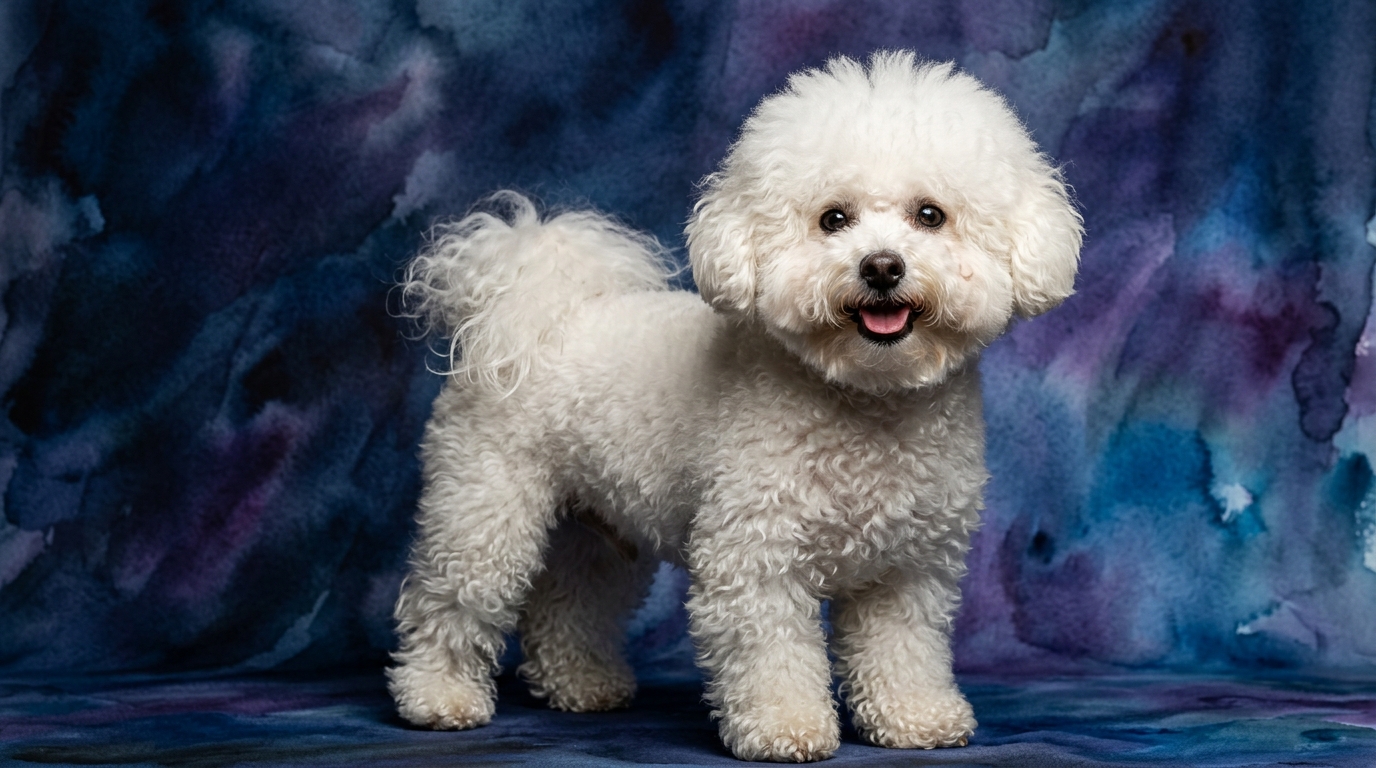
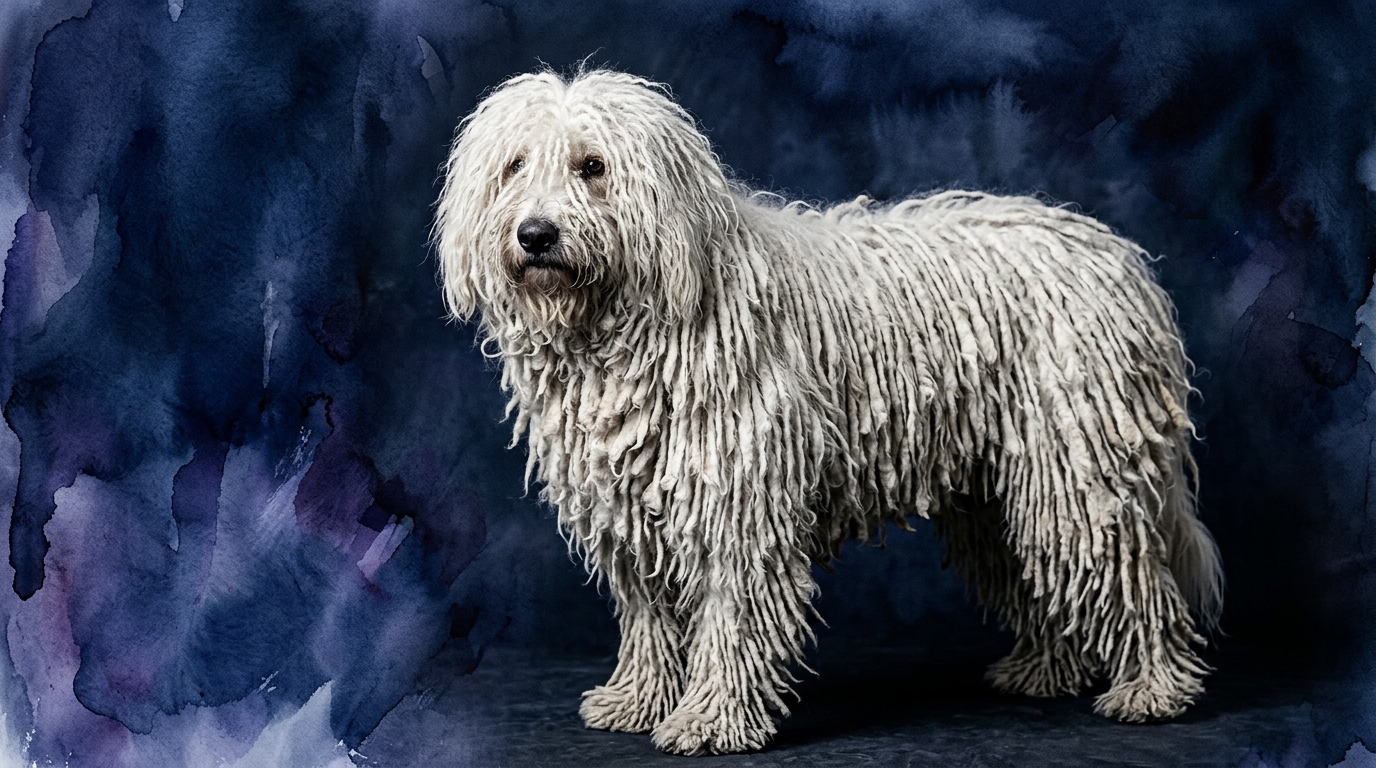
Side-by-Side Pet IQ Profile: Bichon Frisé vs. Komondor
The Bichon Frisé, ranking #45 in Coren's intelligence scale, presents a cognitive profile optimized for companionship. Their Problem Solving (3/5) indicates a moderate ability to navigate novel situations or simple puzzles, learning routines and basic commands efficiently with guidance. Training Speed (3/5) suggests they acquire new behaviors at a steady pace, responding well to consistent positive reinforcement. This receptiveness is amplified by their exceptional Social Intelligence (5/5), reflecting a profound capacity to interpret human emotions, understand social cues, and integrate deeply into family dynamics, often anticipating owner needs. Their Instinctive Drive is notably low (2/5), meaning primal urges minimally guide their actions, promoting adaptability. Memory (3/5) ensures solid retention of learned behaviors and routines.
The Komondor, positioned at #67 on Coren's scale, exhibits a cognitive architecture designed for independent guardianship. Their Problem Solving (3/5) manifests as a capacity for autonomous decision-making, assessing environmental changes and potential threats, rather than solving human puzzles. Training Speed (3/5) indicates a moderate learning pace, though their inherent independence means they may require more consistent motivation and firm leadership, often prioritizing their own judgment. Social Intelligence (3/5) suggests they form strong bonds with family and understand pack structures but typically show less effusive emotional expressiveness than a Bichon. Their Instinctive Drive (3/5) is a defining characteristic, reflecting a powerful innate urge for guarding and protection, influencing their vigilant and assertive nature. Memory (3/5) ensures retention of essential commands and recognition of individuals, crucial for their role.
Where the Bichon Frisé Wins Cognitively
The Bichon Frisé's primary cognitive advantage lies in its exceptional Social Intelligence (5/5). This breed possesses an unparalleled ability to interpret human emotions, subtle vocal inflections, and body language, allowing them to forge deep, empathetic connections with family members. This sophisticated social awareness means a Bichon often anticipates an owner's needs or moods, providing comfort or initiating play. This high degree of social attunement makes them incredibly adaptable to various household dynamics and highly receptive to social learning cues, facilitating smoother family integration.
Furthermore, the Bichon's lower Instinctive Drive (2/5) is a strength for a companion animal. Unlike breeds with strong predatory or territorial instincts, Bichons are less prone to behaviors driven by primal urges that might conflict with a domestic setting. This reduced innate drive means their behavior is more flexible and readily shaped by social interaction and training, rather than being dictated by hardwired instincts, making them generally more amenable to living harmoniously with other pets and in diverse environments.
Where the Komondor Wins Cognitively
The Komondor's cognitive strengths are deeply rooted in its purpose as an independent livestock guardian. While their Problem Solving is rated 3/5, this manifests as a superior capacity for autonomous decision-making in complex, dynamic environments. A Komondor excels at assessing potential threats, evaluating unfamiliar situations, and determining appropriate responses without constant human instruction. This independent judgment is a crucial cognitive asset for a guardian, allowing them to act decisively to protect their charges from perceived dangers.
Their Instinctive Drive (3/5) is another significant cognitive advantage, finely tuned for vigilant protection. This inherent drive provides a powerful internal motivation for their guarding duties, ensuring they remain alert and dedicated. This isn't merely physical; it’s a cognitive framework prioritizing territorial awareness, threat assessment, and protective action, equipping the Komondor with a deep-seated mental fortitude for unwavering loyalty and defense of their perceived flock.
Which Is Easier to Train and Why
When considering ease of training, the Bichon Frisé generally presents a less challenging experience for most owners, despite both breeds sharing a 3/5 Training Speed score. The Bichon's exceptional Social Intelligence (5/5) means they are highly motivated by human interaction, praise, and the desire to please. This intrinsic motivation makes them eager participants in training sessions, quickly picking up new commands and tricks because they value positive social feedback. Their lower Instinctive Drive (2/5) also simplifies training, as fewer innate behaviors, like strong prey drive or territoriality, need redirection, allowing for a more straightforward focus on obedience and desired social behaviors.
The Komondor, while capable of learning at a moderate pace, often proves more challenging due to its independent nature and strong Instinctive Drive (3/5). As a breed tasked with autonomous decision-making, Komondors may not be as inherently driven by human approval. They might question commands or prioritize their own assessment, especially if it conflicts with protective instincts. Training a Komondor requires immense patience, unwavering consistency, and establishing a clear, respected leadership role, understanding their cognitive strength lies in independent judgment.
Which Suits Active Owners vs. Relaxed Owners
The choice between a Bichon Frisé and a Komondor also hinges significantly on an owner's lifestyle. The Bichon Frisé is an ideal match for more relaxed owners or those seeking a companion thriving on close proximity and moderate activity. Their relatively low Instinctive Drive (2/5) means they don't require specific "jobs" or intense physical outlets to be content. Instead, their high Social Intelligence (5/5) means they are primarily fulfilled by consistent human interaction, participation in family routines, and ample affection. Daily walks and indoor play usually suffice, making them well-suited for apartment living or less expansive properties.
Conversely, the Komondor, with its strong Instinctive Drive (3/5) and independent nature, is better suited for highly engaged, experienced owners, who are "active" in terms of management and training. Their guardian instincts demand significant mental stimulation, clear boundaries, and extensive socialization. They require owners who provide consistent training, understand their need for independent thought, and often have a larger, securely fenced property. A Komondor needs a proactive owner managing their cognitive and behavioral needs, not a hands-off approach.
The Verdict
Choose the Bichon Frisé when seeking a highly socially attuned companion who thrives on close family interaction, enjoys moderate activity, and integrates seamlessly into a home environment.
Choose the Komondor when an owner seeks a dedicated, independent guardian with a strong protective instinct and is prepared for significant training, socialization, and management of their unique cognitive and behavioral needs.
🧠 Find Your Pet's IQ Score
Our Pet IQ Lab assessment covers 25+ tests across 5 cognitive dimensions — personalized to your breed.
Take the Full IQ Test →Frequently Asked Questions
How does a Bichon Frisé's social intelligence impact its adaptability to family life?
A Bichon Frisé's exceptional social intelligence means they are highly adept at understanding human emotions and social cues, allowing them to integrate seamlessly into diverse family dynamics. They thrive on interaction and often adapt quickly to new people and situations, making them wonderful companions.
Does a Komondor's strong instinctive drive make them difficult to live with?
A Komondor's strong instinctive drive for guarding requires careful management and early, extensive socialization to ensure appropriate behavior in a domestic setting. While this drive makes them dedicated protectors, it necessitates experienced owners who can provide consistent training and clear boundaries to channel their natural tendencies productively.
What kind of environment best suits a Komondor's cognitive needs?
A Komondor's cognitive needs are best met in an environment that allows for independent observation and patrolling, typically a securely fenced, larger property. This enables them to fulfill their innate guarding instincts, alongside consistent training and mental engagement from their owners to keep their minds stimulated and focused.