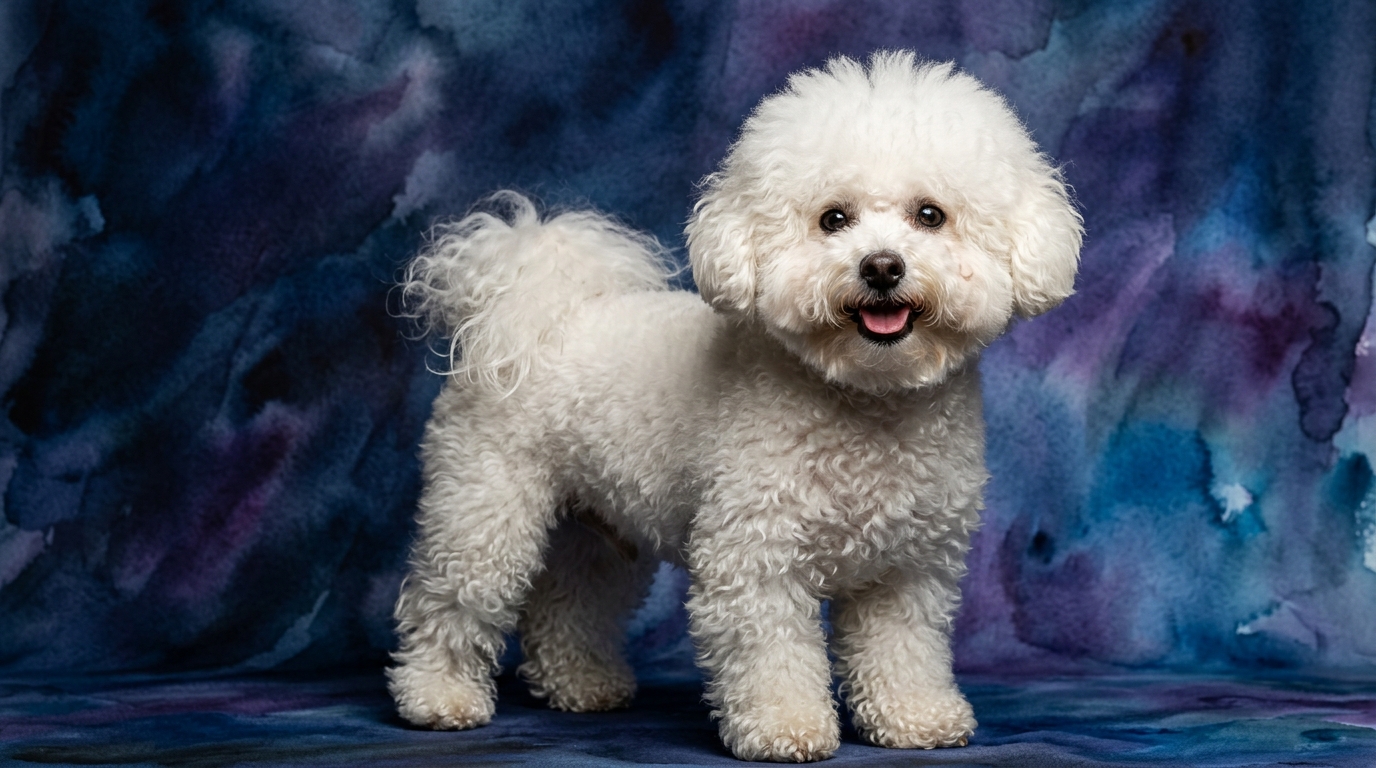
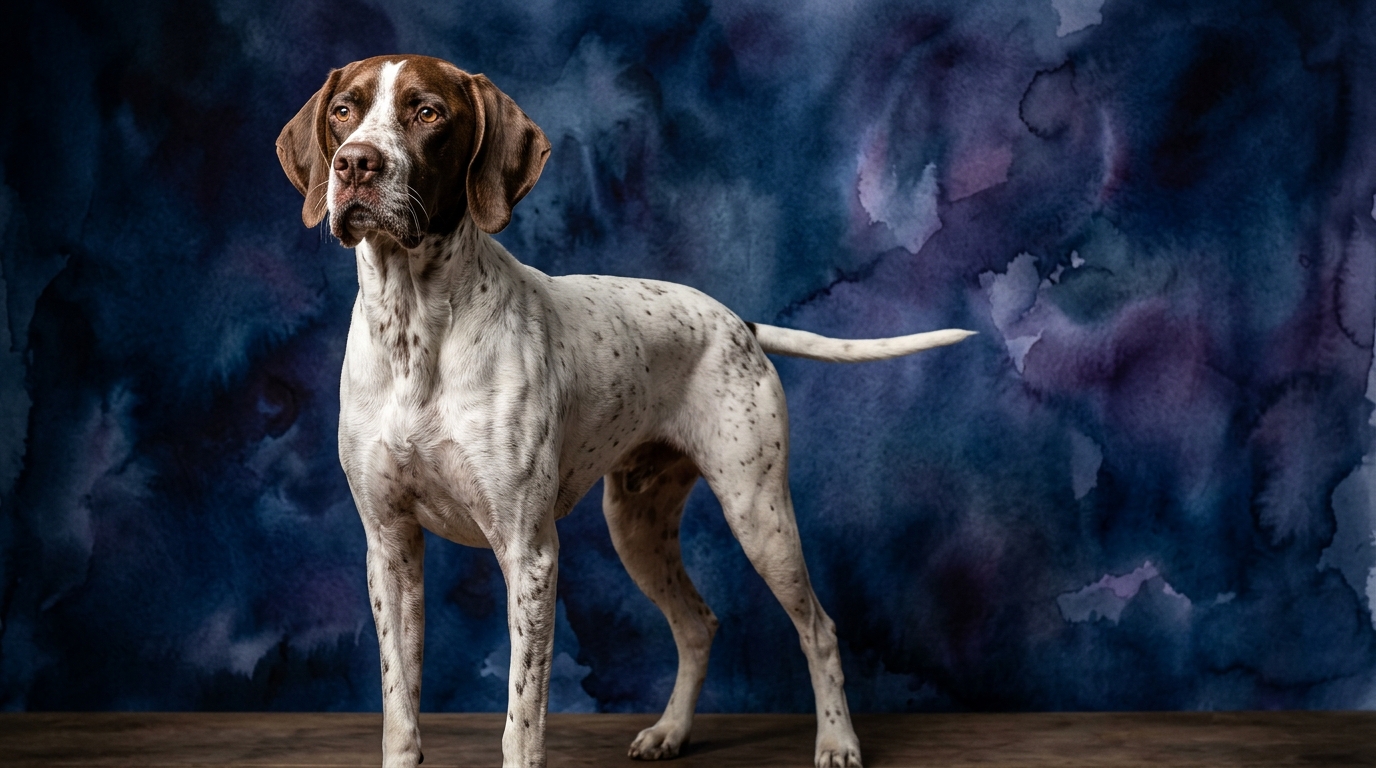
Side-by-Side IQ Profile: Bichon Frisé vs. Pointer
The Cosmic Pet Pet IQ Lab evaluates canine cognition across five crucial dimensions, offering a nuanced view beyond simple labels. For the Bichon Frisé, a delightful member of the Non-Sporting Group, its profile includes a Coren rank of #45. Their problem-solving ability scores a 3 out of 5, indicating a capacity for navigating moderately complex challenges. Training speed also registers a 3/5, suggesting they grasp new commands at a steady pace. A standout feature is their social intelligence, earning a perfect 5/5, reflecting exceptional attunement to human emotional states and social cues. Instinctive drive is lower at 2/5, typical for a breed primarily developed for companionship, and their memory scores a solid 3/5, allowing them to retain learned behaviors and routines effectively.
In contrast, the Pointer, a dedicated Sporting Group breed, does not have a Coren rank, but its IQ profile from The Cosmic Pet Pet IQ Lab highlights a balanced set of working attributes. Like the Bichon, Pointers also score 3/5 in problem-solving, capable of figuring out moderate tasks, and their training speed is also 3/5, meaning they learn at a comparable rate when properly motivated. Their social intelligence is 3/5, indicating a respectable ability to interact with humans and other dogs, though not with the same depth of emotional understanding as the Bichon. Where the Pointer truly differentiates itself is in instinctive drive, scoring 3/5, a reflection of their strong inclination towards their ancestral hunting tasks. Memory is also rated 3/5, providing a reliable foundation for remembering field commands and learned patterns.
Where the Bichon Frisé Excels Cognitively
The Bichon Frisé's most pronounced cognitive strength lies in its exceptional social intelligence, scoring a perfect 5 out of 5. This isn't merely about friendliness; it signifies a deep, intuitive understanding of human emotions and social dynamics. A Bichon is remarkably adept at reading subtle cues – a change in tone of voice, a shift in body language, or even the underlying mood of a household – and often responds in ways that demonstrate empathy and connection. This cognitive prowess allows them to integrate seamlessly into family life, often anticipating needs or offering comfort without explicit prompting. For instance, a Bichon might instinctively gravitate towards a family member feeling unwell, offering gentle presence, or adjust their play intensity based on the energy level of the people around them. This high social acumen makes them particularly responsive to positive reinforcement rooted in social praise and interaction, making them highly rewarding companions who thrive on mutual understanding.
This superior social intelligence also contributes to their adaptability in various social settings. They are often less prone to anxiety in new environments or around new people, provided they feel secure with their primary caregivers, because their cognitive framework helps them interpret and navigate social novelty effectively. While their problem-solving and training speed are moderate, their ability to 'read the room' and their strong desire for harmonious human interaction often makes them appear more compliant and easier to manage in social contexts. They understand the give-and-take of companionship, making them superb at forming strong, reciprocal bonds that extend beyond simple obedience.
Where the Pointer Excels Cognitively
The Pointer's cognitive edge is most evident in its instinctive drive, scoring 3 out of 5, which reflects a strong, inherent motivation tied to their historical role as hunting dogs. This drive isn't just about physical energy; it's a cognitive predisposition towards focused attention, sustained effort, and an innate understanding of their environment, particularly in scent work and tracking. This means a Pointer is hardwired to concentrate on a task, process sensory information related to prey, and follow through with a purpose. While their social intelligence is moderate, their instinctive drive allows them to excel in activities that require independent thought and decision-making within a structured framework, such as field trials or advanced obedience where precision and focus are paramount.
Furthermore, the Pointer shares the same 3/5 scores in problem-solving, training speed, and memory as the Bichon, but their higher instinctive drive often manifests these abilities differently. Their problem-solving might be geared towards overcoming obstacles in pursuit of a 'prey' item (even a toy), and their memory is excellent for retaining complex sequences of commands related to their working tasks. This breed's natural inclination towards independent work and sustained focus means they are less likely to be distracted by extraneous social stimuli when engaged in a task. This cognitive profile makes them highly capable partners for activities requiring consistent effort, mental stamina, and a strong work ethic, translating into a dog that can maintain concentration over extended periods when given a job.
Which is Easier to Train and Why
When comparing ease of training, both the Bichon Frisé and the Pointer register a 3/5 for training speed, suggesting they learn new commands at a similar pace. However, the practical experience of training these breeds can differ significantly due to their other cognitive attributes. The Bichon Frisé's superior social intelligence (5/5) means they are highly attuned to their owner's moods and desires. This makes them often eager to please and more responsive to social reinforcement like praise, affection, and interactive play. They inherently understand the value of cooperation for maintaining harmonious human relationships, which can make them quite biddable. If a Bichon senses their owner is pleased, they are likely to repeat the desired behavior, making them relatively straightforward to motivate with positive, relationship-based methods. Their lower instinctive drive (2/5) also means fewer competing internal urges pulling them away from the training session, making them generally less prone to distraction by environmental stimuli.
The Pointer, with its 3/5 training speed, can certainly learn effectively, but their training often benefits from channeling their higher instinctive drive (3/5). While they are capable learners, their motivation might be more task-oriented than relationship-oriented compared to the Bichon. A Pointer might be more focused on the thrill of the chase, the scent, or the physical activity itself, rather than solely on their owner's approval. Trainers often find success by incorporating elements of their natural drive into training, such as using retrieve games or scent work as rewards. They may require more consistent, firm guidance and a clear understanding of what's expected of them, with training sessions needing to be engaging and purposeful to hold their attention against their innate desire to explore or 'work.' While both breeds are trainable, the Bichon's intrinsic social contract often makes the initial stages of basic obedience feel more intuitive and less demanding on the owner's creativity for motivation.
Which Suits Active Owners vs. Relaxed Owners
For owners seeking a more relaxed pace of life, the Bichon Frisé stands out as an ideal companion. Their lower instinctive drive (2/5) means they generally have less intense physical demands compared to working breeds. While they enjoy play and regular walks, they are often content with indoor activities and cuddling, making them excellent apartment dwellers or companions for individuals with less active lifestyles. Their high social intelligence (5/5) means they thrive on close human interaction and are deeply satisfied by being a central part of family life, often preferring to be near their people rather than engaged in solitary, high-intensity pursuits. They are cognitively wired to be attentive, emotionally responsive companions, making them perfect for owners who prioritize mutual affection and a calm home environment.
Conversely, the Pointer is unequivocally suited for active owners who can provide consistent outlets for their higher instinctive drive (3/5). This breed needs more than just a casual walk; they require purposeful exercise that engages both their body and their mind. Their cognitive makeup, geared towards sustained focus and physical exertion, means they flourish with activities like running, hiking, long-distance fetching, or dog sports such as agility or obedience. An owner who can channel this drive into structured activities will find a highly motivated and capable partner. Without adequate mental and physical stimulation, a Pointer can become restless or develop undesirable behaviors stemming from boredom. They are best matched with individuals or families who embrace an active, outdoor-oriented lifestyle and are prepared to integrate their dog into these pursuits consistently.
The Verdict
Choose the Bichon Frisé if your priority is a deeply socially intelligent companion who thrives on close interaction and a more relaxed lifestyle, excelling at emotional attunement and gentle companionship.
Opt for the Pointer if you are an active owner seeking a driven, focused partner for outdoor adventures and structured activities, valuing their sustained effort and purpose-driven engagement.
🧠 Find Your Pet's IQ Score
Our Pet IQ Lab assessment covers 25+ tests across 5 cognitive dimensions — personalized to your breed.
Take the Full IQ Test →Frequently Asked Questions
Does a Bichon Frisé's low instinctive drive mean it's lazy?
Not at all; a low instinctive drive simply means their primary motivation isn't centered around working tasks like hunting or herding. Bichons still enjoy play and walks, but they are generally content with moderate activity and prioritize social interaction over strenuous, task-oriented pursuits.
How does a Pointer's instinctive drive affect its behavior in a family setting?
A Pointer's instinctive drive means they will naturally seek out activities that engage their senses and desire to work. In a family setting, this translates to a need for consistent physical and mental stimulation; without it, they may become restless, exhibiting behaviors like excessive sniffing, 'hunting' toys, or demanding attention through energetic means. Providing outlets for this drive is crucial for a well-adjusted Pointer.
Is the Bichon Frisé's high social intelligence a benefit for first-time dog owners?
Yes, the Bichon Frisé's exceptional social intelligence can be a significant advantage for first-time dog owners. Their ability to read human cues and their strong desire for harmonious interaction often makes them more responsive to training based on positive reinforcement and easier to integrate into a new home environment, fostering a strong bond quickly.