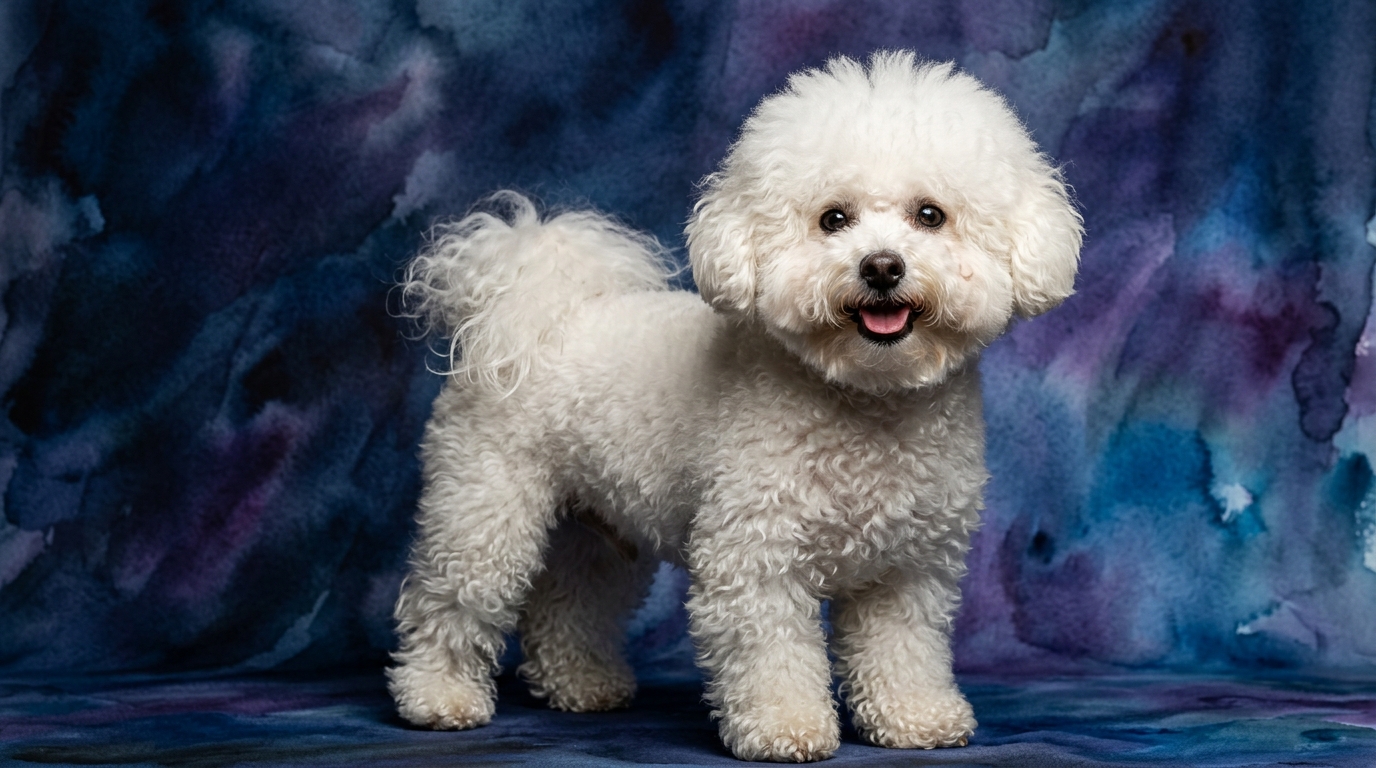
Side-by-Side IQ Profile: Bichon Frisé
The Bichon Frisé, a cheerful companion classified in the Non-Sporting Group and holding a Coren rank of #45, exhibits a cognitive profile centered around connection and adaptability. Their Problem Solving score of 3/5 indicates a capacity for navigating routine challenges and understanding cause-and-effect in their immediate environment, often applying this to social situations. Training Speed, also at 3/5, suggests they learn new commands and routines with consistent positive reinforcement, showing steady progress rather than rapid acquisition.
Where the Bichon truly shines is in Social Intelligence, scoring an exceptional 5/5. This reflects an extraordinary attunement to human emotions, cues, and social dynamics; they actively seek interaction and form profound, responsive bonds. Their Instinctive Drive is a low 2/5, meaning they possess minimal predatory or herding inclinations, content with companionship and indoor life. Memory, at 3/5, allows them to retain commands, routines, and experiences well, contributing to their generally predictable and well-adjusted demeanor.
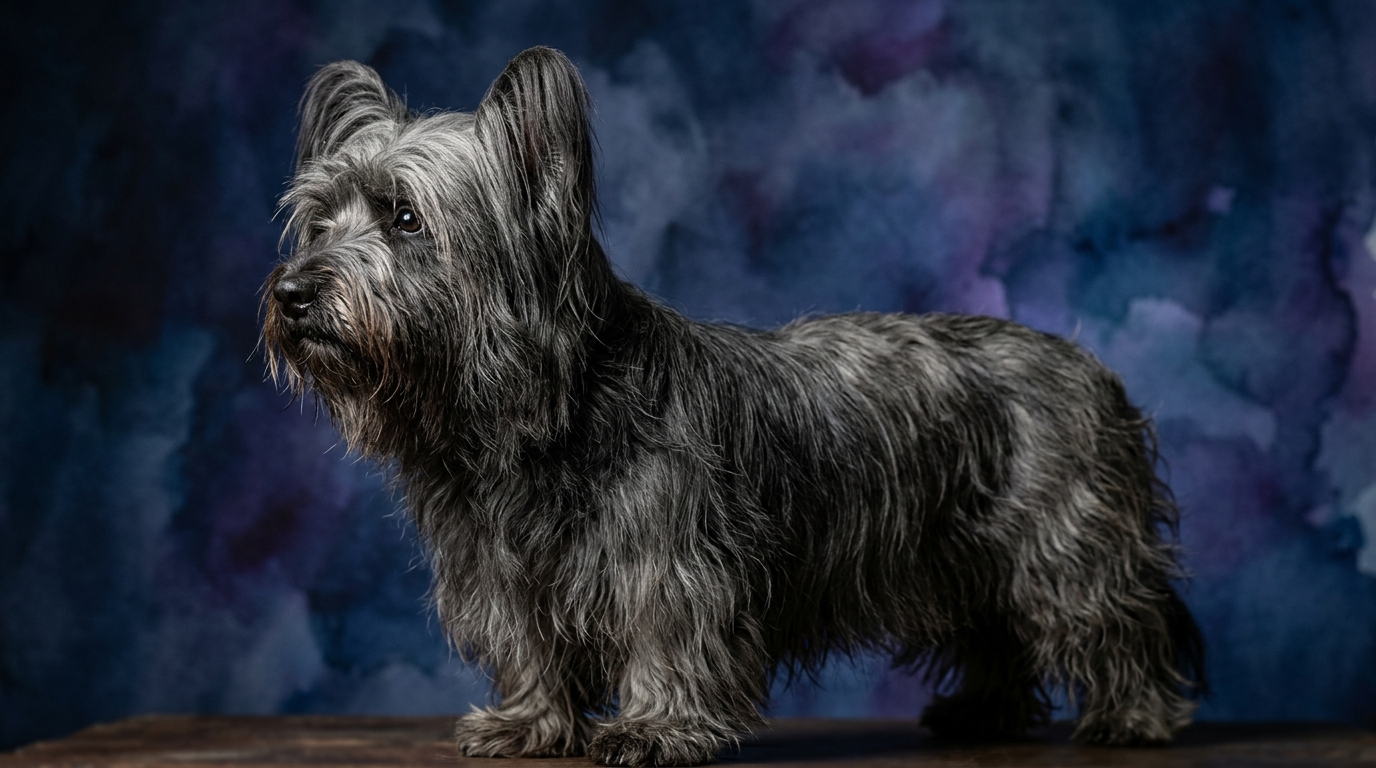
Side-by-Side IQ Profile: Skye Terrier
The Skye Terrier, a distinctive member of the Terrier Group, presents a cognitive makeup characterized by persistence and a more independent spirit, without a specific Coren ranking. Their Problem Solving ability, rated 3/5, manifests as a tenacious approach to puzzles and environmental challenges, often showing a deliberate, methodical effort to achieve a goal. Training Speed, also 3/5, indicates they learn at a steady pace, though their inherent terrier independence means they may require more patience and consistency in methods.
The Skye Terrier's Social Intelligence stands at 3/5. While they form deep, loyal bonds with their immediate family, they tend to be more reserved and discerning with strangers, not displaying the overt social eagerness of some breeds. Their Instinctive Drive is a moderate 3/5, reflecting a natural inclination for activities like digging, scent-following, and exploring, typical of their terrier heritage. Memory, like the Bichon, scores 3/5, enabling them to recall commands, past experiences, and the routines of their household effectively.
Where the Bichon Frisé Wins Cognitively
The Bichon Frisé's standout cognitive advantage lies overwhelmingly in its exceptional Social Intelligence (5/5 compared to the Skye Terrier's 3/5). This isn't merely about being friendly; it signifies a profound capacity to interpret and respond to human emotional states and subtle social cues. A Bichon will often anticipate an owner's mood, offering comfort or initiating play at opportune moments. This heightened social awareness makes them incredibly empathetic companions, often appearing to 'understand' their humans on a deeper level. Their problem-solving (3/5) is frequently channeled through this social lens, as they learn to manipulate social situations to their advantage, whether for attention, treats, or comfort.
This superior social cognition also means Bichons are typically more adaptable to varying household dynamics and social interactions, thriving on being an integral, interactive part of family life. They are more likely to engage in reciprocal communication, making eye contact, responding to vocal tones, and adjusting their behavior based on perceived human reactions. This makes them particularly suitable for roles requiring close human interaction, such as therapy work, where their ability to connect emotionally is paramount.
Where the Skye Terrier Wins Cognitively
The Skye Terrier's cognitive strengths lean into their inherent terrier characteristics, particularly their Instinctive Drive (3/5 compared to the Bichon's 2/5) and a specific flavor of Problem Solving (3/5). While both breeds score 3/5 in problem-solving, the Skye's approach is often more independent and persistent, driven by a moderate inclination to investigate and pursue. This might manifest as diligently working to figure out how to access a hidden toy or successfully navigating a complex scent trail, demonstrating a focused determination that can be less apparent in a Bichon.
Their moderate instinctive drive, combined with their problem-solving ability, makes them adept at tasks requiring focused attention and a degree of self-sufficiency. Owners might observe a Skye Terrier meticulously exploring a new environment, methodically searching for interesting smells, or persistently trying to dig a den. This drive provides a natural motivation for certain types of activities, such as earthdog trials or scent work, where a Bichon's lower drive might not provide the same intrinsic reward or sustained effort.
Which Is Easier to Train and Why
Despite both breeds scoring 3/5 in Training Speed, the Bichon Frisé is generally perceived as easier to train due to its superior Social Intelligence (5/5). Bichons are profoundly motivated by human approval and connection. This eagerness to please means they are highly responsive to positive reinforcement, praise, and the simple act of engaging with their trainer. They actively seek to understand what is expected of them and enjoy the cooperative process, making them more amenable to learning new commands and polite behaviors.
The Skye Terrier, while capable of learning at a steady pace, can present a greater challenge due to its more independent nature and lower social intelligence (3/5). They are less overtly driven by human approval and can possess a stubborn streak typical of many terriers. Training a Skye requires immense patience, consistent methods, and a deep understanding of their inherent tenacity. While they will learn, their motivation often needs to be more carefully cultivated, perhaps through high-value rewards or by making the training feel like a collaborative game rather than a command-and-obey dynamic.
Which Suits Active Owners vs. Relaxed Owners
For owners seeking a companion that thrives on consistent, deep social interaction and can adapt to a more relaxed pace, the Bichon Frisé is an excellent match. Their low instinctive drive (2/5) means they are generally content with moderate indoor play and daily walks, not requiring extensive outdoor adventures. However, 'relaxed' does not mean 'absent'; their high social intelligence means they genuinely need significant human companionship and mental stimulation through interaction, making them ideal for individuals or families who are home frequently and enjoy engaging with their pet.
The Skye Terrier, with its moderate instinctive drive (3/5) and a more reserved social intelligence (3/5), suits owners who appreciate a dignified companion with a subtle need for purposeful activity. While not hyperactive, they benefit from owners who can provide opportunities for exploration, scent work, or engaging in activities that allow them to use their problem-solving and moderate drive. They are well-suited for owners who enjoy consistent, but not necessarily intense, daily walks that include sniffing opportunities, and who respect a dog's independent streak while still fostering a close bond.
The Verdict: When to Choose Each
The Verdict
Choose the Bichon Frisé if you prioritize a highly socially responsive, emotionally attuned companion eager for constant interaction and companionship, thriving on profound human connection. They excel in environments where their empathetic nature and desire to please can flourish.
Opt for the Skye Terrier if you appreciate a dignified, independent companion with a moderate drive for exploration and a reserved loyalty, forming deep bonds within its immediate family. They are best for owners who value a dog with a distinct personality and enjoy engaging in purposeful, focused activities.
🧠 Find Your Pet's IQ Score
Our Pet IQ Lab assessment covers 25+ tests across 5 cognitive dimensions — personalized to your breed.
Take the Full IQ Test →Frequently Asked Questions
Is the Bichon Frisé genuinely easy to train?
While their Training Speed is moderate, the Bichon Frisé's exceptional social intelligence makes them very eager to please and responsive to human cues, which often translates to an easier training experience for owners. They thrive on positive reinforcement and enjoy the collaborative aspect of learning.
What kind of mental stimulation does a Skye Terrier need?
Skye Terriers benefit from mental stimulation that taps into their moderate instinctive drive and problem-solving abilities. This can include puzzle toys, scent games, supervised digging opportunities, or exploring new, safe environments on walks, allowing them to engage their investigative nature.
How do their social needs differ?
The Bichon Frisé has very high social needs, actively seeking interaction and deep emotional connection with their family, often thriving on being the center of attention. The Skye Terrier, while loyal and affectionate with its family, has more reserved social needs, being less overtly demonstrative and often more discerning with strangers.