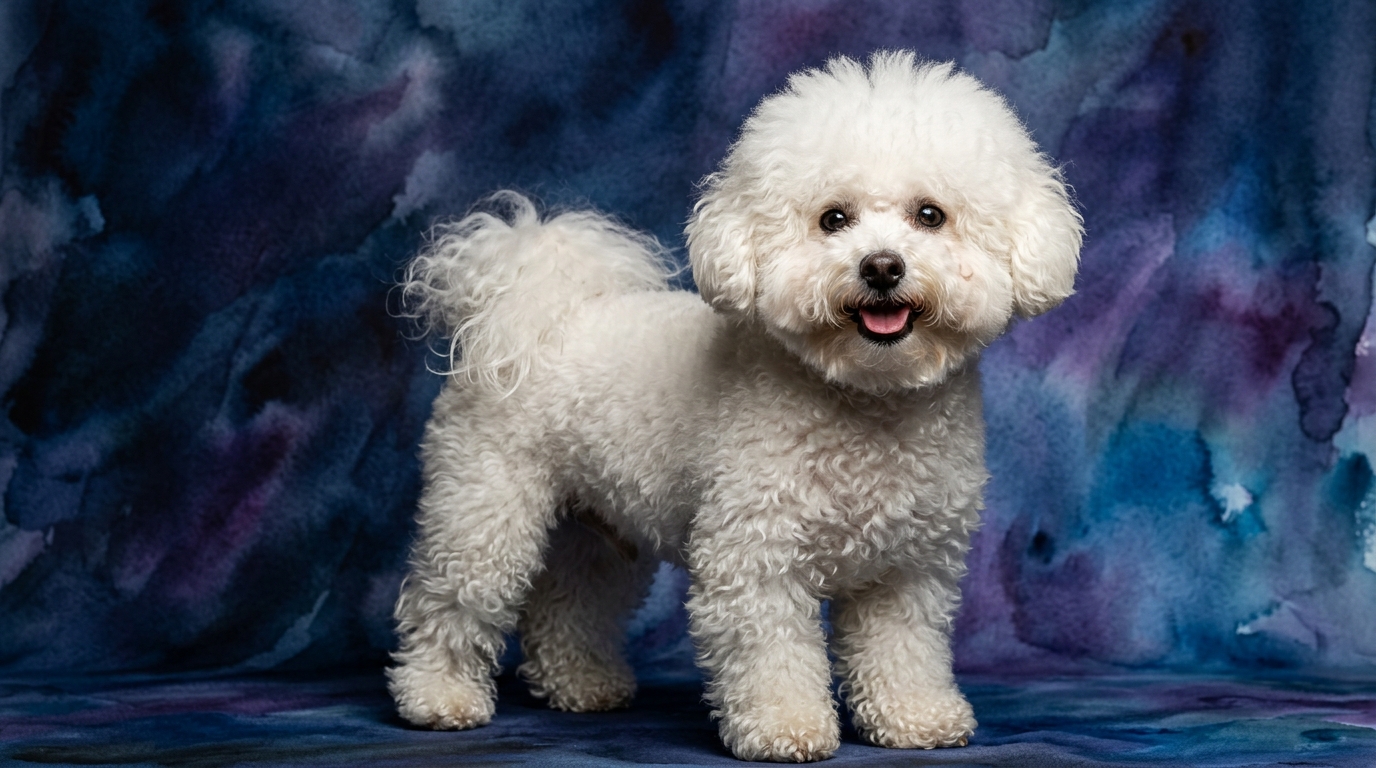
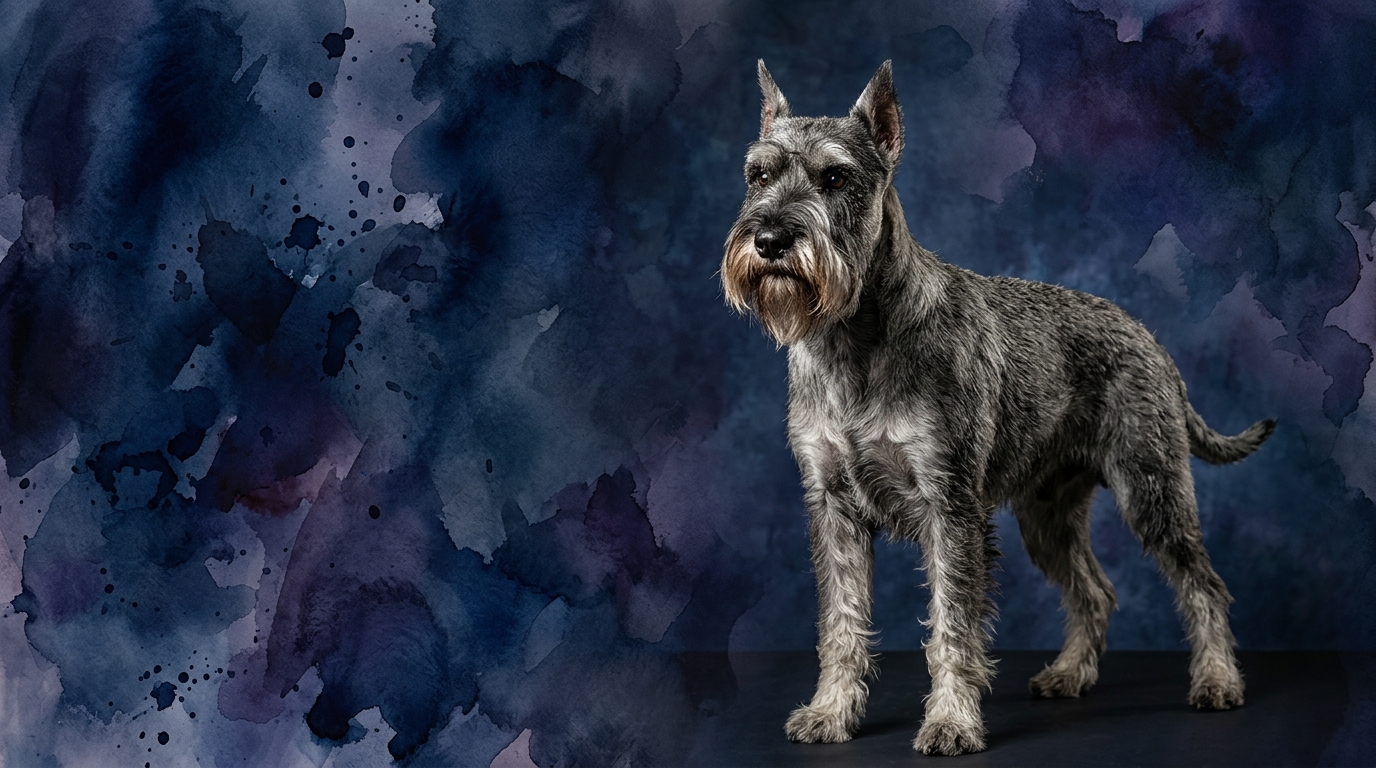
Side-by-side IQ Profile: Bichon Frisé vs. Standard Schnauzer
Exploring the cognitive blueprints of the Bichon Frisé and the Standard Schnauzer reveals distinct mental architectures, each optimized for different roles.
Coren Rank: The Bichon Frisé, at #45, demonstrates a solid capacity for learning, placing it in the mid-tier of working and obedience intelligence. The Standard Schnauzer, with a significantly higher #22, suggests a quicker grasp of new commands and a stronger drive for learned tasks.
Problem Solving: Bichons (3/5) show moderate problem-solving, adept at simple puzzles and routines, often relying on social cues. They may struggle with complex, novel challenges. Schnauzers (4/5) possess stronger aptitude, tackling intricate tasks, figuring out mechanisms, and adapting strategies, indicating thoughtful engagement with obstacles.
Training Speed: Bichons (3/5) learn new commands at a moderate pace, thriving on consistency and positive reinforcement linked to pleasing their human. Schnauzers (4/5) typically pick up new skills quickly, requiring fewer repetitions due to their eagerness and capacity for complex instructions, making them efficient learners for advanced work.
Social Intelligence: Bichons (5/5) truly excel here, displaying exceptional ability to read human emotions and social cues, fostering profound empathetic bonds. They are highly attuned to family moods, often adjusting their behavior instinctively. Schnauzers (3/5) have good social intelligence, forming loyal bonds and understanding basic human communication, but their focus is more on partnership in tasks than nuanced emotional mirroring.
Instinctive Drive: Bichons (2/5) have a low instinctive drive; their behavior is not strongly governed by ancient hunting or guarding urges. This contributes to their adaptability as house pets, with less territoriality or a constant need for a “job.” Schnauzers (3/5) possess a moderate instinctive drive, rooted in their farm dog history. This manifests as a natural inclination to guard, curiosity, and a drive for purposeful activities, thriving with mental stimulation.
Memory: Bichons (3/5) show moderate memory, recalling commands, routines, and familiar people well, though less robust for complex sequences. Schnauzers (4/5) demonstrate good memory retention, remembering a wide array of commands, intricate action sequences, and spatial layouts over extended periods, crucial for sustained learning.
Where the Bichon Frisé Wins Cognitively
The Bichon Frisé unequivocally dominates in the realm of social intelligence, scoring a perfect 5/5. This breed possesses an extraordinary capacity to interpret human emotions, body language, and vocal inflections with remarkable accuracy. Their cognitive strength lies in their ability to form deep, empathetic connections, often anticipating their owner's needs or moods without explicit cues. This acute social awareness fosters an unparalleled companionship experience, making them intuitive emotional anchors within a household. Furthermore, their lower instinctive drive (2/5) means they are less burdened by ancient urges that might conflict with modern domestic life. This allows for a more adaptable and generally less demanding cognitive profile in a pet context, requiring less redirection of ingrained behavioral patterns.
Where the Standard Schnauzer Wins Cognitively
The Standard Schnauzer's cognitive strengths are evident in its superior problem-solving (4/5), training speed (4/5), and memory (4/5). These dimensions converge to create a dog exceptionally capable of learning and executing complex tasks. Their problem-solving acumen allows them to strategize and overcome obstacles, making them adept at navigating intricate environments or learning multi-step behaviors. The speed at which they acquire new commands is a testament to their mental agility and focused attention, often mastering skills with fewer repetitions. This efficiency is bolstered by their robust memory, enabling them to retain vast amounts of information and recall intricate sequences over time. Their moderate instinctive drive (3/5) further provides a purposeful foundation, channeling their mental energy into constructive engagement rather than aimless activity, which is a significant cognitive advantage for task-oriented roles.
Which is Easier to Train and Why
Determining which breed is 'easier' to train depends heavily on the training goals. For foundational obedience and seamless integration into a family as a companion, the Bichon Frisé often presents an approachable path. Their paramount social intelligence (5/5) means they are highly motivated by human approval and connection, making them eager to please and responsive to positive reinforcement centered around interaction. They might take a bit longer to grasp complex commands (training speed 3/5), but their desire for social harmony helps them adapt quickly to household rules and manners. Conversely, for owners seeking a dog for advanced obedience, dog sports, or specific working tasks, the Standard Schnauzer typically offers a more direct and efficient training experience. Their higher training speed (4/5) and problem-solving ability (4/5) mean they can learn intricate sequences and abstract concepts more readily. While their social intelligence is lower (3/5), their moderate instinctive drive (3/5) provides a strong internal motivation for engagement, making them persistent and focused learners when presented with a clear purpose. Therefore, while Bichons excel at 'being a good companion' through social learning, Schnauzers shine in 'doing a good job' through cognitive application and task-oriented drive.
Which Suits Active Owners vs. Relaxed Owners
The choice between a Bichon Frisé and a Standard Schnauzer significantly aligns with an owner's lifestyle and activity levels. For relaxed owners who cherish quiet companionship and gentle indoor activities, the Bichon Frisé is often an ideal match. Their lower instinctive drive (2/5) means they don't possess an overwhelming urge for constant physical or mental 'work.' While they enjoy walks and playtime, their contentment is largely derived from social interaction and being close to their family, aligning perfectly with a less demanding routine. Their exceptional social intelligence further ensures they are attuned to a relaxed home environment, providing comfort without requiring strenuous engagement. In contrast, active owners will find a more suitable partner in the Standard Schnauzer. With a moderate instinctive drive (3/5), a strong problem-solving aptitude (4/5), and good memory (4/5), these dogs thrive on purposeful activity. They require regular physical exercise and, crucially, consistent mental stimulation through training, puzzle toys, or structured tasks. An active owner who enjoys hiking, training for dog sports, or providing a 'job' will find the Schnauzer's cognitive profile and energy levels to be a rewarding complement to their lifestyle, preventing boredom and potential behavioral issues that can arise from under-stimulation.
The Verdict
Choose a Bichon Frisé if your priority is an emotionally attuned companion who thrives on social connection and requires less structured mental work, fitting seamlessly into a relaxed home environment. Their exceptional social intelligence makes them intuitive family members, offering comfort and joy through empathetic interaction.
Opt for a Standard Schnauzer if you seek a capable, task-oriented partner who excels in learning, problem-solving, and purposeful activities, perfectly suiting an active lifestyle. Their robust cognitive abilities and moderate drive make them ideal for owners who enjoy engaging in training, sports, and providing mental challenges.
🧠 Find Your Pet's IQ Score
Our Pet IQ Lab assessment covers 25+ tests across 5 cognitive dimensions — personalized to your breed.
Take the Full IQ Test →Frequently Asked Questions
Is a Bichon Frisé easy to house train?
Bichon Frisés can be moderately easy to house train due to their desire to please and strong social intelligence, which helps them understand human expectations. Consistent routines, positive reinforcement, and patience are key, as their training speed is moderate.
Do Standard Schnauzers require a lot of mental stimulation?
Yes, Standard Schnauzers benefit greatly from significant mental stimulation, thanks to their strong problem-solving skills and moderate instinctive drive. Without engaging activities like training, puzzles, or purposeful tasks, they can become bored and potentially develop undesirable behaviors.
Which breed is better with children, based on their IQ profile?
The Bichon Frisé, with its superior social intelligence (5/5), is often more inherently attuned to family dynamics and human emotions, making them generally adaptable and gentle with children. Standard Schnauzers, while loyal, might require more structured socialization to ensure their moderate instinctive drive and guarding tendencies are well-managed around younger family members.