Side-by-Side IQ Profile: Bichon Frisé vs. Sussex Spaniel
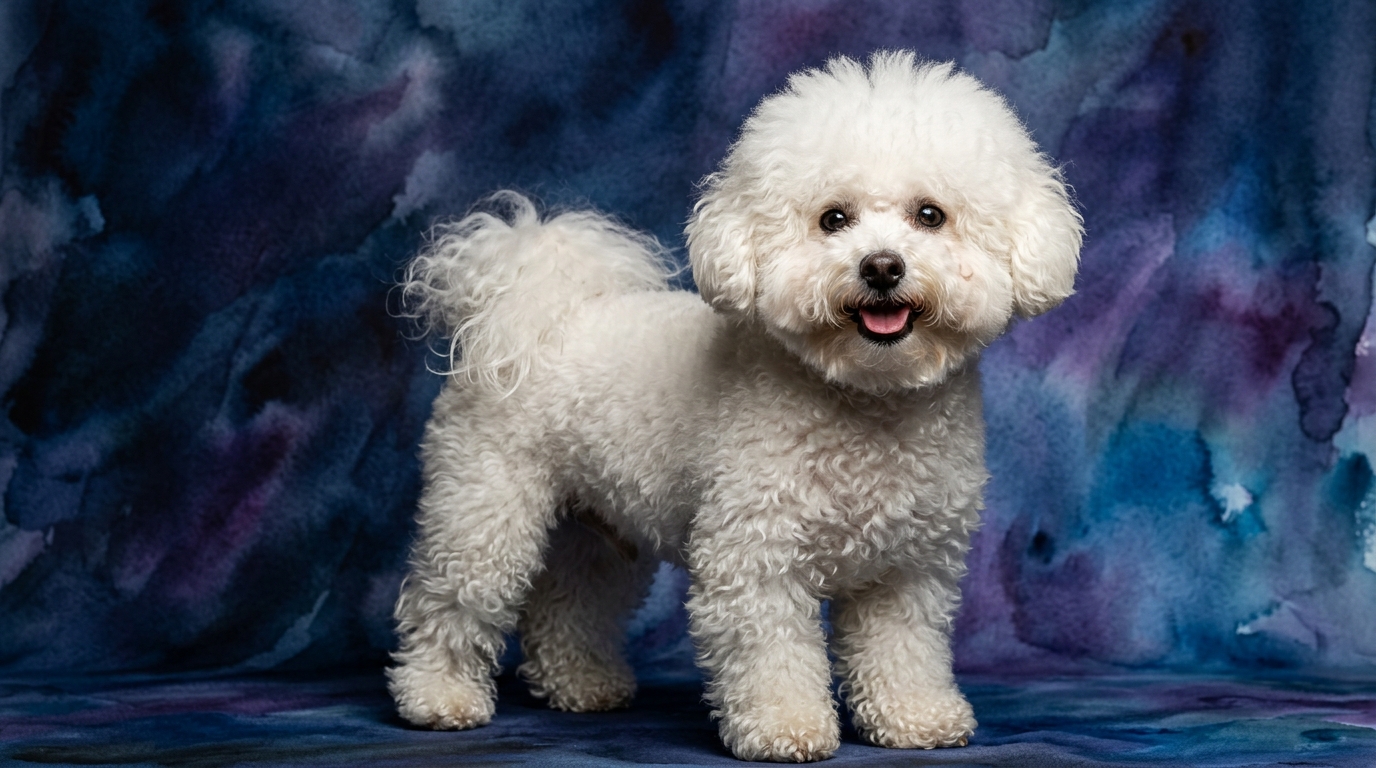
The Bichon Frisé, a member of the Non-Sporting Group, registers a Coren rank of #45, indicating a respectable capacity for obedience and adaptive learning. Their cognitive profile from The Cosmic Pet's Pet IQ Lab reveals a Problem Solving score of 3/5, suggesting they are capable of understanding and navigating moderately complex situations, often through learned sequences rather than novel invention. Their Training Speed also stands at 3/5, meaning they respond well to consistent, positive reinforcement, learning new commands at a steady, reliable pace. Where the Bichon truly distinguishes itself is in Social Intelligence, scoring an exceptional 5/5. This reflects an extraordinary ability to read and respond to human emotions, cues, and social dynamics, making them highly intuitive companions. Their Instinctive Drive is a modest 2/5, indicating a low inherent inclination towards tasks like hunting, guarding, or intense prey pursuit, preferring social interaction over independent work. Memory for the Bichon Frisé is rated at 3/5, allowing them to retain learned commands and routines effectively over time.
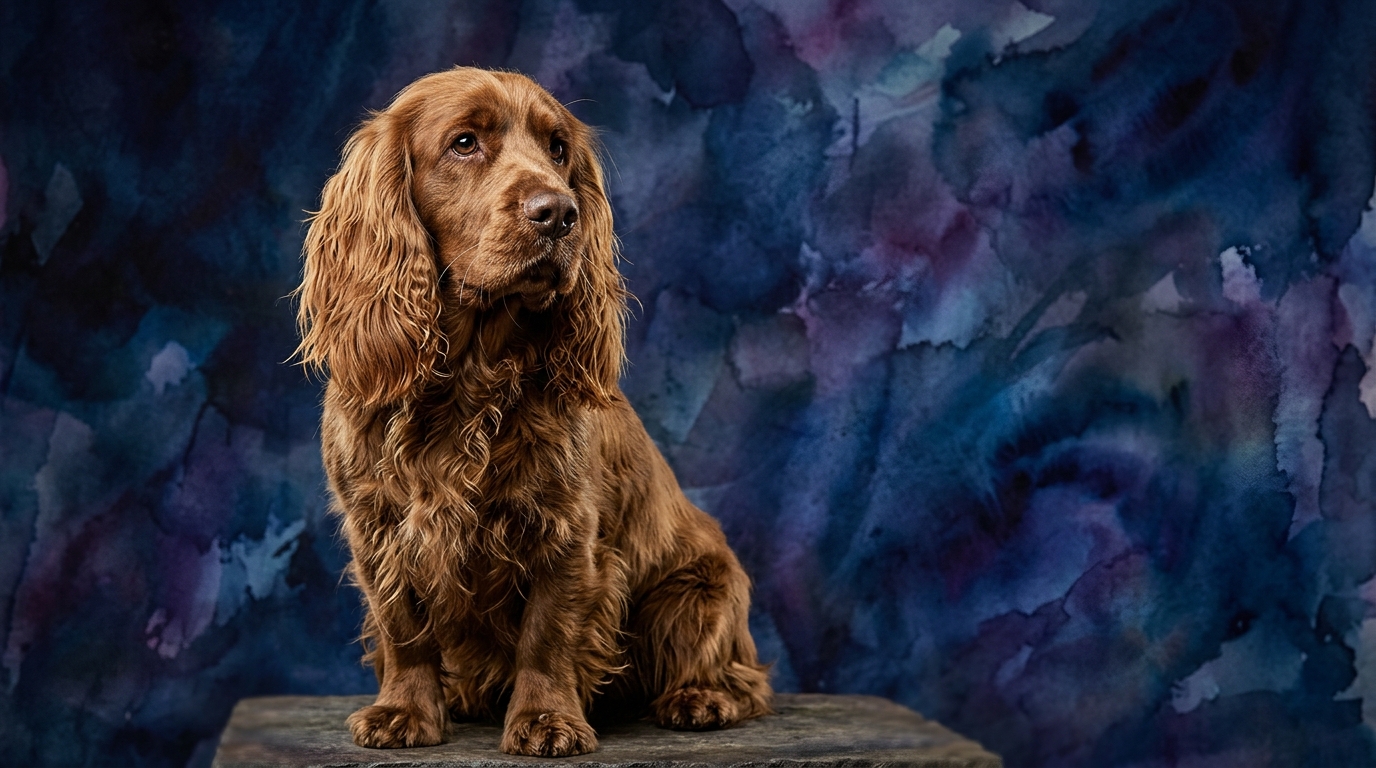
In contrast, the Sussex Spaniel, hailing from the Sporting Group, holds a Coren rank of #62. Their Pet IQ Lab profile shows a Problem Solving score of 3/5, matching the Bichon Frisé. This suggests an equal capacity for tackling moderately challenging mental tasks, often leaning on their breed-specific aptitudes. Their Training Speed is also 3/5, indicating a consistent learning pace, particularly when training methods align with their natural motivations. The Sussex Spaniel's Social Intelligence is 3/5; while capable of forming strong bonds and understanding basic human interactions, they may not possess the same nuanced emotional attunement or overt responsiveness as the Bichon. A notable difference lies in their Instinctive Drive, rated at 3/5. This reflects a pronounced natural inclination for scent work, tracking, and flushing game, characteristic of their spaniel heritage, providing a strong internal motivation for specific activities. Their Memory also scores 3/5, enabling them to recall training and experiences, especially those tied to their natural working behaviors, with good reliability.
Where the Bichon Frisé Wins Cognitively
The Bichon Frisé’s most significant cognitive advantage lies in its unparalleled Social Intelligence, scoring a perfect 5/5 compared to the Sussex Spaniel’s 3/5. This isn't merely about being friendly; it signifies an exceptional ability to interpret and react to the subtle nuances of human communication and emotional states. A Bichon can often sense a shift in mood, offering comfort or initiating play at just the right moment, demonstrating an intuitive grasp of social dynamics within a household. Their high social intelligence means they are profoundly attuned to their human companions, often mirroring their emotional energy and seeking to engage in ways that foster strong, reciprocal bonds. This makes them highly responsive to praise and social cues during training, as their primary motivation is often rooted in pleasing their people and maintaining harmonious interactions. They excel at adapting their behavior based on social feedback, making them remarkably intuitive and empathetic companions capable of forming deep, meaningful connections that extend beyond basic obedience.
This elevated social acumen translates into a dog that is often perceived as more 'person-oriented' and less driven by independent exploration or task completion. They thrive on being part of the family's daily life, actively participating in social rituals and demonstrating a remarkable capacity for companionship. Their cognitive energy is largely directed towards understanding and integrating into the human social structure, allowing them to navigate complex family dynamics with grace and adaptability. This makes them particularly adept at forming strong attachments and providing emotional support, often picking up on subtle non-verbal cues that other breeds might overlook. In essence, the Bichon Frisé's cognitive strength is in its mastery of the social world, making them exceptionally intuitive and emotionally intelligent partners.
Where the Sussex Spaniel Wins Cognitively
The Sussex Spaniel’s distinct cognitive strength is evident in its Instinctive Drive, scoring 3/5 against the Bichon Frisé’s 2/5. This isn't just a generic 'drive' but a specific cognitive orientation towards environmental engagement and task completion rooted in their sporting heritage. A Sussex Spaniel processes the world through its nose and its desire to explore and work. Their cognitive framework is geared towards scent detection, tracking, and the satisfaction derived from following a trail or retrieving an object. This means they possess an inherent curiosity and a focused persistence when presented with sensory challenges, making them naturally inclined towards activities that engage these drives, such as scent work, 'find it' games, or retrieving exercises. This drive provides a powerful internal motivation that can be harnessed for training and enrichment, allowing them to engage with their environment in a purposeful, task-oriented manner.
While their social intelligence may not be as overtly expressive as the Bichon's, the Sussex Spaniel's cognitive strength in instinctive drive means they find deep satisfaction in performing tasks that align with their natural predispositions. This cognitive trait makes them resilient and determined when pursuing a goal, whether it’s locating a hidden toy or following a scent trail. Their problem-solving abilities, rated equally at 3/5, are often channeled through this instinctive framework, allowing them to figure out how to achieve a desired outcome through exploration and sensory input. For owners who appreciate a dog with a clear purpose and enjoy engaging in activities that tap into these natural behaviors, the Sussex Spaniel's cognitive makeup offers a rewarding partnership focused on exploration and achievement.
Which is Easier to Train and Why
When evaluating which breed might be easier to train, both the Bichon Frisé and the Sussex Spaniel share identical scores in Training Speed (3/5) and Problem Solving (3/5). This suggests that both breeds will respond consistently to training and are capable of learning new commands at a steady pace. However, the 'ease' of training often hinges on *how* a dog is motivated and what behaviors are being taught, which is significantly influenced by their differing Social Intelligence and Instinctive Drive scores.
The Bichon Frisé, with its superior Social Intelligence (5/5), often *feels* easier to train for a typical pet owner focused on companionship and house manners. Their strong desire to please, coupled with an innate ability to read human cues, means they are highly receptive to positive reinforcement, especially social praise and affectionate gestures. They are generally less distracted by environmental stimuli due to their lower Instinctive Drive (2/5), making them more focused on their human during training sessions. This responsiveness allows for quick progress in obedience and trick training, as their primary cognitive motivation is often to engage positively with their people. They thrive on interactive learning where the reward is social connection and approval.
The Sussex Spaniel, despite the same 3/5 Training Speed, might present different training dynamics. Their 3/5 Instinctive Drive means they can be more easily distracted by compelling scents or outdoor stimuli, requiring a trainer to work harder to maintain focus, especially in stimulating environments. While they are trainable, their motivation is often tied to task completion and their natural drives rather than purely social approval. Effective training for a Sussex often involves incorporating their natural inclinations, such as using scent work, retrieving games, or food rewards that engage their purposeful nature. While they learn commands reliably, their training might require a more nuanced approach, leveraging their inherent drives to make learning engaging and rewarding, rather than relying solely on their social responsiveness.
Which Suits Active Owners vs. Relaxed Owners
The differing cognitive profiles of the Bichon Frisé and the Sussex Spaniel provide clear indications of which breed might better suit active versus relaxed owners. For individuals or families who prefer a more relaxed lifestyle, the Bichon Frisé is often an ideal match. Their lower Instinctive Drive (2/5) means they don't possess a relentless need for strenuous physical activity or complex, independent working tasks. While they enjoy play and short walks, their cognitive energy is primarily directed towards social engagement and companionship. They are content with indoor interaction, cuddle time, and moderate daily exercise, thriving on the intimacy of their human relationships rather than requiring extensive outdoor adventures. Their high Social Intelligence makes them fulfilled by simply being present and interacting with their family.
Conversely, the Sussex Spaniel is better suited for more active owners who are prepared to engage with a dog's natural working instincts. Their 3/5 Instinctive Drive signifies a clear need for regular, purposeful activity that taps into their scenting and retrieving abilities. A Sussex Spaniel requires more than just a casual walk; they benefit immensely from opportunities to explore varied environments, engage in scent-tracking games, or participate in retrieving drills. Their cognitive fulfillment comes from having a 'job' or a purpose-driven activity that allows them to utilize their natural predispositions. Owners who enjoy hiking, long walks in natural settings, or dog sports like scent work will find the Sussex Spaniel a more suitable and fulfilling companion, as these activities align perfectly with their inherent cognitive drives and provide the mental and physical stimulation they need to thrive.
The Verdict
Choose the Bichon Frisé if you prioritize an exceptionally socially astute companion, one that intuitively understands and responds to human moods, thriving on intimate interaction within a less intensely active lifestyle.
Opt for the Sussex Spaniel if you enjoy engaging with a dog's natural working instincts, providing opportunities for scent work or retrieving, and appreciate a more independent yet devoted companion that thrives with purpose-driven activity.
🧠 Find Your Pet's IQ Score
Our Pet IQ Lab assessment covers 25+ tests across 5 cognitive dimensions — personalized to your breed.
Take the Full IQ Test →Frequently Asked Questions
Are Bichon Frisé or Sussex Spaniels better with children?
The Bichon Frisé, with its 5/5 Social Intelligence, generally excels with children due to its intuitive understanding of social cues and desire for interaction, often adapting well to family dynamics. The Sussex Spaniel, at 3/5 Social Intelligence, can be good with respectful children but may not possess the same inherent emotional attunement, often preferring interactions that are calmer or more task-oriented.
Do Bichon Frisé and Sussex Spaniels require a lot of mental stimulation?
Both breeds require mental stimulation, but in different forms. The Bichon Frisé thrives on social interaction, puzzle toys, and learning new tricks that engage their social intelligence. The Sussex Spaniel, with its 3/5 Instinctive Drive, benefits greatly from activities that engage their natural scenting and retrieving abilities, such as scent games, structured walks, or agility, which provide purposeful mental engagement.
What are the key differences in communication styles between these two breeds?
The Bichon Frisé often communicates through highly expressive body language and vocalizations aimed at social engagement, reflecting their 5/5 Social Intelligence and desire for interaction. The Sussex Spaniel tends to be more reserved in its social communication, often expressing itself through actions related to its 3/5 Instinctive Drive, such as following scents or bringing objects, rather than overt social displays.