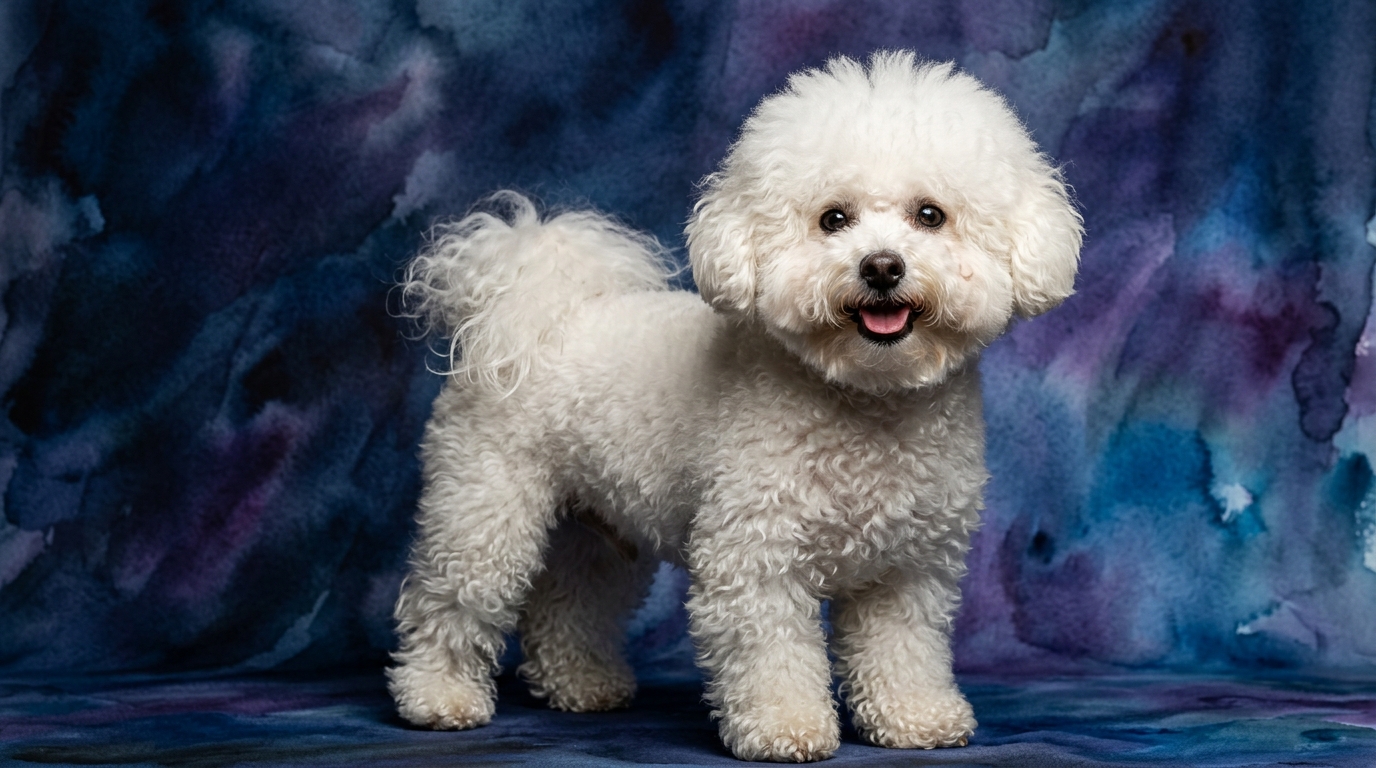
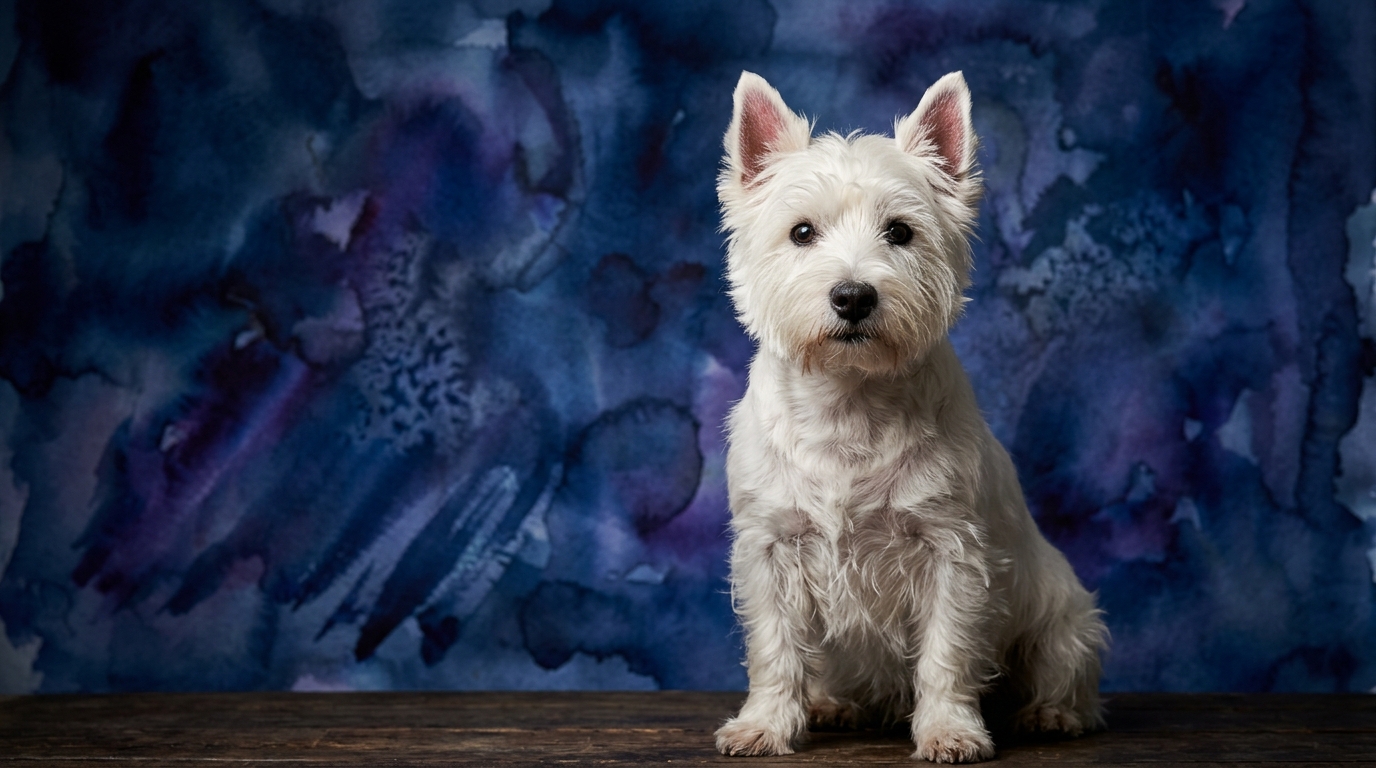
Side-by-Side Cognitive Profiles: Bichon Frisé vs. West Highland White Terrier
At The Cosmic Pet Pet IQ Lab, we delve beyond superficial traits to explore the nuanced cognitive landscapes of different breeds. The Bichon Frisé, with a Coren rank of #45, and the West Highland White Terrier, ranked #47, appear closely matched in general working and obedience intelligence. However, our five-dimensional IQ framework reveals distinct cognitive architectures.
The Bichon Frisé exhibits a Problem Solving score of 3/5, indicating a moderate capacity to navigate novel challenges. Their Training Speed also stands at 3/5, suggesting a reasonable pace for acquiring new behaviors. Where the Bichon truly shines is in Social Intelligence, scoring an exceptional 5/5, reflecting a profound attunement to human emotional states and social cues. Their Instinctive Drive is lower at 2/5, meaning they are less compelled by innate urges like hunting or digging, and their Memory is a moderate 3/5.
In contrast, the West Highland White Terrier also scores 3/5 for Problem Solving and 3/5 for Training Speed, aligning with the Bichon in these areas. Their Social Intelligence is a solid 3/5, indicating competence in reading human interactions, though not with the same depth as the Bichon. The Westie's Instinctive Drive is higher at 3/5, showcasing a more pronounced internal motivation for exploration and pursuit, characteristic of their terrier heritage. Notably, their Memory score is a strong 4/5, suggesting an impressive ability to retain information and learned behaviors over time.
Where the Bichon Frisé Excels Cognitively
The Bichon Frisé's standout cognitive strength lies unequivocally in their Social Intelligence, rated at an impressive 5/5. This isn't merely about friendliness; it signifies an acute ability to perceive, interpret, and respond to human emotions and social dynamics. A Bichon is exceptionally adept at reading subtle cues from their owner, understanding intentions, and often adjusting their behavior to maintain harmony and connection. This heightened social awareness contributes to their reputation as empathetic companions, capable of forming remarkably strong, responsive bonds.
Their superior social acumen means a Bichon can often anticipate their owner's needs or moods, offering comfort or initiating play at opportune moments. This capacity makes them particularly suited for roles requiring sensitivity, such as companion animals for individuals needing emotional support or even certain therapy dog work, where understanding human vulnerability is paramount. While their problem-solving and training speeds are moderate, their social intuition often makes interactions feel smoother and more cooperative, as they are naturally inclined to engage and connect on a deeply personal level.
Where the West Highland White Terrier Shows Cognitive Edge
The West Highland White Terrier demonstrates a distinct cognitive advantage in two key areas: Memory and Instinctive Drive. With a Memory score of 4/5, Westies possess a robust capacity to recall learned commands, routines, and experiences over extended periods. This strong retention means that once a behavior is taught and reinforced, it is likely to stick, making them reliable in consistently executing tasks and remembering boundaries within their environment.
Coupled with their moderate Instinctive Drive (3/5), Westies exhibit a persistent curiosity and a natural inclination to explore, dig, and follow scents – behaviors rooted in their heritage as vermin hunters. While this drive requires channeling, it also signifies a focused determination and a willingness to engage with their environment in a more active, investigative manner. This combination of strong memory and persistent drive means Westies can excel in activities that require both learning and sustained engagement, such as scent work, complex trick training, or even navigating agility courses where remembering sequences is crucial. Their cognitive profile suggests a dog that not only learns but also remembers and applies that learning with a spirited tenacity.
Training Dynamics: Which Breed is Easier to Shape?
When considering ease of training, both the Bichon Frisé and the West Highland White Terrier share a Training Speed score of 3/5, indicating they learn at a comparable, moderate pace. However, the underlying cognitive and behavioral differences significantly influence the training approach and perceived ease. The Bichon's exceptional Social Intelligence (5/5) means they are highly motivated by human interaction and approval. They are often eager to please and respond well to positive reinforcement that emphasizes connection and praise. Their lower Instinctive Drive (2/5) also means fewer innate distractions, making them generally more focused on their handler during training sessions. Behavioral challenges, if they arise, often stem from a desire for attention or separation anxiety, rather than independent terrier pursuits.
Conversely, the Westie's moderate Social Intelligence (3/5) means they are less solely driven by human approval, and their higher Instinctive Drive (3/5) means their attention can be more easily diverted by environmental stimuli like interesting smells or potential 'prey.' While their strong Memory (4/5) is an asset for retaining commands, trainers must work harder to capture and maintain their focus against their natural terrier urges. Training a Westie often requires more structured engagement, making sessions feel like a stimulating game to them, rather than just a social interaction. Consistency is paramount with a Westie to reinforce desired behaviors against their independent spirit and natural curiosity, ensuring their robust memory is used to recall correct actions even when their instincts are piquing.
Matching Breeds to Lifestyles: Active vs. Relaxed Owners
The distinct cognitive and drive profiles of these two breeds make them suitable for different owner lifestyles. The Bichon Frisé, with its lower Instinctive Drive (2/5) and profound Social Intelligence (5/5), thrives in environments where companionship and close human interaction are central. They are typically content with moderate daily exercise, such as pleasant walks and indoor play, and do not possess a strong urge for independent exploration or intense physical activity. This makes them an excellent fit for more relaxed owners or those living in smaller spaces, who prioritize a devoted, emotionally responsive companion over an adventure partner. Their greatest need is consistent social engagement and affection, making them ideal for individuals or families who can dedicate ample time to direct interaction.
The West Highland White Terrier, however, with its moderate Instinctive Drive (3/5) and strong Memory (4/5), is better suited for more active owners. While not requiring marathon-level exertion, Westies possess a spirited curiosity and a natural inclination to explore, dig, and chase. They benefit significantly from regular, engaging physical activity that provides both mental and physical stimulation, such as brisk walks, structured playtime, or even participation in dog sports like earthdog trials or agility. Owners who enjoy outdoor activities and are prepared to channel a terrier's inherent tenacity will find a Westie a fulfilling companion. They thrive with consistent routines and owners who can provide outlets for their investigative nature, preventing boredom and potential behavioral issues that can arise from an under-stimulated terrier mind.
The Verdict
Choose the Bichon Frisé if you prioritize a deeply socially attuned companion, eager to connect and less driven by independent exploration, who thrives in a consistent, loving home environment.
Opt for the West Highland White Terrier if you appreciate a spirited companion with a robust memory and a moderate instinctual drive, keen on engaging in varied activities that challenge their intellect and physical endurance.
🧠 Find Your Pet's IQ Score
Our Pet IQ Lab assessment covers 25+ tests across 5 cognitive dimensions — personalized to your breed.
Take the Full IQ Test →Frequently Asked Questions
Are Bichon Frisés good at learning tricks?
Yes, Bichons are quite capable of learning tricks. While their training speed is moderate, their exceptional social intelligence means they are highly motivated by positive human interaction and enjoy the interactive nature of trick training, often performing with enthusiasm.
Do West Highland White Terriers forget commands easily?
No, Westies possess a strong memory (4/5), which means they retain learned information well. While their independent nature might sometimes lead to selective hearing, they are unlikely to genuinely forget commands once they have been consistently taught and reinforced.
Which breed is better for first-time dog owners?
Both breeds can be suitable for first-time owners, but their needs differ. The Bichon Frisé's higher social intelligence and lower instinctive drive might make them slightly more intuitive for a novice to manage, as they are often more focused on their human. A Westie's moderate instinctive drive requires a more prepared owner who understands the need for consistent training and channeling of their terrier instincts.