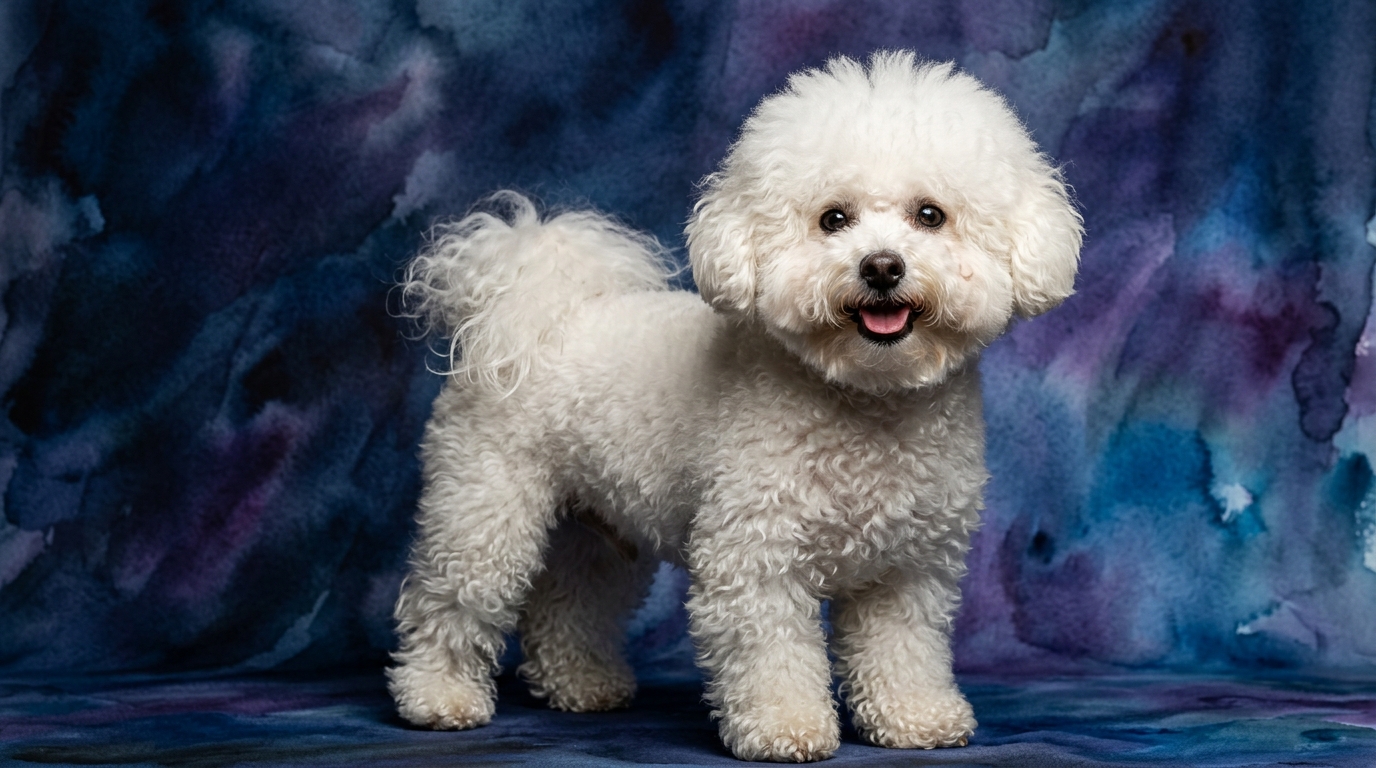
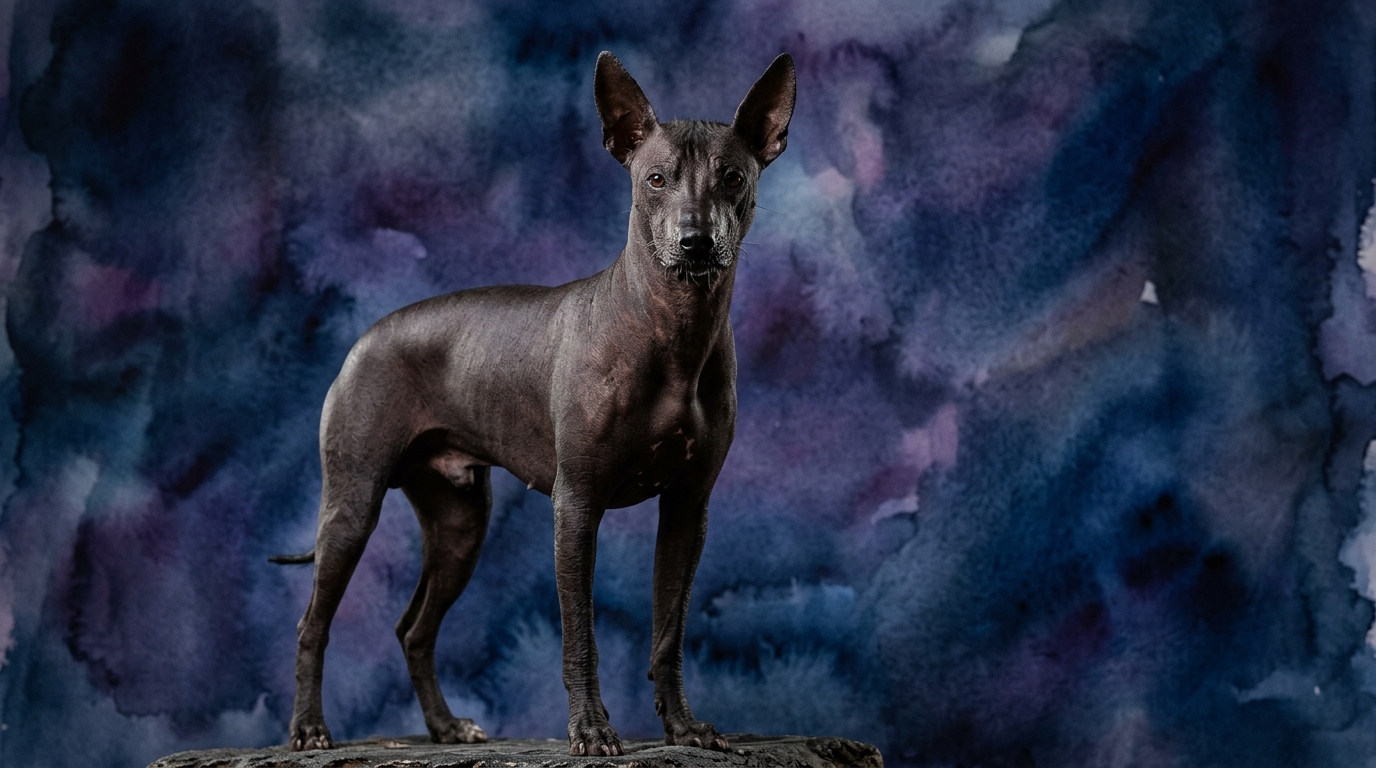
Side-by-Side Cognitive Profiles: Bichon Frisé vs. Xoloitzcuintli
The Bichon Frisé, often recognized for its playful demeanor, presents a cognitive profile that balances moderate general problem-solving (3/5) and training speed (3/5) with an exceptional capacity for social interaction (5/5). Their instinctive drive is relatively low (2/5), suggesting less inclination towards independent hunting or guarding behaviors, while their memory holds at a solid 3/5, allowing them to recall learned commands and routines effectively. This breed's Coren rank of #45 places it among dogs capable of understanding new commands in 25-40 repetitions, obeying 50% of the time or more.
In contrast, the Xoloitzcuintli, an ancient breed with a calm and watchful nature, demonstrates a more evenly distributed cognitive profile. They exhibit moderate problem-solving abilities (3/5) and a similar training speed (3/5) to the Bichon. Their social intelligence is rated at 3/5, indicating a capacity for connection but perhaps with a more reserved approach compared to the Bichon. A moderate instinctive drive (3/5) suggests a balanced presence of natural behaviors like guarding or tracking, and their memory also registers at 3/5, providing a reliable foundation for learning and recall. The Xoloitzcuintli is not included in Coren's ranking, which often signifies breeds with less widespread study in standardized obedience trials.
Where the Bichon Frisé Shines Cognitively
The Bichon Frisé truly excels in the realm of social intelligence, scoring a perfect 5/5. This remarkable aptitude translates into an extraordinary ability to read and respond to human emotions and cues, fostering deep, empathetic bonds. They often anticipate their owner's moods and react accordingly, offering comfort or initiating play with precision. This capacity makes them particularly adept at roles requiring close human companionship, such as therapy work, where sensitivity to human states is paramount. Their strong desire for interaction and attention fuels their engagement in joint activities, making them highly responsive to praise and social reinforcement during training.
Furthermore, the Bichon's lower instinctive drive (2/5) means they are less prone to independent pursuits driven by primal urges like chasing small animals or territorial guarding. This cognitive trait makes them generally more focused on their human companions and less distracted by environmental stimuli that might activate strong prey drives in other breeds. Their cognitive energy is predominantly channeled into social engagement and learning within a domestic context, rather than being diverted by external, instinct-driven motivations. This can simplify training in environments where distractions are common, as their attention remains firmly on their handler.
Where the Xoloitzcuintli Demonstrates Unique Strengths
The Xoloitzcuintli's cognitive strengths lie in its balanced and robust instinctive drive (3/5) and its composed social intelligence (3/5). While not as overtly effusive as the Bichon, the Xolo's social intelligence allows for a profound, albeit often more reserved, connection with its primary family. This breed's intrinsic watchfulness and moderate territorial instincts (part of their instinctive drive) mean they possess a natural awareness of their surroundings and a propensity to alert their owners to unusual occurrences. This isn't aggressive guarding, but rather a calm, observant nature that contributes to their role as a loyal family protector without excessive reactivity.
The Xolo's moderate instinctive drive (3/5) also provides a solid foundation for engaging in a variety of dog sports or activities that leverage natural canine behaviors. While not extreme, this drive can be channeled into scent work, agility, or even herding games, offering a mental outlet that might appeal to owners seeking a dog with a more active internal landscape. Their 3/5 problem-solving and memory, combined with this drive, suggest they can effectively learn and execute complex tasks that require both mental application and a degree of intrinsic motivation, making them capable partners in structured canine activities.
Ease of Training: A Behavioral Perspective
When considering ease of training, the Bichon Frisé often presents a more straightforward experience for many owners, primarily due to their exceptional social intelligence (5/5) and lower instinctive drive (2/5). Their strong desire to please and connect with humans means they are highly motivated by social praise, affection, and interactive play. This inherent focus on their human companions makes them incredibly attentive during training sessions, readily absorbing commands and responding to cues. While their training speed is moderate (3/5), their consistent engagement and motivation for social reward can make the learning process feel quicker and more rewarding for both dog and handler. They thrive on positive reinforcement that emphasizes connection, making them responsive to methods that build rapport.
The Xoloitzcuintli, with its moderate social intelligence (3/5) and balanced instinctive drive (3/5), may require a slightly different training approach. While equally capable of learning (problem-solving 3/5, training speed 3/5, memory 3/5), their motivation might be less singularly focused on human approval. They are often described as independent thinkers, and while loyal, they may not possess the same fervent desire to constantly engage or "perform" for their owner. Training a Xolo benefits from clear, consistent methods, often incorporating puzzle toys or activities that tap into their natural curiosity and moderate drive. Owners might find that while a Bichon is eager to learn a new trick for a clap and a hug, a Xolo might respond best to a reward that appeals to its investigative nature or provides a sense of accomplishment. Patience and an understanding of their more reserved yet dedicated personality are key.
Matching Breeds to Lifestyles: Active vs. Relaxed Owners
For the relaxed owner seeking a constant, effervescent companion, the Bichon Frisé is an excellent match. Their high social intelligence means they genuinely thrive on continuous human interaction and are content to be involved in whatever their family is doing, whether it's lounging on the sofa or a gentle stroll in the park. Their lower instinctive drive translates to fewer demands for rigorous, task-oriented activities, making them ideal for individuals or families whose lifestyle prioritizes companionship and less structured engagement. While they enjoy play, their need for intense physical exertion or complex mental challenges is moderate, perfectly aligning with a laid-back household that values affectionate presence.
Conversely, the Xoloitzcuintli, while calm indoors, possesses a balanced instinctive drive (3/5) and a quiet alertness that can appeal to more active owners or those who appreciate a dog with a discernible purpose. These dogs enjoy regular exercise, whether it's brisk walks, hiking, or participation in dog sports like agility or obedience trials. Their moderate problem-solving and memory, combined with their drive, mean they can excel in activities that engage both their body and mind. Owners who enjoy structured training, outdoor adventures, or who appreciate a dog with a more independent yet loyal spirit will find the Xolo a rewarding companion. They are not perpetually demanding, but they do benefit from consistent mental and physical stimulation to prevent boredom and channel their natural inclinations.
The Verdict
Opt for a Bichon Frisé if your lifestyle prioritizes constant, effusive companionship, an easily motivated training partner, and a dog whose primary joy comes from social interaction and being an integral part of your daily life. They are ideal for owners seeking a sensitive, responsive companion who thrives on affection and less on independent activity.
Select a Xoloitzcuintli if you appreciate a loyal, watchful companion with a quiet dignity, a dog that benefits from consistent mental and physical engagement, and an independent spirit that forms deep bonds without constant overt demonstration. This breed suits owners who value a balanced drive and are willing to engage in structured activities.
🧠 Find Your Pet's IQ Score
Our Pet IQ Lab assessment covers 25+ tests across 5 cognitive dimensions — personalized to your breed.
Take the Full IQ Test →Frequently Asked Questions
Are Bichon Frisé dogs good with children?
Yes, Bichon Frisé dogs, with their exceptional social intelligence (5/5) and affectionate nature, are generally very good with children, often enjoying playful interactions and adapting well to family dynamics. Their low instinctive drive also means they are less likely to react strongly to the unpredictable movements of young ones, making them gentle companions.
Do Xoloitzcuintli dogs get along with other pets?
Xoloitzcuintli dogs, possessing a moderate social intelligence (3/5) and a more reserved temperament, can coexist peacefully with other pets, especially if introduced early and socialized appropriately. Their balanced instinctive drive means they are not overly prey-driven, but their quiet nature benefits from careful introductions and supervision to ensure harmony.
How much exercise do these breeds require daily?
A Bichon Frisé needs moderate daily exercise, typically satisfied with a couple of short walks and indoor play, due to their lower instinctive drive. A Xoloitzcuintli requires more consistent physical activity, including brisk walks or runs, to satisfy their moderate instinctive drive and maintain their physical and mental well-being.