
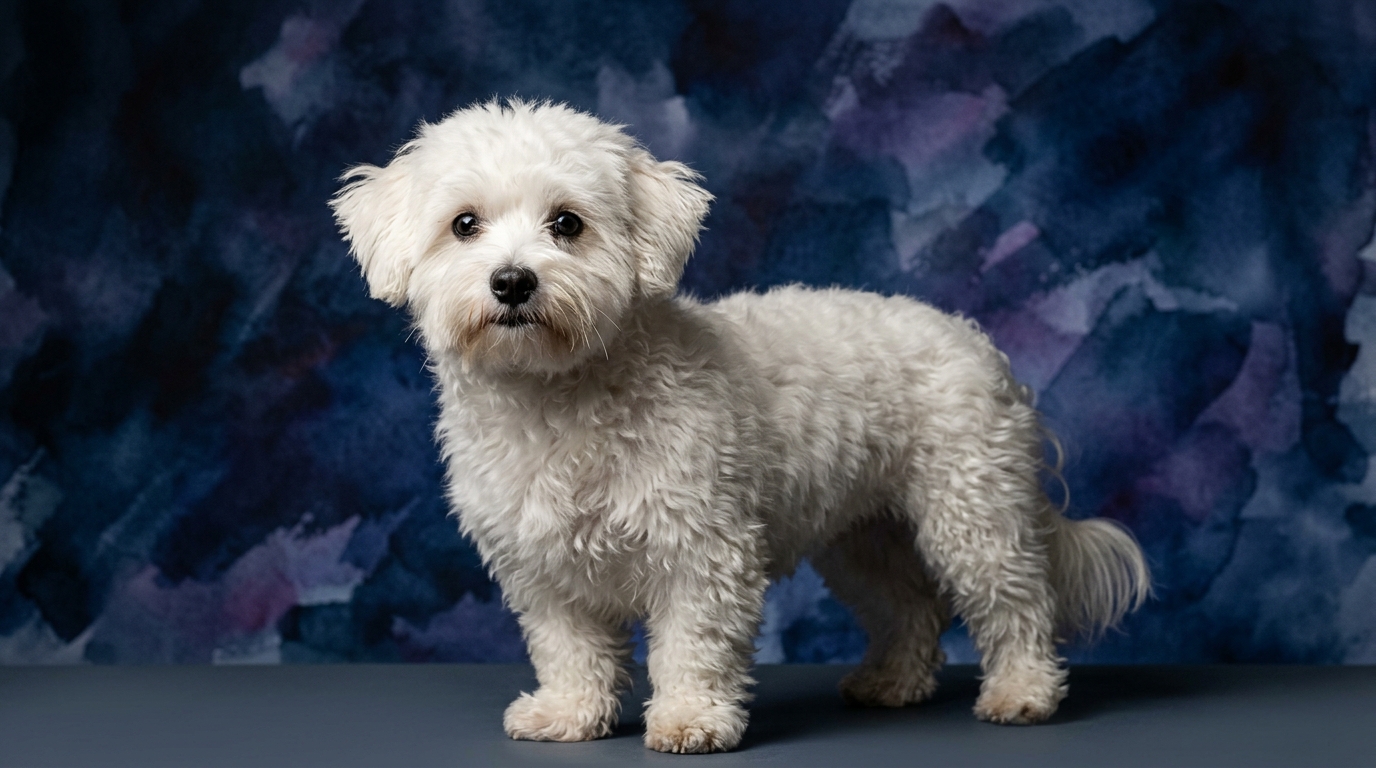
A Tale of Two Threes: Side-by-Side IQ Profiles
The Cosmic Pet Pet IQ Lab assesses canine intelligence across five key dimensions, each rated on a scale of 1 to 5. What makes this particular comparison fascinating is that both the robust Black and Tan Coonhound and the delicate Coton de Tuléar register a consistent 3/5 across the board. This doesn't imply identical cognitive function, but rather an average capacity that is shaped and expressed through their breed-specific instincts and adaptations.
For **Problem Solving (3/5)**, the Coonhound's score reflects its ability to independently decipher complex scent trails and navigate challenging terrain, often requiring sustained focus and critical decision-making in the field without direct human command. Its problem-solving is rooted in its primary hunting function. The Coton de Tuléar, on the other hand, exhibits its 3/5 problem-solving through adapting to household routines, figuring out how to gain attention, or subtly manipulating its environment to achieve comfort. Its challenges are typically human-centric and social.
**Training Speed (3/5)** for the Coonhound often means it can learn commands, but its deep-seated scent drive can occasionally override a learned cue, especially if a compelling scent is present. Consistency and patience are paramount, as its focus can be singular. The Coton de Tuléar's 3/5 indicates it generally picks up commands at an average pace, often motivated by positive reinforcement and a desire for interaction. However, its training can be influenced by sensitivity or a tendency towards playful distraction, requiring engaging methods.
**Social Intelligence (3/5)** in the Coonhound is expressed through its understanding of pack dynamics, its communication with its hunting partner (human or canine), and its ability to read environmental cues pertinent to its work. It's a pragmatic social intelligence. The Coton de Tuléar's 3/5 in this area highlights its capacity to attune to human emotions, understand household hierarchies, and adapt its behavior to fit various social situations within a family setting. Its social acumen is geared towards companionship.
The **Instinctive Drive (3/5)** in a Black and Tan Coonhound is undeniably its powerful, persistent drive to follow a scent trail, a core component of its breed identity. This moderate score indicates a robust, but not necessarily overwhelming, impulse that can be channeled. For the Coton de Tuléar, its 3/5 instinctive drive manifests as a strong desire for companionship, play, and comfort. It's driven to be close to its people, a characteristic of its companion breed heritage.
Finally, **Memory (3/5)** for the Coonhound often pertains to recalling specific scent patterns, successful hunting grounds, and past experiences in the field, crucial for efficient tracking. The Coton de Tuléar's 3/5 memory is typically observed in its recall of daily routines, specific people and their habits, and the location of favored toys or treats. Both demonstrate an average capacity for retention, but the content of their memory banks differs significantly.
Where the Black and Tan Coonhound's Cognition Shines
Despite sharing average scores, the Black and Tan Coonhound's cognitive strengths are profoundly tailored to its role as a scent hound, making it exceptionally capable in specific domains. Its problem-solving, rated 3/5, truly shines when it involves disentangling complex scent puzzles across varied terrain. This isn't about solving a puzzle feeder; it's about independently tracking a faint, hours-old trail through mud, leaves, and over streams, making critical decisions about direction and persistence without direct human guidance. This demonstrates a sophisticated, autonomous application of its cognitive resources.
The Coonhound's instinctive drive, also a 3/5, is a powerful engine for this type of sustained, focused work. While not rated as an extreme drive, it's sufficiently potent to allow the dog to overcome distractions and physical fatigue in pursuit of a scent. This isn't simply a strong instinct; it's a cognitive commitment. Its memory (3/5) supports this by allowing it to recall previous successful tracking strategies, environmental landmarks, and even the specific scent signature of a particular animal, refining its future efforts.
Furthermore, its social intelligence (3/5) is uniquely adapted for its working relationship. A Coonhound understands the subtle cues from its handler during a hunt, knows when to bay to signal a discovery, and comprehends its role within a working 'pack.' This intelligence is less about emotional nuance and more about effective communication and collaboration in a high-stakes outdoor environment. Its training speed (3/5), while average, means it can effectively learn the specific commands and expectations required for its demanding work, even if its independent nature means it values its own judgment in the field.
The Coton de Tuléar's Distinct Cognitive Strengths
The Coton de Tuléar, with its identical 3/5 scores, demonstrates cognitive strengths that are equally specific but geared towards companionship and adaptability within a human household. Its problem-solving (3/5) excels in navigating social situations, figuring out how to get its owner's attention, or understanding complex household routines. This breed often displays a cleverness in manipulating its environment or people through charming behaviors, which is a form of social problem-solving that a Coonhound might not employ.
The Coton's social intelligence (3/5) is particularly pronounced in its emotional attunement. It can often read human moods, respond with comforting gestures, and adapt its playfulness or quietness to suit the atmosphere of the home. This isn't just about understanding commands; it's about a deep, intuitive grasp of human social dynamics. This ability allows them to integrate seamlessly into diverse family structures and provide genuine emotional support, a cognitive role distinct from a working hound.
Its instinctive drive (3/5) is centered around companionship and play. This moderate drive ensures the Coton is eager to engage with its family, participate in games, and seek out physical affection. This intrinsic motivation makes them highly responsive in training scenarios where human interaction is the primary reward. Their memory (3/5) is strong for recalling routines, specific people, and the location of cherished toys or comfort spots, contributing to their sense of security and their ability to thrive in a structured home environment.
While its training speed is a 3/5, the Coton's eager-to-please nature and strong bond with its owner often translate to a dog that is highly motivated to learn and perform tricks or obedience tasks, especially when positive reinforcement and social praise are involved. They thrive on engagement and mental stimulation that involves their human companions, showcasing their cognitive adaptability to a companion lifestyle.
Navigating the Leash: Training Ease and Behavioral Nuances
When considering which breed might be 'easier' to train, despite both having a 3/5 Training Speed, the practical experience can differ significantly based on an owner's goals and experience. The Black and Tan Coonhound's independent nature and powerful scent drive mean that while it can learn commands, its focus during training might be secondary to a compelling scent. Recall, for instance, can be a lifelong challenge if not consistently reinforced with high-value rewards and an understanding of its instinct to follow its nose. Training a Coonhound requires immense patience, consistency, and an appreciation for its inherent drive, often feeling like a negotiation rather than a simple command-and-response. Owners must provide ample opportunities for their Coonhound to engage its nose, or it may find its own, sometimes destructive, outlets.
The Coton de Tuléar, conversely, often presents as 'easier' for many pet owners, even with the same 3/5 Training Speed. Its strong desire for human companionship and eagerness to please mean it is generally highly motivated by praise, attention, and treats. Cotons are typically more sensitive and respond very well to positive reinforcement, often picking up new commands and tricks quickly. However, their social intelligence and charm can also lead to inconsistent behavior if boundaries aren't clear, or if they learn they can 'get away' with things through cuteness. They can also be prone to 'small dog syndrome' if not given proper training and socialization from a young age, and their moderate instinctive drive for play and attention can lead to demanding behavior if not managed. While they may learn quickly, maintaining focus in a distracting environment can still be an average challenge.
Lifestyle Match: Active Pursuits vs. Relaxed Companionship
The Black and Tan Coonhound is undeniably a dog for active, committed owners who appreciate its working heritage. Its 3/5 instinctive drive, while not extreme, mandates significant physical exercise and mental stimulation that engages its powerful nose. This means long, vigorous walks, hikes, or dedicated scent work sessions are not optional, but essential for its well-being. A Coonhound thrives when given a 'job' to do, even if it's just tracking games in the backyard. Owners must be prepared for its characteristic baying and its strong desire to follow a scent, which means secure fencing and reliable recall training are non-negotiable. This breed is best suited for individuals or families who embrace an outdoor, active lifestyle and can integrate their dog into these pursuits.
The Coton de Tuléar, in contrast, is an adaptable companion dog whose 3/5 instinctive drive is primarily focused on human interaction and comfort. While they do require daily walks and playtime, their exercise needs are moderate compared to a Coonhound. They thrive on being part of the family's daily activities, preferring to be close to their people. Their cognitive strengths are best utilized in an environment where they receive consistent attention, engage in interactive play, and participate in family routines. Cotons are well-suited for a variety of living situations, including apartments, provided they receive regular mental engagement and social interaction. They are an excellent choice for owners seeking a devoted, emotionally attuned indoor companion who enjoys gentle walks and cuddle sessions.
The Verdict
Choose the Black and Tan Coonhound if you are an active, outdoors-oriented individual or family, prepared to channel a powerful scent drive into demanding physical and mental activities, and appreciate an independent, focused working partner.
Opt for the Coton de Tuléar if you seek an adaptable, emotionally responsive companion dog that thrives on close human interaction, enjoys a more relaxed indoor lifestyle, and can enrich your home with its charming and attentive presence.
🧠 Find Your Pet's IQ Score
Our Pet IQ Lab assessment covers 25+ tests across 5 cognitive dimensions — personalized to your breed.
Take the Full IQ Test →Frequently Asked Questions
Are identical IQ scores truly indicative of similar overall intelligence?
Not entirely. While both breeds scored 3/5 across the board, these are broad categories. Their intelligence manifests differently, with the Coonhound excelling in independent, scent-driven problem-solving and the Coton in social and emotional adaptability within a human environment. The 'type' of intelligence is distinct.
Can a Coton de Tuléar be trained for scent work like a Coonhound?
While Cotons can certainly enjoy scent games and basic nose work due to their general cognitive capacity, they lack the specialized physical build, endurance, and powerful, persistent instinctive drive that defines a Coonhound's ability for sustained, intensive tracking over long distances and challenging terrain. They simply aren't bred for that scale of work.
Is a Black and Tan Coonhound suitable for apartment living?
Generally, a Black and Tan Coonhound is not ideal for apartment living due to its significant exercise requirements, strong scent drive that needs outlets, and characteristic vocalizations (baying). While possible with an exceptionally dedicated owner who provides hours of outdoor activity and mental stimulation daily, it’s far better suited to homes with large, securely fenced yards and owners who embrace a very active, outdoor lifestyle.