Side-by-Side Cognitive Profile
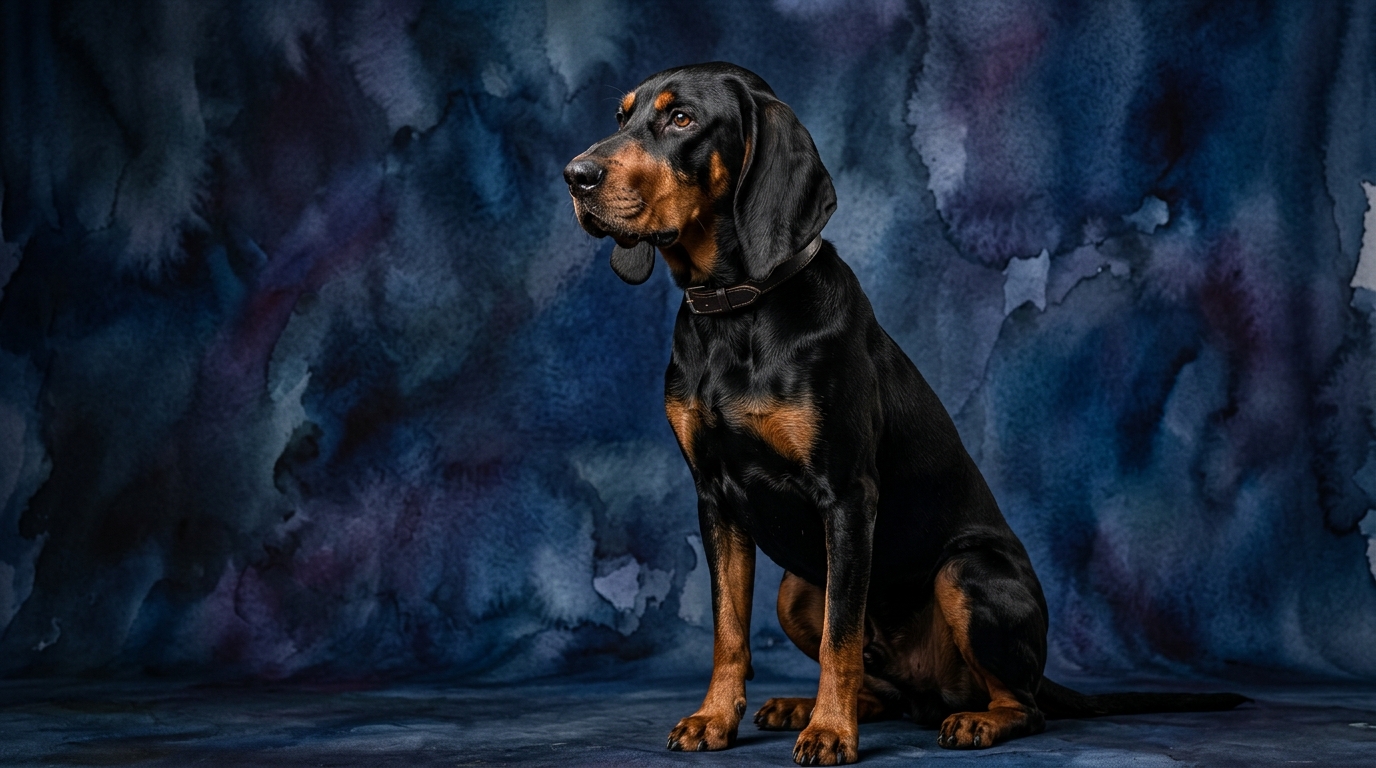
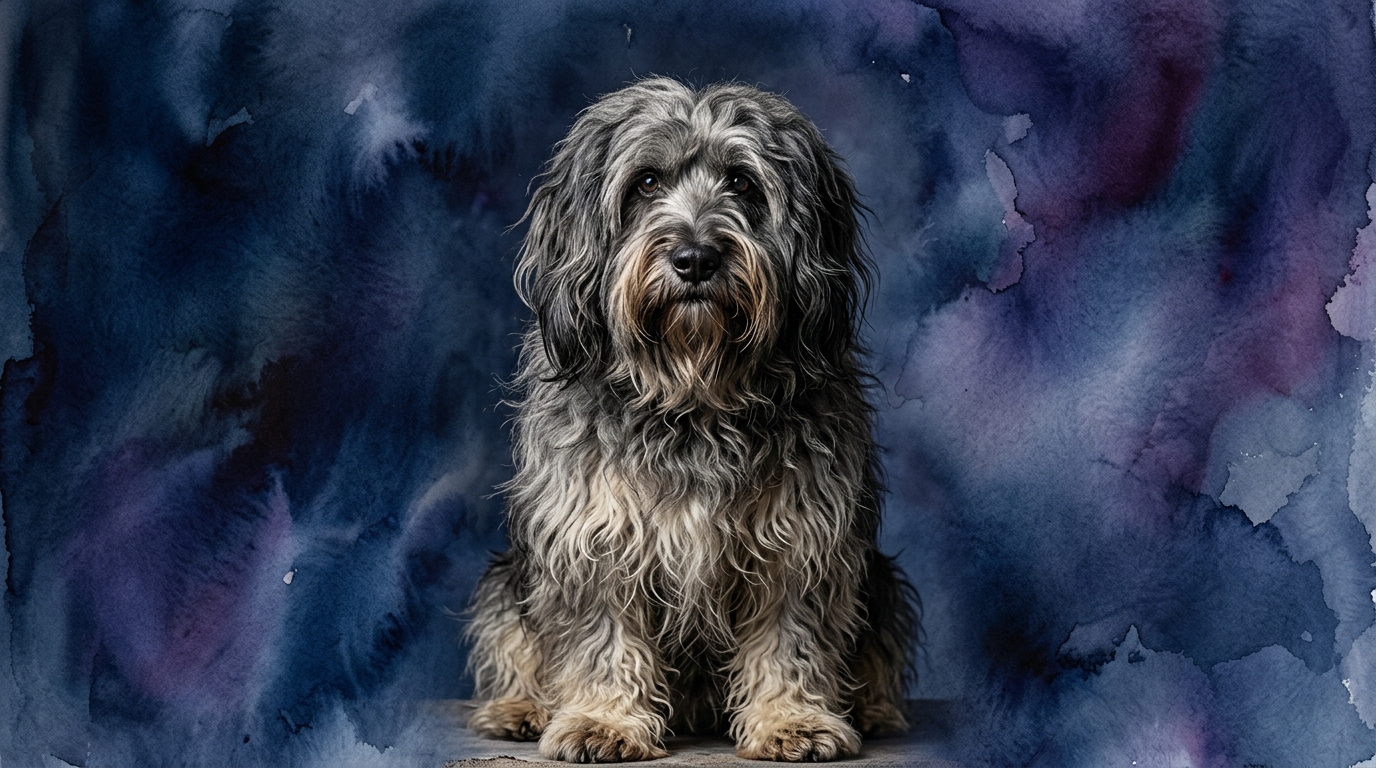
The Cosmic Pet Pet IQ Lab evaluates canine cognition across five crucial dimensions, and interestingly, both the Black and Tan Coonhound and the Polish Lowland Sheepdog register a consistent 3/5 in each category. This shared numerical rating, however, belies the profoundly different ways these breeds employ their cognitive faculties, shaped by centuries of selective breeding for distinct purposes.
For the **Black and Tan Coonhound**, a 3/5 in **Problem Solving** primarily reflects their exceptional ability to navigate complex environments to follow a scent trail, overcoming natural obstacles with determined focus. Their **Training Speed (3/5)** indicates they are capable learners, though their intense focus on scent can sometimes make them appear less biddable than other breeds, as their primary motivation often lies in the chase. Their **Social Intelligence (3/5)** is evident in their strong pack bonds with family members, showing contentment in companionship, yet they are not typically driven by a desire to constantly anticipate human desires. The **Instinctive Drive (3/5)** for a Coonhound is almost entirely dominated by their powerful olfactory sense and the urge to track and bay, an intrinsic part of their being. Finally, their **Memory (3/5)** is particularly formidable when it comes to recalling scent patterns and the location of previous successful hunts or intriguing trails.
The **Polish Lowland Sheepdog (PON)**, by contrast, expresses its 3/5 in **Problem Solving** through its aptitude for managing and controlling livestock, anticipating movement, and finding creative solutions within a herding context. Their **Training Speed (3/5)** demonstrates a capacity for learning commands and routines efficiently, though this is often accompanied by an independent streak that can lead to moments of thoughtful deliberation before compliance. Their **Social Intelligence (3/5)** shines in their close connection to their human families, often acting as vigilant protectors and keen observers of household dynamics, though they can be reserved with strangers. The **Instinctive Drive (3/5)** for a PON centers on herding and guarding, exhibiting a natural inclination to gather, control, and protect their perceived flock, whether it be sheep or family members. Their **Memory (3/5)** is robust for routines, learned commands, and maintaining an internal map of their territory, remembering who belongs and who does not.
Where the Black and Tan Coonhound’s Cognition Shines
Despite sharing identical scores, the Black and Tan Coonhound's cognitive strengths are most vividly displayed in scenarios demanding independent, scent-driven work. Their 3/5 in problem-solving is not about solving puzzles for human amusement, but rather about meticulously unraveling a complex scent puzzle across varied terrains. This involves intricate decision-making in real-time, such as determining the freshest trail or navigating dense undergrowth while maintaining focus on a specific odor. Their memory, also a 3/5, is exceptionally tuned to olfactory information, allowing them to recall specific scents and their locations with remarkable precision, a skill vital for tracking game over long distances and extended periods. This breed truly excels when given the freedom to engage its nose, demonstrating a profound depth of cognitive processing within its specialized domain. Their instinctive drive, while rated 3/5, translates into an unwavering, almost single-minded dedication to the hunt, making them unparalleled partners for scent-related tasks where persistence and self-reliance are paramount.
Where the Polish Lowland Sheepdog’s Cognition Shines
The Polish Lowland Sheepdog's cognitive advantages are most apparent in tasks requiring nuanced interaction, spatial reasoning, and a strong sense of purpose within a collaborative framework. Their 3/5 in problem-solving manifests as an ability to strategically manage and move livestock, often anticipating their reactions and adjusting their approach accordingly. This demonstrates a sophisticated understanding of cause and effect within a dynamic environment. Their social intelligence, also a 3/5, allows them to be highly attuned to their family's needs and moods, often acting as perceptive watchdogs who can differentiate between friend and perceived foe, indicating a complex understanding of social cues within their established 'flock'. While their training speed is 3/5, this often comes with a desire to engage in a partnership, making them responsive to handlers who provide clear guidance and a job to do. Their instinctive drive, a 3/5, means they are often seeking to organize and control, applying their cognitive abilities to maintain order and security within their territory. This combination of traits makes them particularly adept at roles requiring vigilance, quick thinking, and a cooperative spirit.
Ease of Training: Behavioral Differences at Play
When considering ease of training, the identical 3/5 training speed rating for both breeds needs to be interpreted through the lens of their dominant instinctive drives and motivations. The Black and Tan Coonhound, with its potent 3/5 instinctive drive for scent work, often finds external commands secondary to a compelling odor. While they certainly learn, their compliance can be conditional, meaning a strong scent will often override a 'come' command, making recall a significant training challenge. Their independent problem-solving (3/5) is geared towards self-direction in tracking, which can translate into a perceived stubbornness in obedience settings where a handler expects immediate, unwavering focus. Building a strong foundation of positive reinforcement and making training more rewarding than the allure of the wild is crucial, but owners must anticipate a consistent battle against their powerful nose.
The Polish Lowland Sheepdog, despite also having a 3/5 training speed, often presents a different training dynamic. Their 3/5 instinctive drive for herding typically includes a desire to work in partnership and find purpose, which can make them more amenable to structured training sessions once they understand the 'rules' and their 'job'. However, their problem-solving (3/5) and independent nature can lead them to 'think for themselves' or test boundaries, requiring a handler who is consistent, patient, and engaging. They learn quickly, but may require convincing that your way is the best way. For many owners, the PON's desire to participate and their responsiveness to a strong bond can make them feel 'easier' to train for general obedience than a Coonhound, provided their inherent need for mental engagement and a clear role is met. They are less likely to disappear over the horizon on a scent, but might decide to 'herd' the children instead.
Matching Breeds to Lifestyles: Active vs. Relaxed Owners
Neither the Black and Tan Coonhound nor the Polish Lowland Sheepdog are ideal companions for truly relaxed, sedentary owners; both breeds demand substantial mental and physical engagement, albeit in different forms. The Coonhound, with its 3/5 instinctive drive for scent, requires owners who can provide consistent opportunities for nose work. This isn't just about long walks; it's about structured tracking games, scent discrimination exercises, or even just exploring new environments where their powerful olfactory senses can be fully engaged. An owner who fails to provide this specific mental outlet will likely find their Coonhound bored, vocal, and potentially destructive, as their problem-solving (3/5) will be redirected towards finding their own entertainment. They thrive with active individuals or families who appreciate their independent spirit and are committed to channeling their natural talents.
The Polish Lowland Sheepdog, with its 3/5 herding and guarding instincts, also needs an active lifestyle that includes both physical exercise and significant mental stimulation. Without a 'job'—whether it's advanced obedience, agility, herding trials, or complex puzzle toys—their 3/5 problem-solving abilities can lead to them creating their own 'work,' which might involve herding family members, barking at perceived threats, or meticulously rearranging household items. They are not content to simply exist; they need purpose and mental challenges to prevent boredom and undesirable behaviors. Owners who enjoy engaging in dog sports, consistent training, and providing a clear structure will find the PON a rewarding companion. Both breeds require owners who are prepared to be active participants in their dog's mental and physical well-being, rather than passive observers.
The Verdict
Choose the Black and Tan Coonhound if you are an owner passionate about scent work, tracking, or hunting, who deeply appreciates an independent companion with a profound connection to the natural world. They thrive with patient trainers who understand their powerful instincts and can channel their cognitive abilities into fulfilling scent-based activities.
Opt for the Polish Lowland Sheepdog if you are seeking a thoughtful, protective, and engaging companion who thrives on mental challenges and enjoys having a 'job' within the family structure. They suit individuals who can provide consistent training, socialisation, and outlets for their herding and problem-solving talents.
🧠 Find Your Pet's IQ Score
Our Pet IQ Lab assessment covers 25+ tests across 5 cognitive dimensions — personalized to your breed.
Take the Full IQ Test →Frequently Asked Questions
Are Black and Tan Coonhounds good family pets despite their strong drive?
Yes, Black and Tan Coonhounds can be wonderful family pets, known for their amiable and gentle nature indoors. However, their strong instinctive drive means they require consistent mental stimulation through scent work and secure environments to prevent them from following their nose.
Do Polish Lowland Sheepdogs require professional grooming?
Polish Lowland Sheepdogs possess a long, shaggy double coat that requires significant grooming to prevent matting. While some owners manage it themselves with daily brushing, many opt for professional grooming every 6-8 weeks to maintain their coat's health and appearance.
How do these breeds typically interact with other pets?
Black and Tan Coonhounds generally get along well with other dogs, especially those in their immediate 'pack,' though their prey drive might make them unsuitable with very small, fast-moving pets. Polish Lowland Sheepdogs can coexist peacefully with other pets, particularly if raised together, but their herding instincts might lead them to 'manage' other animals, which some pets may not appreciate.