
Side-by-Side IQ Profile
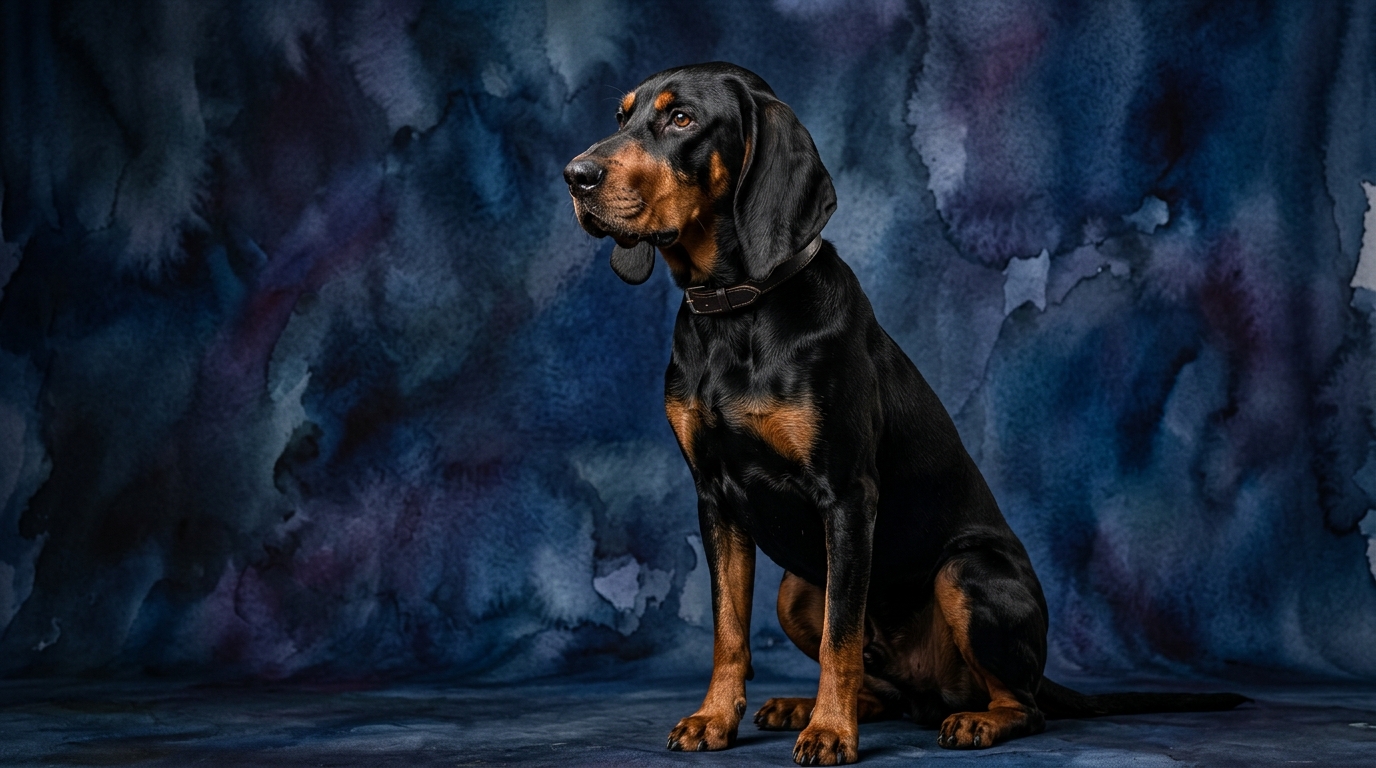
For the Black and Tan Coonhound, Problem Solving (3/5) speaks to their highly specialized ability to untangle complex scent trails, navigating varied terrain and obstacles with a single-minded focus to locate quarry. Their cognitive strength lies in sequential processing of olfactory information, piecing together a scent puzzle across distances. Training Speed (3/5) indicates they learn at a moderate pace, but their primary motivation is often tied to their nose rather than a desire to please. They can master commands, but their independent nature and powerful scent drive mean they might choose to follow a fascinating odor over a handler's instruction, requiring significant patience and consistency. Social Intelligence (3/5) for Coonhounds is geared towards cooperative hunting within a group and forming strong, if sometimes reserved, bonds with their core human companions, often displaying a calm, observant demeanor. Their Instinctive Drive (3/5) is a powerful indicator of their profound hunting instinct; their drive to track, trail, and bay is not merely a preference but a deeply ingrained behavioral pattern that shapes their entire cognitive landscape. Memory (3/5) for a Coonhound is acutely tuned to environmental details relevant to tracking: remembering specific scent pathways, terrain features, and the locations of past successful hunts, possessing a strong recall for complex scent patterns and sequential information gathered during a trail.
The Tibetan Terrier's Problem Solving (3/5) reflects their historical role as companions and guardians. Their cognitive strengths lie in adapting to household routines, figuring out how to get attention, and navigating complex human social dynamics, often using cleverness to achieve desired outcomes within a domestic setting. Training Speed (3/5) suggests they are moderately quick learners, capable of picking up commands and tricks with relative ease when motivated. They possess an independent streak, meaning training requires engaging methods, positive reinforcement, and a handler who understands their sometimes mischievous nature. Social Intelligence (3/5) for Tibetan Terriers is centered on their human family, often acting as watchful and devoted companions. They are adept at reading human emotions and intentions, and while generally friendly, they can be reserved or discerning with strangers, demonstrating a keen awareness of their social circle. Their Instinctive Drive (3/5), while not as singularly focused as a hound's, is present in their historical roles as herders and watchdogs, manifesting as alertness, a natural inclination to guard their family, and a desire for purpose. Memory (3/5) for the Tibetan Terrier is typically strong for routines, learned commands, and the specific dynamics of their human family and household environment, remembering who is part of their inner circle and the sequences of events that lead to rewards or attention.
Where Black and Tan Coonhound Wins Cognitively
The Black and Tan Coonhound's cognitive strengths truly shine in scenarios demanding specialized olfactory processing and sustained focus on a singular environmental cue. Their ability to discriminate between myriad scents, follow a cold trail for hours, and navigate complex, often rugged, terrain while maintaining a precise trajectory is unparalleled. This isn't just about having a good nose; it's a sophisticated form of spatial and sequential problem-solving, where each new scent molecule is a piece of a puzzle, and their memory for these scent maps is exceptionally robust. They demonstrate a deep, ingrained understanding of their working environment, making them masters of scent-based navigation and endurance.
Where Tibetan Terrier Wins Cognitively
The Tibetan Terrier excels in cognitive areas related to adaptability, nuanced human interaction, and problem-solving within a domestic context. Their social intelligence allows them to quickly understand household dynamics, anticipating human moods and routines, which fosters their role as exceptional companions. Their problem-solving often involves creative strategies to engage their family, whether it's figuring out how to open a cabinet or orchestrating a play session. Their cognitive flexibility allows them to thrive in varied environments and learn a wide array of non-specialized tasks, demonstrating a versatile memory for social cues and learned behaviors that serve a companion role effectively.
Which is Easier to Train and Why
For the average pet owner seeking a dog to reliably execute basic obedience commands and integrate smoothly into a household routine, the Tibetan Terrier is generally perceived as easier to train. While both breeds score 3/5 in Training Speed, the Tibetan Terrier's cognitive profile is more aligned with human-centric learning goals. Their social intelligence and desire to be part of the family often translate into a willingness to engage in training sessions, even with their independent streak. They respond well to positive reinforcement and can be motivated by praise, treats, and play. In contrast, the Black and Tan Coonhound's powerful instinctive drive, particularly their scenting focus, presents a significant hurdle. Their nose can override learned commands, making recall in an open environment particularly challenging. Training a Coonhound requires an understanding of their deep-seated instincts and a commitment to making training more rewarding than the allure of a scent trail, often demanding more specialized techniques and unwavering patience.
Which Suits Active Owners vs Relaxed Owners
The Black and Tan Coonhound is unequivocally suited for active owners who are prepared to integrate significant outdoor activity and mental stimulation into their daily lives. Their powerful instinctive drive demands outlets for scent work, long walks, or structured tracking exercises. A relaxed owner who cannot provide these consistent, vigorous activities will likely find a Coonhound restless, vocal, and prone to finding their own (often destructive) entertainment. Conversely, the Tibetan Terrier offers a more flexible match for activity levels. While they are energetic and playful, requiring daily walks and mental engagement, they are also adaptable to apartment living and can be content with indoor play and cuddling. They suit owners who enjoy regular activity but also appreciate a calm, devoted companion for quieter moments, rather than requiring an owner whose lifestyle revolves around intense outdoor pursuits.
The Verdict
Choose the Black and Tan Coonhound if you are an experienced, active owner dedicated to providing consistent, stimulating outdoor scent work and can patiently manage a dog with powerful independent instincts.
Opt for the Tibetan Terrier if you seek a versatile, devoted companion who thrives on human interaction, enjoys a balance of activity and relaxation, and will adapt well to a family-oriented lifestyle.
🧠 Find Your Pet's IQ Score
Our Pet IQ Lab assessment covers 25+ tests across 5 cognitive dimensions — personalized to your breed.
Take the Full IQ Test →Frequently Asked Questions
Do Black and Tan Coonhounds bark a lot?
Yes, Coonhounds are known for their distinctive "baying" or howling, especially when on a scent trail or when bored or lonely. This vocal nature is a strong characteristic of the breed, stemming from their hunting heritage.
Are Tibetan Terriers good with children?
Tibetan Terriers are generally good with respectful children, often forming strong bonds with their family members. Their playful yet watchful nature makes them suitable family pets, but early socialization and proper introductions are always beneficial.
How much exercise does a Black and Tan Coonhound need daily?
A Black and Tan Coonhound requires substantial daily exercise, typically an hour or more of vigorous activity, ideally involving opportunities for scent exploration or long, leashed walks in varied environments to satisfy their hunting instincts.