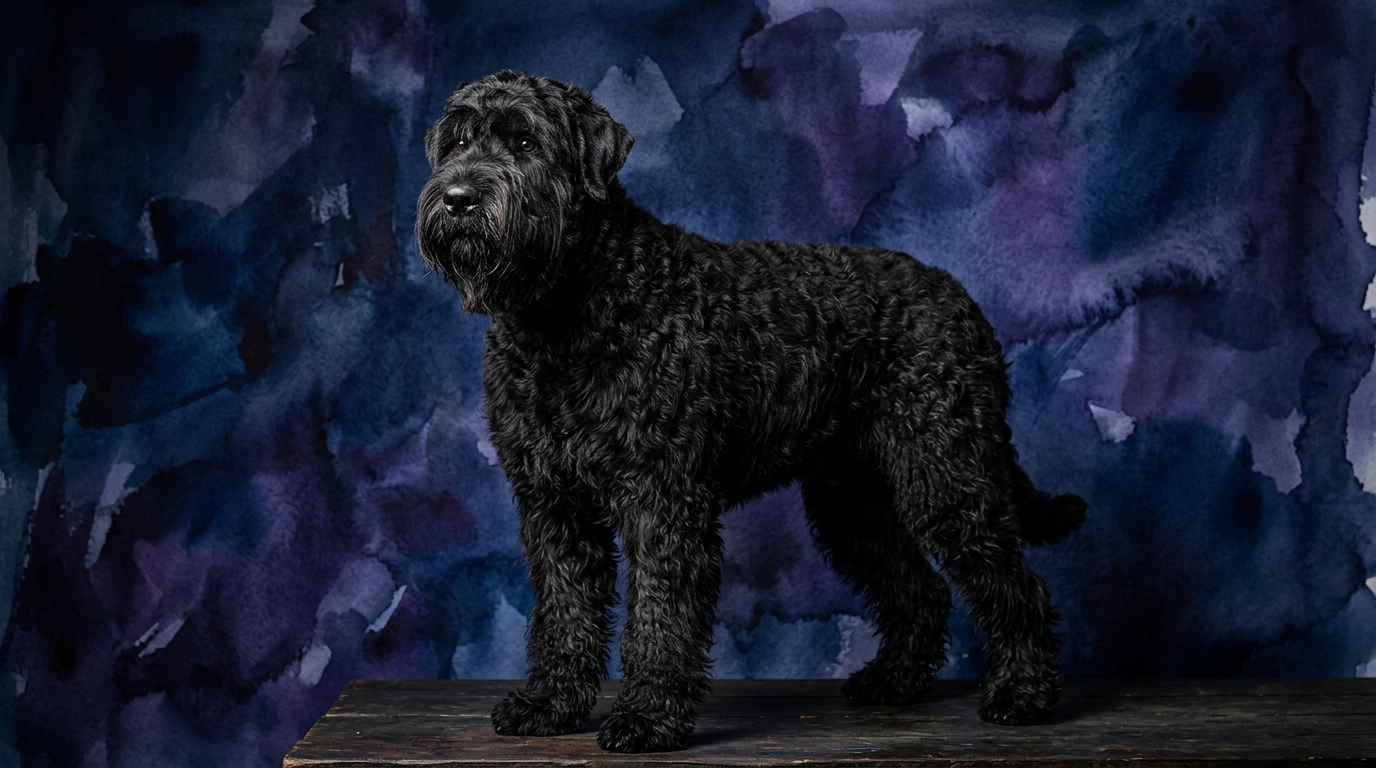
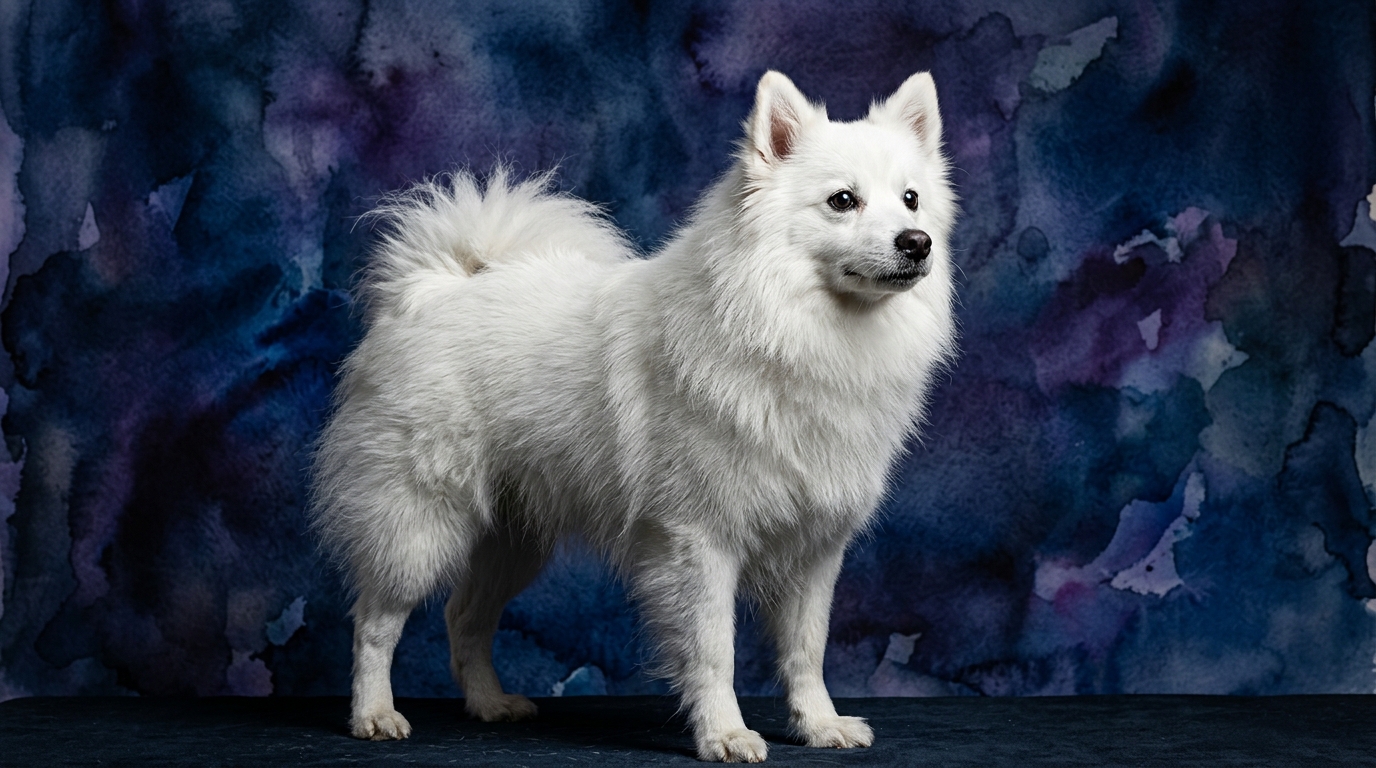
Side-by-Side IQ Profile: Black Russian Terrier vs. American Eskimo Dog
**Black Russian Terrier (Working Group)**
**Problem Solving (3/5):** The Black Russian Terrier's problem-solving skills are geared towards their working heritage, manifesting as a strategic approach to assessing and addressing perceived threats. They excel at figuring out physical barriers or complex multi-step commands related to protection, often using determination to achieve a goal.
**Training Speed (3/5):** These dogs possess a solid capacity for learning, but their training speed is often influenced by their strong will. They respond best to a firm, consistent, and experienced handler who can provide clear direction and establish leadership; once motivated, they learn and retain information efficiently.
**Social Intelligence (3/5):** A Black Russian Terrier's social intelligence revolves around understanding pack dynamics and reading intentions, adept at discerning friend from foe. They show a reserved demeanor towards strangers while forming deep, protective bonds with family, interpreting cues related to security.
**Instinctive Drive (3/5):** Their instinctive drive is profoundly tied to guarding and territoriality, a robust intrinsic motivation to protect their home and people. This drive is a powerful asset in working roles, providing impetus for vigilance and decisive action, coupled with a strong prey drive.
**Memory (3/5):** Black Russian Terriers demonstrate reliable memory, particularly for commands, routines, and the identity of individuals they encounter regularly. This allows them to recall complex sequences of obedience or protection work over extended periods, making them consistent performers.
**American Eskimo Dog (Non-Sporting Group)**
**Problem Solving (3/5):** The American Eskimo Dog's problem-solving abilities often shine in different contexts, adept at figuring out puzzle toys, navigating novel environments, or devising clever ways to get attention. Their intelligence is applied with playful curiosity, making them resourceful and engaging companions.
**Training Speed (3/5):** These dogs are generally eager to please and quick to pick up new commands and tricks. However, their independent streak means training requires consistency, positive reinforcement, and engaging methods to maintain focus, thriving on variety and praise.
**Social Intelligence (3/5):** American Eskimo Dogs exhibit strong social intelligence, particularly within their family unit, skilled at reading human emotions and acting as sensitive barometers of their owners' moods. Their ability to communicate reflects a keen awareness of their social environment.
**Instinctive Drive (3/5):** Their instinctive drive is rooted in history as alert watchdogs and companions, manifesting as a strong desire to be involved in family activities, vocalizing warnings, and inherent alertness. They possess a natural inclination to entertain and engage, enjoying performing tricks.
**Memory (3/5):** American Eskimo Dogs have a good memory for tricks, routines, and the people they love, easily recalling learned behaviors and understanding consistent household rules. Their ability to remember complex sequences in agility or obedience often makes them successful in various dog sports.
Where the Black Russian Terrier Wins Cognitively
Despite identical numerical scores, the Black Russian Terrier's cognitive strengths lean towards applications demanding gravitas, strategic defense, and unwavering focus in high-stakes situations. Their "3/5" in Problem Solving is particularly suited for tasks requiring a dog to assess and neutralize a perceived threat, using both physical presence and calculated action rather than playful ingenuity. The "3/5" in Instinctive Drive means they possess a deep-seated, purposeful motivation for guarding and protection, translating into a cognitive advantage for roles requiring serious commitment to duty. Their Social Intelligence, while also 3/5, is acutely tuned to discerning trustworthiness and recognizing potential dangers, making them superior in evaluating external stimuli for security purposes compared to the Eskie's more family-centric social awareness.
Where the American Eskimo Dog Wins Cognitively
The American Eskimo Dog's cognitive advantages, while numerically equal, are expressed in areas requiring adaptability, nuanced communication, and a zest for interactive learning. Their "3/5" in Problem Solving often manifests as a creative flair for navigating household challenges or mastering complex puzzle toys, showcasing a different kind of mental agility. Their Social Intelligence (3/5) allows for a more emotionally sensitive and communicative interaction with family members, excelling at picking up on subtle human cues and responding with empathy or playful engagement. The Eskie's "3/5" in Instinctive Drive translates into a strong desire for companionship and participation, making them cognitively superior at engaging in interactive games, learning intricate tricks, and being a responsive family member who enjoys being the center of attention.
Which is Easier to Train and Why
Neither breed is inherently "easier" to train in a universal sense, as both possess a "Training Speed 3/5," indicating a solid capacity for learning, but their training approaches differ significantly. The American Eskimo Dog often appears easier for novice owners due to their eagerness to please, playful demeanor, and responsiveness to positive reinforcement; they enjoy engaging in training sessions, especially with variety and ample praise. In contrast, the Black Russian Terrier, while equally capable, demands a more experienced and confident handler. Their strong will and protective instincts mean training must be consistent, firm, and establish clear leadership from the outset, thriving when given a "job" and requiring a more structured approach.
Which Suits Active Owners vs. Relaxed Owners
The Black Russian Terrier is unequivocally suited for active owners prepared for significant physical and mental engagement. Their Working group heritage dictates a need for extensive daily exercise, rigorous training, and consistent mental stimulation to prevent boredom. They thrive with owners who can provide a structured environment, often involving protection sports or advanced obedience, and are not a match for relaxed owners. The American Eskimo Dog also requires active owners, though perhaps with a different intensity level. While they appreciate regular walks and playtime, their needs can be met with daily exercise, interactive games, and mental challenges like agility. They are more adaptable to apartment living than the BRT, provided their owners commit to daily engagement, but are not suited for truly relaxed owners who prefer minimal interaction.
The Verdict
Choose the Black Russian Terrier if you are an experienced dog owner seeking a powerful, dedicated protector and companion, prepared to commit to extensive training, socialization, and a highly active lifestyle.
Choose the American Eskimo Dog if you desire an engaging, communicative, and playful companion who thrives on social interaction, trick training, and regular activity, and you can provide consistent positive reinforcement.
🧠 Find Your Pet's IQ Score
Our Pet IQ Lab assessment covers 25+ tests across 5 cognitive dimensions — personalized to your breed.
Take the Full IQ Test →Frequently Asked Questions
Do Black Russian Terriers and American Eskimo Dogs require the same amount of mental stimulation?
While both breeds score 3/5 for problem-solving and memory, the *type* of mental stimulation they thrive on differs; BRTs excel with structured, task-oriented challenges, while Eskies enjoy interactive puzzles and trick training.
Can an American Eskimo Dog be a good guard dog like a Black Russian Terrier?
American Eskimo Dogs are excellent alert dogs due to their vocal nature and alertness, but they lack the Black Russian Terrier's powerful protective instincts and physical presence for true guarding roles.
Are there significant temperament differences that impact their cognitive application?
Absolutely; the BRT's reserved and protective temperament directs its cognitive abilities towards vigilance and strategic defense, whereas the Eskie's outgoing and eager-to-please nature channels its intelligence into social engagement and playful problem-solving.