Side-by-Side Cognitive Profiles
Despite both breeds scoring 3/5 across all five cognitive dimensions – Problem Solving, Training Speed, Social Intelligence, Instinctive Drive, and Memory – the practical application and manifestation of these traits are distinctly shaped by their unique historical backgrounds.
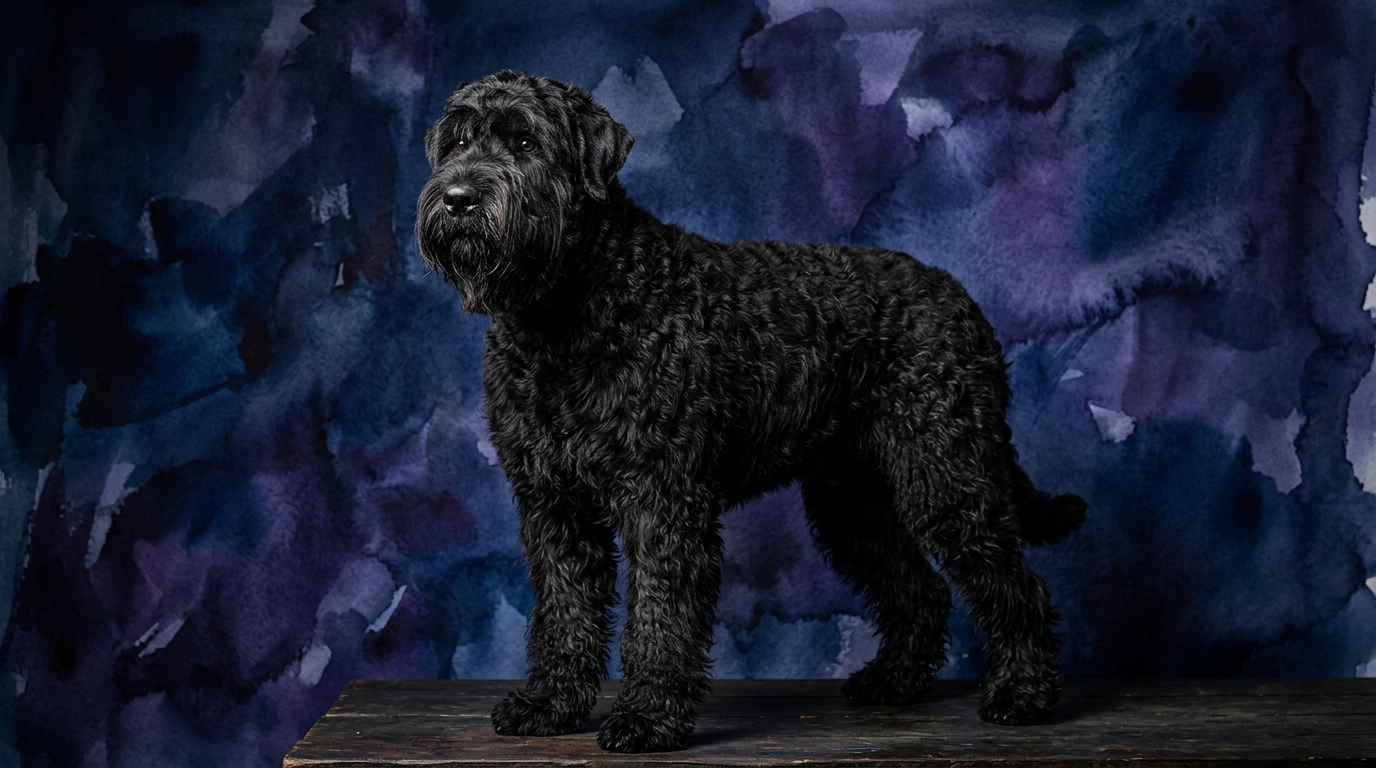
For the Black Russian Terrier (BRT), developed for demanding military roles, their Problem Solving (3/5) often centers on real-world situational analysis, assessing potential threats, and devising effective strategies for protection or neutralization. This involves a keen ability to interpret subtle environmental cues and make decisive judgments, rather than abstract puzzle-solving. Their Training Speed (3/5) reflects a strong capacity to absorb and execute complex command sequences and intricate tasks with good speed, particularly those requiring precision and rapid response in high-pressure scenarios. BRTs exhibit a nuanced Social Intelligence (3/5), deeply attuned to reading their handler's intent and understanding the social dynamics within their immediate 'pack,' while maintaining a cautious or aloof demeanor towards unfamiliar individuals. A powerful protective and territorial Instinctive Drive (3/5) defines them, manifesting as a strong, inherent impulse to guard their family and property, often accompanied by a deep-seated suspicion of strangers. They possess a robust Memory (3/5) for complex command routines, specific individuals, and past interactions, which is crucial for consistent performance in protection duties and recognizing familiar faces versus potential threats.
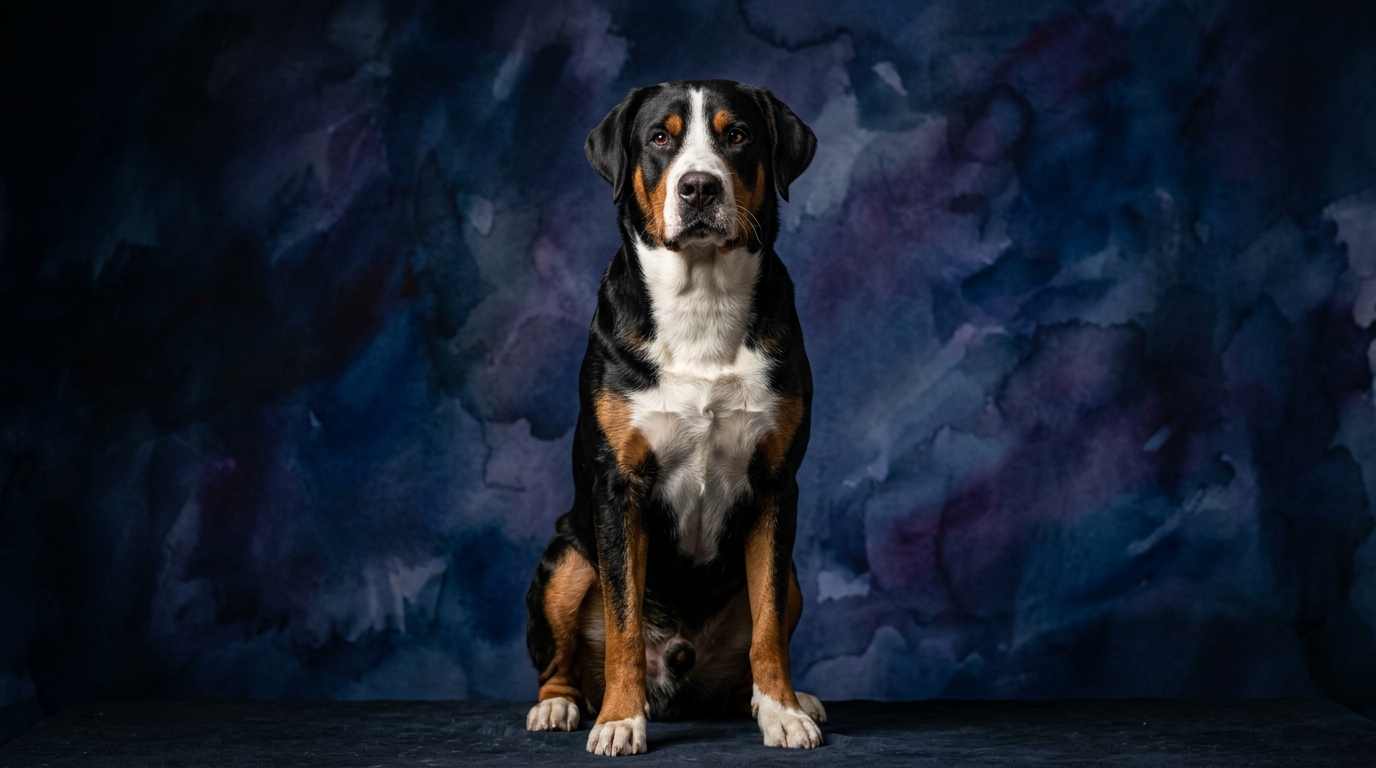
The Greater Swiss Mountain Dog (GSMD), originating as versatile farm dogs, displays a Problem Solving (3/5) ability that involves practical, physical challenges such as navigating varied terrain while pulling heavy loads, managing livestock movements, or finding efficient routes for their daily tasks. Their solutions are often robust and physically oriented, focused on overcoming environmental and logistical obstacles in a practical manner. Their Training Speed (3/5) means they learn multi-step tasks related to farm work, such as specific herding patterns, drafting commands, or carting routes, with good speed. They respond well to consistent, positive reinforcement, appreciating collaborative efforts and clear communication over purely authoritative instruction. Their Social Intelligence (3/5) is geared towards harmonious interaction within a family unit, with various farm animals, and with occasional visitors, demonstrating an understanding of social hierarchies and an ability to adapt their behavior appropriately in diverse settings. Strong, inherent Instinctive Drives (3/5) for herding, droving, and pulling carts are prominent, coupled with a natural inclination to guard their family and territory with a watchful but generally less intense suspicion than the BRT. GSMDs possess a good Memory (3/5) for routes, established farm routines, the layout of their territory, and the specific individuals (both human and animal) they interact with regularly, which is essential for their traditional working roles.
Where the Black Russian Terrier Excels Cognitively
The Black Russian Terrier's cognitive strengths shine particularly in scenarios demanding swift, precise decision-making under pressure, especially concerning protection. Their Problem Solving (3/5) in a guardian role is characterized by an ability to quickly evaluate potential threats and react decisively, often requiring a nuanced interpretation of their handler's instructions or body language. This translates to an exceptional capacity for threat assessment and strategic response.
Their Memory (3/5) is particularly potent for recalling complex command chains and distinguishing between known associates and potential intruders, making them exceptionally reliable in security-oriented tasks that demand consistent recognition. The specific application of their Social Intelligence (3/5) involves a deep attunement to their primary handler, allowing them to anticipate needs and understand subtle cues in high-stakes situations, a level of handler focus that is paramount for their original military purpose.
This combination of focused problem-solving, precise memory, and handler-centric social intelligence equips the BRT for roles requiring unwavering loyalty and protective instincts.
Where the Greater Swiss Mountain Dog Excels Cognitively
The Greater Swiss Mountain Dog's cognitive advantages manifest in tasks requiring independent judgment, spatial reasoning, and sustained effort in varied environments. Their Problem Solving (3/5) is often geared towards practical, physical challenges: navigating difficult terrain while pulling a heavy load, or subtly guiding livestock without excessive force. This involves a more independent, less handler-dependent form of decision-making, allowing them to assess and overcome physical obstacles effectively.
Their Instinctive Drive (3/5) for draft work and herding is accompanied by a robust Memory (3/5) for routes and routines, allowing them to perform complex, repetitive tasks efficiently and reliably over long periods, making them excellent at tasks requiring consistent physical engagement and navigation. The GSMD's Social Intelligence (3/5) excels in managing diverse social dynamics, from interacting gently with children to confidently overseeing livestock, demonstrating a balanced and adaptable understanding of social roles and appropriate behavior in varied settings.
This blend of practical problem-solving, reliable memory for routines, and adaptable social intelligence makes the GSMD highly capable in roles demanding resilience, judgment, and harmonious interaction.
Training Dynamics: BRT vs. GSMD
While both breeds score 3/5 in Training Speed, the 'how' and 'what' of their training differ significantly. The Black Russian Terrier, with its deep-seated desire to serve a primary handler and its intense focus, can appear to learn complex obedience and protection routines with remarkable speed and precision. However, this often requires an experienced, confident trainer who can establish clear leadership and manage their innate guarding instincts effectively. BRTs thrive on structure and consistency, and their strong-willed nature means any perceived inconsistency can lead to challenges in compliance and behavior.
The Greater Swiss Mountain Dog, while equally capable of learning quickly, often prefers a more collaborative and positive reinforcement-based approach. Their independent Problem Solving (3/5) and strong Instinctive Drives (3/5) for farm work mean they can sometimes question the necessity of a command if it doesn't align with their perceived task or common sense. They may not exhibit the same intense, unwavering focus on a single handler for advanced obedience as a BRT, but they are highly amenable to learning tasks that engage their physical and mental capabilities, especially those involving navigating, pulling, or herding. Training a GSMD is often about building a partnership and providing clear, consistent motivation, rather than demanding absolute subservience.
Matching Breeds to Lifestyles: Active vs. Relaxed Owners
For the active owner seeking a dedicated partner in demanding activities, the Black Russian Terrier presents a compelling choice. Their cognitive makeup, geared towards intense focus and purposeful work, means they require consistent mental stimulation and physical activity. Owners who enjoy advanced obedience, protection sports, or a highly structured routine will find the BRT a rewarding, albeit challenging, companion. Their need for a 'job' means a relaxed owner who cannot provide consistent engagement and leadership might find themselves with a bored, potentially destructive, or overly protective dog, underscoring the importance of matching their high drive with an owner's commitment.
The Greater Swiss Mountain Dog, while also an active breed, offers a different kind of companionship that can appeal to a broader spectrum of owners. Their endurance and love for outdoor excursions make them excellent partners for hiking, long walks, or carting, suiting active owners who enjoy exploring. However, their generally calm and amiable nature indoors, combined with their strong family bonds, also makes them suitable for owners who appreciate a more relaxed home environment after their exercise needs are met. They are adaptable, thriving in homes where they are integral to family life, making them a good fit for active owners seeking a balanced companion, or even relaxed owners committed to providing regular, moderate exercise and engagement.
The Verdict
Choose a Black Russian Terrier if you are an experienced, confident owner seeking a highly dedicated protector and working companion, prepared to provide consistent, rigorous training and mental engagement in a structured environment.
Choose a Greater Swiss Mountain Dog if you desire a robust, good-natured family companion that thrives on outdoor adventures and collaborative tasks, and you can provide consistent, positive training and moderate daily exercise.
🧠 Find Your Pet's IQ Score
Our Pet IQ Lab assessment covers 25+ tests across 5 cognitive dimensions — personalized to your breed.
Take the Full IQ Test →Frequently Asked Questions
Do Black Russian Terriers and Greater Swiss Mountain Dogs learn at the same pace?
While both breeds score 3/5 in training speed, the Black Russian Terrier typically excels in learning complex, precise obedience and protection work due to its strong handler focus, whereas the Greater Swiss Mountain Dog learns practical, collaborative tasks like herding or drafting efficiently, often preferring a more independent approach to problem-solving.
Which breed is better with strangers, considering their social intelligence?
The Greater Swiss Mountain Dog, with its farm background, generally exhibits a more balanced and welcoming social intelligence towards strangers once properly introduced, showing adaptability. In contrast, the Black Russian Terrier's military guardian background leads to a more discerning and often aloof or suspicious demeanor towards unfamiliar individuals, prioritizing family protection above all else.
How do their problem-solving skills differ in a home environment?
A Black Russian Terrier's problem-solving might manifest in assessing household dynamics or potential threats, requiring decisive action in guardian scenarios. Conversely, a Greater Swiss Mountain Dog's problem-solving might involve figuring out how to retrieve a toy from a tight space or navigating furniture efficiently, demonstrating practical, physical spatial awareness and adaptability within the home.