Side-by-Side Cognitive Profiles
At The Cosmic Pet Pet IQ Lab, we analyze canine intelligence across five key dimensions, providing a comprehensive understanding of a breed's cognitive strengths. When we examine the Black Russian Terrier and the Keeshond, their profiles reveal distinct approaches to learning and interaction, shaped by their historical roles and genetic predispositions.
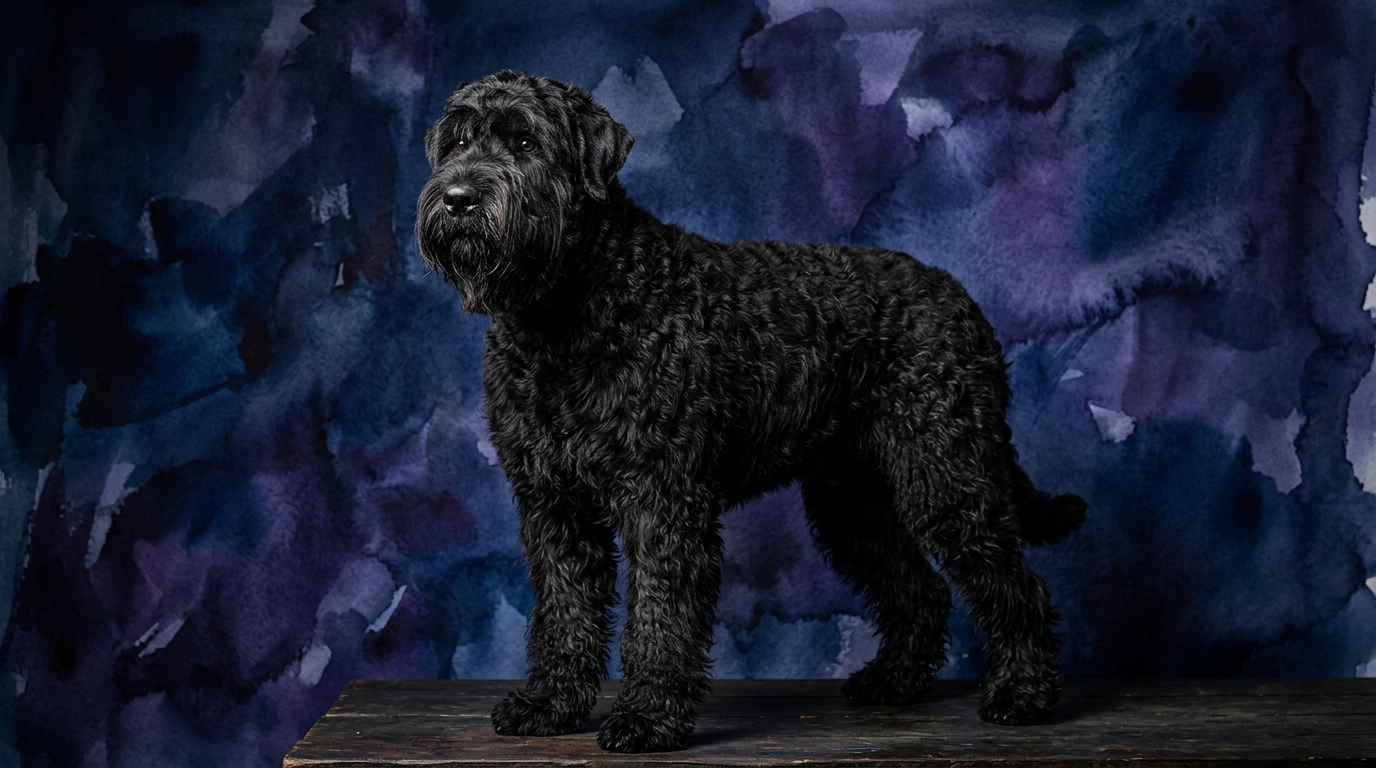
The Black Russian Terrier (BRT), a formidable dog from the Working group, presents a balanced cognitive profile with a score of 3 out of 5 across all measured dimensions. This indicates a consistent, reliable, and methodical approach to mental tasks. Their problem-solving ability (3/5) suggests they can navigate moderately complex situations and learn multi-step tasks with steady guidance. Training speed (3/5) means they absorb new commands at a deliberate pace, requiring consistent reinforcement. Social intelligence (3/5) reflects a moderate capacity for understanding human cues and social dynamics, while instinctive drive (3/5) indicates a controlled, purposeful application of their natural inclinations, often tied to their protective working heritage. Their memory (3/5) is solid but benefits from regular practice to maintain learned behaviors.
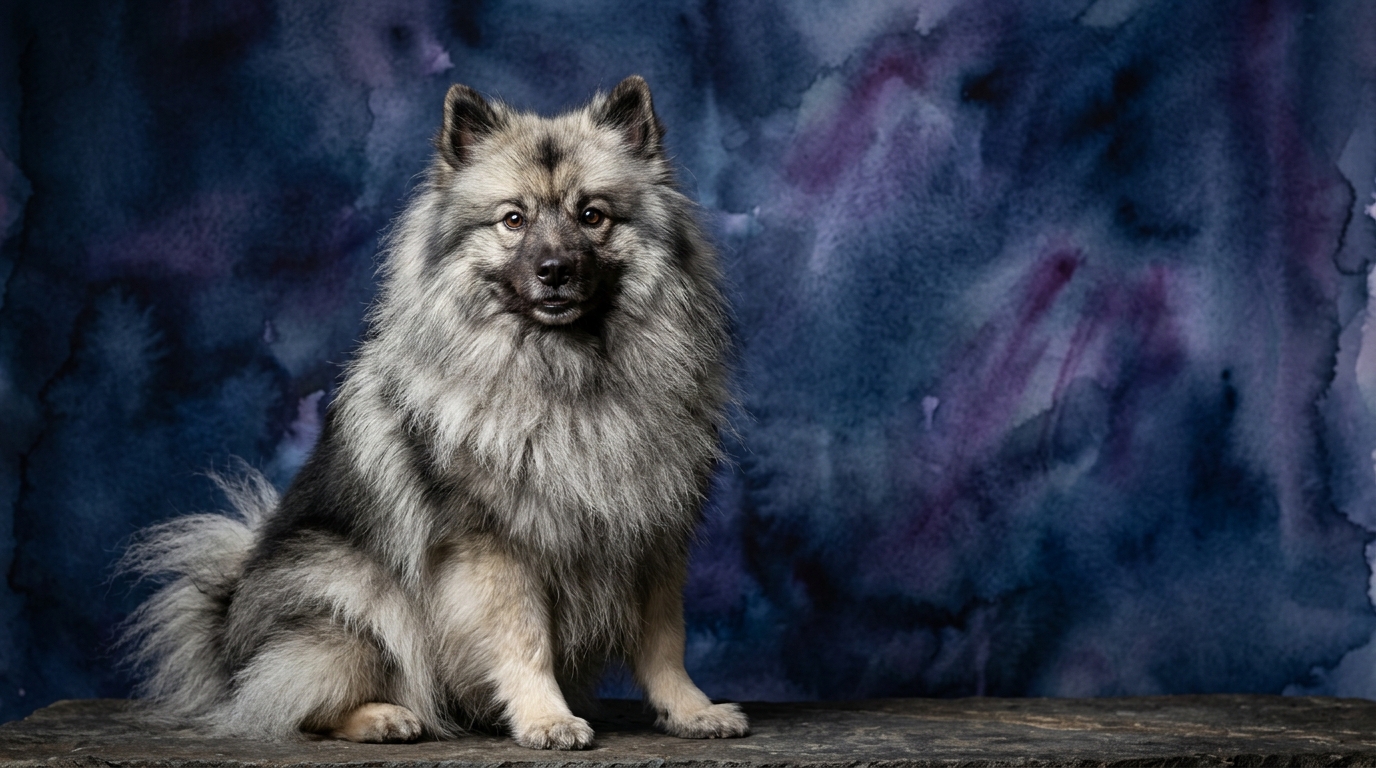
In contrast, the Keeshond, a lively member of the Non-Sporting group, showcases a profile with notable peaks. Ranked #16 by Dr. Stanley Coren for 'obedience and working intelligence,' the Keeshond demonstrates superior cognitive aptitude in several areas. Their problem-solving score of 4/5 indicates a quicker grasp of novel situations and an adeptness at figuring out new challenges. Training speed also rates 4/5, meaning they typically learn new commands and concepts with fewer repetitions than the BRT. Social intelligence (3/5) and instinctive drive (3/5) align with the BRT, suggesting a similar level of engagement with human interactions and controlled natural impulses. However, their memory truly stands out at an impressive 5/5, signifying exceptional retention of learned behaviors, cues, and routines over long periods.
Where the Black Russian Terrier Excels Cognitively
While the Black Russian Terrier doesn't boast higher numerical scores in any single cognitive dimension compared to the Keeshond, its cognitive strength lies in its profound consistency and steadfast application across all areas. A uniform 3/5 score signifies a dog that is reliably capable without exhibiting extremes, making it an exceptionally predictable and robust cognitive partner for specific tasks. Their balanced profile suggests an unwavering mental fortitude, particularly valuable in demanding, repetitive, or high-pressure working environments where sustained focus and resilience are paramount.
For instance, in roles requiring methodical execution rather than rapid innovation, the BRT's steady problem-solving and training speed become an asset. They are less likely to be sidetracked by fleeting novelties, instead applying their cognitive faculties with a persistent resolve. This makes them well-suited for tasks that demand endurance and a consistent, unyielding approach, such as patrolling, guarding, or advanced obedience work that relies on deep-seated habituation. Their moderate instinctive drive means their natural predispositions are channeled effectively towards purposeful work, making them less prone to undirected energy or impulsive actions that might divert a dog with a higher, less focused drive.
Where the Keeshond Shines Cognitively
The Keeshond's cognitive profile reveals clear advantages in areas that highlight mental agility and retention. Their problem-solving score of 4/5 indicates a breed that is often quicker to grasp new concepts, solve environmental puzzles, or adapt to unforeseen changes. This makes them adept at navigating complex scenarios or learning intricate sequences of behaviors, often with a visible spark of understanding.
Their 4/5 training speed is a significant asset, allowing them to pick up new commands and cues more rapidly than many other breeds. This translates to more efficient training sessions and quicker progress through obedience levels or dog sports. However, the Keeshond's true cognitive hallmark is its exceptional memory, scoring a perfect 5/5. This means they not only learn quickly but also retain that knowledge with remarkable fidelity over extended periods. Owners will find that once a behavior or command is learned, it is deeply ingrained, requiring less frequent refreshers and leading to highly reliable responses even after a long break. This combination of rapid learning and superior retention makes the Keeshond a highly rewarding partner for complex training and mental challenges.
Training Dynamics: Which is Easier and Why?
Based on their cognitive profiles, the Keeshond is generally easier to train than the Black Russian Terrier. The Keeshond's 4/5 training speed means they typically grasp new commands and concepts with fewer repetitions, leading to faster progress in training sessions. Coupled with their exceptional 5/5 memory, learned behaviors are retained with remarkable fidelity, requiring less frequent reinforcement to maintain proficiency. This combination makes them highly responsive to positive reinforcement methods and capable of excelling in complex obedience, agility, and trick training with relative ease.
In contrast, the Black Russian Terrier's 3/5 training speed and 3/5 memory indicate a more deliberate learning pace. While certainly capable of learning a vast array of commands, they require more consistent, patient, and methodical instruction. Owners of BRTs should be prepared for more repetitions to solidify new behaviors and regular reinforcement to prevent skill fade. Their working dog background means they often respond best when training is presented as a purposeful task, tapping into their desire for a 'job,' rather than purely as play. Understanding these inherent cognitive differences allows owners to tailor their training approaches for optimal success with either breed.
Matching Breeds to Lifestyles: Active vs. Relaxed Owners
The Black Russian Terrier, originating as a robust working breed, thrives with active owners who can provide consistent structure, purpose, and ample physical and mental challenges. Their balanced cognitive profile and working heritage mean they excel when given a 'job' to do, whether it's protection work, advanced obedience, or extensive outdoor activities that engage both their body and mind. They are not suited for purely relaxed owners who cannot commit to meeting these significant needs for engagement and structured exercise; an under-stimulated BRT can become restless or destructive. An active owner for a BRT is one who is prepared for a committed partnership in purposeful activities.
The Keeshond, while part of the Non-Sporting group, possesses a sharp mind that demands significant mental stimulation, making them suitable for owners who are prepared to engage them consistently. Their high problem-solving and exceptional memory mean they thrive on learning, puzzle toys, and interactive play. An 'active owner' for a Keeshond might involve regular participation in dog sports like agility or obedience, or simply consistent, engaging training sessions at home. They can adapt to more 'relaxed' owners, provided that mental enrichment is a daily priority. A relaxed owner for a Keeshond is one who enjoys consistent, thoughtful interaction and mental games, ensuring their intelligent companion remains content and well-behaved, even if intense physical exercise is not always the primary focus.
The Verdict
Choose a Black Russian Terrier if you seek a steadfast, robust working partner who thrives on consistent direction and purpose, and you appreciate a dog with reliable, methodical cognitive capabilities applied to demanding tasks.
Opt for a Keeshond if you enjoy engaging a quick-witted canine mind, value rapid learning and exceptional memory in training, and seek a companion capable of excelling in a wide range of mental challenges.
🧠 Find Your Pet's IQ Score
Our Pet IQ Lab assessment covers 25+ tests across 5 cognitive dimensions — personalized to your breed.
Take the Full IQ Test →Frequently Asked Questions
Are Black Russian Terriers difficult to train?
Black Russian Terriers are not inherently difficult, but their training speed and memory scores of 3/5 indicate they learn at a steady, deliberate pace. They require consistent, patient, and clear instruction, with regular reinforcement to solidify learned behaviors and ensure long-term retention.
Do Keeshonds need a lot of mental stimulation?
Yes, Keeshonds, with their high problem-solving (4/5) and exceptional memory (5/5) scores, thrive on mental engagement. They benefit greatly from consistent training, puzzle toys, and interactive activities to keep their sharp minds challenged and prevent boredom.
How does Coren rank relate to the IQ Lab scores?
The Coren rank primarily assesses a breed's 'obedience and working intelligence' based on the number of repetitions needed to learn new commands and their success rate. The IQ Lab offers a more granular view, breaking intelligence into five distinct dimensions like problem-solving, training speed, and memory, providing a broader, multi-faceted cognitive profile.