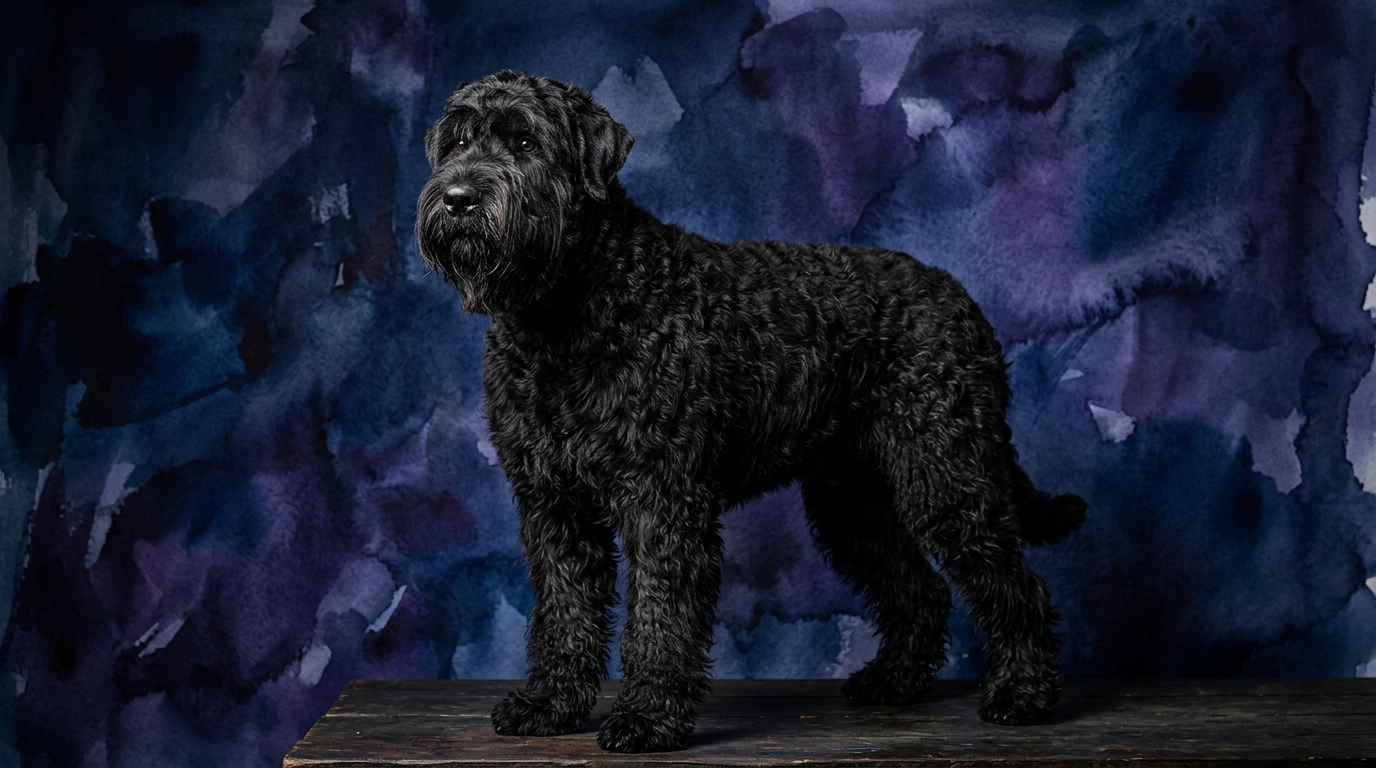
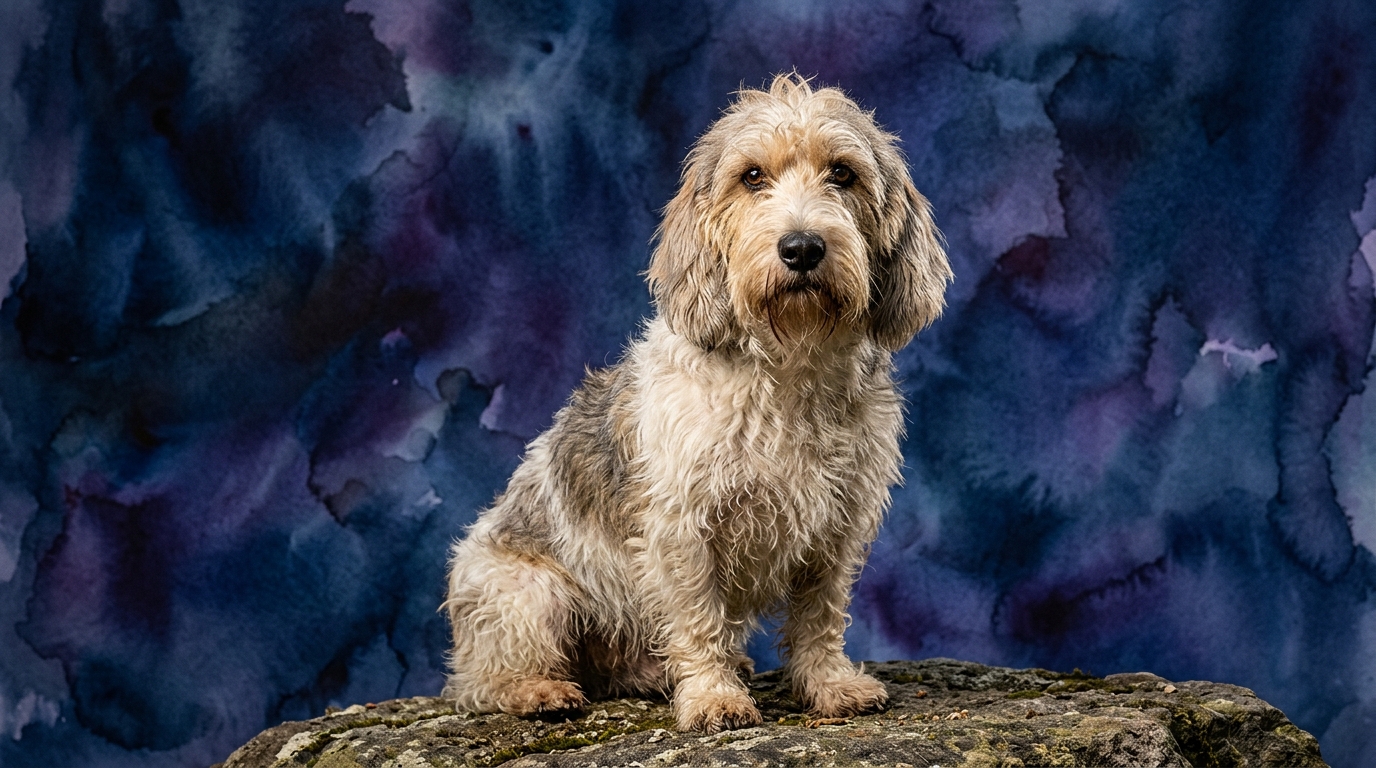
Side-by-Side Cognitive Profiles: BRT vs. PBGV
At The Cosmic Pet Pet IQ Lab, we assess canine intelligence across five key dimensions. For both the Black Russian Terrier (BRT) and the Petit Basset Griffon Vendéen (PBGV), each dimension registers a 3 out of 5, indicating capable but not extreme aptitude in any single area. However, the *manifestation* of these scores differs significantly due to their foundational breed purposes.
For the **Black Russian Terrier**, a working breed, their **Problem Solving (3/5)** typically manifests as a practical, watchful approach to assessing their environment for potential threats or protective duties. Their cognitive efforts are often directed towards understanding and reacting to their surroundings in a strategic, rather than abstract, manner. **Training Speed (3/5)** reflects their moderate pace in grasping new commands, often driven by a desire to fulfill their role for a trusted handler, requiring consistent and purposeful instruction. Their **Social Intelligence (3/5)** is keenly focused on their immediate family unit, allowing them to read their owner's subtle cues and intentions, particularly in protective scenarios, while remaining reserved with outsiders. The **Instinctive Drive (3/5)** is powerfully rooted in their guardian heritage, compelling them to patrol, observe, and protect their territory. Finally, their **Memory (3/5)** is robust for retaining complex routines, commands, and especially experiences related to perceived threats or significant social interactions within their inner circle.
The **Petit Basset Griffon Vendéen**, a hound breed, interprets these same scores through a lens of independent exploration and scent work. Their **Problem Solving (3/5)** is characteristically tenacious and scent-driven, focused on overcoming obstacles to reach a desired aroma rather than strategizing a defense. This involves a persistent, trial-and-error approach to navigating their environment. Their **Training Speed (3/5)** is influenced by their independent nature and powerful sense of smell, meaning they learn effectively with positive reinforcement and patience, but can be easily distracted by compelling scents. **Social Intelligence (3/5)** for a PBGV is typically cheerful and outgoing, making them adept at engaging with a wide range of humans and other canines, often driven by curiosity and a desire for interaction. Their **Instinctive Drive (3/5)** is overwhelmingly centered on tracking, trailing, and vocalizing, a constant motivator stemming from their hunting heritage. Their **Memory (3/5)**, while capable of retaining obedience commands, truly excels in recalling intricate scent trails and the spatial layout of areas they've explored, a specialized form of cognitive recall vital for their original purpose.
Where the Black Russian Terrier Shines Cognitively
The Black Russian Terrier demonstrates a cognitive advantage in areas demanding structured decision-making and a clear hierarchy of command. Their problem-solving, rated 3/5, often manifests as a deliberate assessment of situations, particularly those involving territory or family safety. For instance, a BRT might excel at discerning a genuine threat from a benign visitor, a nuanced cognitive task requiring careful observation and recall of established rules. Their social intelligence, also 3/5, is finely tuned to the dynamics within their immediate human pack, allowing them to anticipate their owner's needs or reactions in a protective context. This contrasts with a more generalized social curiosity, indicating a focused application of their mental faculties towards their specific guardianship role. Furthermore, their memory (3/5) is particularly strong for operational procedures and boundaries, making them reliable in recalling complex sequences of commands related to their duties. This cognitive strength leans towards a more 'executive' function, where clarity of purpose and consistent execution are paramount.
Where the Petit Basset Griffon Vendéen Excels Cognitively
The Petit Basset Griffon Vendéen showcases its cognitive strengths in domains requiring sensory acuity and independent, persistent exploration. Their problem-solving, also 3/5, is largely driven by their olfactory prowess. A PBGV will relentlessly work out how to access a fascinating scent source, demonstrating a tenacious, trial-and-error approach to overcoming physical barriers. This isn't about strategizing a defense, but about creatively navigating an environment using their primary sense. Their instinctive drive (3/5) is a continuous engine for this type of cognitive engagement, leading them to constantly process and interpret their surroundings through scent. While their memory (3/5) for obedience commands is present, it truly shines in recalling complex scent patterns and the topography of their hunting grounds, showcasing a specialized form of spatial and olfactory memory. Their social intelligence (3/5), characterized by an effervescent curiosity, allows them to quickly integrate into new social settings, adapting their interactions based on immediate feedback from novel individuals or groups, a skill honed by pack hunting.
Training Dynamics: Which Breed is 'Easier' to Train?
Assessing which breed is 'easier' to train requires understanding their inherent motivations and cognitive priorities. The Black Russian Terrier, with a training speed of 3/5, often responds well to training that is purposeful and reinforces their role as a protector or companion. Their social intelligence, directed towards their family unit, means they are typically eager to understand and comply with their handler's directives. However, their physical power and strong will necessitate a confident, consistent trainer who establishes clear boundaries and expectations from an early age. They learn effectively through structured repetition and benefit from understanding the 'why' behind a command, often associating it with their duties.
Conversely, the Petit Basset Griffon Vendéen, also with a training speed of 3/5, presents a different set of training challenges and rewards. Their powerful instinctive drive for scent work means that while they are capable of learning, their focus can be easily diverted by an intriguing smell. Training a PBGV requires immense patience, creativity, and a positive reinforcement approach that makes learning more engaging than the allure of a new scent. They respond well to games and short, fun sessions that tap into their cheerful disposition. While a BRT learns for duty, a PBGV often learns for the sheer joy of interaction or the reward of a treat, making their training path less about strict adherence and more about engaging their independent spirit. Neither breed is 'easy' in the sense of requiring minimal effort; both demand dedicated, appropriate training methods tailored to their specific cognitive leanings.
Matching Breeds to Lifestyles: Active vs. Relaxed Owners
The Black Russian Terrier, a breed developed for strenuous work, unequivocally suits active and experienced owners. Their instinctive drive (3/5) for protection and their substantial physical presence demand significant daily exercise, not just for physical health but for mental well-being. A BRT thrives on having a 'job,' whether it's protection training, competitive obedience, or long, purposeful walks. Their problem-solving abilities (3/5) are best engaged through structured activities that challenge them mentally, preventing boredom which can manifest as undesirable behaviors. An owner who can dedicate time to consistent training, socialization, and providing outlets for their protective instincts will find a loyal and balanced companion. A more relaxed or passive owner might find themselves overwhelmed by the BRT's need for consistent leadership and activity.
The Petit Basset Griffon Vendéen, while appearing more compact, also requires an active owner, albeit one focused on different types of activity. Their powerful instinctive drive (3/5) for scenting means they need ample opportunities for off-leash exploration in secure areas or structured scent work. Their problem-solving (3/5) often involves navigating complex outdoor environments, so daily walks that allow for sniffing and investigating are crucial. A PBGV's social intelligence (3/5) thrives on interaction, making them excellent companions for owners who enjoy bringing their dog along for outings. While they enjoy cuddling, a truly relaxed owner might struggle with their persistent need for sensory engagement and their vocal nature, which is part of their hound heritage. Both breeds demand significant owner engagement, but the nature of that engagement differs profoundly, with the BRT needing purposeful work and the PBGV needing extensive sensory exploration.
The Verdict
If you are an experienced dog owner seeking a dedicated, protective companion who thrives on purposeful work and consistent leadership, the Black Russian Terrier is an exceptional choice. They excel in environments where their robust memory and focused social intelligence can be channeled into specific duties, offering unparalleled loyalty and security.
Conversely, if you are an active, patient owner who delights in a cheerful, independent, and scent-driven companion, the Petit Basset Griffon Vendéen might be your ideal match. They bring joy through their tenacious exploration and social exuberance, perfect for homes that embrace their inquisitive nature and provide ample opportunities for sensory adventures.
🧠 Find Your Pet's IQ Score
Our Pet IQ Lab assessment covers 25+ tests across 5 cognitive dimensions — personalized to your breed.
Take the Full IQ Test →Frequently Asked Questions
Are Black Russian Terriers good with children?
Black Russian Terriers, when properly socialized from a young age and raised in a family, can be devoted protectors of children. Their social intelligence allows them to form strong bonds with their family pack, but their sheer size and protective instincts mean supervision is always necessary, especially with unfamiliar children.
Do Petit Basset Griffon Vendéens bark a lot?
Petit Basset Griffon Vendéens are hounds, and like many hounds, they are prone to 'baying' or barking, particularly when on a scent trail or if they are bored or lonely. Their vocal nature is an integral part of their instinctive drive, making them less suitable for extremely quiet living situations or close neighbors.
Are these breeds suitable for first-time dog owners?
Neither the Black Russian Terrier nor the Petit Basset Griffon Vendéen is typically recommended for first-time dog owners. Both breeds possess strong instincts and require consistent training, extensive socialization, and owners who understand their unique cognitive and behavioral needs to ensure they develop into well-adjusted companions.